


Walking through a grocery store, restaurant, or shopping mall shouldn’t feel like navigating an obstacle course. But when you round a corner and suddenly find yourself airborne because someone mopped the area without putting out a single warning cone, the consequences can be devastating. A slip and fall on a wet floor might sound minor until you’re dealing with a broken wrist, a concussion, or worse.
If you’ve fallen on a wet floor that had no warning sign posted, you’re probably wondering whether the property owner can be held responsible. The short answer is yes, you may have grounds for a lawsuit. But like most legal matters, the details of your specific situation matter enormously.
Can You Sue When There’s No Wet Floor Sign?
You absolutely can sue for a slip and fall on a wet floor without a warning sign, but winning your case requires proving that the property owner failed to use reasonable care in keeping the premises safe. The absence of a warning sign doesn’t automatically guarantee you’ll win, but it can serve as powerful evidence that the owner failed to adequately warn visitors about a hazard they knew about or should have known about.
New York premises liability law puts a legal duty on property owners and occupiers to take reasonable steps to protect lawful visitors from harm. This includes maintaining safe walking surfaces, cleaning up spills within a reasonable timeframe, and warning people about wet or slippery conditions. When they fail to do these things and someone gets hurt as a result, they can be held legally responsible.
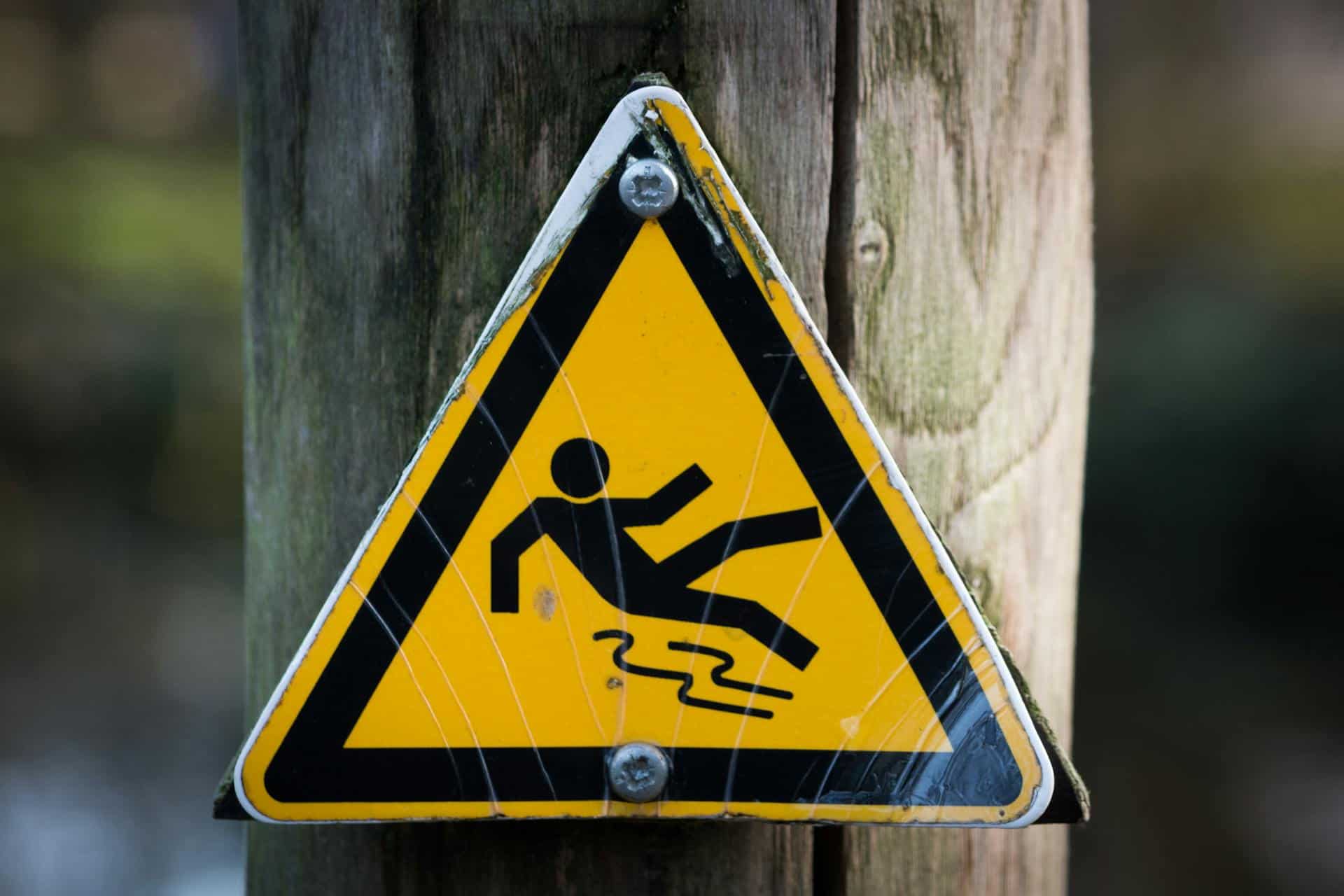
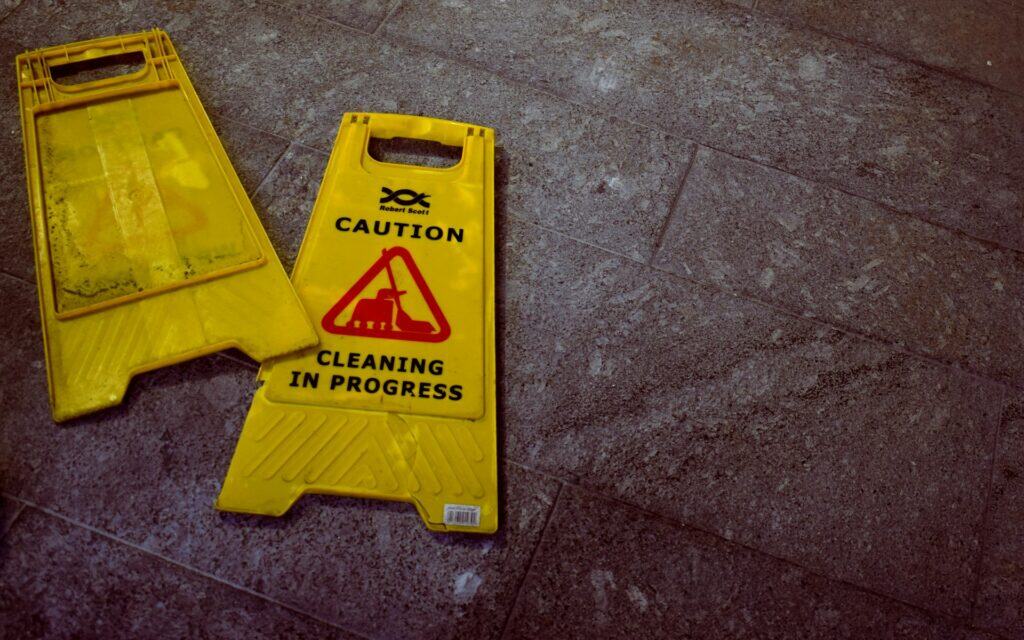
Think of it this way. If a store employee mops the entire produce section during peak shopping hours and doesn’t put out a single bright yellow warning cone, most people would agree that’s unreasonable. The absence of that basic safety measure becomes evidence that the store didn’t meet its duty to keep customers safe.
What You Need to Prove in a Wet Floor Case
Winning a slip and fall lawsuit isn’t just about showing that you fell and got hurt. You need to establish several specific legal elements that together demonstrate the property owner’s negligence caused your injuries.
First, there must have been a dangerous condition. A wet floor qualifies, especially when it’s slippery enough to cause someone to lose their footing. The wetness might come from a spill, mopping, a leak, tracked-in rain, or any number of sources.
Second, and this is crucial, you need to show that the property owner either created the dangerous condition or had notice of it. This is where many cases turn. Did an employee spill something? Was the floor wet because workers were cleaning? Had the spill been sitting there long enough that staff should have discovered it during routine inspections? These questions get to the heart of whether the owner can be held responsible.
Third, you must prove the owner failed to fix the problem or warn people about it. If there had been a bright, properly positioned wet floor sign that you simply didn’t see, your case becomes significantly harder to win. But when no warning exists at all, you’re in a much stronger position to argue the owner breached their duty of care.
Finally, this failure must have directly caused your fall and injuries. You’ll need to connect the dots between the wet floor, the lack of warning, your fall, and the harm you suffered.
Actual Notice Versus Constructive Notice
The concept of “notice” is fundamental to premises liability cases, and understanding the difference between actual and constructive notice can help you evaluate the strength of your claim.
Actual notice is straightforward. It means the property owner or their employees directly knew about the wet floor. Maybe an employee caused the spill while restocking shelves. Perhaps a manager received a complaint about a leaky roof that was dripping onto the floor. Or workers were actively mopping when you fell. When actual notice exists, the property owner’s responsibility to warn or fix the problem is clear and immediate. Failing to post a warning sign in these situations is strong evidence of negligence.
Constructive notice is more nuanced but equally important. It applies when a hazard has been present long enough and is visible enough that the owner should have discovered it through reasonable inspections, even if no one actually saw it. Courts look at several factors when determining constructive notice: How long had the wet floor existed? What were the property’s cleaning and inspection policies? Did staff regularly patrol or monitor the area? Was the wet spot in a high-traffic area where it should have been noticed quickly?
For example, if you slip on a puddle that’s been growing under a vending machine for three days, the property owner can’t escape liability just by saying “we didn’t know about it.” They should have known about it through reasonable inspection practices.
This is why documentation matters so much in slip and fall cases. Your attorney will dig into maintenance logs, cleaning schedules, incident reports, and employee statements to build a picture of what the property owner knew or should have known.
Why Warning Signs Matter But Don’t Tell the Whole Story
You won’t find a New York statute that explicitly requires wet floor signs in every situation. Instead, the law requires property owners to act reasonably to keep visitors safe. In practice, though, posting visible warning signs has become a standard safety measure that courts and juries expect when floors are wet and potentially slippery.
Here’s what makes this interesting from a legal standpoint. The presence of a warning sign doesn’t automatically shield a property owner from liability, and the absence of a sign doesn’t guarantee you’ll win your case. Courts look at warning signs as one factor among many when deciding whether the owner acted reasonably under the circumstances.
Sometimes a warning sign isn’t enough. Imagine a restaurant that mops the only path to the restrooms during lunch rush and puts out a single small sign that’s partially hidden behind a coat rack. Even though there’s technically a sign, a court might find the warning inadequate given the circumstances. The sign’s size, placement, visibility, and whether there was any reasonable alternative path all matter.
On the flip side, sometimes the absence of a sign might not doom the property owner’s case if other factors suggest they acted reasonably. But this scenario is rare. In most situations where someone falls on a wet floor and gets seriously hurt, the lack of any warning sign becomes compelling evidence that the property owner failed to meet the standard of reasonable care.
Safety guidance and common industry practices reinforce this expectation. When businesses know a floor is wet and slippery, posting clear, visible warnings has become the baseline standard of care. Failing to do so looks negligent to judges and juries alike.
The Open and Obvious Defense
Property owners and their insurance companies will often argue that a wet floor was “open and obvious” and that a reasonably careful person would have seen and avoided it. This defense essentially claims you should have noticed the hazard yourself and therefore bear some responsibility for your fall.
New York law doesn’t completely bar recovery when a condition might have been visible. Courts recognize that even obvious hazards can be unreasonably dangerous, and property owners still have duties to address them. The open and obvious nature of a hazard is a factor courts consider, but it’s not automatically a get-out-of-jail-free card for negligent property owners.
Several circumstances can undermine this defense. Poor lighting can make wet floors much harder to spot, especially if the floor is dark or has a shiny surface that naturally looks wet. Crowded conditions might prevent you from looking down constantly as you navigate through people. The layout of the space might create blind corners or transitions between floor surfaces that hide wet spots until it’s too late. Distractions created by the business itself, like elaborate displays or loud music, can draw attention away from the floor.
The key question isn’t just whether the wet floor was theoretically visible, but whether the property owner acted reasonably in creating or allowing that hazard to exist without adequate warnings or barriers. A property owner can’t create a dangerous situation and then blame visitors for not spotting it quickly enough.
How Comparative Negligence Affects Your Case
New York follows a system called comparative negligence, which acknowledges that more than one party can share responsibility for an accident. Even if you bear some fault for your fall, you can still recover damages as long as you’re not entirely responsible.
Let’s say you were texting while walking through a store and didn’t notice a wet floor that had no warning sign. A jury might find that the store was 80% at fault for failing to warn about the hazard, while you were 20% at fault for not paying attention to where you were walking. Under comparative negligence, you could still recover 80% of your damages.
This system recognizes that accidents rarely have just one cause. Maybe you were walking quickly, or wearing smooth-soled shoes, or looking at merchandise instead of the floor. These factors don’t automatically destroy your case. They might reduce your recovery somewhat, but they don’t eliminate the property owner’s responsibility to maintain safe conditions and provide adequate warnings.
Insurance companies love to overplay the comparative negligence angle. They’ll scrutinize everything about your behavior before the fall, looking for any reason to shift blame onto you. This is one reason why having experienced legal representation matters. An attorney who understands premises liability can counter these arguments and keep the focus on the property owner’s failure to meet their legal duties.
Evidence That Strengthens a Wet Floor Claim
The moments immediately after a fall are crucial for preserving evidence. If you’re physically able, or if someone is with you, document everything you can.
Photographs are invaluable. Take pictures of the wet floor from multiple angles, showing the extent of the wet area and the absence of warning signs. Photograph the surrounding area to capture lighting conditions, the type of flooring, and any obstructions to visibility. If your clothes got wet from the fall, photograph them too. Time-stamped photos taken right after the incident are much more powerful than recreations days later.
Witness information can make or break a case. If other customers or employees saw your fall or noticed the wet floor before you fell, get their names and contact information. Witnesses who can testify that they also thought the floor looked dry, or that they saw the wet spot earlier but no signs were posted, provide crucial corroboration of your account.
Always insist on an incident report being filed, even if the property owner seems reluctant. Many stores and businesses have policies requiring documentation of any on-site injuries. Make sure you get a copy of this report, and carefully review what gets written before you sign anything. Incident reports sometimes contain valuable admissions, like an employee noting that the floor “had just been mopped” or that “we didn’t have time to put out signs yet.”
Your own injuries serve as evidence too. Seek medical attention promptly, even if you think you’re not seriously hurt. Some injuries don’t manifest symptoms immediately. Medical records that connect your injuries directly to the fall, documented close in time to the incident, are essential for proving damages. Be thorough when describing your accident to doctors so their notes accurately reflect what happened.
Video surveillance can be a game-changer. Many commercial properties have security cameras. While you can’t typically access this footage yourself, your attorney can send a preservation letter requiring the property owner to save any relevant video. This footage might show how long the wet floor existed, whether employees walked past it without addressing it, the absence of warning signs, and the actual mechanics of your fall.
Maintenance and cleaning logs often reveal patterns. If a store has chronic problems with leaks or spills in a certain area, or if their cleaning schedule is inadequate for the amount of foot traffic they get, these documents can prove the property owner knew about ongoing hazards and failed to address them appropriately. Your attorney can obtain these records through the discovery process in litigation.
Previous complaints or violations related to floor conditions can establish that the property owner had been put on notice about safety problems but didn’t take them seriously. Multiple slip and fall incidents in the same area suggest a systemic problem rather than an isolated accident.
Why Falls Are More Serious Than People Realize
Society tends to trivialize slip and fall accidents. We make jokes about banana peels and clumsy people. But the statistics tell a sobering story about how dangerous these incidents really are.
Falls are consistently among the leading causes of injury and death in the United States. According to the Centers for Disease Control and Prevention, unintentional falls send millions of Americans to emergency departments every year. These aren’t just minor bumps and bruises. Falls result in broken bones, traumatic brain injuries, spinal cord damage, and internal injuries that can have lifelong consequences.
The risk is especially severe for older adults. People 65 and over are far more likely to suffer serious complications from a fall. Hip fractures are common and often mark a turning point in an older person’s independence and quality of life. Many older adults never fully recover from a serious fall. Head injuries from falls can cause bleeding in the brain, even from impacts that seem minor at the time.
But younger people aren’t immune. A fall onto a hard floor can cause wrist fractures that require surgery, knee injuries that need months of physical therapy, or back injuries that create chronic pain. If you hit your head, even briefly losing consciousness or feeling dazed afterward indicates a potential concussion that requires medical monitoring.
The financial impact extends beyond medical bills. You might miss work during recovery, losing income precisely when you’re facing increased expenses. Some injuries cause permanent limitations that affect your earning capacity long-term. Pain and suffering, loss of enjoyment of life, and emotional distress are real damages that courts recognize and compensate.
This is why premises liability law takes floor safety so seriously. The expectation that property owners will clean up spills promptly, maintain non-slip flooring, and clearly warn about wet conditions isn’t just bureaucratic red tape. These measures prevent genuine harm to real people. When property owners cut corners on basic safety, the consequences can be devastating.
Taking Action After Your Fall
If you’ve been injured in a slip and fall on a wet floor without warning signs, time matters. New York has statutes of limitations that set deadlines for filing lawsuits. Generally, you have three years from the date of your injury to file a personal injury lawsuit, but there are exceptions and nuances that can shorten this timeframe depending on who owns the property.
Consulting with an attorney early gives you the best chance of preserving evidence and building a strong case. Many personal injury attorneys offer free initial consultations and work on a contingency fee basis, meaning you don’t pay attorney fees unless you recover compensation.
During an initial consultation, an attorney will evaluate the specific facts of your case, including where and when you fell, the extent of your injuries, what evidence exists, and what the property owner knew or should have known about the wet floor. They’ll also consider any statements you made at the scene or afterward, as well as any actions you took that might affect liability.
Be honest and complete when discussing your case with an attorney. Tell them everything, even details that might seem embarrassing or potentially unfavorable. Your attorney needs the full picture to give you sound advice and to avoid surprises later if the case proceeds to litigation.
Remember that insurance companies aren’t on your side. The property owner’s insurance adjuster might contact you shortly after your fall, seeming friendly and concerned. They may offer a quick settlement that sounds reasonable when you’re worried about medical bills. Be extremely cautious about giving recorded statements to insurance adjusters or accepting early settlement offers without talking to an attorney first. Insurance companies often try to minimize payouts by getting injured people to make statements that can be used against them later or by offering settlements that seem adequate until you realize the full extent of your injuries and expenses.
Summing It Up
Falling on a wet floor without warning signs can turn an ordinary errand into a life-changing event. The physical pain, medical expenses, lost work time, and emotional toll of a serious fall injury shouldn’t be your burden to bear alone when someone else’s negligence caused your accident.
New York law recognizes that property owners have real responsibilities to keep their premises safe for visitors. When they fail to clean up spills, fix leaks, or post basic warnings about wet floors, and someone gets hurt as a result, the law provides a path to compensation. The absence of a wet floor sign doesn’t guarantee you’ll win your case, but it serves as powerful evidence that the property owner didn’t meet the standard of reasonable care.
Every case is different, with unique facts and circumstances that affect both liability and damages. What happened in the moments before your fall, what the property owner knew or should have known, the severity of your injuries, and the evidence available to prove your claim all play crucial roles in determining the outcome.
If you’re dealing with injuries from a slip and fall, don’t minimize what happened or assume you just need to tough it out. These accidents can have serious, lasting consequences. Getting proper medical treatment and understanding your legal rights are both important steps toward recovery. The law exists to protect people from preventable harm and to hold negligent property owners accountable when their carelessness injures others.