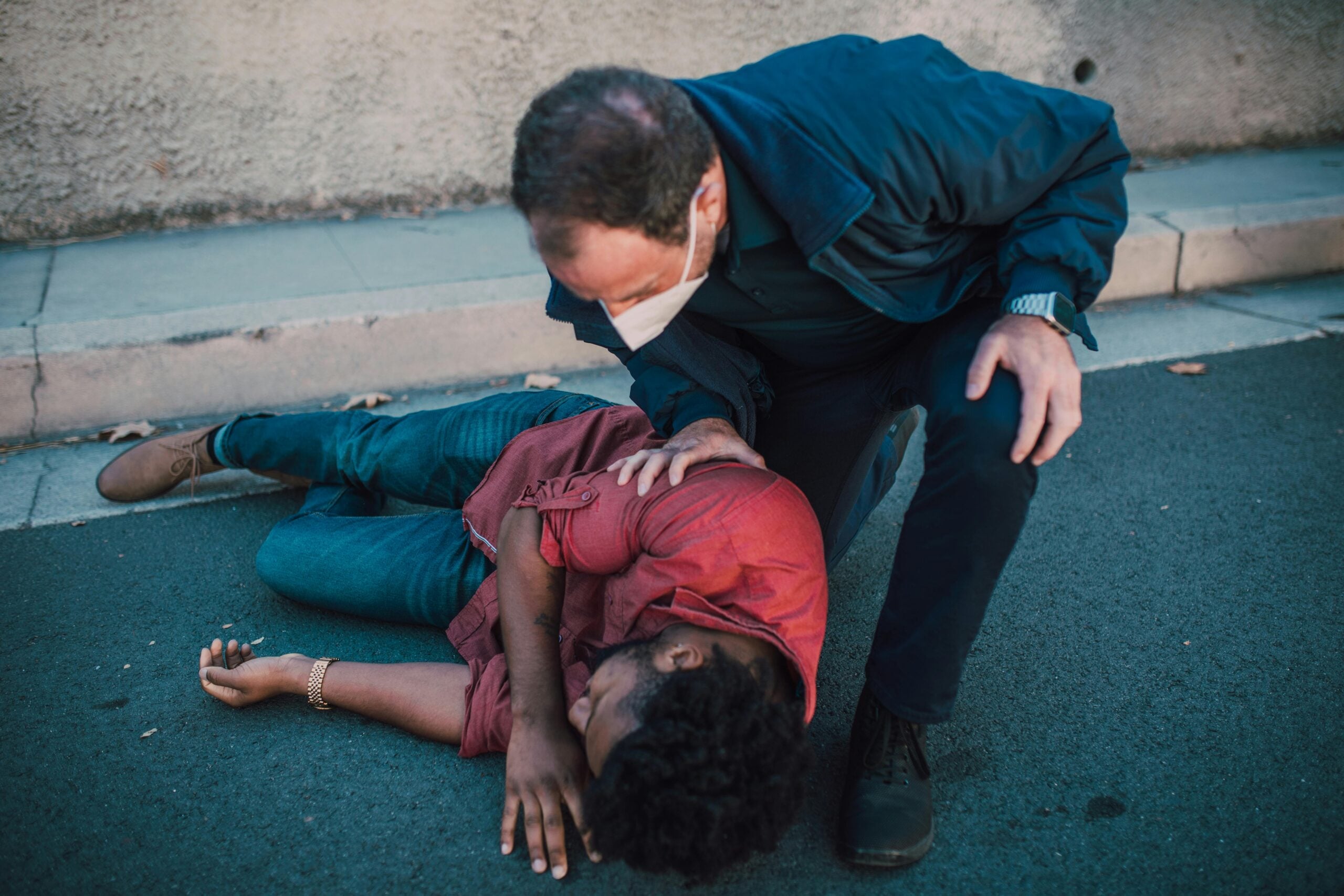


Getting hit by a car while walking is one of those things you never think will happen to you—until it does. Whether you were crossing at a light, walking through a parking lot, or just standing on the sidewalk when a vehicle struck you, the aftermath can be overwhelming. Medical bills pile up, you might be unable to work, and the pain doesn’t just disappear after a few days.
One of the first questions people ask after a pedestrian accident is straightforward in pedestrian injury claims: how much money can I actually get for this? It’s not about being greedy. It’s about understanding whether you’ll be able to cover your medical expenses, make up for lost wages, and get some recognition for what you’ve been through.
The honest answer is that there’s no single number that applies to everyone. Pedestrian accident compensation in New York, including pedestrian injury claims, can range from a few thousand dollars in no-fault insurance benefits to six or seven figures in serious injury cases. What you can recover depends on how badly you were hurt, who was at fault, what insurance coverage is available, and whether your injuries meet certain legal thresholds that allow you to pursue a full lawsuit.
Understanding how New York’s system works can help you get a clearer picture of what to expect and what steps you need to take to protect your rights.
What Is No-Fault Insurance and How Does It Help Pedestrians?
New York operates under a no-fault insurance system, which can be confusing if you’re not familiar with it. The basic idea is that after most car accidents in pedestrian injury claims, your own insurance company pays for your immediate medical bills and a portion of lost wages, regardless of who caused the crash. This system is meant to get people the help they need quickly without having to prove fault right away.
But what happens when you’re a pedestrian who got hit by a car? You probably don’t own the vehicle that struck you, so whose insurance pays?
In most cases, you can claim Personal Injury Protection (PIP) benefits through the insurance policy of the driver who hit you. New York law requires most drivers to carry at least $50,000 in PIP coverage. As a pedestrian injured by that vehicle, you’re treated almost like you were a passenger in that car, which means you can access those benefits.
PIP typically covers reasonable medical expenses and a portion of your lost earnings. If the driver who hit you was uninsured or can’t be identified (like in a hit-and-run), you may be able to file a claim through your own auto insurance policy’s uninsured motorist coverage or through a household member’s policy if you reside together.
These no-fault benefits are helpful for covering immediate costs, but they have limits. Fifty thousand dollars might sound like a lot, but serious injuries can burn through that amount quickly. And importantly, no-fault benefits don’t compensate you for pain and suffering or the full extent of your lost wages. For that, you’ll need to step outside the no-fault system.
Can You Sue After a Pedestrian Accident in New York?
Here’s where things get more complicated. New York’s no-fault system has a trade-off built into it. In exchange for getting quick access to basic benefits without proving fault, you give up the right to sue for additional damages in many cases. But the law recognizes that some injuries are so serious that limiting victims to no-fault benefits alone would be unfair.
That’s where the “serious injury threshold” comes in. To file a lawsuit seeking full compensation from the driver who hit you, your injuries generally need to meet this legal standard. New York Insurance Law defines serious injury in specific categories, including death, significant disfigurement, bone fractures, permanent loss of use of a body part or function, significant limitation of use of a body part or function, or an injury that prevents you from performing substantially all of your usual daily activities for at least 90 days during the 180 days immediately following the accident.
This isn’t just a formality. Insurance companies and defendants will scrutinize your medical records to argue that your injury doesn’t meet the threshold. If your case doesn’t satisfy these requirements, you’ll be limited to your no-fault benefits and won’t be able to recover compensation for pain and suffering, which is often the most valuable part of a personal injury claim.
Most pedestrian accidents that result in hospitalization or long-term treatment do meet this threshold. Broken bones, head injuries, spinal damage, and other serious trauma clearly qualify. But cases involving sprains, soft tissue injuries, or relatively quick recoveries can face challenges. Medical documentation is critical here. Detailed diagnostic records, consistent treatment, and clear physician statements about your limitations often determine whether your case meets the legal standard.
What Types of Compensation Are Available in a Pedestrian Accident Case?
Once you’ve established that your injuries meet the serious injury threshold, you can pursue a full personal injury claim. The compensation available falls into three main categories.
Economic damages cover all the financial losses you’ve suffered because of the accident. This includes past and future medical expenses, which can encompass emergency room treatment, surgeries, hospital stays, physical therapy, medications, medical equipment, and any ongoing care you’ll need down the road. It also includes lost wages for time you’ve already missed from work and reduced earning capacity if your injuries prevent you from returning to your previous job or limit your ability to earn income in the future. Out-of-pocket expenses like transportation to medical appointments or home modifications you need because of your injuries also count as economic damages.
Non-economic damages compensate you for harms that don’t have a clear price tag. Pain and suffering is the most well-known category, covering both the physical pain you’ve endured and the mental and emotional distress that comes with a serious injury. This can include anxiety, depression, loss of enjoyment of life, and the frustration of dealing with limitations that didn’t exist before the accident. If you’ve been scarred or disfigured, that’s compensable. If your spouse has lost your companionship or support because of your injuries, they may have a claim for loss of consortium.
Punitive damages are rare but possible in pedestrian accident cases. These aren’t meant to compensate you for your losses but rather to punish the defendant for especially reckless or outrageous behavior and to deter others from acting similarly. A driver who was extremely drunk, racing at dangerous speeds through a residential area, or intentionally trying to harm someone might face punitive damages. But in typical pedestrian accident cases where the driver was negligent but not malicious, punitive damages won’t apply.
Does It Matter If You Were Partly at Fault for the Accident?
New York follows what’s called pure comparative negligence, which affects how much compensation you can ultimately recover. Under this system, your payout is reduced by your percentage of fault, but you’re not completely barred from recovery unless you’re found to be 100 percent responsible.
This matters because pedestrian accidents aren’t always entirely the driver’s fault. Maybe you were crossing against the light, or you stepped into the street between parked cars where drivers couldn’t see you coming. Maybe you were distracted by your phone and didn’t notice the traffic signal had changed. These factors don’t automatically eliminate your right to compensation, but they will reduce it.
Here’s how it works in practice. Let’s say a jury determines that your damages total $100,000, but they also find that you were 25 percent at fault for the accident because you crossed outside of a crosswalk. Your recovery would be reduced to $75,000. If you were 40 percent at fault, you’d receive $60,000. Even if you’re found to be 75 percent responsible, you can still recover the remaining 25 percent of your damages from the other party.
This system is actually more generous than what exists in many other states, where being even slightly more than 50 percent at fault eliminates your right to any compensation at all. But it also means that insurance companies and defense lawyers will work hard to shift as much blame as possible onto you to reduce what they have to pay.
The evidence in your case becomes crucial here. Traffic camera footage, witness statements, accident reconstruction, and even details about the weather and lighting conditions can all influence how fault is apportioned. This is one reason why it’s important to document everything you can after an accident and get legal help early, before evidence disappears or witnesses’ memories fade.
What Factors Determine How Much Your Case Is Worth?
No two pedestrian accidents are identical, which is why compensation amounts vary so dramatically. Several key factors drive what a case is actually worth.
The severity and permanence of your injuries matter most. A broken ankle that heals completely within a few months will result in significantly less compensation than a traumatic brain injury that leaves you with cognitive impairments for the rest of your life. Spinal cord injuries, amputations, severe burns, and permanent disabilities command higher compensation because they fundamentally change your quality of life and often require lifelong medical care and assistance.
Your total medical costs, both past and future, directly impact your economic damages. If you’ve already racked up $200,000 in medical bills and doctors say you’ll need another $500,000 in treatment and care over your lifetime, that becomes the foundation of your economic damages claim. Expert testimony from doctors and life care planners helps establish these future costs with credibility.
Lost income and diminished earning capacity can be substantial, especially if you’re younger and have decades of work ahead of you. A 35-year-old construction worker who can no longer perform physical labor because of permanent leg injuries isn’t just losing a few months of paychecks. They’re potentially losing hundreds of thousands or even millions in lifetime earnings. Vocational experts can help calculate these losses by comparing what you would have earned in your previous career to what you can realistically earn now given your limitations.
Clear evidence of the driver’s fault strengthens your case considerably. If the driver was speeding, ran a red light, was texting while driving, or was under the influence of drugs or alcohol, that not only makes liability easier to establish but can also influence how sympathetic a jury might be to your situation. Traffic violations, police reports, and any criminal charges filed against the driver all support your claim.
Available insurance coverage often becomes the practical ceiling on what you can recover. Even if your case is worth $2 million based on your injuries, if the driver only has $100,000 in liability coverage and no additional assets or umbrella policy, collecting the full value becomes difficult. This is why your lawyer will investigate all possible sources of coverage, including the driver’s personal assets, any commercial policies if the driver was working at the time, and your own underinsured motorist coverage if you have it.
What Do Pedestrian Accident Cases Actually Pay Out in New York?
Some law firms cite “average” settlements in the mid-six-figure range for serious pedestrian accidents in New York, but treating any number as typical can be misleading. The reality is that pedestrian accident cases span an enormous range of outcomes.
Minor injuries that meet the serious injury threshold might settle for $50,000 to $150,000, covering medical bills, lost wages, and modest pain and suffering. Moderate injuries like significant fractures, injuries requiring surgery, or conditions that cause lasting but not permanent limitations might result in settlements or verdicts in the $200,000 to $500,000 range. Severe and catastrophic injuries like traumatic brain injuries, spinal cord damage, amputations, or permanent disabilities regularly produce million-dollar-plus results, especially when liability is clear and insurance coverage is adequate.
New York City sees some of the highest pedestrian accident settlements and verdicts in the state, partly because juries in urban areas tend to understand the vulnerability of pedestrians in dense traffic and partly because the injuries in these cases are often severe. Pedestrians have zero protection when struck by a vehicle, so even relatively low-speed collisions can cause devastating harm.
The pedestrian safety crisis in New York adds context to why these cases can result in substantial compensation. Recent data shows thousands of pedestrian injuries and over a hundred pedestrian deaths in New York City alone each year. Many of these crashes occur at intersections or along busy corridors where drivers fail to yield, speed, or drive distracted. The frequency and severity of these accidents have made pedestrian safety a major public health concern, and that awareness influences how seriously these cases are taken in the legal system.
How Long Does It Take to Get Compensation?
The timeline for resolving a pedestrian accident case varies widely depending on several factors. Some cases settle within months, while others take years to reach a conclusion.
The first phase involves medical treatment and reaching what doctors call maximum medical improvement, the point where your condition has stabilized and doctors can reasonably predict whether you’ll have permanent limitations. You don’t want to settle your case before you understand the full extent of your injuries and future medical needs. Settling too early often means leaving money on the table because you didn’t know you’d need additional surgeries or ongoing care.
Once you’ve reached maximum medical improvement or at least have a clear prognosis, your attorney will typically send a demand letter to the insurance company outlining your injuries, treatment, losses, and the compensation you’re seeking. The insurance company will investigate, review your medical records, and either make a settlement offer or deny liability.
Negotiations can take weeks or months. Insurance companies rarely accept the first demand, and your lawyer will need to respond to their counteroffers and potentially provide additional documentation to support your claim. Many cases settle during this negotiation phase without ever filing a lawsuit.
If negotiations don’t produce an acceptable settlement, your lawyer will file a personal injury lawsuit. From that point, you’ll enter the discovery phase, where both sides exchange evidence, take depositions, and build their cases. This process can take a year or more. Many cases settle even after a lawsuit is filed, often as the trial date approaches and both sides gain a clearer picture of the strengths and weaknesses of the evidence.
If the case goes to trial, you’ll need to add additional time for jury selection, the trial itself (which can last days or weeks for complex cases), and potentially appeals if either side contests the verdict. Very few personal injury cases actually make it all the way through trial, but those that do can produce substantial verdicts when liability is clear and injuries are severe.
The trade-off is straightforward: settling quickly provides certainty and faster access to money, but it might mean accepting less than what a jury would award. Going to trial takes longer and involves more risk, but it can result in significantly higher compensation if the jury sides with you.
What Should You Do Right After a Pedestrian Accident?
The steps you take immediately after getting hit by a car can significantly impact your ability to recover compensation later. If you’re physically able, there are several things you should try to do at the scene.
Call 911 to get police and medical help. Even if you don’t think you’re seriously hurt, some injuries don’t become apparent until hours or days later. Having paramedics examine you creates a medical record connecting your injuries to the accident, which becomes important evidence later. The police report will document the scene, identify the driver and any witnesses, and note any traffic violations or other factors that contributed to the accident.
Get information from the driver, including their name, contact information, insurance company and policy number, license plate number, and driver’s license number. If there are witnesses, get their names and contact information too. Witness statements often become crucial when the driver denies fault or claims you darted into traffic without warning.
Document the scene if you can. Take photos of the vehicle that hit you, the surrounding area, traffic signals, crosswalks, your injuries, torn clothing, and anything else that might be relevant. Your phone’s camera is fine for this. The more documentation you have from the immediate aftermath, the harder it becomes for insurance companies to dispute what happened.
Seek medical treatment as soon as possible, even if you initially refused treatment at the scene. Go to the emergency room or see your doctor within a day or two. Delays in seeking treatment give insurance companies ammunition to argue that your injuries weren’t serious or weren’t caused by the accident. Follow all your doctors’ recommendations for treatment and keep detailed records of all medical appointments, prescriptions, and expenses.
Don’t give recorded statements to the driver’s insurance company without talking to a lawyer first. Insurance adjusters are trained to ask questions designed to minimize your claim or get you to admit partial fault. They might sound sympathetic and helpful, but their goal is to protect their company’s interests, not yours. Politely decline to give a recorded statement until you’ve consulted with an attorney.
Summing It Up
Pedestrian accidents in New York can result in compensation ranging from basic no-fault benefits to multi-million-dollar settlements or verdicts, depending on the severity of your injuries, who was at fault, and what insurance coverage is available. Understanding New York’s no-fault system, the serious injury threshold, comparative negligence rules, and the factors that drive case value can help you make informed decisions about your claim.
If you’ve been hit by a car while walking, you’re dealing with physical pain, financial stress, and uncertainty about the future. Getting fair compensation isn’t just about the money. It’s about holding the responsible party accountable and getting the resources you need to recover and move forward with your life. The legal process can feel complicated, but you don’t have to navigate it alone. Documenting your injuries thoroughly, understanding your rights, and getting experienced legal help can make all the difference in the outcome of your case.