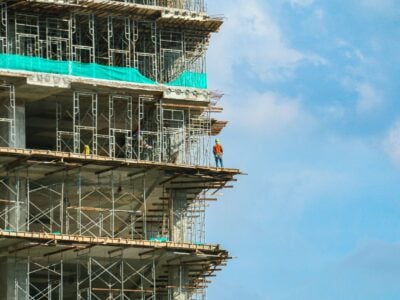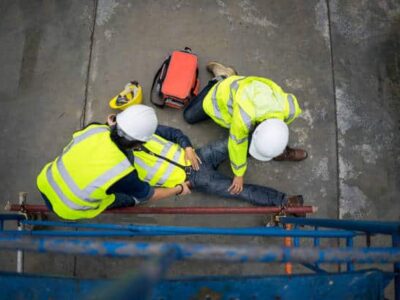


Construction sites are dangerous places. Even when workers follow every safety rule, accidents happen because someone else failed to meet their safety obligations. A scaffold collapses because the general contractor cut critical corners. A piece of equipment malfunctions because the manufacturer used cheap parts. A property owner ignores a hazard they’ve known about for weeks.
When you get hurt on a construction site in New York, you might assume workers’ compensation is your only option. But that’s not always the case. If someone other than your direct employer contributed to your accident, you may have the right to file a lawsuit against them and recover far more than workers’ comp alone would provide.
Understanding when you can sue a third party, who qualifies as a third party, and what you need to prove can make a significant difference in your recovery, both physically and financially.
Workers’ Compensation vs Third Party Lawsuits
New York’s workers’ compensation system exists to provide injured workers with medical care and partial wage replacement, regardless of who was at fault. The tradeoff is straightforward: you get benefits without having to prove anyone did anything wrong, but you generally cannot sue your own employer for the injury.
Workers’ comp covers your medical bills and replaces a portion of your lost wages. It can also provide some disability benefits if your injury prevents you from working long-term. What it doesn’t cover is pain and suffering, full wage replacement, or compensation for the ways your injury has substantially affected your quality of life.
A third party lawsuit is entirely separate. This is a personal injury claim against someone other than your employer who bears legal responsibility for what happened to you. These claims can seek full compensation for every way the accident has impacted your life: complete lost wages and future earning capacity, pain and suffering, loss of enjoyment of life, and other damages that workers’ comp doesn’t address.
You can pursue both at the same time. The workers’ comp carrier will typically place a lien on any third party recovery to get reimbursed for benefits they paid, but even after that reimbursement, injured workers often recover substantially more through a third party claim than they could have through workers’ comp alone.
Can You Sue for a Construction Accident in New York?
Yes, you can sue for a construction accident when someone other than your direct employer was negligent or violated safety laws, and that misconduct contributed to your injuries.
The key word here is “someone other than your employer.” New York law protects employers from lawsuits by their own employees in most circumstances. But construction sites typically involve multiple parties: property owners, general contractors, subcontractors, equipment manufacturers, architects, and engineers. Any of these parties can potentially be held liable if their negligence or violation of safety regulations caused or contributed to your accident.
This is where construction accident cases become more complex and potentially more valuable than a typical workers’ comp claim. You’re not just dealing with an insurance system designed to provide limited benefits. You’re pursuing full legal accountability against parties who had a responsibility to keep you safe and failed to do so.
Who Counts as a Third Party on a Construction Site?
The term “third party” simply means any person or company that isn’t your direct employer. On a typical construction site, that includes quite a few potential defendants:
Property owners bear responsibility for maintaining safe conditions on their land. Even if they’re not actively involved in the construction work, they can be held liable for known hazards they failed to address or for failing to ensure that contractors followed proper safety protocols.
General contractors coordinate the entire project and typically have broad authority over site safety. When a general contractor makes decisions that prioritize speed or cost savings over worker safety, they can be held accountable for resulting injuries.
Subcontractors responsible for specific trades, such as electrical work, plumbing, or steel erection, have their own safety obligations. If a subcontractor’s negligence causes an injury to a worker from another company, that subcontractor can be sued as a third party.
Equipment and tool manufacturers can be liable under product liability laws when defective or poorly designed machinery causes an injury. These cases don’t require proving traditional negligence. You need to show that the product was defective and that the defect caused your injury.
Architects and engineers who design the project or conduct site inspections can be held responsible if their negligence in design or oversight contributes to an accident. This might include designing unsafe structures, failing to specify proper safety equipment, or overlooking dangerous conditions during inspections.
The specific parties you can sue will depend on the facts of your case: who was present, who had control over the work area, who made the decisions that led to the unsafe condition, and who was responsible for providing or maintaining the equipment involved.
What Types of Construction Accidents Lead to Third Party Claims?
Certain types of construction accidents frequently involve third party liability because they stem from failures by property owners, general contractors, or equipment manufacturers rather than from an employer’s direct negligence.
Falls from scaffolds, ladders, roofs, or other elevated work areas are among the most common and most serious construction accidents. These often result from inadequate fall protection equipment, improperly assembled scaffolding, or defective ladders. When the party responsible for providing or maintaining that equipment isn’t your direct employer, you likely have a third party claim.
Accidents involving falling objects, where tools, materials, or debris strike a worker from above, often trace back to failures in site management and safety protocols that fall under the responsibility of general contractors or property owners.
Structural collapses and trench cave-ins typically result from poor planning, inadequate shoring, or failure to follow engineering specifications. These catastrophic accidents almost always involve multiple parties beyond just the injured worker’s employer.
Electrical injuries and electrocutions can result from defective equipment, improper installation by other contractors, or failure by property owners to disclose known electrical hazards on the site.
Machinery accidents involving defective or unguarded equipment may give rise to product liability claims against manufacturers or claims against general contractors who provided unsafe equipment.
Vehicle and heavy equipment collisions on construction sites often involve equipment operators employed by different companies or failures in site traffic management by the general contractor.
In each of these scenarios, the critical question is whether a party other than your employer failed to take required safety measures and whether that failure caused your injury.
New York’s Powerful Worker Protection Laws
New York provides some of the strongest legal protections for injured construction workers in the country. Three statutes in particular, known as New York Labor Laws 200, 240, and 241, significantly expand the rights of injured workers to recover compensation from third parties.
Labor Law Section 200 and the General Duty of Safety
Labor Law Section 200 codifies the common law duty to provide a reasonably safe workplace. It applies to property owners and contractors who either control the work being performed or control the premises where the work occurs.
Claims under Section 200 function similarly to traditional negligence cases. You need to prove that the defendant failed to exercise the standard of care that a reasonable property owner or contractor would have met under similar circumstances, and that this failure caused your injury. Evidence might include violations of industry standards, building codes, or OSHA regulations, as well as testimony about accepted practices in the construction industry.
Labor Law Section 240(1) and Gravity Related Hazards
Labor Law Section 240(1), often called the “Scaffold Law,” is unique to New York and provides extraordinary protection for workers injured in falls or struck by falling objects.
This statute imposes absolute liability on property owners and general contractors for gravity-related accidents when required safety devices were missing, defective, or improperly used. The list of covered safety devices includes scaffolds, ladders, hoists, slings, hangers, blocks, pulleys, braces, irons, ropes, and personal fall arrest systems.
The word “absolute” is critical here. You don’t need to prove that the owner or contractor was negligent in the traditional sense. You only need to show that the statute applies to your work, that adequate safety devices were not provided or were defective, and that this violation proximately caused your fall or strike-by injury.
This makes Section 240(1) claims significantly easier to win than ordinary negligence cases. Defendants cannot avoid liability by arguing that they delegated safety responsibilities to someone else or that they didn’t know about the specific hazard. If they were required to provide proper fall protection and failed to do so, they’re liable.
The statute applies to construction, demolition, repair, alteration, and cleaning work on buildings and structures. It protects workers who are exposed to elevation-related risks, whether they’re working at heights or at ground level where they might be struck by falling objects or equipment.
Labor Law Section 241(6) and Specific Safety Violations
Labor Law Section 241(6) covers a broader range of construction, demolition, and excavation hazards beyond just gravity-related risks. It makes property owners and contractors liable when they violate specific, concrete safety rules set forth in New York’s Industrial Code.
These regulations address numerous aspects of construction site safety: unguarded floor openings, unsafe temporary flooring, inadequate lighting, defective equipment, improper excavation and trenching, electrical hazards, and much more. Each regulation contains detailed requirements about what safety measures must be in place.
To prevail on a Section 241(6) claim, you need to identify the specific Industrial Code regulation that was violated, prove that the regulation is sufficiently specific (not just a general safety mandate), show that it was violated, and establish that the violation was a proximate cause of your injury.
Like Section 240(1), Section 241(6) provides a significant advantage over common law negligence. Once you establish a violation of an applicable Industrial Code provision, liability is much easier to prove than in a standard negligence case where the question of what constitutes reasonable care might be more subjective.
What You Need to Prove in a Third Party Construction Case
The elements you must prove depend on the legal theory underlying your claim. For negligence-based claims, including those under Labor Law Section 200, you need to establish four elements.
First, duty. The defendant must have owed you a duty of care. Property owners owe duties to workers on their land. General contractors owe duties to workers under their supervision or working in areas they control. Equipment manufacturers owe duties to use reasonable care in designing and producing safe products. The specific nature of the duty varies depending on the defendant’s role and relationship to the work site.
Second, breach. The defendant must have breached that duty by failing to exercise reasonable care or by violating applicable safety standards. This might mean failing to inspect equipment, ignoring known hazards, violating building codes or OSHA regulations, or making decisions that prioritized cost or speed over worker safety.
Third, causation. The breach must have been a substantial factor in causing your accident and injuries. This doesn’t mean it had to be the only cause, but it must have played a meaningful role. If multiple parties’ failures contributed to your accident, each can potentially be held liable for their share.
Fourth, damages. You must have suffered actual harm: medical expenses, lost income, disability, pain and suffering, and other losses that can be documented and quantified.
For claims under Labor Laws 240(1) and 241(6), the analysis shifts. Under Section 240(1), once you establish that the statute applies to your work and that proper safety equipment was not provided, absolute liability attaches. The defendants cannot escape responsibility by arguing that they acted reasonably or that someone else was more at fault.
Under Section 241(6), once you prove a violation of a sufficiently specific Industrial Code regulation that proximately caused your injury, the burden effectively shifts to defendants to establish that they complied with the regulation or that the violation didn’t cause your harm.
Deadlines and How Workers’ Compensation Liens Work
Time matters in construction accident cases. New York generally imposes a three-year statute of limitations on personal injury claims, including third party construction accident cases. This deadline runs from the date of your accident.
Three years might sound like plenty of time, but these cases require extensive investigation, expert analysis, and often lengthy negotiations or litigation. Evidence can disappear, witnesses’ memories fade, and site conditions change. Starting the process early gives your legal team the best chance to build a strong case.
If the third party defendant is a government entity, such as a municipality, public authority, or state agency, much shorter deadlines apply. You may need to file a notice of claim within 90 days of the accident, and the statute of limitations may be shortened to one year and 90 days. Missing these deadlines can bar your claim entirely, no matter how strong it would have been on the merits.
When you receive workers’ compensation benefits and then recover money from a third party, the workers’ comp insurance carrier typically has a right to reimbursement for some of what they paid. This is called a lien. The exact amount of the lien and the timing of reimbursement can become complicated, particularly when settlement negotiations are ongoing.
In practice, this means that settlement calculations need to account for the workers’ comp lien. Your attorney will negotiate with both the third party defendants and the workers’ comp carrier to maximize your net recovery after the lien is satisfied. Despite having to reimburse the workers’ comp carrier, injured workers who successfully pursue third party claims almost always end up with substantially more compensation than they would have received from workers’ comp alone.
What Negligence Actually Means in Construction Cases
The word “negligence” gets used frequently in legal discussions, but understanding what it means in practice helps clarify when you might have a case.
Negligence occurs when someone fails to act with the level of care that a reasonable person or company would use under similar circumstances, and that failure causes foreseeable harm to someone else. In construction settings, this might mean failing to maintain scaffolding in good repair, ignoring hazards that workers reported, not following industry safety standards, or providing workers with equipment the defendant knew or should have known was defective.
The key is foreseeability. Would a reasonable person in the defendant’s position have anticipated that their action or inaction created a risk of harm? On construction sites, where the dangers are well-known and extensively regulated, the answer is often yes.
This is different from arguing that the defendant intended to hurt someone or even that they were reckless (though those situations certainly give rise to liability as well). Negligence simply requires that the defendant failed to meet the standard of care that the law requires, and someone got hurt as a result.
For claims under Labor Laws 240(1) and 241(6), you often don’t need to prove negligence in this traditional sense. Violating the statute or a specific Industrial Code regulation is sufficient. This is what makes New York’s construction worker protection laws so powerful.
When You Probably Cannot Sue a Third Party
Not every construction accident gives rise to a third party claim. Understanding the limitations helps set realistic expectations.
You generally cannot sue your direct employer. If your injury resulted entirely from negligence or safety violations by your own employer with no involvement from any other party, your remedy is typically limited to workers’ compensation benefits. There are narrow exceptions involving intentional harm or employer conduct that falls outside the scope of employment, but these are rare.
You cannot sue a co-worker for ordinary negligence. New York law generally extends immunity to co-employees for workplace injuries, treating them as part of the same employment relationship that’s covered by workers’ comp. Again, there are exceptions for intentional torts or for conduct completely outside the scope of employment, but these are not common.
If your injury resulted from your own actions with no contribution from any third party, you have no one to sue. Workers’ comp will still cover you regardless of fault, but there’s no third party defendant to pursue.
If the only potentially liable third parties are individuals or entities with no assets or insurance, pursuing a lawsuit may not be practical even if you have a valid legal claim. Winning a judgment means little if it cannot be collected.
These limitations underscore why it’s important to have an experienced attorney evaluate your case. The facts that matter for third party liability can be subtle. Equipment that appears to belong to your employer might actually be provided by the general contractor. Work that seems to be supervised by your foreman might fall under the control of the property owner. Multiple parties might share responsibility in ways that aren’t immediately obvious.
Summing It Up
Construction accidents cause devastating injuries that can change lives permanently. When that injury results from a third party’s negligence or violation of New York’s safety laws, you have rights beyond what workers’ compensation provides.
Understanding those rights requires looking carefully at who was involved in your accident, what legal duties they had, and how their failures contributed to what happened. Property owners, general contractors, subcontractors, equipment manufacturers, and design professionals can all potentially be held accountable when their negligence or statutory violations cause harm.
New York’s Labor Laws 200, 240, and 241 provide powerful tools for injured construction workers, particularly in cases involving falls, falling objects, and violations of specific Industrial Code safety regulations. These statutes can make it significantly easier to establish liability than in ordinary negligence cases.
Time limits and procedural requirements mean that acting quickly is important. Evidence needs to be preserved, witnesses need to be interviewed, and claims need to be filed before deadlines expire. The sooner you speak with an attorney who understands construction accident law, the better positioned you’ll be to protect your rights and maximize your recovery.
No amount of money can undo a serious injury. But holding negligent parties accountable and obtaining full compensation for your losses can make a real difference in your ability to move forward, get the medical care you need, and provide for yourself and your family during a difficult time.