
When you’re hurt on the job and someone points to OSHA safety violations that contributed to your accident, it’s natural to assume you have grounds for a lawsuit. After all, if there was a clear safety violation and you got injured because of it, shouldn’t someone be held accountable?
The answer is more nuanced than you might expect. While you generally cannot sue directly under OSHA regulations, those violations can become powerful evidence in other types of lawsuits. Understanding how OSHA fits into personal injury law, especially in New York, can make all the difference when you’re trying to figure out your legal options after a workplace accident.
What OSHA Actually Does
The Occupational Safety and Health Act of 1970 created a framework requiring employers to provide workplaces “free from recognized hazards” that could cause death or serious injury. OSHA, the agency responsible for enforcing these standards, has the authority to inspect worksites, issue citations, and impose penalties for OSHA safety violations.
But here’s what catches many injured workers off guard. OSHA’s enforcement is entirely administrative. The agency conducts inspections, writes citations, and levies fines against employers who break the rules. What it doesn’t do is give individual workers the right to file personal injury lawsuits based on those violations. The federal law simply wasn’t written to create that kind of private legal action.
This does not mean OSHA is irrelevant to your case. It simply means the path to compensation looks different than a straightforward “OSHA violation lawsuit.
Can You Sue Based on OSHA Violations?
You cannot bring a lawsuit that says, “My employer violated OSHA regulations, therefore I’m suing them under OSHA.” That type of legal claim doesn’t exist under federal law.
While you generally cannot sue directly for OSHA safety violations, those violations can play a critical role in the lawsuits you are able to bring. When safety regulations are broken and someone gets hurt, those violations often serve as compelling evidence that someone was negligent. Courts across the country recognize that OSHA standards represent the baseline for what reasonable safety practices should look like. When those standards are ignored, it’s much easier to prove that a property owner, contractor, or other party failed to exercise reasonable care.
In some states, a proven OSHA violation can establish negligence per se, meaning the violation itself is treated as automatic proof of carelessness if the regulation was designed to protect people like you from the type of harm you suffered. More commonly, OSHA violations are admitted as strong evidence that helps demonstrate breach of duty in a negligence case.
How New York Law Handles Workplace Safety Cases
New York has its own robust framework for protecting workers injured on job sites, particularly in construction. Rather than relying on federal OSHA enforcement, injured workers typically bring claims under a combination of state Labor Laws and common law negligence.
New York Labor Law Section 200 creates a general duty for employers and property owners to provide reasonably safe workplaces. But Sections 240 and 241 go much further, especially for construction workers. These statutes impose strict, non-delegable duties on property owners and general contractors when it comes to elevation-related hazards and compliance with New York’s Industrial Code.
The beauty of these Labor Law provisions is that they often provide stronger protections than federal OSHA standards alone. When you’re injured on a construction site in New York, your attorney can argue violations of both state safety regulations and industry standards that OSHA helps define. The OSHA violation becomes one piece of a larger puzzle showing that the defendants ignored basic safety requirements.
Who Can You Actually Sue After an OSHA-Related Accident?
Understanding who you can sue is just as important as understanding what legal theories apply to your case.
Your Own Employer
In almost every situation, you cannot sue your own employer for a workplace injury, even if they violated OSHA regulations. New York, like all states, has a workers’ compensation system that provides medical benefits and lost wage replacement without requiring you to prove fault. In exchange for these guaranteed benefits, employees generally give up the right to sue their employers for workplace injuries.
Workers’ compensation covers you regardless of whether OSHA violations occurred. But it also means that even a serious OSHA citation against your employer won’t open the door to a traditional personal injury lawsuit against them. The workers’ comp system remains your exclusive remedy.
Third Parties Who Contributed to the Accident
This is where OSHA violations can really matter. You can bring civil lawsuits against parties other than your direct employer when their negligence or safety violations contributed to your injuries. These third-party claims operate outside the workers’ compensation system, and OSHA violations can serve as powerful evidence of wrongdoing.
Common defendants in these cases include property owners who failed to maintain safe conditions, general contractors who ignored fall protection requirements, subcontractors whose unsafe methods created hazards, and manufacturers of defective safety equipment. When any of these parties violated OSHA standards in ways that led to your accident, those violations help establish that they breached their duty to keep the worksite safe.
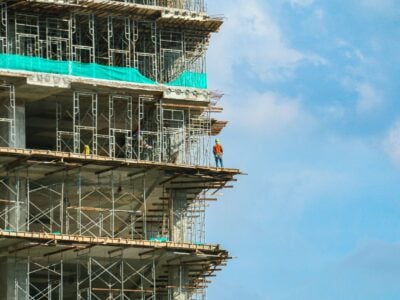
For example, if you fell from a scaffold that lacked proper guardrails in violation of OSHA regulations, that violation doesn’t give you a claim against OSHA or a special “OSHA lawsuit.” But it does provide concrete evidence that the property owner, general contractor, or scaffold provider failed to meet the applicable standard of care. Your attorney can point to the specific OSHA regulation, explain how it was violated, and argue that this violation demonstrates negligence or a Labor Law breach.
What Types of OSHA Violations Come Up in Injury Cases?
Certain OSHA violations appear repeatedly in construction accident and workplace injury cases. Recognizing these common safety failures can help you understand whether the conditions that led to your accident might support a legal claim.
Missing or inadequate fall protection represents one of the most frequent and serious OSHA violations. When workers are performing tasks at elevation without proper guardrails, safety nets, or personal fall arrest systems, they face substantial risk of life-changing injuries. In New York, these situations often trigger Labor Law Section 240(a) claims, with OSHA standards providing additional evidence of what proper fall protection should have looked like.
Defective or improperly used scaffolding creates another common category of OSHA-related accidents. Regulations specify requirements for scaffold construction, weight capacity, access points, and guardrails. When these standards are ignored and someone falls or gets struck by falling materials, the OSHA violations help demonstrate that the accident was preventable.
Ladder safety violations frequently contribute to construction injuries. OSHA sets clear rules about ladder angles, tie-offs, load capacity, and proper use. A fall from an improperly secured ladder can result in broken bones, spinal injuries, or traumatic brain damage. The existence of an OSHA violation for improper ladder use strengthens the argument that someone’s carelessness caused your injuries.
Trench and excavation hazards present extreme dangers when safety protocols aren’t followed. OSHA requires protective systems like shoring, shielding, or sloping for trenches deeper than five feet. Cave-ins can bury workers in seconds, causing suffocation or crushing injuries. Documented OSHA violations in these situations provide strong evidence that mandatory safety measures were ignored.
Failure to provide required personal protective equipment also appears in many injury cases. Whether it involves missing hard hats in areas with overhead hazards, lack of safety harnesses where fall risks exist, or failure to provide respiratory protection around hazardous substances, these violations show that basic workplace safety obligations were not met.
Does an OSHA Citation Automatically Prove Your Case?
It’s important to understand that an OSHA citation, while valuable evidence, doesn’t automatically guarantee that you’ll win your lawsuit. Courts treat OSHA violations as one factor in determining whether someone was negligent or violated a duty of care, not as automatic proof of legal liability.
The practical reason for this approach is that OSHA regulations and civil liability operate under different legal frameworks. An OSHA citation might be issued for technical violations that didn’t actually cause an injury, or the violation might involve safety rules that weren’t specifically designed to prevent your type of accident. Courts want to ensure that civil liability is based on actual negligence and causation, not just the existence of a citation.
That said, OSHA violations carry significant weight in personal injury cases. When you can show that defendants violated specific safety regulations designed to prevent the exact type of accident that injured you, judges and juries tend to find that evidence highly persuasive. The violation demonstrates that recognized safety standards existed, that the defendants knew or should have known about those standards, and that they chose to ignore them.
How OSHA Violations Strengthen Your Legal Case
Even though OSHA violations don’t create standalone lawsuits, they provide several strategic advantages when you’re pursuing compensation through state law claims.
First, OSHA regulations establish clear, objective standards for workplace safety. Rather than arguing in the abstract about what a “reasonably safe” worksite should look like, your attorney can point to specific federal regulations that spell out exactly what precautions should have been taken. This reduces ambiguity and makes it harder for defendants to claim they didn’t know better or that industry standards were unclear.
Second, OSHA violations often come with documentation that supports your case. When OSHA investigates an accident, inspectors take photographs, interview witnesses, measure distances and conditions, and compile detailed reports. This investigation happens independently of your lawsuit, meaning the findings carry extra credibility. Defense attorneys have a harder time disputing OSHA’s factual findings than they do challenging evidence gathered solely by your legal team.
Third, OSHA standards help your expert witnesses explain to judges and juries what went wrong. Construction safety experts, engineers, and industry professionals can testify about how the defendants’ conduct fell below acceptable standards by referencing specific OSHA regulations. This testimony becomes more concrete and understandable than vague assertions about “unsafe practices.”
Finally, OSHA violations can demonstrate a pattern of disregard for safety. If the same defendant has been cited for similar violations in the past, or if multiple OSHA violations existed at the accident site, this pattern can suggest systemic carelessness rather than an isolated oversight. Evidence of repeated violations can significantly strengthen your case and support arguments for full accountability.
Combining OSHA Evidence with New York Labor Law Claims
The real power of OSHA violations in New York injury cases comes from combining federal safety standards with state Labor Law protections. This dual approach creates multiple avenues for proving liability and recovering compensation.
Labor Law Section 240(a), often called the “Scaffold Law,” provides absolute liability for elevation-related accidents on construction sites. If you were injured in a fall and the statute applies, property owners and general contractors are liable regardless of whether they were personally careless. But OSHA violations strengthen these claims by demonstrating exactly what safety equipment or procedures were missing.
Labor Law Section 241(6) requires construction sites to comply with specific provisions of New York’s Industrial Code. Many Industrial Code provisions mirror or build upon OSHA standards, creating overlapping safety requirements. When defendants violate both OSHA regulations and Industrial Code provisions, your attorney can argue multiple independent bases for liability.
Common law negligence claims benefit from OSHA evidence in different ways. To prove negligence, you need to show that defendants owed you a duty of care, breached that duty, and caused your injuries. OSHA violations help establish breach by demonstrating that defendants failed to comply with recognized safety standards. The existence of detailed regulations also supports the argument that defendants knew, or reasonably should have known, what safety measures were required.
What to Do if You Think OSHA Violations Contributed to Your Accident
If you’ve been injured in an accident where safety violations may have played a role, taking the right steps early can significantly impact your ability to recover compensation.
Report the accident immediately and make sure it’s properly documented. Whether you’re filing a workers’ compensation claim or notifying a site supervisor, creating an official record of what happened preserves important evidence. Include details about the conditions you observed, equipment that was missing or defective, and any safety concerns you raised before the accident.
Seek medical attention right away, even if your injuries seem minor at first. Some serious conditions don’t show symptoms immediately, and gaps in medical treatment can hurt your case later. Follow all treatment recommendations and keep records of every medical appointment, prescription, and expense related to your injuries.
If possible, take photographs of the accident scene, the equipment involved, and the conditions that contributed to your injury. Visual evidence can be invaluable, especially since conditions at accident sites often change quickly once someone gets hurt. If you can’t take photos yourself, ask a coworker or family member to document everything as soon as possible.
Request copies of any incident reports, safety inspection records, or OSHA citations related to the accident. You may not receive all of this information immediately, but making the request creates a record that these documents exist and should be preserved. Your attorney can issue formal requests for documents that employers or property owners are reluctant to share voluntarily.
Consult with a personal injury attorney who has experience handling workplace accident cases in New York. An experienced lawyer can investigate whether OSHA violations occurred, identify all potentially liable parties, and determine which legal theories provide the strongest path to compensation. Many personal injury attorneys offer free initial consultations and work on contingency, meaning you don’t pay unless you recover money.
Why Legal Experience Matters with OSHA-Related Cases
Cases involving workplace safety violations require attorneys who understand both federal OSHA standards and state personal injury law. The intersection of workers’ compensation rules, Labor Law provisions, negligence principles, and regulatory compliance creates legal complexity that demands specific expertise.
Attorneys experienced in this area know how to obtain and interpret OSHA investigation reports, work with safety experts who can explain technical violations to juries, and identify all the parties who might share liability for your accident. They understand which legal theories apply to different types of accidents and how to maximize compensation by pursuing every available claim.
These cases often involve defendants with substantial resources and insurance companies determined to minimize payouts. Having a legal team that knows how to build compelling evidence of safety violations and fight for full compensation makes an enormous difference in case outcomes.
Talk With a New York Personal Injury Lawyer at the Porter Law Group. Free, no-obligation, confidential.
Summing It Up
You cannot sue directly under OSHA, but you can absolutely use OSHA violations as powerful evidence in personal injury lawsuits based on negligence and New York Labor Law. When workplace accidents involve clear safety violations, those violations help demonstrate that someone’s carelessness caused preventable harm.
The key is understanding that OSHA creates safety standards everyone must follow, while state law creates the legal framework for holding negligent parties accountable when those standards are ignored. By combining evidence of OSHA violations with strong legal claims under New York law, injured workers can pursue the compensation they need to cover medical bills, lost income, and the other consequences of serious accidents.
If you’ve been hurt in an accident involving possible safety violations, don’t assume that workers’ compensation is your only option. Third-party negligence claims can provide significantly greater compensation than workers’ comp alone, and OSHA violations can be the evidence that makes those claims successful. Speaking with an experienced attorney about your specific situation is the best way to understand your rights and options moving forward.