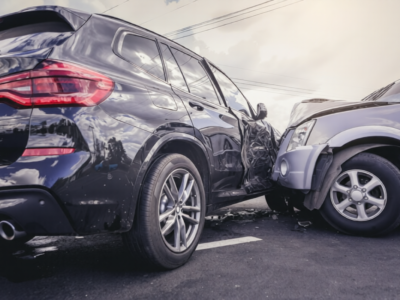



Getting into a car accident is stressful enough without discovering that the person who hit you was driving illegally. Finding out the other driver had a suspended license adds another layer of frustration and concern to an already difficult situation. You might be wondering whether their illegal driving status strengthens your case or makes it easier to recover compensation for your injuries.
The short answer is yes, you can absolutely sue a driver with a suspended license who caused your accident. But the reality is more nuanced than many people expect. While driving with a suspended license is illegal in New York, that violation alone doesn’t automatically make the driver liable for your damages or guarantee you’ll win your case.
Can You Sue Someone Who Hit You While Driving with a Suspended License?
You have every right to pursue legal action against a driver with a suspended license, just as you would against any other driver who caused an accident. The fact that they were breaking the law by driving doesn’t change your ability to seek compensation for your medical bills, lost wages, pain and suffering, and other damages.
However, winning your case still requires proving that the driver was negligent and that their negligence caused your injuries. The suspended license status is just one piece of evidence in your case, not an automatic win. You’ll need to demonstrate that the driver’s actual driving behavior during the accident was careless or reckless, whether that means they were speeding, ran a red light, failed to yield, or were distracted.
Think of it this way: if a driver with a suspended license is sitting at a red light and gets rear-ended by another vehicle, the suspended license doesn’t make them responsible for that accident. The same principle applies when determining fault in any collision.
What New York Law Says About Driving with a Suspended License
New York takes driving with a suspended license seriously. Under Vehicle and Traffic Law Section 511, operating a vehicle with a suspended license is a criminal offense known as “aggravated unlicensed operation.” The severity of the charge depends on the circumstances and the driver’s history.
Third-degree aggravated unlicensed operation is the most basic level. This applies when someone operates a motor vehicle on a public road while knowing or having reason to know their license is suspended, revoked, or withdrawn by the state. It’s a misdemeanor punishable by a fine between $200 and $500, up to 30 days in jail, or both.
Second-degree aggravated unlicensed operation applies when a driver has previous convictions within the past 18 months, has a DWI-related suspension, or has accumulated three or more suspensions on different dates. The penalties jump significantly to fines starting at $500 and jail time ranging from seven days to 180 days.
First-degree aggravated unlicensed operation is the most serious charge and is classified as a Class E felony. This applies when someone with a second-degree offense drives under the influence, has ten or more suspensions, is operating under permanent revocation, or has five or more suspensions for serious violations. Penalties include fines between $500 and $5,000, plus potential prison time.
These criminal penalties exist to discourage people from driving without valid licenses, but they’re separate from your civil case for damages.
Does a Suspended License Automatically Prove the Driver Was Negligent?
Many people assume that because driving with a suspended license is illegal, it must automatically prove negligence in an accident. Unfortunately, New York courts don’t see it that way. This legal principle is called “negligence per se,” and it doesn’t apply to suspended license cases.
Negligence per se occurs when someone violates a safety statute designed to protect the public, and that violation directly leads to an injury. In New York, certain traffic violations can establish automatic negligence. For example, running a red light or failing to stop at a stop sign can qualify as negligence per se because these laws exist specifically to prevent accidents.
However, New York courts have ruled that not having a valid driver’s license doesn’t fall into this category. The reasoning is that license requirements ensure drivers have demonstrated basic competency and knowledge of traffic laws, but the absence of a license doesn’t inherently make someone’s driving dangerous in that specific moment.
This distinction matters because it means the suspended license alone won’t automatically establish fault. It can serve as strong supporting evidence that the driver was irresponsible or had a history of traffic violations, but you still need to prove their actual driving caused the accident.
How Do You Prove Negligence When the Other Driver’s License Was Suspended?
To win your case, you need to establish the four standard elements of negligence regardless of the driver’s license status. This means proving the driver owed you a duty of care, breached that duty through careless behavior, directly caused your injuries through that breach, and that you suffered measurable damages as a result.
The suspended license status becomes most useful as supporting evidence that paints a broader picture of the driver’s irresponsibility. For instance, if the driver ran a red light and caused the collision, the red light violation itself could constitute negligence per se. The fact that they were also driving with a suspended license further reinforces the pattern of disregarding traffic laws and public safety.
Similarly, if the driver was speeding or weaving between lanes, these concrete actions demonstrate negligent driving. The suspended license adds context showing they knew they shouldn’t have been on the road at all. It’s about building a complete picture rather than relying on any single factor.
Documentation becomes critical in these cases. Police reports noting the suspended license, witness statements describing the driver’s behavior, photographs of the accident scene, and your medical records all work together to establish liability. The more evidence you have showing exactly what the driver did wrong during the accident, the stronger your case becomes.
What If You Were Partially at Fault for the Accident?
New York follows what’s called “pure comparative negligence,” which is actually one of the most plaintiff-friendly systems in the country. Under this rule, you can still recover damages even if you were partly responsible for the accident. Your compensation just gets reduced by your percentage of fault.
This means that even if the court determines you were 40% at fault for the accident and the driver with the suspended license was 60% at fault, you can still recover 60% of your total damages. If your damages totaled $100,000, you would receive $60,000. New York even allows recovery when you’re 99% at fault, though you’d only receive 1% of the damages in that scenario.
According to New York Civil Practice Law and Rules 1411, when your own conduct contributed to your injuries, your damage award gets diminished proportionally. This system recognizes that accidents often involve some degree of shared responsibility while still allowing injured parties to seek compensation.
The suspended license status doesn’t change how comparative negligence works, but it might influence how a jury assigns fault percentages. A driver who was operating illegally might be viewed as bearing greater responsibility, all else being equal.
How New York’s No-Fault Insurance System Affects Your Case
New York operates under a no-fault insurance system, which changes how you initially pursue compensation after an accident. This system requires you to file a claim with your own insurance company first, regardless of who caused the accident. Your policy covers up to $50,000 for what’s called “basic economic loss,” which includes medical expenses, lost wages, and other out-of-pocket costs.
The no-fault system exists to reduce litigation and ensure people get prompt medical care after accidents. However, it comes with a significant limitation. Your no-fault insurance doesn’t cover non-economic damages like pain and suffering, emotional distress, or loss of enjoyment of life.
To step outside the no-fault system and file a lawsuit against the at-fault driver for full compensation, you must meet the “serious injury” threshold defined in Insurance Law Section 5102(d). This threshold includes injuries like significant disfigurement, bone fractures, permanent limitation of a body organ or member, significant limitation of a body function or system, or a medically determined injury that prevents you from performing substantially all of your usual daily activities for at least 90 days within the 180 days following the accident.
If your injuries meet this threshold, you can pursue a lawsuit against the driver with the suspended license to recover all your damages, including pain and suffering, beyond what your no-fault coverage provided.
What Happens If the Driver Has No Insurance?
Here’s where things often get complicated with suspended license cases. Drivers with suspended licenses frequently lack valid insurance coverage. In fact, New York law requires the revocation of both vehicle registration and driver’s license for at least one year if someone is involved in a traffic accident while driving without liability insurance.
This connection between suspended licenses and lack of insurance isn’t coincidental. Many license suspensions happen because of insurance lapses. If your liability insurance coverage lapses for 91 days or more, the state automatically suspends your driver’s license. The financial penalties are severe too. The traffic court fine for driving without insurance can reach $1,500, and getting a license reinstated after revocation for driving uninsured requires paying an additional civil penalty of $750 to the DMV.
These financial burdens mean that drivers with suspended licenses often have limited resources to pay damages even if you win your case. This is where your own uninsured motorist coverage becomes critical.
Why Uninsured Motorist Coverage Matters So Much
New York requires all car owners to carry uninsured motorist coverage. The minimum coverage limits are $25,000 per person and $50,000 per accident for bodily injury. This requirement has been in effect since 1977 under Insurance Law Section 3420(f).
Uninsured motorist coverage protects you when you’re hit by a driver who has no liability coverage or who flees the scene. Given how often suspended license cases involve uninsured drivers, this coverage frequently becomes your primary source of compensation.
Your uninsured motorist coverage essentially steps into the shoes of the at-fault driver’s insurance company (if they had one). You file a claim with your own insurance carrier, but you’re seeking compensation for the other driver’s negligence. This protects you from being left without recourse when the at-fault driver lacks financial resources.
Many people carry higher uninsured motorist coverage limits than the minimum, which proves invaluable in serious accident cases. If you purchased $100,000 in uninsured motorist coverage and the at-fault driver has no insurance, you have access to that full amount for your injuries rather than being limited to whatever the uninsured driver could afford to pay.
Why Do People Drive with Suspended Licenses?
Understanding why licenses get suspended in New York provides useful context for these cases. The New York DMV suspends licenses for numerous reasons, and not all of them directly relate to dangerous driving.
Common reasons include unpaid traffic tickets, unpaid New York State tax debts, insurance lapses, DWI convictions, accumulating too many points on a driving record, and failure to pay child support. Some suspensions happen because people can’t afford to pay fines or maintain insurance, while others result from serious violations that demonstrate dangerous behavior.
This matters because it affects how courts and juries might view the case. A driver whose license was suspended for unpaid parking tickets presents differently than one suspended after multiple DWI convictions. While both were breaking the law by driving, the latter suggests a pattern of dangerous behavior that’s more directly relevant to the accident.
Talk With a New York Personal Injury Lawyer at the Porter Law Group. Free, no-obligation, confidential.
Summing It Up
Getting hit by a driver with a suspended license creates a potentially winnable case, but not an automatic one. You still need to prove that the driver’s negligent behavior during the accident caused your injuries. The suspended license serves as powerful supporting evidence of irresponsibility and disregard for the law, but it won’t carry your entire case on its own.
The good news is that New York’s comparative negligence system and mandatory uninsured motorist coverage provide protections even when the at-fault driver lacks resources. You can recover compensation proportional to the other driver’s fault, and your own insurance coverage steps in when the at-fault driver has no insurance.
These cases require careful documentation of both the accident itself and the extent of your injuries. Gathering police reports, medical records, witness statements, and evidence of the driver’s suspended status builds the strongest foundation for your claim. Given the complexity of proving negligence and navigating insurance coverage issues, working with an attorney experienced in New York accident cases can make a significant difference in the outcome.
The suspended license is part of your story, but the real question is whether you can prove the driver’s negligence caused real harm. When you can answer that question with solid evidence, you have a strong case regardless of their license status.