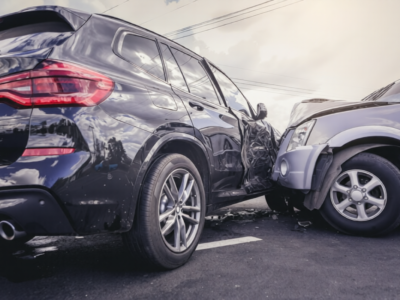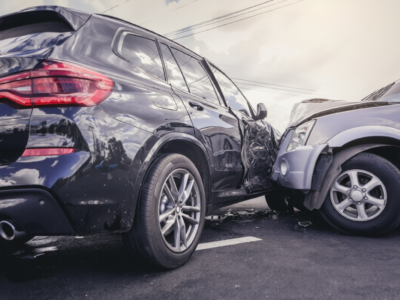


You’re driving through an intersection when suddenly a car swings across traffic lanes right in front of you. There’s no time to react. The impact throws your life into chaos, with injuries to deal with, a damaged vehicle, and mounting bills. When you learn the other driver was making an illegal U-turn, the first question that often comes to mind is whether you have the right to hold them accountable.
The short answer is yes. In New York, you can absolutely pursue compensation when another driver causes an accident by making an illegal U-turn. The traffic violation itself serves as strong evidence that the driver was being careless, and state law allows you to recover damages even if you shared some of the blame. Understanding exactly how these cases work can help you figure out whether you have a valid claim and what steps to take next.
Can You Sue Someone for Making an Illegal U-Turn?
When another driver makes an illegal U-turn and crashes into you, that violation of traffic law becomes the foundation of your legal case. But the illegal turn alone isn’t enough. You need to show that the driver acted carelessly by making that turn and that their carelessness directly led to your injuries and losses.
Think of it this way. Every driver on the road has a responsibility to operate their vehicle safely and follow traffic laws. When someone breaks a traffic rule designed to prevent accidents, like the laws governing where U-turns are allowed, they’ve breached that duty of care. If their illegal U-turn put you in the hospital or left your car totaled, you have grounds to file a personal injury lawsuit against them.
New York law treats traffic violations as evidence of negligence. Courts often view violating a safety statute as proof that the driver wasn’t being reasonably careful. The other driver can try to argue that their illegal turn somehow didn’t cause the crash, but they’re fighting an uphill battle once that violation is established.
The key is connecting all the dots. You’ll need to demonstrate that the other driver owed you a duty to drive safely, that they violated that duty by making an illegal U-turn, that the violation caused the accident, and that you suffered real harm as a result. When these pieces come together, you have a strong case for recovering compensation for medical bills, lost wages, pain and suffering, and property damage.
Where U-Turns Are Actually Illegal in New York
New York’s Vehicle and Traffic Law spells out specific situations where U-turns are prohibited. These restrictions exist because certain locations and conditions make U-turns particularly dangerous. Understanding these rules matters because if the other driver violated one of them, that violation strengthens your case significantly.
The law bans U-turns on curves or near the crest of a hill where your vehicle can’t be seen by other drivers from at least 500 feet away in either direction. This makes sense when you think about it. If an oncoming driver can’t see you in time to slow down or avoid you, a U-turn becomes a recipe for a serious collision.
School zones are another area where U-turns are strictly prohibited. The stretch of road near a school with posted school zone signs is off-limits for U-turns because of the presence of children and the need for extra caution in these areas. Similarly, you can’t make U-turns on limited-access highways like parkways and expressways, where high speeds and restricted entry points make such maneuvers extremely hazardous.
If you’re in New York City, the rules can get even stricter. The city generally prohibits U-turns in business districts and at intersections with traffic lights unless a sign specifically permits them. This reflects the reality of urban driving, where dense traffic, pedestrians, and limited visibility make U-turns in commercial areas particularly risky.
Beyond these statewide rules, local jurisdictions can impose additional restrictions. You’ll often see “No U-Turn” signs at specific intersections or areas where city planners have determined that U-turns pose a danger. When a driver ignores one of these signs and causes a crash, that violation becomes powerful evidence in your case.
How an Illegal U-Turn Proves the Driver Was at Fault
When someone breaks a traffic law and causes an accident, it’s not just a minor infraction you can brush off. In legal terms, violating a safety statute often can constitute what lawyers call “negligence per se.” This concept is crucial to understanding why an illegal U-turn gives you such a strong case.
Negligence per se means the violation itself is treated as proof that the driver was careless. The law was designed to protect people like you from exactly this kind of harm. When a driver breaks that law and injures someone, courts don’t require you to prove separately that the behavior was unreasonable. The unreasonableness is built into the fact that they broke a safety rule in the first place.
Think about what happens when a driver makes a U-turn on a blind curve. They’re forcing other drivers to react to an unexpected obstacle in situations where visibility is already limited. Or consider a U-turn in heavy city traffic at a controlled intersection. Other drivers are proceeding based on the reasonable expectation that everyone will follow the rules of the road. An illegal U-turn violates those expectations and creates danger.
Even in situations where a U-turn might not be technically illegal, a driver can still be held liable if the maneuver was unreasonably dangerous under the circumstances. Courts look at factors like whether the driver had a clear view of oncoming traffic, whether there was enough time and space to complete the turn safely, and whether the driver properly yielded the right of way. A U-turn might be legal in theory but still negligent if executed recklessly in heavy traffic or poor weather conditions.
The burden of proof shifts once that traffic violation is established. Instead of you having to build a case from scratch about why the driver was careless, the other driver has to explain why their illegal turn somehow wasn’t negligent or didn’t cause the crash. That’s a much harder argument for them to make.
What If You Were Partially at Fault for the Accident?
One of the biggest concerns people have after an accident is what happens if they weren’t driving perfectly either. Maybe you were going a few miles over the speed limit. Maybe you were momentarily distracted. Maybe you could have braked sooner. Does any degree of fault on your part destroy your right to compensation? In New York, the answer is no.
New York follows what’s called a “pure comparative negligence” rule, and it’s one of the most favorable systems for accident victims in the country. Under this rule, you can still sue and recover damages even if you were partially responsible for the accident. Your compensation gets reduced by your percentage of fault, but you’re not barred from recovery entirely.
Here’s how it works in practice. Let’s say a jury determines that the other driver was 70 percent at fault for making an illegal U-turn without checking for traffic, but you were 30 percent at fault for not being fully attentive. If your total damages are $100,000, you would recover $70,000. The math is straightforward, and the key point is that you still get compensated for the harm you suffered.
The pure comparative negligence rule means that even if you were mostly at fault, you can still recover something. If you were 90 percent responsible and the other driver 10 percent, you’d get 10 percent of your damages. This rarely happens in illegal U-turn cases because the nature of the violation typically places the bulk of responsibility on the driver who made the illegal turn, but the principle matters. Your case isn’t automatically worthless just because you made a mistake too.
This system recognizes reality. Accidents are often complex events where multiple factors contribute to what happened. The law doesn’t require you to be perfect to deserve compensation. It just adjusts the award to reflect everyone’s level of responsibility. In cases involving illegal U-turns, where one driver has clearly violated a safety law, you typically start from a strong position even if minor issues with your driving come to light.
Who Can You Actually Sue After a U-Turn Accident?
When you decide to pursue compensation, you need to know who you’re holding accountable. The answer isn’t always as simple as just suing the person behind the wheel.
Obviously, the driver who made the illegal U-turn is the primary target. They’re the one whose careless decision caused the crash, and they bear direct responsibility for the harm you suffered. In most cases, this person will be the named defendant in your lawsuit.
But what if the driver doesn’t own the vehicle they were driving? New York law has an important provision here. Under Vehicle and Traffic Law Section 388, the owner of a vehicle is generally liable for accidents caused by anyone driving their car with permission. This matters tremendously in practical terms.
Imagine the driver who hit you is a young person with minimal assets and insurance coverage, but they were driving their parent’s car with permission. You can pursue compensation from the vehicle owner as well. This often means access to additional insurance coverage beyond what the driver personally carries. Vehicle owners are expected to be responsible for how their cars are used, and the law holds them accountable when they let someone else drive.
In reality, most of these cases don’t actually result in individuals writing personal checks for damages. Instead, you’re dealing with insurance companies. The at-fault driver’s liability insurance typically covers the damages up to the policy limits. If the vehicle owner is a separate party with their own insurance, that coverage may stack on top of the driver’s policy, giving you a better chance of full recovery.
Understanding who can be held liable helps your attorney identify all possible sources of compensation. This becomes especially important in serious injury cases where damages exceed standard insurance policy limits. The more parties who bear legal responsibility, the more avenues exist for making you whole after the accident.
What You Need to Prove to Win Your Case
Building a successful lawsuit after an illegal U-turn accident requires proving four essential elements. These aren’t arbitrary legal hurdles. They represent the basic logic of why one person should compensate another after causing harm.
First comes duty. Every driver owes other people on the road a duty to operate their vehicle safely and follow traffic laws. This isn’t controversial. We all understand that driving comes with responsibilities. When you get behind the wheel, you’re agreeing to follow the rules designed to keep everyone safe.
Next is breach. The other driver violated their duty by making an illegal or unreasonably dangerous U-turn. This is where the traffic violation does heavy lifting in your case. The law said don’t make a U-turn there, and they did it anyway. That’s a clear breach of the duty to follow traffic safety laws.
Causation is the third element, and it’s where things can get more complex. You need to show that the illegal U-turn was a substantial factor in causing the accident and your injuries. It’s not enough that the driver broke a law. That violation has to be what actually led to the crash. If you rear-ended them five minutes after they completed their illegal U-turn, for example, the earlier violation isn’t what caused your accident.
Finally, you must prove damages. This means showing that you suffered actual, quantifiable harm. Medical bills and records documenting your injuries. Pay stubs or employer statements proving lost wages. Repair estimates or total loss valuations for your vehicle. Expert testimony about future medical needs or reduced earning capacity if your injuries are severe. Photos and journals documenting how the injuries impacted your daily life and ability to enjoy activities you used to love.
The damages element is often the most extensive part of an injury case. It’s not enough to prove the other driver was at fault. You need to paint a complete picture of how the accident affected your life, both immediately and going forward. This includes not just economic losses like bills and lost income, but also intangible harms like physical pain, emotional distress, and the loss of your ability to do things you enjoyed before the crash.
What Evidence Strengthens Your Illegal U-Turn Case
The quality of evidence in your case can mean the difference between a strong settlement and a fight over every dollar. Certain types of evidence carry particular weight when you’re trying to prove that an illegal U-turn caused your accident.
The police accident report is usually the first and most important document. When officers respond to the scene, they document what they observe, interview witnesses, examine the vehicles and roadway, and often note whether any traffic violations occurred. If the officer cited the other driver for an illegal U-turn, that citation becomes powerful ammunition in your case. It’s an official determination by a neutral third party that a violation occurred.
Documentation of the traffic laws themselves matters too. Your attorney will want copies of the relevant sections of the Vehicle and Traffic Law showing that U-turns were prohibited in that location. If there was a “No U-Turn” sign at the intersection, photographs of that sign help establish that the driver should have known better. These pieces of evidence take the question of whether the turn was illegal from a matter of opinion to a matter of documented fact.
Visual evidence from the scene can be incredibly valuable. Photographs of vehicle damage often tell a story about how the collision occurred. The location and severity of damage to each vehicle can help reconstruct who was where when impact happened. Skid marks on the pavement show where drivers braked and how they tried to avoid the collision. Photos of traffic signs, road conditions, and sight lines help establish the context in which the accident occurred.
Video evidence has become increasingly important. Surveillance cameras from nearby businesses, traffic cameras at intersections, and dashcam footage from your vehicle or others nearby can provide objective documentation of exactly what happened. Unlike witness memories, which can fade or become confused over time, video shows events as they actually unfolded. If you have a dashcam or if the accident occurred in an area with security cameras, getting that footage preserved quickly is critical.
Witness statements add credibility to your version of events. Other drivers who saw the illegal U-turn, passengers in either vehicle, and pedestrians waiting at the corner can provide independent confirmation of what happened. The more witnesses who tell a consistent story that supports your account, the stronger your case becomes.
Medical records create the essential link between the accident and your injuries. Emergency room records, physician notes, diagnostic imaging results, physical therapy documentation all of this evidence shows what injuries you suffered and connects them directly to the collision. The medical records also establish the severity of your injuries and the treatment you required, which forms the basis for calculating your damages.
How Long Do You Have to File a Lawsuit?
Time limits matter enormously in legal cases, and New York imposes strict deadlines for filing lawsuits after car accidents. Miss these deadlines, and you lose your right to sue no matter how strong your case is.
For personal injury claims, where you’re seeking compensation for medical bills, lost wages, pain and suffering, and other harm you suffered, you generally have three years from the date of the accident to file a lawsuit. This might seem like a long time, but it goes by faster than you’d think, especially when you’re dealing with ongoing medical treatment and recovery.
Property damage claims for vehicle repairs or replacement also carry a three-year deadline from the accident date. Even if you’ve settled the personal injury portion of your case, make sure you’ve addressed property damage within the same timeframe.
The rules get more urgent if the accident resulted in a death. Wrongful death lawsuits must be filed within two years from the date of death, not from the date of the accident. This distinction matters in cases where someone survives for weeks or months after the crash before succumbing to their injuries.
These deadlines aren’t suggestions. They’re absolute bars to bringing your case. Courts very rarely make exceptions, even for sympathetic reasons. If you show up to file your lawsuit three years and one day after the accident, the court will dismiss your case without even looking at the merits.
The practical takeaway is that you shouldn’t wait to consult with an attorney. Evidence becomes harder to gather as time passes. Witnesses move away or forget details. Video footage gets recorded over. Your own memories of events may become less clear. Insurance companies know about these deadlines too, and they may drag out negotiations hoping you’ll miss your window to file.
Starting the process early gives your attorney time to investigate properly, gather all necessary evidence, and build the strongest possible case. It also preserves your options. Even if you’re still treating for your injuries or don’t yet know the full extent of your damages, an attorney can take steps to protect your rights while you focus on recovery.
Reach out for a free case evaluation with our experienced New York car accident attorneys.
Summing It Up
Getting hit by a driver making an illegal U-turn can turn your life upside down in seconds. The good news is that New York law gives you strong grounds to pursue compensation when traffic violations like illegal U-turns cause accidents. The violation itself serves as evidence that the driver was being careless, and the state’s pure comparative negligence rule means you can still recover damages even if you weren’t driving perfectly either.
Your case hinges on showing that the illegal U-turn was negligent and that it caused your injuries and losses. This means gathering solid evidence, understanding who bears legal responsibility, and proving both that the violation occurred and that it led directly to the harm you suffered. Police reports, witness statements, photographs, video footage, and thorough medical documentation all play important roles in building that case.
The law gives you three years to file a personal injury lawsuit, but waiting that long puts you at a disadvantage. Evidence fades, memories dim, and the ability to investigate effectively diminishes with time. If another driver’s illegal U-turn caused your accident, consulting with an attorney sooner rather than later helps protect your rights and maximizes your chances of fair compensation.
You didn’t ask for this situation, but you have legal options for dealing with it. Understanding those options is the first step toward getting your life back on track after someone else’s careless decision put you in harm’s way.