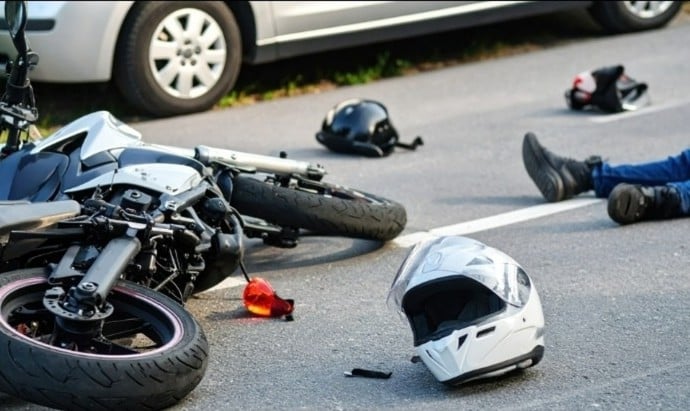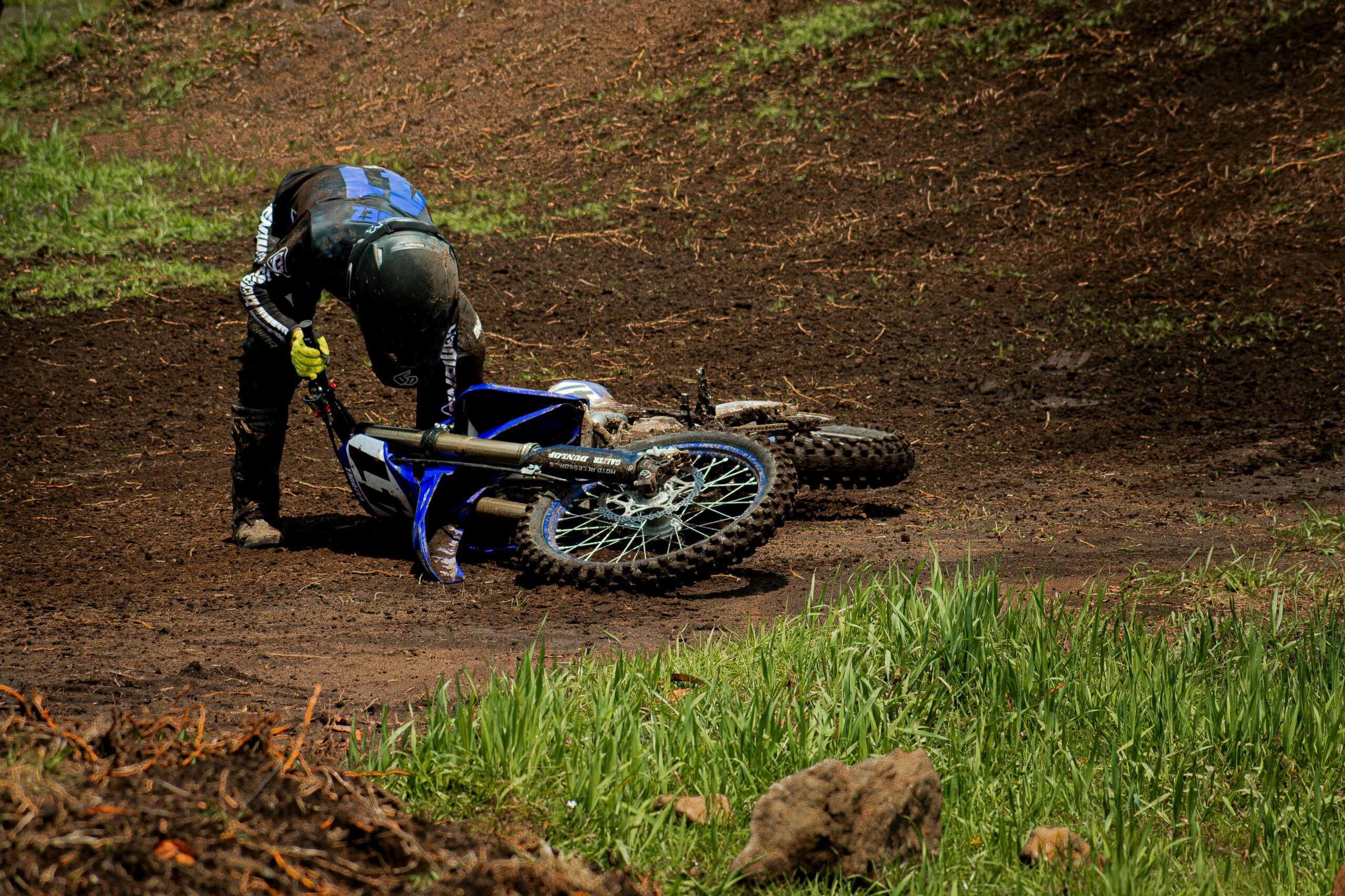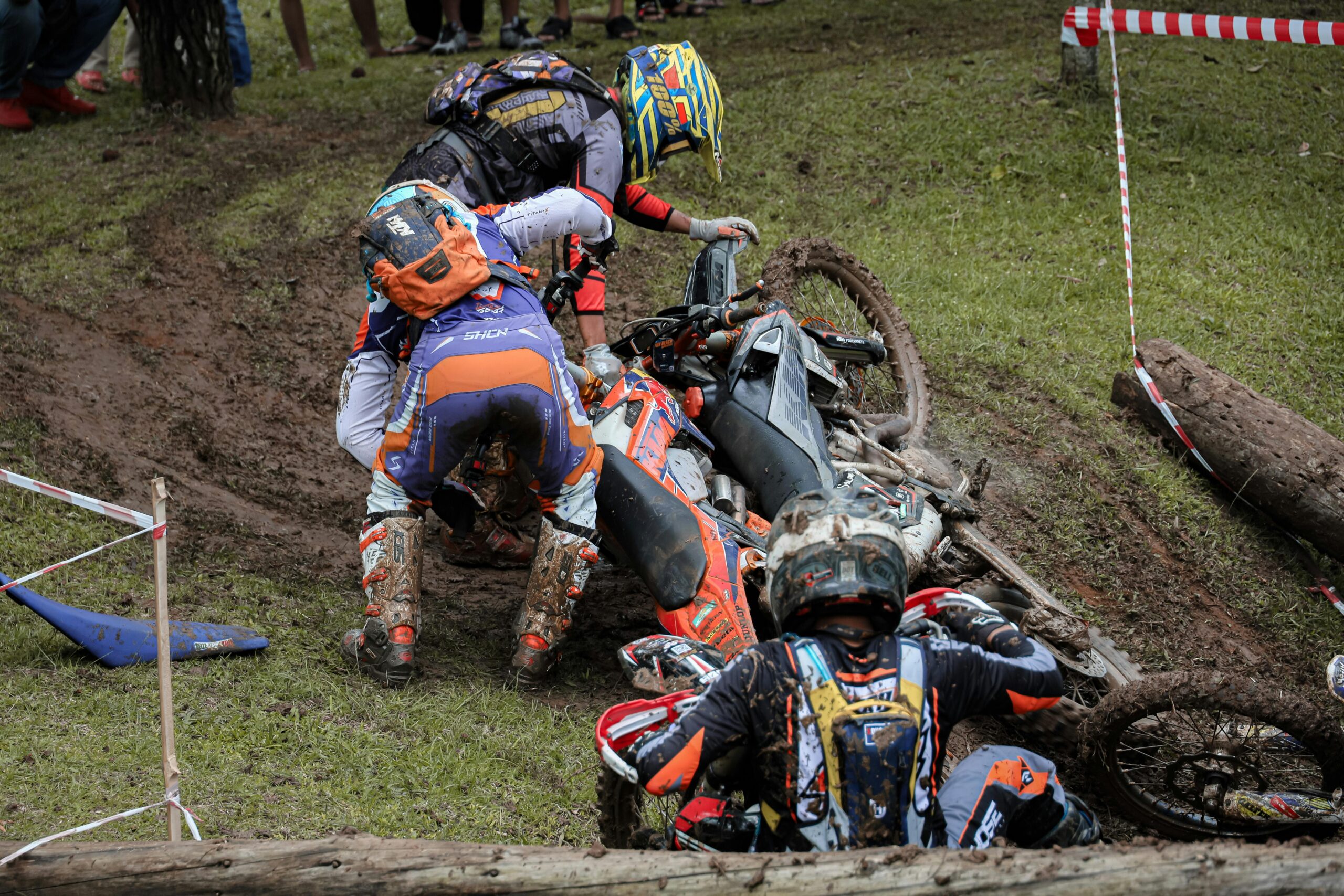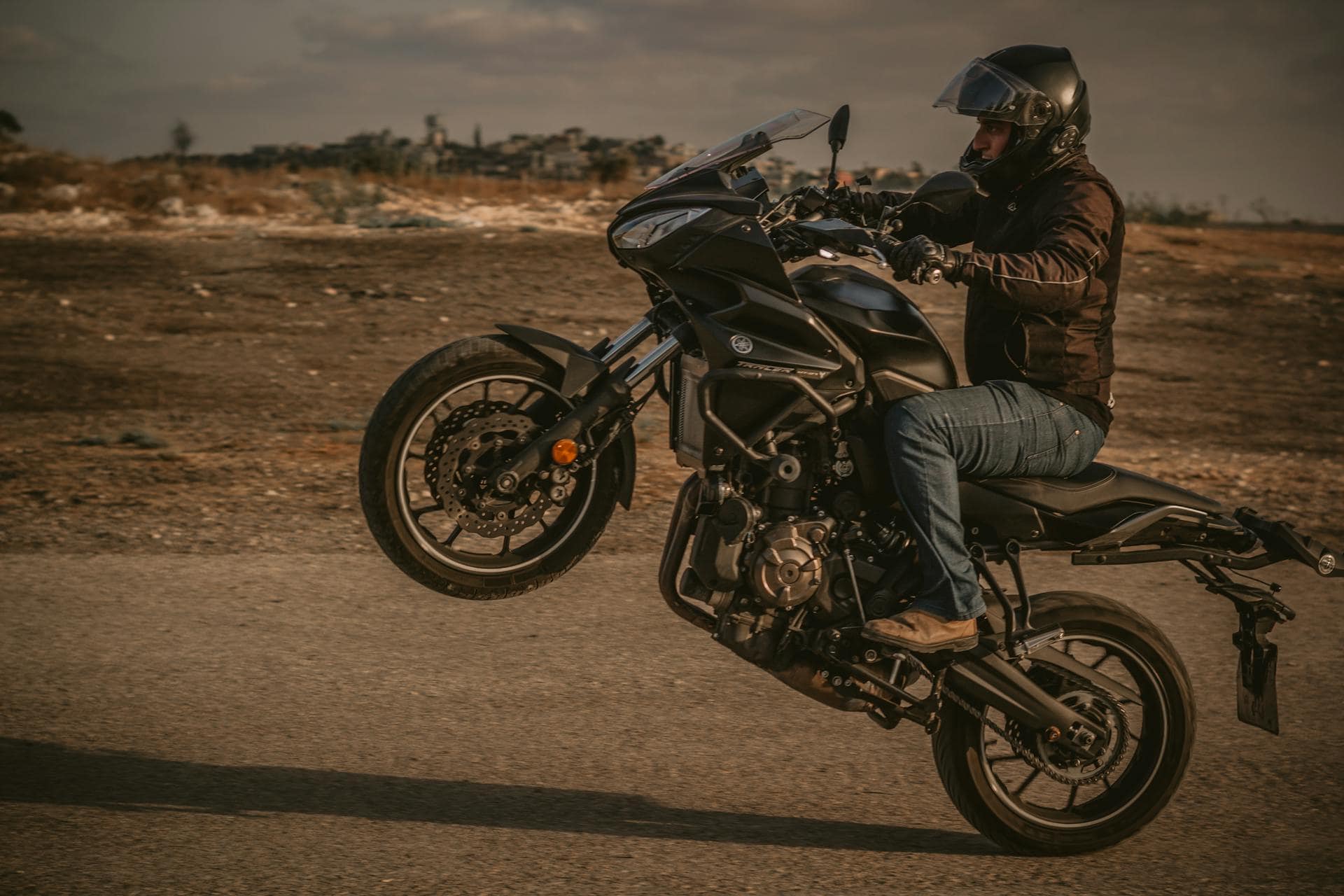


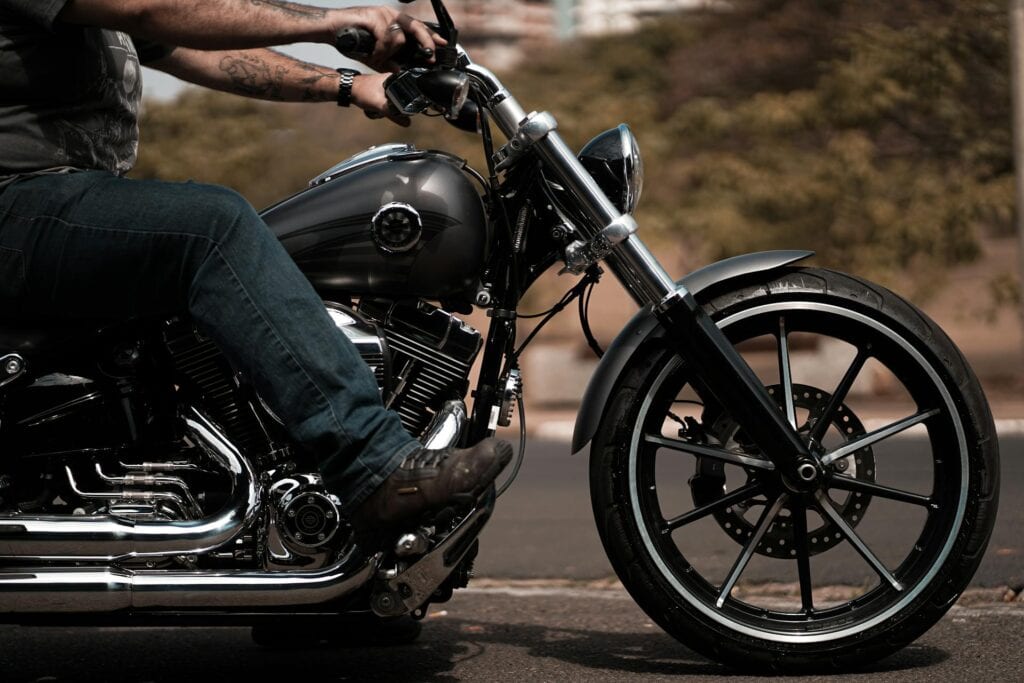

When a motorcycle crashes, the way it goes down makes a significant difference in the injuries a rider sustains. You might have heard emergency room staff or accident investigators refer to “high-side” and “low-side” crashes. These terms describe two fundamentally different types of motorcycle accidents, each with distinct injury patterns and causes. Understanding the difference matters, especially if you’re trying to piece together what happened after a serious crash or determine who was at fault.
Prior results do not guarantee a similar outcome.
How Does a Low-Side Motorcycle Crash Happen?
A low-side crash occurs when a motorcycle’s tires lose traction and the bike falls toward the inside of a turn. Picture a rider leaning into a corner when suddenly the wheels slip out from under them. The motorcycle falls to the ground on the same side the rider is leaning, and both rider and bike typically slide along the pavement together, or the rider separates and slides alongside the motorcycle.
The loss of traction can happen for several reasons. Wet pavement, gravel in the road, oil spills, or even an unexpected pothole can cause the tires to lose their grip. Sometimes a rider brakes too hard while already leaning into a turn. Other times, the road surface itself is defective or poorly maintained.
What distinguishes a low-side crash is how the energy dissipates. The fall happens relatively gradually, with friction against the road surface slowing both the rider and motorcycle. The rider’s trajectory is more predictable, and while the fall height is lower, the slide distance can be considerable. Riders often describe having a moment to realize what’s happening before they hit the ground.
What Happens During a High-Side Motorcycle Crash?
High-side crashes are far more violent. These accidents occur when a sliding rear tire suddenly regains traction, creating a whipping motion that launches the bike upward and outward. The motorcycle essentially flips, catapulting the rider over the handlebars or off the side at significant height and speed.
The physics behind a high-side are brutal. When the rear wheel starts sliding during acceleration or braking in a turn, the bike begins to lose stability. If that wheel suddenly grips the pavement again, all that rotational energy converts into an abrupt angular rebound. The effect resembles a whip cracking, with the rider at the end of that whip.
High-side crashes typically happen in three scenarios. The most common is throttle-induced, where a rider accelerates aggressively, causing the rear wheel to spin, then suddenly hook up with the pavement. Braking-induced high-sides occur when a rider locks the rear brake mid-corner, then releases it or the wheel regains traction unexpectedly. The most disorienting variant is the secondary high-side, where after an initial slide, the bike briefly recovers before flipping in the opposite direction.
Why High-Side Crashes Cause More Severe Injuries
The injury patterns between these two crash types differ dramatically. In a low-side crash, riders typically suffer extensive road rash, fractures from secondary impact with the motorcycle or roadside objects, and injuries from the long slide across pavement. These injuries can certainly be serious, but riders often have a split second to brace themselves or position their bodies.
High-side crashes produce more catastrophic outcomes. The violent ejection means riders are thrown through the air at considerable height before impacting the ground. Multiple impacts are common as riders hit the pavement, then potentially strike the motorcycle, other vehicles, or roadside barriers. The sudden nature of the flip makes it nearly impossible to brace for impact. Head injuries, spinal trauma, internal organ damage, and severe fractures are typical.
Nationally, motorcyclists account for only 3% of registered vehicles but represent 15% of all traffic deaths. In 2023 alone, 6,335 motorcyclists died in crashes across the United States. Approximately 220,000 motorcyclists were treated in emergency departments for crash injuries in 2022. While not all of these involved high-side or low-side crashes specifically, the severity of motorcycle accidents generally reflects the vulnerability riders face regardless of crash type.
What Causes These Different Types of Crashes?
Both high-side and low-side crashes can occur at any speed, though high-sides are more frequent in situations where riders are pushing performance limits. Aggressive cornering, sudden throttle changes mid-turn, and hard braking while leaned over all increase the risk.
Road conditions play a massive role. Poorly maintained pavement with uneven surfaces, potholes, or deteriorating asphalt can cause sudden traction loss. Debris in the roadway, from gravel to spilled cargo, creates hazards that may not be visible until a rider is already committed to a turn. Weather conditions like rain, ice, or even morning dew on certain road surfaces reduce available traction.
Other drivers create significant risks too. When a car cuts off a motorcyclist or forces sudden evasive maneuvers, the rider may need to brake or swerve in ways that destabilize the motorcycle. Left-turn collisions represent a particularly deadly scenario. In 2022, 44% of all fatal two-vehicle crashes between motorcycles and other vehicles occurred when the other vehicle turned left while the motorcycle was going straight, passing, or overtaking. While these don’t always result in high-side or low-side crashes, they often force motorcyclists into emergency maneuvers that lead to loss of control.
Equipment failure can also trigger these crashes. Tire defects, brake malfunctions, or suspension problems may cause unexpected loss of traction or control. Manufacturing defects in motorcycle components have led to numerous crashes where riders had no warning before their bike became unstable.
Can Road Defects Lead to Motorcycle Crashes?
Absolutely. Municipalities and highway authorities have a responsibility to maintain roads in reasonably safe condition. When they fail to repair potholes, fix uneven pavement, clear debris, or address drainage problems that leave standing water, they create conditions that can cause both high-side and low-side crashes.
New York law recognizes that governmental entities can be held liable for dangerous road conditions under certain circumstances. However, these cases involve specific notice requirements and shorter timeframes for filing claims. If a road defect contributed to your crash, documenting the condition immediately becomes critical. Photographs, witness statements, and any prior complaints about that road section can support a claim.
What About Crashes Caused by Other Drivers?
When another driver’s negligence causes a motorcyclist to crash, that driver can be held liable even if they never made physical contact with the motorcycle. A car that suddenly changes lanes, forces a rider to brake hard mid-corner, or turns left across a motorcycle’s path may trigger the chain of events leading to a high-side or low-side crash.
New York follows a comparative negligence system, meaning fault can be apportioned among multiple parties. Even if a rider’s actions contributed partially to the crash, they may still recover damages reduced by their percentage of fault. This matters particularly in motorcycle cases where insurance companies and defense attorneys often try to blame the rider for going too fast or not reacting appropriately, even when another driver created the dangerous situation.
How Helmet Use Affects Injury Outcomes
New York requires all motorcyclists to wear helmets that meet federal safety standards. This universal helmet law exists because the data is overwhelming. Helmets dramatically reduce the risk of death and traumatic brain injury in motorcycle crashes.
In high-side crashes especially, where riders are ejected and strike the ground head-first from significant height, helmets can mean the difference between a survivable injury and a fatality. Even in lower-speed low-side crashes, the helmet protects against head impact with the pavement or other objects during the slide.
Beyond the legal requirement, helmet use affects personal injury claims. While not wearing a helmet doesn’t automatically bar recovery, it can impact damage awards if the defense successfully argues that head injuries would have been prevented or reduced with proper helmet use.
What Evidence Matters After a High-Side or Low-Side Crash?
The crash scene tells a story. Skid marks, gouge marks in the pavement, debris patterns, and the final resting positions of the motorcycle and rider all provide clues about what type of crash occurred and what caused it. In high-side crashes, you’ll often see evidence of the bike’s violent rotation, impact marks at different locations, and a significant distance between where the slide began and where the rider came to rest. Low-side crashes typically show longer, more continuous slide marks.
Motorcycle damage patterns differ too. High-side crashes often result in damage to multiple sides of the bike from the flipping motion and subsequent impacts. Low-side crashes usually show damage concentrated on one side where the bike slid along the pavement.
Witness testimony becomes invaluable, particularly from other motorcyclists who understand the dynamics of these crashes. They can often identify whether a crash was a high-side or low-side and what likely triggered it based on the rider’s position, the bike’s behavior, and the sequence of events.
Medical records document injury patterns consistent with each crash type. Emergency room physicians, trauma surgeons, and orthopedic specialists can often tell from injury locations and types how a crash likely occurred. This medical evidence can corroborate or contradict other accounts of the accident.
Why the Crash Type Matters for Your Legal Case
Understanding whether a crash was a high-side or low-side helps establish causation. If road debris caused a low-side crash, that points toward potential liability for whoever was responsible for that debris or for maintaining the roadway. If a car’s sudden lane change forced a rider into emergency braking that triggered a high-side crash, that establishes the other driver’s negligence as the proximate cause.
The crash type also helps explain injury severity. Insurance adjusters sometimes question why a motorcycle crash at a certain speed caused such serious injuries. Explaining the mechanics of a high-side crash and the violent ejection involved helps justify the extent of medical treatment, ongoing care needs, and the overall value of the claim.
Expert witnesses, including accident reconstructionists and motorcycle safety experts, can analyze the evidence and explain to a jury exactly how the crash occurred. They can demonstrate that the rider’s actions were reasonable given the circumstances and that the other party’s negligence set the crash in motion.
What Compensation Can You Recover After a Motorcycle Crash?
Medical expenses include emergency treatment, hospitalization, surgeries, rehabilitation, ongoing care, and future medical needs. Many motorcycle crash victims face years of treatment, multiple surgeries, and permanent limitations.
Lost wages cover time off work during recovery, but also lost earning capacity if injuries prevent you from returning to your previous occupation. Many riders suffer injuries that end careers or require significant job modifications.
Pain and suffering damages account for the physical pain, emotional trauma, and reduced quality of life resulting from the crash. High-side crashes with catastrophic injuries often justify substantial pain and suffering awards given the severity and permanence of the harm.
Property damage includes the motorcycle itself, riding gear, and any other personal property damaged in the crash. Quality riding gear is expensive, and it’s often destroyed in a serious crash even as it protects the rider from worse injuries.
It is important to know that motorcycle riders are exempt from the no-fault system in New York. This means that while you may not immediately recover compensation from an insurance company for a motorcycle accident the same way you would in a car accident, you can also immediately sue for damages without necessarily proving that your injury falls under the serious injury threshold.
Talk to our experienced motorcycle accident lawyers and know all your legal options for recovery in a free, no-obligation consultation.
Summing It Up
High-side and low-side crashes represent two distinct types of motorcycle accidents with different causes and injury patterns. Low-side crashes involve loss of traction and a fall toward the inside of a turn, with the rider and bike sliding along the pavement. High-side crashes occur when a sliding tire suddenly regains grip, violently flipping the motorcycle and ejecting the rider at significant height.
The distinction matters because it helps establish what caused the crash, whether another party’s negligence contributed, and why injuries are as severe as they are. Whether the crash resulted from another driver’s actions, road defects, or equipment failure, understanding the mechanics helps build a stronger case.
If you or someone you care about has been seriously injured in a motorcycle crash, the type of crash is just one piece of a complex legal puzzle. The immediate priority is always medical treatment and recovery, but preserving evidence and understanding your legal options matters too. New York’s statute of limitations gives injured people three years from the date of injury to file a personal injury lawsuit, but waiting that long often means lost evidence and faded memories.
The reality is that motorcycle crashes, whether high-side or low-side, often result in life-changing injuries. The financial impact extends far beyond initial medical bills. Riders face lost income, reduced earning capacity, ongoing treatment needs, and permanent limitations. Insurance companies know this, which is why they often move quickly to offer settlements before injured riders fully understand the extent of their damages.
You don’t have to navigate this alone. Understanding what happened and why matters, both for your recovery and for holding the responsible parties accountable. Fill out our online form for a free consultation and know your options. You can also call 833-PORTER9 or email info@porterlawteam.com to get started.