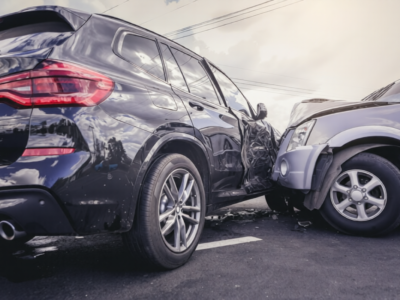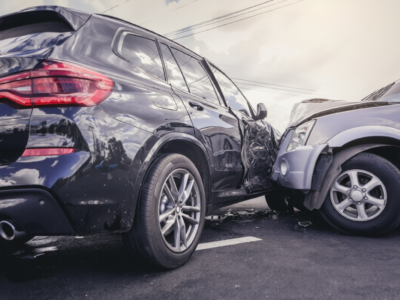




Car accidents can upend your life in an instant. One moment you’re driving to work, picking up your kids, or heading home, and the next you’re dealing with pain, medical appointments, insurance calls, and a car that may not even be drivable. In the middle of all of that, it’s natural to wonder whether you have legal options and what your rights are. This guide is designed to help you understand what determines whether you may have a car accident lawsuit in New York, what the law requires, and what you should be thinking about right now.
Prior results do not guarantee a similar outcome.
A Quick Checklist Before We Go Further
Before diving into the details, run through these questions. They map directly to what attorneys evaluate when someone calls about a car accident case. If you’re checking off most of these boxes, there’s a real possibility you have a viable claim worth discussing.
- Was another driver at least partly responsible for the crash?
- Did you seek medical treatment after the accident?
- Did you receive a diagnosis of a fracture, significant injury, or lasting physical limitation?
- Were you unable to perform your normal daily activities for a significant period of time?
- Did you file a no-fault insurance claim within 30 days of the accident?
- Do you have documentation of the accident, such as a police report, photos, or witness information?
- Have you lost income or had medical bills that exceed what no-fault insurance covers?
You don’t need to check every single box for a case to exist, but the more of these that apply to your situation, the stronger your position tends to be.
How New York’s No-Fault Insurance System Works
New York is what’s called a “no-fault” state, and this is the first thing that shapes whether and how you can sue after a car accident. Under New York’s no-fault system, your own insurance company pays for your basic medical expenses and a portion of your lost earnings after a crash, regardless of who caused it. Every vehicle owner in the state is required to carry at least $50,000 in this coverage, known as Personal Injury Protection or PIP.
This system was designed to get people compensated quickly without having to prove fault right away. It covers necessary medical treatment, 80% of lost wages up to certain monthly limits, and some additional expenses like transportation to medical appointments. However, it does not cover pain and suffering, and it has limits. When injuries are serious and costs run high, no-fault coverage often isn’t enough.
There’s also a hard deadline attached to no-fault. You must file your no-fault claim with the appropriate insurance company within 30 days of the accident. Missing that window can result in a denial of benefits, and there are very few exceptions. Even if you’re still figuring out the extent of your injuries, that clock is already running.
When Can You Actually Sue After a Car Accident in New York?
This is the question at the heart of it all. Because New York has a no-fault system, you can’t automatically sue the other driver just because they caused the accident. The law requires that your injuries meet a legal standard called the “serious injury” threshold, which is defined under New York Insurance Law Section 5102(d).
Think of it this way: if someone rear-ends you at a red light, you’re shaken up, your neck is sore for a week, and you’re back to normal within a month, New York law says that’s what no-fault is there for. You get your medical bills covered, but you don’t have a personal injury lawsuit for pain and suffering. That’s by design. The threshold exists to prevent the courts from being flooded with minor fender-bender claims.
But if that same crash left you with a herniated disc that limits your ability to lift your children, or a fractured vertebra that required surgery, or a scar across your face that’s permanent, the picture changes entirely. Those are the types of injuries the law recognizes as serious enough to pursue a lawsuit beyond the no-fault system.
What Counts as a “Serious Injury” Under New York Law?
New York’s serious injury threshold includes several specific categories, and understanding them matters because your injury needs to fit into at least one:
- Death;
- Dismemberment;
- Significant disfigurement;
- A fracture;
- Loss of a fetus;
- Permanent loss of use of a body organ, member, function or system;
- Permanent consequential limitation of use of a body organ or member;
- Significant limitation of use of a body function or system.
The 2026 reforms removed a former category, the 90/180-day rule for non-permanent injuries, for lawsuits commenced on or after May 26, 2026. Lawsuits commenced before that date are still evaluated under the prior definition.
The clearest ones are fractures and death. If you broke a bone in the accident, that alone satisfies the threshold. The same goes for dismemberment, loss of a fetus, and significant disfigurement such as permanent scarring that’s visible and meaningful in terms of appearance.
Beyond those, the law covers permanent loss of use of a body part, organ, function, or system, and permanent consequential limitation of use of a body organ or member. These apply when injuries result in lasting, documented physical restrictions. A back injury that permanently limits your range of motion or a shoulder injury that never fully heals would fall under these categories, assuming the limitation is substantiated through medical evidence.
Finally, if your basic economic loss exceeds $50,000, you can also pursue a lawsuit for those additional costs even without meeting the serious injury standard.
What Makes Someone Legally Responsible for a Car Accident?
Assuming your injuries meet the threshold, the other key piece of a car accident lawsuit is proving that the other driver was negligent. Negligence in a legal sense means failing to act with the reasonable care that a responsible driver would exercise.
Every driver on the road has a duty to follow traffic laws, pay attention, and operate their vehicle safely. When a driver breaks that duty, and their actions cause an accident that injures someone, that’s the foundation of a negligence claim. Common examples include running a red light, making a left turn without yielding to oncoming traffic, following another car too closely (which is especially relevant in rear-end collisions), speeding, or driving while distracted or impaired.
New York’s Vehicle and Traffic Law spells out these duties in specific statutes, and violations of those statutes can be powerful evidence of negligence in a civil case. A police report that documents a traffic citation, for example, can go a long way in establishing that the other driver was at fault. Causation also matters, meaning you have to show that the driver’s negligence was what actually caused your injuries, not just that they were driving carelessly in general.
What If You Were Partly at Fault for the Crash?
A lot of people assume that if they did something wrong in the accident, they have no case. New York law says otherwise. The state follows a legal rule called comparative fault, codified in CPLR Section 1411, which allows you to recover damages even if you were partially responsible for the crash.
The way it works is proportional. Say a jury determines that the other driver was 70% at fault and you were 30% at fault.
Your total damages are reduced by your share of fault, so you may recover 70% of the total award. That can still be a meaningful amount, even with some fault on your side.
New York now bars recovery in personal injury cases covered by New York’s no-fault motor vehicle law and commenced on or after May 26, 2026, if your fault is greater than the combined fault of the parties you are suing.
This matters for people who wonder whether they can still have a case because they were speeding slightly, didn’t signal, or contributed to the accident in some minor way. The answer is that shared fault doesn’t erase your rights. It just affects the math.
Who Can Be Held Responsible Beyond the Driver?
Most people think about suing the driver who hit them, but in New York, liability can extend further than that depending on the circumstances.
The owner of the vehicle involved in the crash can be held liable if they gave the driver permission to use the car. This applies even if the owner wasn’t present and had nothing to do with how the accident happened.
If the driver was working at the time of the crash, such as making a delivery or operating a company vehicle, the employer can also be brought into the lawsuit under a legal doctrine called respondeat superior. This is particularly relevant in accidents involving commercial vehicles, delivery trucks, or rideshares. Employers with commercial fleets often carry much larger insurance policies, which can be critical when injuries are severe and damages are high.
In some situations, a government entity may also share responsibility, for example when a poorly maintained road, a missing traffic sign, or a defective traffic signal contributed to the accident. Claims against municipalities involve additional procedural requirements and strict deadlines, so these situations require prompt legal attention. For anyone considering their options after a serious crash, consulting with a car accident lawyer in Cortland, New York or elsewhere in the state sooner rather than later can make a real difference in identifying all potential sources of liability.
What Evidence Actually Matters in a Car Accident Case?
The strength of your lawsuit depends heavily on what can be documented and proven. Evidence in car accident cases generally falls into a few categories, and gathering it early is essential because things like skid marks, surveillance footage, and witness memories fade quickly.
The police accident report is often the most important starting document. It records the parties involved, the crash diagram, road and weather conditions at the time, any traffic citations issued, and officer observations about injuries and damage. Even if you feel the report doesn’t fully capture what happened, it’s a foundational piece of evidence.
Medical records are equally critical because they link the crash directly to your injuries and document the severity and duration of treatment. This is what allows an attorney to argue that you meet the serious injury threshold.
Photographs of the vehicles, the scene, road markings, signals, and any visible injuries are valuable, especially if taken at the scene.
Witness contact information is also worth collecting immediately, as bystanders may have a clear account of how the crash happened.
On the financial side, keeping records of lost wages, employer correspondence about missed work, and all medical bills helps establish the economic impact of your injuries. For those whose losses go beyond the $50,000 no-fault limit, this documentation becomes the basis for recovering the excess.
What Kinds of Injuries Most Often Lead to a Viable Lawsuit
The reality is that some injuries are more likely to satisfy New York’s threshold than others, and that’s worth being direct about.
Fractures, herniated discs causing documented nerve compression, traumatic brain injuries, permanent scarring, and spinal cord injuries tend to be the clearest cases. These injuries frequently require significant medical treatment, produce objectively measurable limitations, and are well-documented in imaging studies and physician notes. When there’s a clean paper trail from the accident to the diagnosis to the ongoing treatment, proving both the existence and the severity of the injury becomes more straightforward.
Soft tissue injuries, like strains and sprains that resolve without lasting effects, are harder to build a lawsuit around. That’s not because the pain isn’t real, it’s that New York’s threshold demands objective, medically verified evidence of serious or lasting harm. A case where someone was sore for three weeks and fully recovered is a no-fault situation, not a lawsuit. Where it gets more complicated is in the middle ground, such as a whiplash injury that causes real limitations but requires strong medical documentation to substantiate. In those cases, the quality and consistency of treatment matters a great deal. Working with a car accident lawyer who understands how to navigate New York’s threshold requirements is important for injuries that don’t fall neatly into obvious categories.
How Much Are Car Accident Injuries Actually Worth?
Nationally, the financial toll of car accidents is staggering. The National Safety Council estimated total crash injury costs of about $513.8 billion in 2023 alone, factoring in medical expenses, lost productivity, property damage, and related costs. On an individual level, hospitalized crash victims face an average of around $57,000 in lifetime medical costs from a single injury episode, and that doesn’t account for ongoing disability or reduced earning capacity.
In a New York personal injury lawsuit, damages can include past and future medical expenses, lost wages, diminished earning capacity if your injuries affect your ability to work long-term, and non-economic damages like pain and suffering, emotional distress, and loss of enjoyment of life. When injuries are severe, these figures can be substantial. Understanding the full scope of what you may be entitled to is part of why getting legal guidance matters, because insurance companies do not routinely volunteer the maximum value of a claim.
Talk to our experienced personal injury lawyers and know all your legal options for recovery in a free, no-obligation consultation.
Summing It Up
Determining whether you have a car accident lawsuit in New York comes down to three things working together: someone else’s negligence caused the crash, your injuries meet the serious injury threshold or your economic losses exceed the no-fault limit, and there’s documented evidence connecting those facts. You don’t need a perfect case to have a real one, and shared fault doesn’t disqualify you from recovering damages.
If you were seriously hurt in a crash and are trying to make sense of your options, the best thing you can do is talk to someone who can look at the specifics of your situation. Every accident is different, and the details matter far more than general rules can convey. The Porter Law Group represents people throughout New York in personal injury cases, including car accident claims, and we’re here to help you understand where you stand. Reach out to us today. Fill out our online form for a free consultation and know your options. You can also call 833-PORTER9 or email info@porterlawteam.com to get started.