
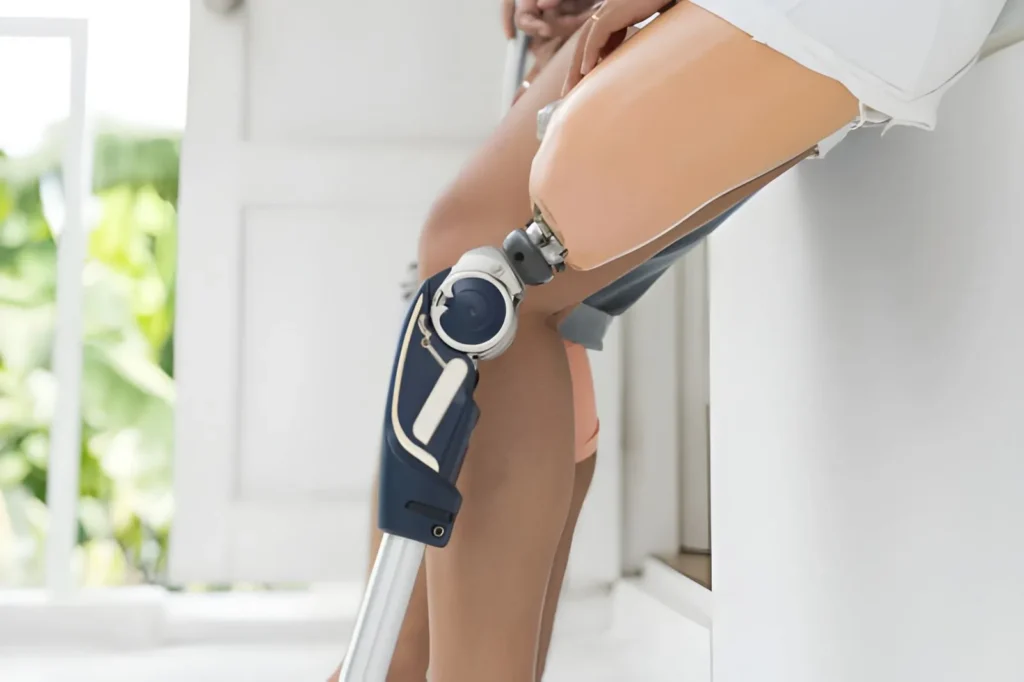

Losing a limb changes everything. The physical reality of an amputation is devastating enough on its own, but when someone else’s carelessness or negligence caused that loss, the situation becomes both a medical crisis and a legal one. Whether you were hurt in a workplace accident, a car crash, or through a medical error that spiraled into something far worse than it should have, the question of whether you have a lawsuit deserves a real answer, not a vague one.
Prior results do not guarantee a similar outcome.
This article is designed to help you understand what an amputation injury lawsuit actually involves, what New York law says about it, and whether your situation might give you grounds to pursue compensation.
Quick Checklist: Signs You May Have an Amputation Injury Claim
Before diving into the details, run through these factors. If most of them apply to your situation, it’s worth having a serious conversation with a lawyer.
- Your amputation resulted from an accident, medical procedure, or dangerous condition that someone else created or failed to prevent
- There’s evidence that another party acted carelessly, recklessly, or outside accepted safety or medical standards
- Medical records connect the amputation to the incident in question
- You’ve experienced lasting consequences, including lost income, long-term care needs, or an inability to return to the work or life you had before
- Your injury occurred within the last three years, or within a shorter window if a public entity or medical malpractice is involved
If those boxes are checked, keep reading. The full picture matters.
What Does an Amputation Injury Lawsuit Actually Mean?
An amputation injury lawsuit is a civil legal claim seeking financial compensation for the loss of a limb or part of a limb caused by someone else’s negligence, a dangerous product, a medical error, or another wrongful act. It’s not a criminal case. It’s a civil one, meaning the goal is compensation rather than punishment.
These cases fall under a few different legal categories depending on how the injury happened. A construction worker who loses a hand to an unguarded piece of machinery might have both a workers’ compensation claim and a third-party negligence suit against the equipment manufacturer. Someone whose foot was amputated after a hospital failed to catch a deteriorating infection in time might have a medical malpractice claim. A person who loses a leg in a serious truck accident might have a straightforward personal injury negligence claim. The category matters because it shapes which deadlines apply, who the defendants are, and what evidence you’ll need.
What all of these cases share is the same core legal framework. You need to show that someone owed you a duty of care, that they breached it, that the breach caused the amputation or made it unavoidable, and that you suffered real damages as a result. That structure is universal across every type of personal injury case in New York, but the severity and permanence of limb loss make the damages side of these cases especially significant.
How Do Amputations Actually Happen in Injury Cases?
Not all amputation cases look the same, and understanding the different contexts helps clarify who might be responsible and what kind of lawsuit is appropriate.
Motor vehicle accidents are one of the leading causes of traumatic limb loss. High-speed collisions, especially those involving large commercial trucks, can cause the kind of crush or shear injuries that lead to on-scene amputations or injuries so severe that surgical amputation becomes necessary. In these cases, negligence claims typically run against the at-fault driver, a trucking company, or sometimes a vehicle manufacturer if a defect contributed.
Workplace and industrial accidents are another major category. Someone operating a punch press without proper safety guards, or a worker whose hand gets pulled into a conveyor belt because a lockout procedure wasn’t followed, or a construction laborer caught in a trench collapse, these scenarios are unfortunately common. In New York, injured workers can file a workers’ compensation claim regardless of fault, but they can also pursue a civil lawsuit against a third party, such as a subcontractor or equipment manufacturer, if that party’s negligence contributed to the injury.
Medical malpractice leading to amputation happens more often than most people realize. A doctor who misses the early signs of peripheral vascular disease, a surgical team that fails to manage a post-operative infection, a hospital that doesn’t respond appropriately to a patient developing sepsis, all of these failures can turn a treatable condition into an irreversible one. When amputation was avoidable had the standard of care been followed, a malpractice claim becomes a real possibility.
Defective products are also a source of amputation injuries. Power tools, industrial machinery, vehicles, and even consumer products that malfunction or lack adequate warnings can cause catastrophic harm. Product liability law allows injured people to pursue manufacturers, distributors, and retailers when a design defect, manufacturing defect, or failure to warn contributed to the injury.
Premises liability covers situations where someone is injured on property that was negligently maintained. An escalator malfunction, an unmarked hazard in a manufacturing facility, a defective gate or door mechanism, these can all produce the kind of severe injuries that result in amputation.
What Are New York’s Time Limits for Filing an Amputation Lawsuit?
Time limits in personal injury law are non-negotiable. Miss the deadline, and even the strongest case can be permanently barred.
For most personal injury negligence cases in New York, including traumatic amputation claims, the statute of limitations is three years from the date of the accident under CPLR Section 214. That sounds like plenty of time, but in practice, building the medical and legal foundation for a catastrophic injury case takes significant time and resources, so waiting is never advisable.
Medical malpractice cases operate under different and stricter rules. The standard deadline is two years and six months, and it can be measured from the date of the act or omission, the date of last treatment in certain continuing-treatment situations, or a different trigger depending on the facts. These nuances matter enormously.
If a government entity is involved, meaning a public hospital, a city vehicle, or a publicly owned facility, there’s an additional requirement to file a Notice of Claim within 90 days of the incident. Failing to do that can eliminate an otherwise valid case entirely. Consulting an amputation injury attorney early is one of the most important steps you can take, precisely because these deadlines can vary in ways that are easy to miss without legal guidance.
What Makes Amputation Cases “Catastrophic” Under the Law?
New York law doesn’t use the word “catastrophic” as a formal legal term in most civil contexts, but the concept is real. Amputation cases are treated differently from soft tissue injuries or temporary disabilities because the consequences are permanent and far-reaching.
The legal system accounts for this in the way damages are calculated. When someone loses a limb, they don’t just have medical bills from the immediate hospitalization. They have decades of future expenses ahead of them. Prosthetics wear out and need to be replaced. Rehabilitation and physical therapy are often ongoing. Homes and vehicles may require significant modifications. Careers may need to change entirely or may become impossible. All of these future costs can be included in a damages claim, and in amputation cases, they add up substantially.
New York’s workers’ compensation system makes this permanence explicit. Under New York Workers’ Compensation Law Section 15, the loss of major limbs is presumed to constitute permanent total disability. The law assigns specific schedule-of-loss calculations for different types of limb loss, and the state’s Workers’ Compensation Board has detailed impairment guidelines that doctors use to evaluate and rate permanent amputation injuries. That framework exists because New York law formally recognizes that losing a limb is not something people simply recover from.
Research supports why the law treats these injuries with such seriousness. A 2024 study on major upper extremity amputations described the loss of an upper limb as a “severely disabling condition” with major effects on function, independence, and employment. These injuries disproportionately affect working-age adults and carry significant economic burden both for individuals and the broader healthcare system. About 2.3 million Americans are currently living with limb loss, a number that’s higher than older estimates suggested.
What Damages Can You Recover in an Amputation Injury Lawsuit?
Damages in these cases break into two main categories: economic and non-economic.
Economic damages are the measurable financial losses. Emergency surgery, hospitalization, follow-up care, stump revision surgeries, infection management, and long-term medical monitoring are all included. Prosthetic limbs, which vary enormously in cost and technology, along with wheelchairs, adaptive equipment, and home modifications, all factor in. So does lost income from the time you couldn’t work, and lost future earning capacity if you can no longer perform the work you did before the injury. Vocational rehabilitation costs can also be part of the claim.
Non-economic damages are harder to put a number on but no less real. Phantom limb pain is a documented and often severe condition that many amputees live with long-term. Psychological consequences including depression, anxiety, PTSD, and significant body image disruption are common after limb loss. The loss of the ability to participate in activities you loved, to parent in the way you did before, to maintain relationships and independence, these are compensable losses in New York courts. Disfigurement, which the law treats as a category of its own, is also considered.
New York follows a comparative negligence standard, and in personal injury cases covered by New York’s no-fault motor vehicle law and commenced on or after May 26, 2026, CPLR 1411(b) bars recovery if your fault is greater than the combined fault of the parties you are suing. That means even if you were partially at fault for the accident, say, you weren’t wearing required protective equipment, you may still recover damages. Your recovery would be reduced by your percentage of fault.
An amputation injury attorney can help evaluate how comparative negligence might affect your specific claim.
What Evidence Do You Need to Build a Strong Case?
Evidence in amputation cases typically comes from several directions, and gathering it early protects the strength of your claim.
Medical records are foundational. Emergency room documentation, surgical notes, imaging, operative reports, prosthetic evaluations, and long-term treatment records all work together to establish what happened, how severe the injury is, and what future care will look like. The more complete and well-documented your medical history is, the stronger your damages picture becomes.
Documentation of the incident itself is equally important. Police reports, OSHA investigation records, workplace incident logs, photographs of machinery or the accident scene, surveillance footage, and witness statements all help establish how the injury occurred and who bears responsibility. In product liability cases, the defective equipment itself may need to be preserved and examined by engineering experts before it’s altered, repaired, or discarded.
Expert testimony plays a central role in amputation cases. Surgeons, rehabilitation specialists, prosthetists, vocational experts, and economic experts all contribute to building out the full picture of what the injury cost and will continue to cost. In industrial or product liability cases, human factors or engineering experts may be needed to establish that a safety standard was violated or a design was defective.
Employment and wage records support the lost income and lost earning capacity components of the claim. Pay stubs, tax returns, job descriptions, and vocational assessments give experts the raw material they need to project future economic harm.
Can You Sue If You Were Injured at Work?
Workers’ compensation and personal injury lawsuits are separate systems, and they can sometimes run in parallel.
If you were injured at work and lost a limb, you’re almost certainly entitled to workers’ compensation benefits regardless of fault. New York’s schedule award system specifically accounts for limb loss and assigns benefits based on the type and degree of amputation. Workers’ compensation benefits cover medical costs and a portion of lost wages, but they don’t include pain and suffering.
A civil lawsuit can sometimes be pursued alongside a workers’ compensation claim if a third party, someone other than your employer, contributed to the injury. A coworker’s negligence typically doesn’t give rise to a separate lawsuit, but a subcontractor, equipment manufacturer, or property owner might. These third-party claims allow injured workers to pursue the full range of damages that workers’ compensation doesn’t cover. Whether this avenue is available depends on the specifics of how the accident happened, which is exactly the kind of analysis an experienced attorney can work through with you.
Get a free consultation to discuss your amputation injury, your legal options, and the compensation you may be entitled to pursue.
Summing It Up
Amputation is one of the most serious and life-altering injuries a person can experience. When it happens because of someone else’s negligence, a defective product, or a medical system that failed you, the law provides a path to hold those parties accountable and to recover compensation that reflects the true scope of what was lost.
Whether your case involves a traumatic accident, a workplace incident, or a medical situation that went wrong, the first step is understanding your options. Every detail matters, from how the injury happened to when the clock started running on your legal deadline. If you think you may have a claim, speaking with a qualified attorney sooner rather than later gives you the best chance of protecting your rights and building the strongest possible case.
This article is for general informational purposes only and does not constitute legal advice. Every case is different, and the information here may not apply to your specific situation. Please consult a licensed New York attorney to discuss the facts of your case.