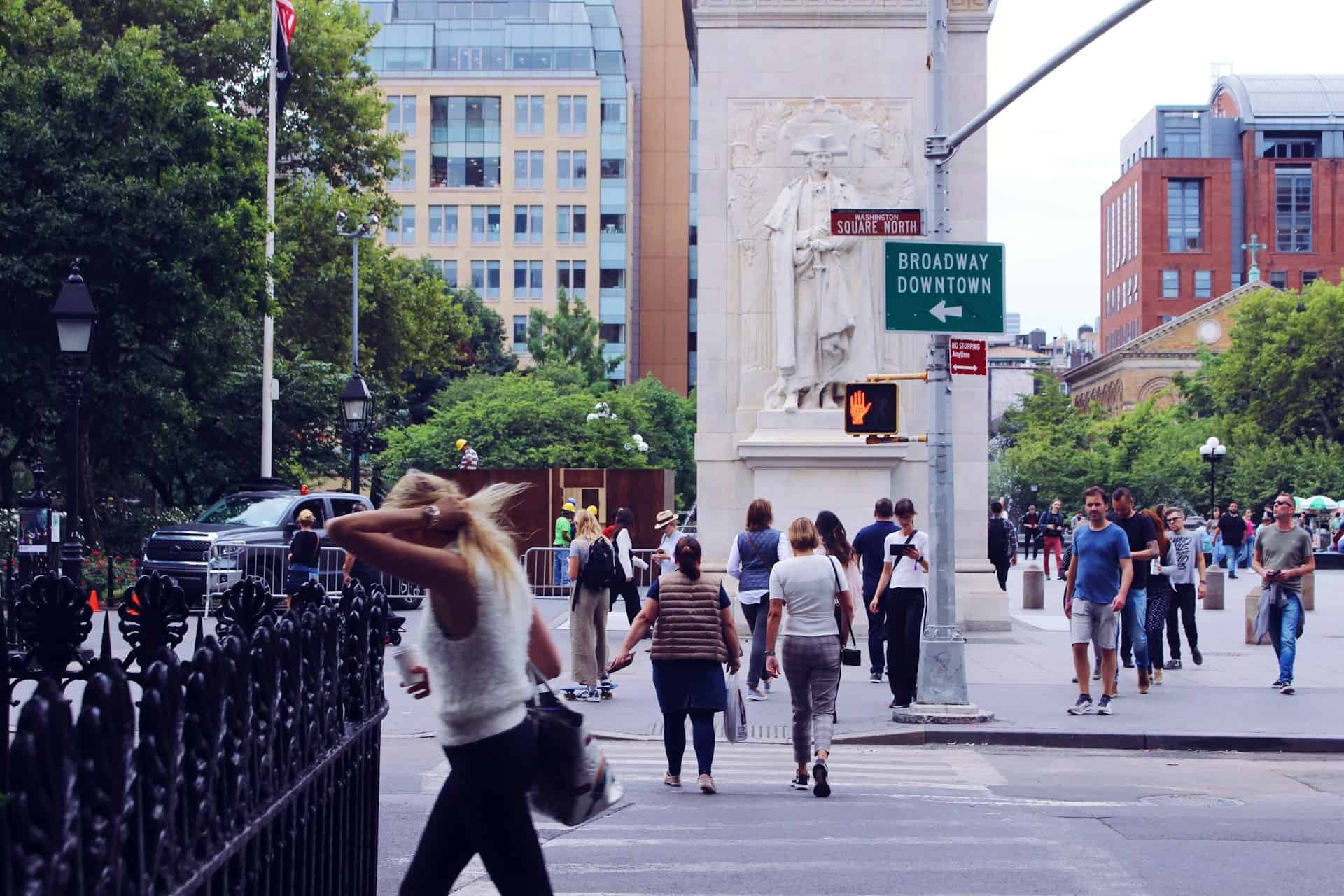



Walk through any New York neighborhood and you’ll cross dozens of intersections where no painted lines mark your path. Yet legally, you’re still in a crosswalk. These invisible but legally enforceable zones cause confusion for drivers and pedestrians alike, and that confusion often leads to serious accidents.
Understanding unmarked crosswalks matters because they determine who has the right of way, who’s at fault after a collision, and whether you can recover compensation for injuries. The absence of paint doesn’t mean the absence of rules. In fact, New York law treats these invisible boundaries with the same legal weight as their brightly striped counterparts.
Prior results do not guarantee a similar outcome.
How New York Law Defines Unmarked Crosswalks
An unmarked crosswalk exists at virtually every intersection where sidewalks meet the roadway, even without a single painted line. Under New York Vehicle and Traffic Law, these areas form when sidewalks on opposite sides of a street would naturally connect if extended across the roadway. The law recognizes these zones as official pedestrian crossing areas where people have the right of way over vehicles.
This isn’t an obscure legal technicality. The definition creates real obligations for drivers and real protections for pedestrians. When you step off a curb at an intersection to cross the street, you’re entering a legally recognized crosswalk whether paint marks it or not. Drivers approaching that intersection must yield to you, just as they would at a crosswalk marked with zebra stripes and flashing lights.
The framework applies throughout the state, from Manhattan intersections to suburban street corners in Buffalo to rural crossroads upstate. If two roads intersect and sidewalks approach that intersection, unmarked crosswalks exist in all four directions where those sidewalks would logically extend.
Do Pedestrians Always Have the Right of Way in Unmarked Crosswalks?
Pedestrians crossing within unmarked crosswalks at intersections generally have the right of way over vehicles. This means drivers must stop and allow people to cross safely when they’re within these zones. The rule applies whether the pedestrian has already stepped into the roadway or is clearly preparing to cross.
But this protection has limits. Pedestrians lose their right of way when they cross outside these designated areas. Step into the street mid-block, away from any intersection, and you’re no longer in a crosswalk. At that point, you must yield to vehicles, and crossing there constitutes jaywalking in most situations.
The distinction matters enormously after an accident. A pedestrian struck while crossing within an unmarked crosswalk at an intersection has strong legal footing to pursue compensation. That same person hit while crossing mid-block faces arguments that they violated traffic laws and contributed to their own injuries.
Traffic signals add another layer. At intersections with traffic lights or walk signals, pedestrians must obey those signals even within unmarked crosswalks. Crossing against a red light or “Don’t Walk” signal means you’ve violated the rules, which can significantly impact any injury claim that follows.
Drivers exiting driveways, parking lots, or alleys face particularly strict obligations. They must stop completely before crossing sidewalks or entering unmarked crosswalk zones, yielding to any pedestrians in those areas. Many pedestrian accidents happen precisely at these transition points where drivers fail to recognize their duty to stop.
What Makes Unmarked Crosswalks Different From Marked Ones?
The legal rights pedestrians hold in marked and unmarked crosswalks are essentially identical. Both types give pedestrians the right of way over vehicles at intersections. Both require drivers to yield. Both factor into liability determinations after accidents. The law doesn’t create a hierarchy where marked crosswalks deserve more respect than unmarked ones.
The practical differences, however, are significant. Marked crosswalks announce themselves with painted lines, textured pavement, or signage. Drivers see them coming. Pedestrians know exactly where to cross. Everyone operates with clear visual cues about where the crossing zone begins and ends.
Unmarked crosswalks depend entirely on understanding and awareness. Drivers must recognize that an intersection creates crosswalks even without markings. Pedestrians must understand their rights extend across the roadway even though nothing on the pavement says so. This knowledge gap creates danger.
Studies consistently show that marked crosswalks, especially those with enhanced visibility features, reduce pedestrian accidents. The visibility factor matters: drivers more readily stop for pedestrians they can clearly see entering a well-marked crossing zone. In unmarked crosswalks, pedestrians often step into roadways where drivers aren’t expecting them or don’t recognize the legal crossing area.
From a liability perspective, unmarked crosswalks introduce more room for dispute. After an accident in a marked crosswalk, there’s little question about where the crosswalk was located. After an accident in an unmarked crosswalk, defendants might argue the pedestrian wasn’t actually within the crosswalk boundaries, or that the driver couldn’t reasonably see the pedestrian in an area without markings.
Property owners face different maintenance obligations, too. A faded marked crosswalk in a parking lot can create liability for the property owner who failed to maintain clear markings. Unmarked crosswalks don’t fade because they were never painted, but their invisible nature means property owners must still ensure drivers understand where pedestrians have the right of way.
What Happens When Someone Gets Hit in an Unmarked Crosswalk?
Accidents in unmarked crosswalks raise immediate questions about fault. Generally, if a pedestrian was crossing within the unmarked crosswalk at an intersection and had the right of way, the driver who struck them bears primary responsibility. The driver’s duty to yield doesn’t disappear just because paint wasn’t there to remind them.
But New York applies comparative negligence to these cases, which means fault gets divided based on each party’s actions. Under CPLR Section 1411, your compensation is reduced by your percentage of fault. If you were 20% responsible for the accident, you can still recover 80% of your damages.
This rule becomes crucial in unmarked crosswalk cases because there’s often more room to argue about pedestrian behavior. Was the pedestrian clearly visible? Were they crossing diagonally instead of straight across? Were they distracted by their phone? Did they suddenly dart into traffic? These factors can all reduce a pedestrian’s recovery even if they were technically in an unmarked crosswalk.
Common scenarios that lead to disputed liability include pedestrians crossing at dusk without reflective clothing, people stepping into traffic without looking, or individuals crossing while distracted. None of these behaviors eliminate the driver’s duty to yield, but they can reduce the pedestrian’s recovery percentage.
Drivers face their own liability risks. Failing to yield to a pedestrian in an unmarked crosswalk can result in traffic tickets, civil liability for injuries, and increased insurance rates. The violation is particularly clear when drivers emerge from parking lots or driveways without stopping, or when they turn at intersections without checking for pedestrians.
Insurance companies often try to minimize payouts in unmarked crosswalk cases by arguing the pedestrian was jaywalking or that the driver couldn’t have seen them. They’ll claim the absence of markings means the crosswalk wasn’t “real” or that pedestrians should only cross at marked locations. These arguments ignore the law, but they’re common enough that injured pedestrians need strong evidence and legal representation to counter them.
How Do Unmarked Crosswalks Work in Parking Lots and Private Property?
The crosswalk concept extends beyond public streets into parking lots, shopping centers, and other private property open to public vehicle traffic. When sidewalks or pedestrian pathways meet driving lanes in these areas, unmarked crosswalks form just as they do on public roads.
Property owners bear responsibility for maintaining reasonably safe conditions in these areas. While they don’t need to paint crosswalk lines everywhere pedestrians might walk, they must ensure that drivers can reasonably anticipate where pedestrians will cross. Inadequate lighting, blocked sightlines, or confusing traffic patterns can all create liability.
The legal obligations remain similar. Drivers must yield to pedestrians in these implied crossing zones. Pedestrians retain the right of way when crossing from one section of a parking lot to another along the natural extension of walkways. But enforcement is often weaker because police rarely patrol private property for traffic violations.
Accidents in parking lot unmarked crosswalks frequently involve vehicles backing out of spaces, drivers rushing through lots without watching for pedestrians, or people walking between parked cars rather than in designated pathways. These cases can involve both driver liability and premises liability claims against property owners who failed to maintain safe conditions.
Can You Get a Ticket for Not Using an Unmarked Crosswalk?
Crossing outside an unmarked crosswalk when one is available can result in a jaywalking ticket. The specific violation and fine depend on local ordinances, but the concept is consistent. If you cross mid-block when an intersection with an unmarked crosswalk is nearby, you’ve likely violated pedestrian crossing laws.
Enforcement varies widely. In Manhattan, police might ticket jaywalkers regularly. In suburban or rural areas, enforcement is often nonexistent. But the existence of the law matters for accident cases even when tickets aren’t commonly issued.
The violation itself isn’t always criminal. Many jurisdictions treat jaywalking as a traffic infraction similar to a parking ticket. You pay a fine, but you don’t get a criminal record. However, the violation becomes critical evidence if you’re later hit by a car while crossing illegally.
Pedestrians sometimes receive tickets even after being struck by vehicles, particularly if police determine the pedestrian was crossing outside a crosswalk and contributed to the accident. This doesn’t prevent injury claims, but it complicates them significantly.
What Evidence Matters After an Unmarked Crosswalk Accident?
Because unmarked crosswalks are invisible, proving exactly where an accident occurred becomes crucial.
Photographs of the intersection showing sidewalk locations, street configurations, and sightlines help establish whether a crosswalk existed and where its boundaries were.
Witness statements carry extra weight in these cases. Someone who saw you step off the curb at the intersection and get hit mid-crossing provides critical testimony that you were in the crosswalk. Without witnesses, cases often devolve into competing claims about exactly where the accident happened.
Traffic camera footage, security camera recordings from nearby businesses, and dashcam videos can all definitively show whether a pedestrian was in an unmarked crosswalk when struck. This objective evidence often determines case outcomes.
Police reports matter, but they’re not always accurate. Officers arriving after an accident must reconstruct what happened based on vehicle positions, debris fields, and statements from people who may be injured, in shock, or motivated to shift blame. An officer’s conclusion about fault isn’t binding in civil cases, but it influences how insurance companies and juries view the accident.
Physical evidence like skid marks, vehicle damage, and injury patterns helps accident reconstruction experts determine speeds, impact points, and sight distances. This technical analysis can prove whether a driver had time to see and stop for a pedestrian in an unmarked crosswalk.
Why Do Unmarked Crosswalk Accidents Happen So Often?
Drivers don’t see markings, so they don’t think about crosswalks. They approach intersections focused on other vehicles, traffic signals, and their intended turns. Pedestrians become afterthoughts until they’re suddenly in the roadway.
Pedestrians often don’t realize they have legal protections in unmarked crosswalks. They hesitate at curbs, unsure whether they’re allowed to cross. Or they step into streets assuming drivers will stop without understanding that their right of way exists only within specific boundaries.
Right turns create particular danger. Drivers turning right at intersections focus on traffic coming from the left while accelerating into their turns. Pedestrians crossing from the right enter the driver’s blind spot at exactly the wrong moment. New York City prohibits right turns on red lights partly to address this danger, but the risk remains when lights are green.
Distraction amplifies every other risk factor. Drivers checking phones, adjusting radios, or talking to passengers don’t notice pedestrians in unmarked crosswalks until impact is unavoidable. Pedestrians staring at phones while crossing don’t see vehicles that aren’t yielding.
Poor lighting conditions make unmarked crosswalks especially dangerous. At dawn, dusk, or night, pedestrians in dark clothing become nearly invisible to drivers who aren’t specifically watching for them. Unlike marked crosswalks that might have enhanced lighting or reflective paint, unmarked crosswalks offer no visual cues in low light.
How Does Fault Get Determined in These Cases?
Determining fault in unmarked crosswalk accidents requires analyzing multiple factors. Courts and insurance companies look at whether the pedestrian was within the crosswalk boundaries, whether they had the right of way, whether the driver should have seen them, and what both parties did to avoid the collision.
The pedestrian’s location at impact matters most. If physical evidence and testimony confirm they were crossing within the unmarked crosswalk at an intersection, they likely had the right of way. If they were crossing mid-block or outside the intersection area, they probably didn’t.
Driver behavior is scrutinized for negligence. Was the driver speeding? Distracted? Impaired? Failing to maintain a proper lookout? Turning without checking for pedestrians? Each of these factors increases driver fault regardless of whether the crosswalk was marked.
Pedestrian behavior factors into comparative negligence calculations. Darting into traffic, crossing against signals, wearing dark clothing at night, or being distracted can all reduce recovery percentages. But these factors rarely eliminate liability entirely unless the pedestrian’s actions were so sudden and unexpected that no reasonable driver could have avoided the collision.
Traffic controls at the intersection matter. If signals were present, whether each party obeyed them becomes critical. A pedestrian crossing with a green light in an unmarked crosswalk has stronger claims than one crossing against the signal.
Visibility and sight distance affect whether drivers reasonably should have seen pedestrians. Parked cars, vegetation, building corners, or other obstructions that blocked the driver’s view can reduce driver fault. But drivers still have a duty to approach intersections at speeds that allow them to stop for hazards they can’t yet see.
What Compensation Can You Recover After Being Hit in an Unmarked Crosswalk?
Pedestrians injured in unmarked crosswalks can pursue compensation for all damages caused by the accident.
Medical expenses form the foundation of most claims, covering emergency treatment, hospitalizations, surgeries, rehabilitation, and ongoing care needs.
Lost wages matter for anyone who missed work due to injuries. This includes both past lost income and future earning capacity if injuries prevent a return to previous employment. Serious pedestrian accidents often result in extended recovery periods or permanent disabilities that affect lifetime earnings.
Pain and suffering compensation addresses the physical pain, emotional distress, and reduced quality of life that injuries cause. New York doesn’t cap these damages in most personal injury cases, allowing juries to award amounts that reflect the true impact of serious injuries.
Permanent injuries like brain damage, spinal cord injuries, amputations, or disfiguring scars warrant additional compensation for permanent impairment and disability. These cases often involve expert testimony about how injuries will affect the victim’s life in the long term.
Property damage claims cover destroyed clothing, damaged phones or other personal items, and any assistive devices damaged in the accident.
The comparative negligence rule directly affects these amounts. If you’re found 30% at fault for the accident, every damage category gets reduced by 30%. A $100,000 verdict becomes a $70,000 recovery. This makes fighting liability arguments crucial to maximizing compensation.
How Long Do You Have to File a Claim?
New York’s statute of limitations gives you three years from the accident date to file a personal injury lawsuit for most pedestrian accidents. Miss this deadline and you lose your right to sue regardless of how strong your case is.
The three-year clock starts on the accident date, not when you discover injuries or complete treatment. Waiting until late in this period creates risks. Witnesses become harder to find. Memories fade. Evidence disappears. Insurance companies take late claims less seriously.
Some situations involve shorter deadlines. If a government vehicle hit you, or if poorly maintained government property contributed to the accident, you must file a notice of claim within 90 days. This notice requirement applies before you can sue municipalities, and it’s strictly enforced. Missing the 90-day window usually means losing your claim entirely.
Claims involving minors follow different rules. The statute of limitations doesn’t begin running until the child turns 18, giving them until their 21st birthday to file suit. But parents filing claims for a child’s medical expenses and other damages must act within the standard three-year period.
Waiting to pursue a claim rarely helps. Medical records are freshest immediately after treatment. Accident scenes change over time. Witnesses move away or forget details. Starting the claims process quickly, even if you’re still receiving treatment, protects your rights and strengthens your case.
Talk to our experienced personal injury lawyers and know all your legal options for recovery in a free, no-obligation consultation.
Summing It Up
Unmarked crosswalks exist at nearly every intersection in New York, creating legal protections for pedestrians even where no paint marks the pavement. These invisible zones carry the same legal weight as marked crosswalks, requiring drivers to yield to pedestrians crossing within them. But their invisibility creates confusion that leads to accidents, disputes about fault, and complicated injury claims.
Understanding your rights in unmarked crosswalks matters whether you’re a pedestrian who was hit or a driver facing liability claims. The law protects pedestrians crossing at intersections within these zones, but it also applies comparative negligence that can reduce recovery based on pedestrian behavior. Evidence about exactly where an accident occurred, what both parties were doing, and whether anyone violated traffic rules determines how fault gets allocated and what compensation is available.
If you were injured in an unmarked crosswalk accident, time matters. Evidence disappears, witnesses become unavailable, and legal deadlines approach whether you’re ready or not. Getting experienced legal help early protects your rights and gives you the best chance at fair compensation for injuries that might affect you for years to come.
If you believe you may have a claim, the Porter Law Group is available to evaluate your situation and walk you through your options. Reach out to us today. Fill out our online form for a free consultation and know your options. You can also call 833-PORTER9 or email info@porterlawteam.com to get started.