
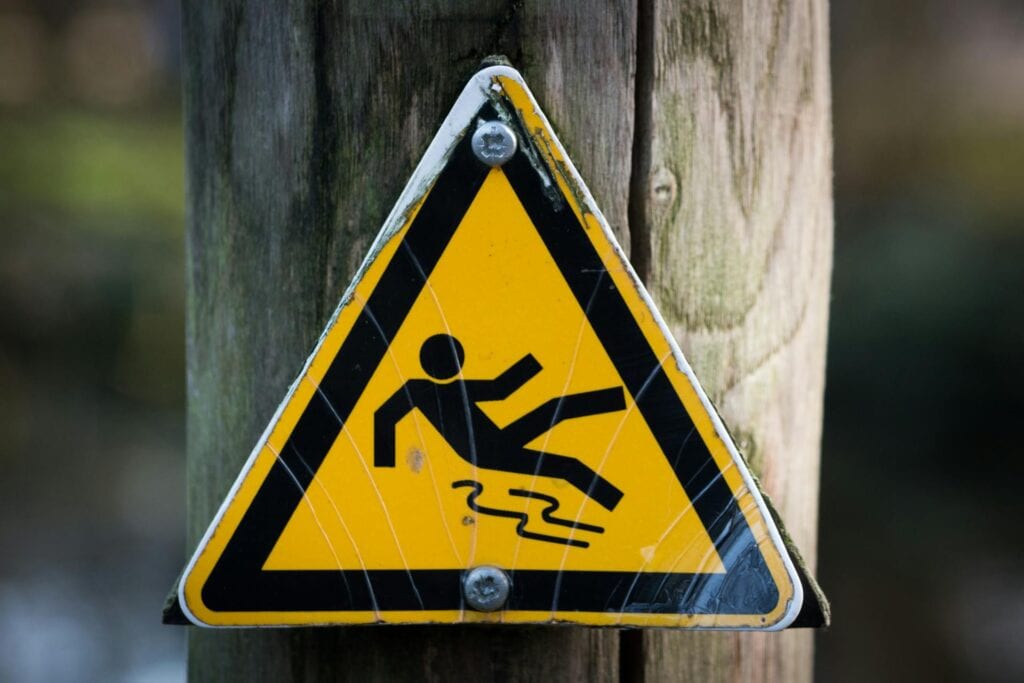

Falling sounds simple. It happens in an instant. But the consequences of a slip or fall can reshape your entire life in ways you never imagined. What begins as a momentary loss of balance on icy pavement, a scaffold that gives way, or a wet floor in a grocery store can lead to months of medical treatment, permanent disability, lost income, and profound changes to your independence and quality of life. Falls represent one of the most significant causes of serious injury and death in New York State, affecting people across every age group, occupation, and living situation.
Prior results do not guarantee a similar outcome.
How Common Are Falls in New York and Across the Country?
Falls have become a public health crisis affecting millions of Americans every year. More than one in four adults aged 65 and older experiences a fall annually, yet fewer than half report the incident to their healthcare provider. In 2021, falls among adults 65 and older caused over 38,000 deaths, making falls the leading cause of injury death for this age group. Each year, approximately 3 million emergency department visits and nearly 1 million hospitalizations occur due to older adult falls. When all age groups are included, falls account for more than 8 million emergency room visits annually, representing 21.3 percent of all emergency department visits.
The financial and physical toll is enormous. Hip fractures alone result in nearly 319,000 hospitalizations each year among older Americans. In 2019, 83 percent of hip fracture deaths and 88 percent of emergency department visits for hip fractures were caused by falls. Falls are also the most common cause of traumatic brain injuries, which often require long-term care and fundamentally alter daily life.
Who Is Most at Risk for Fall Injuries?
Risk escalates substantially after age 65. Among older adults, one in three falls annually, and falling even once doubles your chances of falling again. About 37 percent of those who fall report an injury requiring medical treatment or restricted activity for at least one day. In occupational settings, falls remain among the most frequently cited workplace hazards.
According to the 2024 Census of Fatal Occupational Injuries from the U.S. Bureau of Labor Statistics, fatal falls, slips, and trips decreased 4.6 percent to 844 fatalities in 2024, down from 885 in 2023. Construction workers bear a disproportionate share of that burden. Construction and extraction workers suffered 1,032 fatalities in 2024, with 370 of those attributed to fatal falls, slips, and trips. Among all occupational fall deaths, 10.8 percent involved falls from heights exceeding 30 feet.
What Makes Construction Falls So Dangerous in New York?
New York City’s construction environment creates uniquely severe fall risks. According to the NYC Department of Buildings, 2024 saw 466 construction incidents resulting in 482 injuries and 7 fatalities, the lowest incident count in nearly a decade. Worker falls accounted for 251 incidents, or 54 percent of all accidents, with 4 fatalities. Other incident types included:
- Material failure and falling objects: 47 incidents, 1 fatality
- Mechanical equipment incidents: 31 incidents, 2 fatalities
- Scaffold and shoring failures: 12 incidents, 0 fatalities
The 2025 NYCOSH “Deadly Skyline” report added alarming context: 77 percent of construction fatalities involved non-union workers, and 74 percent of employers at fatal work sites had prior OSHA violations. Fall protection violations remain OSHA’s most frequently cited construction violation nationally, accounting for 6,557 citations and $48 million in penalties in fiscal year 2024. OSHA’s scaffolding standard ranks as the 8th most-cited construction violation nationwide. Verdicts in New York courts reflect the severity of these failures, including a $53.5 million jury award for a scaffold collapse victim and a $7.25 million settlement for a worker left permanently disabled by a scaffold accident.
What Causes Falls from Heights?
Falls from elevated surfaces are the leading cause of serious injury and death in construction. Common hazards include:
- Improperly erected scaffolding with defective planking, missing guardrails, or inadequate fall-arrest systems
- Roof falls, floor openings, and unprotected elevator shafts, which produce severe injuries due to the distances and hard impact surfaces involved
- Ladder failures caused by improper setup, poor equipment quality, or worker fatigue
OSHA‘s updated Walking-Working Surfaces Rule now permits employers to select accepted fall protection systems suited to their workers, rather than mandating guardrails alone. The rule requires that personal fall arrest systems use body harnesses rather than body belts, and mandates training and retraining on fall hazards before workers operate at elevated heights.
How Snow and Ice Cause Falls in New York
New York’s winters create substantial seasonal fall risks. The 2026 Blizzard buried New York under up to 24 inches of snow with wind gusts reaching 60 miles per hour, generating a new wave of slip and fall injuries across the state. Determining liability in winter fall cases can be complex. New York’s “storm in progress” defense allows property owners to argue they had no duty to remove snow while a storm was actively ongoing. However, this defense is far more limited than insurers often claim.
Property owners in New York City must clear adjacent sidewalks within specific timeframes after snowfall ends:
- Snowfall ending between 7:00 a.m. and 5:00 p.m.: 4 hours to clear
- Snowfall ending between 5:00 p.m. and 9:00 p.m.: 14 hours to clear
- Snowfall ending between 9:00 p.m. and 7:00 a.m.: must be cleared by 11:00 a.m.
Black ice is a particularly insidious hazard, often forming hours or days after a storm when melted snow refreezes. When black ice results from predictable conditions such as daytime melting followed by overnight freezing, poor drainage, or roof runoff, it may qualify as a foreseeable hazard. Pre-existing ice can defeat the “storm in progress” defense entirely, because the property owner’s duty arose before the current storm began.
Other Surface Hazards That Lead to Injuries
Damp and uneven surfaces account for more than half of all reported slip and fall cases in the United States. Common hazards include:
- Loose floorboards, mats, and worn carpeting
- Freshly waxed or mopped floors without adequate warning signs
- Parking lot potholes and defective sidewalks
- Poorly constructed staircases and unsecured handrails
- Moisture collection in entryways and lobbies
Inadequate lighting is another significant contributing factor. OSHA requires all workplaces and public properties to be well-lit, and property owners who fail to maintain proper lighting in walkways and staircases face increased liability. In New York City, aging infrastructure compounds these risks; the NYC Department of Buildings documented more than 430 parapet-related incidents between 2014 and 2024, prompting enhanced inspection requirements for building exteriors.
Why Falls Happen So Often in Nursing Homes
Nursing homes present unique fall risks due to residents’ medical complexity, mobility limitations, and medication side effects. According to the CDC, more than 1,800 deaths each year are attributed to falls in nursing homes, and nearly 75 percent of all nursing home residents experience falls annually. Falls in these settings frequently result in fractures, head injuries, immobility, and cascading complications including infection, bed sores, sepsis, and pneumonia.
Common causes of preventable nursing home falls include:
- Trip hazards in hallways, such as food trays and rolling carts left unattended
- Floors contaminated with urine or other fluids due to inadequate cleaning schedules
- Failure to use assistive devices like gait belts or walkers for high-risk residents
- Medication errors causing confusion or disorientation
- Improper bed rail usage and failure to raise rails for residents at risk of falling
When nursing homes fail to conduct proper fall risk assessments, document mobility limitations, or implement reasonable supervision, they can be held liable for resulting injuries.
Can You Sue for a Slip and Fall Injury in New York?
Yes. If your fall was caused by someone else’s negligence, you can sue for compensation under premises liability law. Property owners must exercise reasonable care to keep their properties safe for people who have a right to be there. To succeed in a slip and fall case, you generally need to prove:
- The property owner owed you a duty of care
- The owner breached that duty by creating, ignoring, or failing to warn about a dangerous condition
- That breach directly caused your fall
- You suffered actual damages, such as medical expenses, lost wages, or permanent disability
The concept of “notice” is critical. Actual notice means the owner knew about the hazard. Constructive notice means the hazard existed long enough that a reasonable inspection should have uncovered it. Strong evidence, including photographs, witness statements, incident reports, medical records, and maintenance logs, forms the backbone of a successful claim.
What Damages Can You Recover in a Slip and Fall Case?
New York law recognizes both economic and non-economic damages in slip and fall cases. Economic damages include past and future medical expenses, lost wages, reduced earning capacity, and the cost of ongoing rehabilitation or home health care. Non-economic damages address pain and suffering, loss of enjoyment of life, and emotional distress. In cases involving permanent disability, traumatic brain injury, spinal cord damage, or hip fractures that limit independence, damages can be substantial and reflect the full magnitude of how the injury has altered your life.
How Long Do You Have to File a Slip and Fall Case?
New York’s statute of limitations for personal injury cases generally gives you three years from the date of injury to file a lawsuit. Important exceptions apply:
- Falls on municipal property (city sidewalks, government buildings, public parks) require a notice of claim filed within 90 days of the accident
- After filing that notice, you must wait at least 30 days before filing suit and generally must do so within one year and 90 days from the accident date
- Construction accident claims under New York Labor Law Section 240(a) follow the standard three-year limit
Starting the legal process early preserves evidence, keeps witness recollections fresh, and signals to insurance companies that you are serious about your claim.
Construction Workers’ Special Protections Under New York Law
Construction workers in New York have some of the strongest legal protections in the country. New York Labor Law Section 240(a), known as the “Scaffold Law,” imposes absolute liability on property owners and general contractors for gravity-related injuries to construction workers. This means you do not need to prove the owner was directly negligent. If you fall from a height or are struck by a falling object on a construction site, liability attaches as a matter of law. The Scaffold Law covers falls from scaffolds, ladders, roofs, and other elevated surfaces, as well as injuries from falling tools, materials, or debris. Additional claims may exist under Labor Law Section 200 for general worksite safety violations and Section 241(6) for specific New York Industrial Code violations.
What to Do Immediately After a Fall
The steps you take right after a fall can make or break your case. Key actions include:
- Seek medical attention immediately, even if you feel fine; internal injuries and traumatic brain injuries may not produce obvious symptoms right away
- Report the incident to the property owner, manager, or supervisor and request a written incident report
- Photograph everything: the hazard, the location, your injuries, and your clothing and footwear
- Collect witness information from anyone who saw the fall occur
- Preserve evidence, including the shoes and clothing you were wearing, without washing or repairing them
- Keep detailed records of all medical visits, treatments, costs, and a daily journal of pain and limitations
Talk to our experienced personal injury lawyers and know all your legal options for recovery in a free, no-obligation consultation.
Get Legal Help Today
If you or a loved one has been injured in a slip and fall accident in New York, you should not have to navigate the legal system alone. The Porter Law Group has decades of experience handling complex personal injury litigation, including construction accidents, premises liability cases, and winter slip and fall claims. We know how insurance companies and property owners fight these cases, and we know how to fight back.
We offer free, no-obligation consultations so you can understand your rights and options without any pressure or cost. And because we work on a contingency fee basis, you pay no legal fees unless we win your case or secure a favorable outcome on your behalf. The only risk is waiting too long and losing your right to pursue compensation entirely. Fill out our online form for a free consultation and know your options. You can also call 833-PORTER9 or email info@porterlawteam.com to get started.