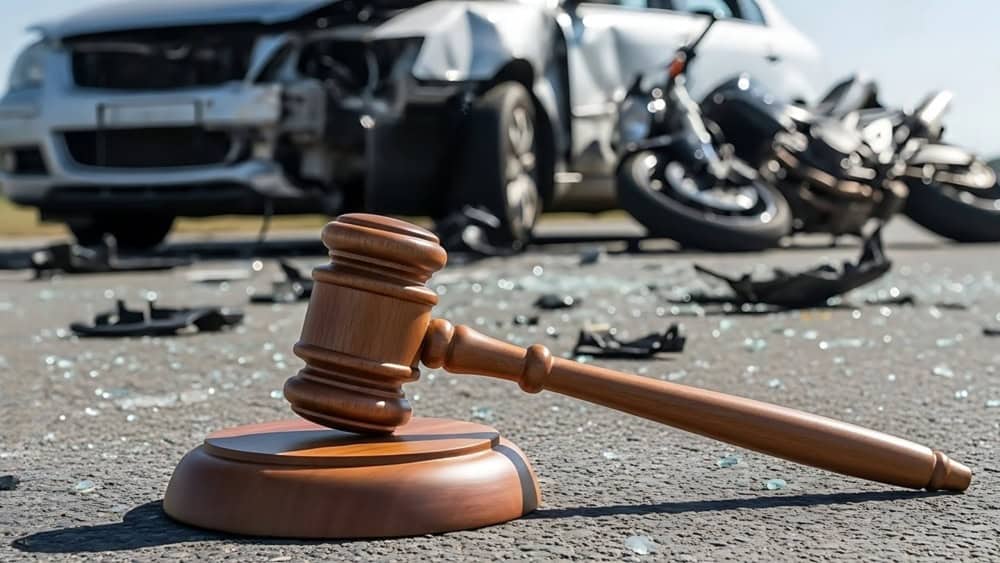


Motorcycle helmet laws in New York require every rider and passenger to wear a DOT-approved helmet at all times, with no exceptions based on age or experience. New York was the first state in the country to adopt a universal helmet law in 1967, and the requirement remains one of the strictest in the nation. According to the NHTSA, helmets reduce the risk of fatal head injuries by 37% and traumatic brain injuries by 67%. Beyond personal safety, helmet use directly affects the value of a motorcycle accident claim in New York because courts apply comparative negligence rules to riders who were not wearing proper head protection at the time of a crash.
Prior results do not guarantee a similar outcome.
What Does New York’s Motorcycle Helmet Law Require?
New York’s helmet law is codified in Vehicle and Traffic Law § 381 and applies universally to every person riding a motorcycle on a public road. The law has three core requirements that every rider needs to understand.
DOT-Approved Helmet
Every helmet worn on a New York road must meet the federal safety standard established in 49 CFR § 571.218 (FMVSS 218). Helmets that pass this standard carry a DOT sticker on the back. The standard tests for three things: impact resistance (the helmet absorbs crash force), retention (the chin strap stays secured under stress), and penetration resistance (sharp objects cannot pierce the shell). Novelty helmets, vintage helmets without certification, and helmets with expired or missing DOT labels do not meet the legal requirement.
Eye Protection
In addition to the helmet, New York law requires riders to wear approved eye protection. This can be goggles, a face shield attached to the helmet, or safety glasses that meet ANSI Z87.1 standards. A motorcycle windshield alone does not satisfy this requirement. Riders with full-face helmets that include an integrated visor are covered, but those wearing half-shell or open-face helmets need separate eye protection.
Passenger Compliance
The law applies equally to passengers. Any person sitting on the back of a motorcycle or in a sidecar must wear a DOT-approved helmet and eye protection. The operator of the motorcycle can be cited if a passenger is riding without proper gear.
What Are the Penalties for Riding Without a Helmet in New York?
Violating New York’s motorcycle helmet law is a traffic infraction, not a criminal offense, but the penalties are still meaningful and can compound quickly.
| Penalty | Details |
| Fine | Up to $100 per violation |
| Jail time | Up to 30 days (rare, but legally possible) |
| Points on license | Added to driving record, which increases insurance premiums |
| Civil liability | Treated as evidence of negligence in accident lawsuits under comparative fault rules |
The $100 fine might seem small on its own, but the real cost shows up in two other places. First, the points on your license can raise your motorcycle insurance premiums for years. Second, and far more expensive, is the impact on an accident claim. If you are injured while riding without a helmet, the insurance company will use that fact to reduce your compensation, sometimes by tens of thousands of dollars.
How Does Not Wearing a Helmet Affect a Motorcycle Accident Claim?
This is where motorcycle helmet laws in New York intersect with real money. New York follows a pure comparative negligence rule under CPLR § 1411, which means that riding without a helmet does not automatically disqualify you from filing a claim or collecting compensation. However, it can significantly reduce the amount you receive.
Here is how it works in practice. If you suffer a head injury in a crash caused by another driver and you were not wearing a helmet, the defense will argue that your injuries were made worse by your own failure to wear proper protection. A jury could assign a percentage of fault to you specifically for the head and neck injuries. If the jury determines that 25% of the severity of your head injury is attributable to not wearing a helmet, your compensation for those injuries would be reduced by 25%.
Insurance adjusters are trained to identify helmet non-use as early as possible. They pull police reports, photograph the scene, interview witnesses, and check emergency room records for notes about whether a helmet was present. A rider who was wearing a properly secured DOT-approved helmet at the time of the crash removes this entire line of attack from the defense.
This dynamic makes helmet use both a safety decision and a financial one. For riders involved in a crash, the presence or absence of a helmet can shift the value of a claim by thousands or even hundreds of thousands of dollars. If you have been in a motorcycle accident and have questions about how helmet use may affect your case, attorneys who handle motorcycle accident claims in New York can evaluate the specifics of your situation.
Are There Any Exceptions to New York’s Helmet Law?
New York’s helmet law is one of the most comprehensive in the country, and the exceptions are extremely narrow.
A limited exemption may apply to operators over 18 who hold a valid motorcycle license for at least two years or have completed an approved motorcycle safety course, carry proof of a medical insurance policy with at least $50,000 in coverage, and have obtained a waiver through the DMV. Even with this exemption, passengers are still required to wear helmets, and the exemption does not extend to eye protection requirements.
In practice, very few riders qualify for or pursue this exemption. The documentation requirements are strict, and any violation of the conditions immediately voids the waiver. Law enforcement officers can request proof of the exemption during a traffic stop, and failing to produce it results in a citation.
What About Trikes and Three-Wheeled Motorcycles?
Three-wheeled motorcycles (trikes) occupy a gray area in New York. Depending on how the vehicle is classified by the NYS DMV, helmet requirements may be slightly different. However, the DMV strongly recommends helmet use on all motorcycle-type vehicles regardless of wheel count, and most personal injury attorneys will tell you that riding a trike without a helmet creates the same comparative negligence exposure as riding a two-wheeled motorcycle without one.
What Kind of Helmet Meets New York’s Legal Standard?
Not all helmets sold in stores or online actually meet the DOT standard, and wearing a non-compliant helmet is treated the same as wearing no helmet at all under the law. Here is what to look for when choosing a helmet that satisfies New York’s requirements.
- DOT certification sticker on the exterior back of the helmet. This is the minimum legal requirement. Helmets with only Snell or ECE certification but no DOT sticker do not technically comply with New York law, although they may meet or exceed the safety standard.
- Snug fit with no gaps between the helmet padding and your head. A helmet that moves when you shake your head or that sits loosely above your eyebrows is not properly fitted and may not protect you in a crash.
- Chin strap that fastens securely and does not release under pressure. D-ring and ratchet closures are the most reliable designs.
- No visible damage, cracks, or modifications. A helmet that has been involved in a previous impact, even a minor one, should be replaced. Most manufacturers recommend replacing helmets every five years regardless of impact history.
Full-face helmets provide the highest level of protection because they cover the chin and jaw, which account for a significant percentage of motorcycle crash impacts. Modular helmets offer similar coverage with the convenience of a flip-up chin bar. Half-shell and open-face helmets meet the DOT standard and are legally compliant, but they leave the face and jaw exposed, which can increase injury severity and give insurance companies more room to argue comparative negligence for facial injuries.
What Should You Do After a Motorcycle Accident in New York?
- Call 911 immediately. A police report is one of the most important pieces of evidence in any motorcycle accident claim, and the responding officers will document whether helmets were worn.
- Get medical attention, even if you feel fine. Adrenaline masks pain, and traumatic brain injuries can take hours to produce noticeable symptoms. Delaying treatment also gives the insurance company a reason to question the severity of your injuries.
- Preserve your helmet. Do not throw it away, give it to anyone, or let it leave your possession. The condition of your helmet after a crash is physical evidence. A cracked or damaged helmet proves the force of impact and demonstrates that you were wearing protection.
- Document everything at the scene: photos of both vehicles, the road, traffic signals, your helmet, any visible injuries, and the contact information of witnesses.
- Report the accident to the DMV within 10 days if anyone was injured, anyone died, or property damage exceeds $1,000 per person. Use the MV-104 form available through the NY.gov portal.
- Do not give a recorded statement to the other driver’s insurance company without consulting an attorney first.
Remember that motorcycles are excluded from New York’s no-fault insurance system. There are no automatic PIP payments for your medical bills. Everything depends on establishing liability and filing a claim against the at-fault driver’s insurance. For a full walkthrough of the process, see our guide on motorcycle insurance claims in New York.
Learn about all your legal options and what damages you can recover from an experienced personal injury attorney.
Frequently Asked Questions About Motorcycle Helmet Laws in New York
Does New York require all motorcycle riders to wear helmets?
Yes. New York has a universal helmet law under Vehicle and Traffic Law § 381. Every operator and every passenger on a motorcycle must wear a DOT-approved helmet on all public roads. There is no age-based exemption. Riders over 18 may qualify for a narrow waiver through the DMV, but the requirements are strict and most riders do not pursue it.
What happens if I get pulled over without a motorcycle helmet in New York?
You will receive a traffic citation carrying a fine of up to $100, possible jail time of up to 30 days, and points on your driving record. The points can increase your insurance premiums for several years. If you were riding under the DMV waiver exemption, you must present proof to the officer or the exemption is void.
Can I still file an accident claim if I was not wearing a helmet?
Yes. Not wearing a helmet does not bar you from filing a claim in New York. Under the state’s pure comparative negligence rule (CPLR § 1411), you can still recover compensation, but the amount may be reduced if a jury determines that not wearing a helmet contributed to the severity of your head or neck injuries. The reduction is proportional to the percentage of fault assigned to your helmet non-use.
What qualifies as a DOT-approved helmet in New York?
A DOT-approved helmet must meet Federal Motor Vehicle Safety Standard 218 (49 CFR § 571.218). Compliant helmets carry a DOT certification sticker on the back exterior. The standard tests impact absorption, strap retention, and penetration resistance. Novelty helmets, helmets without the DOT sticker, and helmets older than five years or previously involved in an impact should not be considered compliant.
Does the helmet law apply to motorcycle passengers?
Yes. Passengers are subject to the same helmet and eye protection requirements as the operator. The rider operating the motorcycle can be cited if their passenger is not wearing a DOT-approved helmet. This applies to passengers on the back seat and in sidecars.
Do I need eye protection in addition to a helmet in New York?
Yes. New York law requires approved eye protection for all motorcycle operators and passengers. Full-face helmets with integrated visors satisfy this requirement. Riders wearing half-shell or open-face helmets must wear separate goggles or safety glasses that meet ANSI Z87.1 standards. A windshield on the motorcycle alone does not count as eye protection under the law.
How does helmet use affect my insurance claim after a crash?
Wearing a helmet strengthens your claim by removing one of the most common defense arguments in motorcycle cases. If you were not wearing a helmet and suffered head or neck injuries, the insurance company will argue that your injuries would have been less severe with proper protection, and your compensation for those specific injuries may be reduced. If you were wearing a helmet, that entire argument disappears. For more on how motorcycle insurance medical expenses are handled in New York, see our detailed breakdown.
Should I keep my helmet after a motorcycle accident?
Absolutely. Your helmet is physical evidence. A cracked or visibly damaged helmet demonstrates the force of the crash and proves that you were wearing protection at the time of the accident. Do not discard it, allow it to be taken by anyone, or alter it in any way. Show it to your attorney and, if requested, make it available to accident reconstruction experts. A preserved helmet can be one of the strongest pieces of evidence in your case.
When should I replace my motorcycle helmet?
Replace your helmet after any impact, even if no visible damage is present. The foam liner inside the helmet compresses on impact and does not recover, which means a helmet that has been in one crash may not protect you in a second one. Manufacturers also recommend replacing helmets every five years due to material degradation from UV exposure, sweat, and general wear. If the DOT sticker is missing, peeling, or illegible, replace the helmet.
How long do I have to file a lawsuit after a motorcycle accident in New York?
The statute of limitations for personal injury claims in New York is three years from the date of the accident under CPLR § 214. If your accident involved a government vehicle or a road maintained by a municipal agency, you must file a Notice of Claim within 90 days. Wrongful death claims carry a two-year deadline. See our full guide on the motorcycle accident statute of limitations for a complete breakdown of all applicable deadlines.
Ride Legal, Ride Protected
Motorcycle helmet laws in New York exist to save lives, but they also have a direct financial impact on every accident claim filed in the state. Wearing a DOT-approved helmet protects your head in a crash and protects your compensation in court. If you have been injured in a motorcycle accident in New York and need guidance on how helmet use or non-use may affect your case, contact Porter Law Group for a case evaluation with attorneys who understand the specific legal dynamics of motorcycle accident claims.
Written by the attorneys at Porter Law Group | Last updated: April 2026 | Jurisdiction: New York State