

If you or someone you love has been diagnosed with asbestos-related lung cancer, you are facing one of the most serious and life-altering situations imaginable. From the shipyards along New York Harbor to the manufacturing corridors near Syracuse’s Carrier facilities, to the aging school buildings scattered across Buffalo and Rochester, workers across New York State spent decades breathing in asbestos fibers without any warning of the danger. Now, years or even decades later, a lung cancer diagnosis has changed everything.
Porter Law Group represents New York residents who developed lung cancer as a result of asbestos exposure. Our attorneys understand the medical complexity of these cases, the specific legal pathways available under New York law, and the urgency that comes with a serious cancer diagnosis. If you believe your lung cancer is connected to asbestos exposure at a job site, in a building, or through a family member’s work clothing, you may have the right to pursue compensation.
Prior results do not guarantee a similar outcome.
Call Porter Law Group at 833-PORTER9 or schedule a free consultation to speak with an asbestos lung cancer attorney.
How Asbestos Exposure Causes Lung Cancer
Asbestos is a naturally occurring mineral that was used extensively in construction, manufacturing, and industrial applications throughout most of the twentieth century. Its fire-resistant and insulating properties made it appealing across dozens of industries. What manufacturers knew, and often concealed, was that asbestos fibers are also deadly.
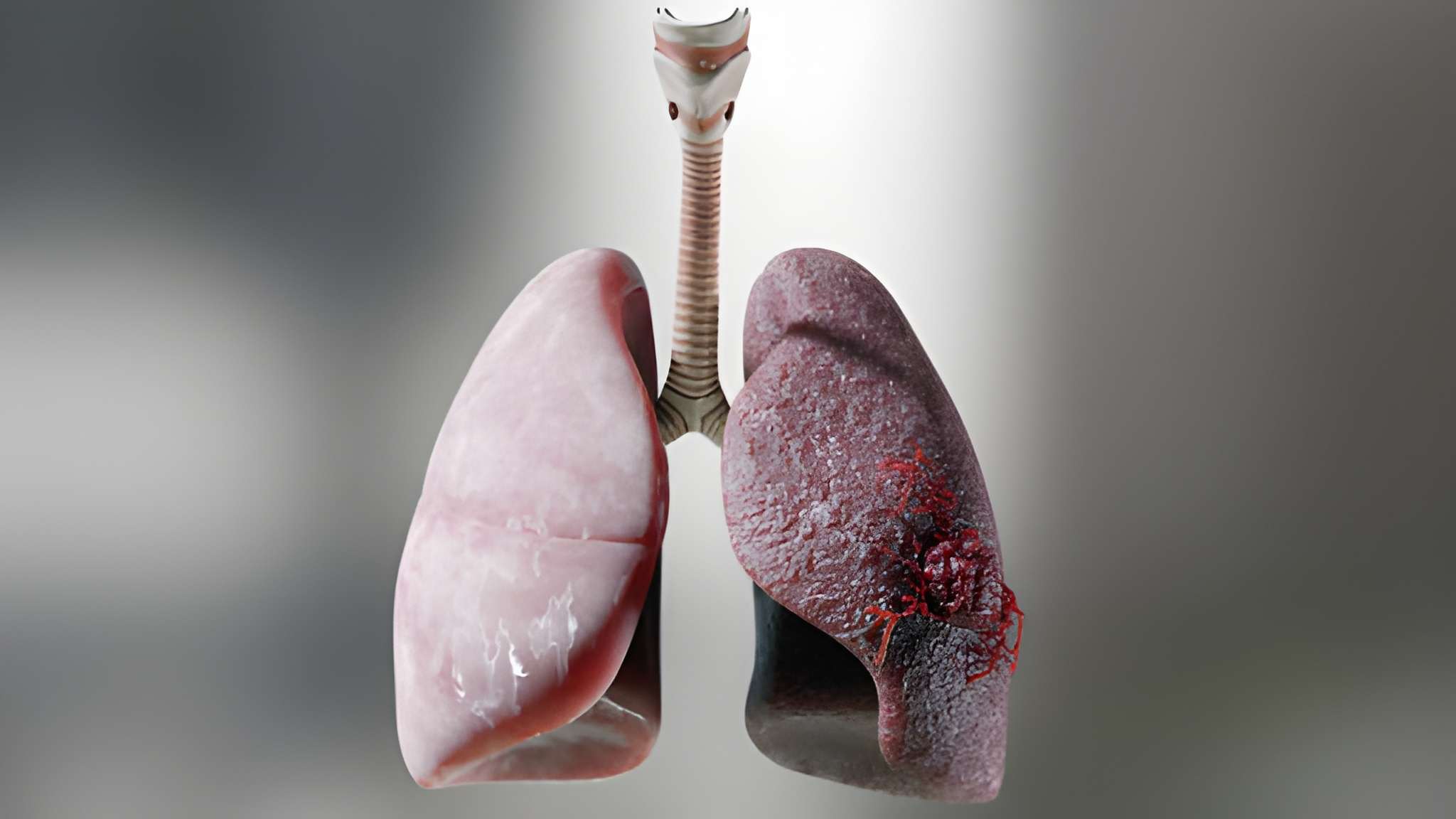
When asbestos-containing materials are disturbed, cut, sanded, or demolished, microscopic fibers become airborne. A person working nearby inhales those fibers, and because of their shape and size, the fibers become permanently lodged in lung tissue. The body cannot expel them. Over time, these embedded fibers cause chronic inflammation, cellular damage, and genetic mutations that can lead to lung cancer.
One of the most important facts to understand is that asbestos-related lung cancer is a latent disease. According to the American Cancer Society, most cases of lung cancer in asbestos workers develop at least a decade after first exposure, and the period between initial exposure and diagnosis often spans 15 to 50 years. Someone who worked in a Syracuse factory or a Brooklyn shipyard in the 1960s or 1970s may only now be receiving a cancer diagnosis directly connected to that exposure.
Several factors can affect the severity of asbestos-related lung cancer risk:
Duration of exposure. Workers with longer periods of regular asbestos contact face higher risk.
Intensity of exposure. Jobs that involved direct handling of asbestos insulation, pipe covering, or fireproofing materials carried higher fiber concentrations.
Smoking history. The American Cancer Society notes that for workers exposed to asbestos who also smoke, the lung cancer risk is greater than simply adding the risks from each exposure separately. If you smoked and were also exposed to asbestos, your combined risk is significantly greater than either factor alone.
Type of asbestos fiber. Certain fiber types, such as amphibole asbestos, are associated with particularly aggressive outcomes in the research literature.
Asbestos-related lung cancer can present as either small cell or non-small cell lung cancer, and it affects the lung tissue itself rather than the surrounding lining. This distinction matters legally, as explained in the section below.

Occupations and New York Worksites with Known Asbestos Exposure
New York State has one of the longest and most documented histories of industrial asbestos use in the country. Decades of shipbuilding, heavy manufacturing, construction, and public infrastructure work left generations of workers exposed. If you worked in any of the following industries or locations, you may have been exposed to asbestos at levels that can cause lung cancer.
Shipyards and naval facilities. New York Harbor and the Brooklyn Navy Yard were among the most asbestos-intensive work environments in American history. Shipbuilders, pipefitters, machinists, and Navy veterans who served aboard vessels built in New York were routinely exposed to asbestos insulation in engine rooms, boiler compartments, and pipe systems.
Construction and trades. Electricians, plumbers, carpenters, ironworkers, and general laborers working on New York buildings constructed before the late 1970s frequently encountered asbestos in floor tiles, ceiling materials, pipe insulation, roofing products, and joint compounds. This is true across New York City, Long Island, Buffalo, Albany, and upstate communities alike.
Manufacturing facilities. Central New York was home to major industrial employers whose facilities contained substantial amounts of asbestos. Workers at plants in and around Syracuse, Utica, and Binghamton were exposed through insulated equipment, gaskets, boilers, and machinery components.
Power generation. Power plant workers across New York, including those at facilities operated by utilities serving the Syracuse and Albany regions, worked around asbestos-insulated turbines, boilers, and steam lines throughout the mid-twentieth century.
Schools and public buildings. Many New York public school buildings constructed before 1980 contained asbestos in floor and ceiling tiles, pipe insulation, and spray-applied fireproofing. Teachers, custodians, and maintenance workers who spent careers in these buildings faced cumulative exposure over time.
Demolition and renovation. Demolition crews, renovation contractors, and abatement workers who disturb older building materials without proper protective equipment continue to face asbestos exposure risks today.
Other at-risk occupations. Firefighters, auto mechanics, particularly those working with older brake linings and gaskets, boiler operators, insulation installers, and railroad workers also appear frequently in asbestos lung cancer cases.
If you are uncertain whether your occupation or worksite involved asbestos exposure, an experienced asbestos lung cancer lawyer can help investigate your work history and identify the responsible parties.
Asbestos Lung Cancer vs. Mesothelioma: Why the Distinction Matters Legally
Many people assume that asbestos-related lung cancer and mesothelioma are the same condition. They are not, and understanding the difference is essential for anyone considering a legal claim.
Mesothelioma is a cancer of the mesothelium, the thin membrane that lines the lungs, chest cavity, abdominal organs, and heart. It is almost exclusively caused by asbestos exposure and is relatively rare. For more information about mesothelioma claims specifically, see our mesothelioma information page.
Asbestos-related lung cancer is a cancer of the lung tissue itself, originating in the cells that make up the lung’s airways and air sacs. While asbestos is one of several known causes of lung cancer, it is a major occupational cause, and a diagnosis can be linked to asbestos exposure through medical evidence, work history documentation, and pathology findings.
The legal differences between these two diagnoses include:
Eligibility criteria for trust fund claims. Many asbestos bankruptcy trusts have separate claim categories for mesothelioma and lung cancer. Lung cancer claims often require meeting specific medical criteria, such as evidence of asbestosis or a confirmed occupational exposure history, to qualify.
Burden of proof. In lung cancer cases, defendants may argue that smoking or other factors caused the cancer. A skilled attorney must present evidence establishing that asbestos exposure was a substantial contributing cause, even if it was not the only cause.
Case strategy. Lung cancer cases require a different evidentiary approach than mesothelioma cases, including pulmonologist testimony, occupational exposure documentation, and often a latency analysis connecting the diagnosis to decades-old workplace conditions.
These distinctions mean that hiring a lawyer with experience specifically in asbestos lung cancer, not just mesothelioma, can make a material difference in how a case is built.
Types of Compensation Available for Asbestos Lung Cancer Victims
New York residents diagnosed with asbestos-related lung cancer may have access to several different forms of compensation, depending on the circumstances of their exposure and their current situation.
Asbestos bankruptcy trust fund claims. Over the past several decades, many of the largest asbestos manufacturers and distributors in the United States have filed for bankruptcy as a result of mounting asbestos litigation. As a condition of those bankruptcy proceedings, these companies were required to establish trust funds dedicated to compensating current and future asbestos victims. Collectively, these trusts hold tens of billions of dollars set aside for eligible claimants. Filing a trust fund claim is separate from filing a lawsuit and can often proceed more quickly, though each trust has its own eligibility criteria, medical documentation requirements, and claim submission procedures.
Personal injury lawsuits. If the companies responsible for your asbestos exposure have not filed for bankruptcy, or if additional solvent defendants exist, you may pursue a personal injury lawsuit seeking compensation for medical expenses, lost income, pain and suffering, and other damages. New York courts handle asbestos personal injury cases under established tort principles, and these cases can proceed to trial or settle through negotiation.
Workers’ compensation. If your asbestos exposure occurred in the course of employment in New York, you may be entitled to workers’ compensation benefits covering medical treatment and a portion of lost wages. Workers’ compensation claims do not require proving fault, but they are generally limited in the total compensation available. Pursuing workers’ compensation does not prevent you from also filing a personal injury lawsuit against third-party defendants such as asbestos product manufacturers.
Wrongful death claims. If a family member died from asbestos-related lung cancer, surviving family members may be entitled to bring a wrongful death claim under New York law. These claims can provide compensation for the financial and emotional losses the family has suffered as a result of the death.
New York Statute of Limitations for Asbestos Lung Cancer Claims
Time is one of the most critical factors in any asbestos lung cancer case. New York law imposes strict deadlines on when claims must be filed, and missing those deadlines can permanently bar you from recovering any compensation.
For personal injury claims based on asbestos-related lung cancer, New York’s statute of limitations is generally three years from the date of diagnosis, under CPLR § 214-c, New York’s discovery-rule statute for latent toxic exposure injuries. This means the clock typically starts running when you receive a confirmed diagnosis, not from the date of your original asbestos exposure.
For wrongful death claims, the deadline is generally two years from the date of death under Estates, Powers and Trusts Law § 5-4.1, which runs from the date of death rather than from discovery.
These time limits may interact with other factors specific to your case, and the applicable deadline can depend on the particular defendants involved and the legal theories being pursued. There is no substitute for speaking with an attorney promptly after a diagnosis. The sooner you consult with a lawyer, the more time your legal team has to investigate your exposure history, gather evidence, and identify all available compensation sources.
Do not assume that because your exposure happened decades ago, it is too late to file a claim. The statute of limitations generally runs from diagnosis, not from the time of exposure.
How Does an Asbestos Lung Cancer Claim Process Work?
Understanding what to expect can reduce some of the uncertainty during an already difficult time.
Initial consultation. You speak with an attorney about your diagnosis, your work history, and your exposure circumstances. This consultation is free and confidential at Porter Law Group.
Case investigation. Your legal team gathers employment records, union records, product identification information, and medical records to document your exposure history and connect it to your diagnosis.
Medical evaluation. In many cases, your attorney will work with occupational medicine specialists or pulmonologists who can provide expert opinions on the relationship between your asbestos exposure and your lung cancer.
Identifying defendants and trust funds. Based on the investigation, your attorney identifies the companies responsible for your exposure, including any that have established bankruptcy trust funds.
Filing claims. Depending on the circumstances, your attorney files trust fund claims, a personal injury lawsuit, or both. These processes can run concurrently.
Resolution. Asbestos lung cancer cases can resolve through trust fund payments, negotiated settlements, or jury verdicts. The timeline varies depending on the complexity of the case and the number of defendants involved.
Porter Law Group handles these cases on a contingency fee basis, meaning you pay no attorney fees unless and until your case results in a recovery.
Learn about exposure history, compensation sources, and filing deadlines after a lung cancer diagnosis.
What to Look for in an Asbestos Lung Cancer Lawyer
Choosing the right attorney after an asbestos lung cancer diagnosis is one of the most important decisions you will make. Not every personal injury lawyer has experience with the specific medical, scientific, and procedural demands of asbestos litigation. Here is what you should look for.
Specific experience with asbestos lung cancer cases. Asbestos cases involve occupational medicine, industrial hygiene, pathology, and complex product identification. Look for a lawyer who understands how to connect a decades-old work history to a current diagnosis and who knows the difference between mesothelioma and lung cancer claims.
Familiarity with New York asbestos law. New York has its own procedural rules governing asbestos cases, including how cases are managed in the courts and what medical criteria apply to different claim types.
Resources to investigate exposure history. Building a strong asbestos lung cancer case requires accessing employment records, union records, product identification databases, and sometimes testimony from former coworkers.
Transparent communication. A serious cancer diagnosis is overwhelming. Your attorney should be accessible, honest about your options, and willing to explain the process in plain language.
Experience in serious injury and complex litigation. Porter Law Group’s founder, Michael S. Porter, J.D., has been selected to Super Lawyers for 14 consecutive years (2012 through 2025), holds a 10.0 Superb rating on Avvo, and carries a Distinguished rating from Martindale-Hubbell. The firm has handled cancer-related medical malpractice and complex injury cases resulting in significant settlements and verdicts. Prior results do not guarantee a similar outcome in any future case.
Porter Law Group also handles medical malpractice claims, including cases where a delayed cancer diagnosis worsened a patient’s prognosis, and our attorneys understand how to present complex medical causation evidence.
Frequently Asked Questions
Is My Lung Cancer Definitely Related to Asbestos Exposure?
This is one of the most common questions asbestos lung cancer lawyers hear, and the honest answer is that it requires a medical and legal evaluation to determine. Lung cancer has multiple potential causes, including tobacco use, radon exposure, air pollution, and genetic factors. Asbestos-related lung cancer does not look different from other forms of lung cancer under a microscope in most cases. What distinguishes it legally is the combination of a documented occupational exposure history, a latency period consistent with asbestos-related disease, and in many cases, the presence of other asbestos-related changes in the lungs such as pleural plaques, pleural thickening, or asbestosis. You do not need to be certain about the cause before speaking with an attorney.
Can I File a Claim If I Also Smoked?
Yes. The fact that you smoked cigarettes does not automatically disqualify you from pursuing an asbestos lung cancer claim. New York follows a pure comparative negligence framework under CPLR § 1411, meaning that even if smoking contributed to your lung cancer, you may still recover compensation proportional to the share of responsibility attributable to asbestos exposure. The medical evidence is well established that asbestos and tobacco smoke act synergistically, meaning their combined effect on lung cancer risk is greater than either factor added alone, which can actually strengthen the argument that asbestos exposure was a substantial contributing cause. Defendants in these cases frequently raise smoking as a defense, and an experienced attorney knows how to address it with medical expert testimony.
What Compensation Can My Family Receive If a Loved One Died from Asbestos Lung Cancer?
When asbestos-related lung cancer causes a death, surviving family members have legal options. New York’s wrongful death statute allows certain family members to bring a claim for the economic losses caused by the death, including lost financial support, medical expenses incurred before death, and funeral costs. In addition to wrongful death damages, the estate of the person who died may be able to pursue a survival action for the pain, suffering, and losses the deceased person experienced before death. Asbestos trust fund claims can also be filed on behalf of a deceased person’s estate, provided the claim is filed within the applicable trust deadlines.
Do I Need to Know Exactly Where I Was Exposed to Asbestos?
No. Many people cannot recall the specific product, building, or job site responsible for their exposure, particularly when decades have passed. An experienced asbestos lung cancer lawyer can reconstruct an exposure history using employment records, union records, product identification databases, and testimony from former coworkers. A general account of where and when you worked is usually enough to begin an evaluation.
How Long Do I Have to File an Asbestos Lung Cancer Claim in New York?
For personal injury claims, New York’s statute of limitations is generally three years from the date of diagnosis, under CPLR § 214-c. For wrongful death claims, the deadline is generally two years from the date of death, under EPTL § 5-4.1. Workers’ compensation claims and asbestos trust fund claims each have their own, often shorter, deadlines. Because the statute of limitations generally runs from diagnosis rather than exposure, do not assume that decades-old exposure makes a claim untimely. Speak with an attorney promptly after diagnosis to confirm your specific deadlines.
What Clients Say About Porter Law Group
Meet the Attorney

Michael S. Porter, J.D.
Founder and managing partner of Porter Law Group. Harvard University (B.A., 1994), Syracuse University College of Law (J.D., 1997). Former U.S. Army JAG Corps Captain, Airborne Training School graduate. Super Lawyers 14 consecutive years, 10.0 Superb on Avvo, Distinguished rating from Martindale-Hubbell. Over 20 years of trial experience and $500 million in recoveries.
Reviewed by Michael S. Porter, J.D. | Last updated: [April, 2026]
Asbestos Lung Cancer Lawyers Serving New York
Porter Law Group serves asbestos lung cancer victims and their families across New York State, including Syracuse, New York City, Buffalo, Rochester, Albany, and communities throughout Central New York, Long Island, and every region of the state.
If you or a family member has been diagnosed with lung cancer and you have a history of asbestos exposure at a New York worksite, school, shipyard, or manufacturing facility, you deserve to know your legal options. Our attorneys will listen to your story, evaluate your case, and explain the options available to you under New York law.
There is no fee unless we recover compensation for you.
Call 833-PORTER9 | Available 24/7 | No fee unless we win

