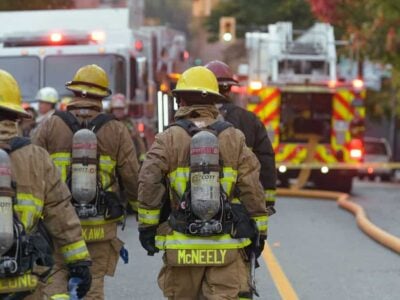

The New York City subway system is the largest rapid transit network in the country, carrying millions of riders daily through tunnels and stations built more than a century ago.
What many workers and commuters don’t realize is that a lot of this aging infrastructure still contains asbestos, a material used heavily in construction from the 1930s through the 1970s, and that damaged or disturbed asbestos in tunnels, stations, and rail facilities can release fibers that cause serious disease decades later.
If you worked in subway maintenance, construction, or renovation, or were exposed during an incident or a poorly managed abatement project, you may have legal options even if symptoms are only showing up now.
Prior results do not guarantee a similar outcome.
Why Does the New York City Subway Contain Asbestos?
Subway infrastructure built or renovated during the peak decades of asbestos use incorporated the material in a lot of different ways.
Fireproofing spray containing asbestos was applied to steel beams, tunnel linings, and station ceilings to meet fire safety requirements in an environment where fire risk underground was a constant concern.
Pipe and boiler insulation in mechanical rooms, electrical chases, and ventilation plants commonly contained it too. Older subway cars used asbestos in brake linings, clutches, gaskets, and interior insulation, and floor tiles, wall panels, and joint compounds in stations frequently included asbestos fibers as well.
Asbestos was considered a near-ideal material at the time: cheap, effective, and well suited to underground fire safety concerns.
By the 1970s, medical research had conclusively linked it to fatal disease, and federal regulation followed, but banning new use did nothing about the enormous amount already installed.
Legacy asbestos remains throughout older subway systems today, tucked into walls, wrapped around pipes, and sprayed onto structural supports.
As long as it stays intact and undisturbed, it typically poses minimal risk. The danger comes when it deteriorates, gets damaged, or is disturbed during construction, maintenance, or an accident.
What Diseases Does Asbestos Exposure Cause?
Inhaled asbestos fibers lodge deep in lung tissue, where the body can’t break them down or expel them. Over time, embedded fibers cause inflammation, scarring, and genetic damage that can lead to several serious diseases.
Mesothelioma is the signature asbestos cancer, developing in the lining of the lungs, abdomen, or heart. It’s aggressive and, for most patients, ultimately fatal, and the CDC confirms that asbestos exposure causes most cases. The latency period typically runs 20 to 60 years after first exposure, meaning someone who worked on subway projects in the 1970s or 1980s might only now be developing symptoms.
Lung cancer caused by asbestos is clinically indistinguishable from lung cancer caused by other factors, but asbestos significantly raises the risk, and that risk multiplies further in people who also smoked. Latency generally runs 15 to 35 years.
Asbestosis, a chronic, progressive scarring of the lungs, isn’t cancer but is irreversible and can be severely disabling, typically developing 10 to 30 years after significant exposure and causing shortness of breath, persistent cough, chest tightness, and declining lung capacity over time.
Pleural plaques, pleural thickening, and pleural effusions round out the list of asbestos-related conditions. These aren’t always life-threatening on their own, but they confirm exposure occurred and can signal a higher risk of more serious disease down the line.
Has the MTA Actually Been Cited for Asbestos Problems?
Yes, though the full picture is more nuanced than headlines about it might suggest, and it’s worth getting right. In December 2020, the MTA Office of the Inspector General issued a detailed report investigating worker complaints about asbestos at the East New York bus depot in Brooklyn.
The most serious allegation, that ventilation ductwork throughout the facility was “lined with asbestos” and had exposed thousands of employees for decades, was not substantiated.
An outside consultant found no asbestos in the ductwork itself, and OIG’s review of 89 separate air monitoring tests conducted at the facility between 2017 and 2019 found every single reading well below the OSHA exposure level that would trigger medical surveillance.
What the investigation did confirm is more of a records and process failure than a story of ignored danger. Vibration-dampening cloths in the facility’s fan house did test positive for asbestos-containing material, and NYC Transit remediated them.
A comprehensive 2011 asbestos survey of the facility, covering more than 1,300 samples and identifying over 500 confirmed and presumed locations of asbestos-containing material, was essentially shelved and forgotten rather than tracked and monitored going forward, which meant the agency had to scramble to re-survey areas it had already identified a decade earlier when the 2019 complaints came in.
Separately, in 2000, the EPA formally cited the New York City Transit Authority and its contractor for violating federal asbestos rules during work at the Stanton Street Substation on Manhattan’s Lower East Side, after inspectors found the contractor had failed to adequately wet asbestos-containing material before bagging it for disposal, a basic safety step meant to keep fibers from becoming airborne.
Together, these examples show that regulatory scrutiny of asbestos in New York’s transit system is real and ongoing, not hypothetical, even when a specific worst-case allegation doesn’t ultimately hold up.
What Does New York Law Require for Asbestos Safety?
New York layers state requirements on top of the federal baseline set by OSHA, which caps worker exposure at 0.1 fibers per cubic centimeter of air over an eight-hour day and requires exposure monitoring, engineering controls, protective equipment, and medical surveillance for at-risk workers.
New York’s own framework starts with Labor Law Article 30, which requires anyone performing asbestos work in the state to hold a valid license under § 902, and authorizes the detailed work-practice regulations found in 12 NYCRR Part 56, commonly called Industrial Code Rule 56, issued under § 906. Rule 56 is enforced by the New York State Department of Labor’s Asbestos Control Bureau and requires a comprehensive asbestos survey before demolition, renovation, or repair work on covered structures, along with specific procedures for containment, wet removal methods, air monitoring, and safe disposal.
In New York City, the Department of Environmental Protection layers on additional oversight, licensing investigators and contractors and issuing stop-work orders when inspectors find asbestos being handled improperly.
Can You Sue if You Were Exposed to Asbestos in a Subway System?
Yes, though your options depend on whether you were exposed as a worker or as a member of the public, and who was responsible.
Workers’ compensation covers employees who develop an occupational disease, including asbestos-related conditions, arising out of their employment, under the occupational disease framework in Workers’ Compensation Law Article 3. You don’t need to prove your employer was negligent, only that the disease arose from your job, and for fatal cases, dependents may be entitled to death benefits.
Third-party lawsuits remain available against everyone else whose negligence contributed to your exposure, including manufacturers of asbestos-containing products used in subway systems, contractors or subcontractors who performed unsafe work, and property owners or managers who failed to address known hazards. A violation of Labor Law Article 30 or Industrial Code Rule 56 that caused or contributed to your exposure can serve as powerful evidence in a negligence claim, since New York courts recognize that a statutory violation causing exactly the harm the statute was designed to prevent can help establish negligence.
Bankruptcy trust claims are also worth exploring, since many companies that manufactured asbestos-containing products used in subway construction went through bankruptcy and were required to establish dedicated trusts to compensate current and future victims, separate from and potentially in addition to a lawsuit.
For commuters and members of the public, workers’ compensation doesn’t apply since you weren’t an employee. Your options generally run through negligence or premises liability claims against the transit authority, a contractor whose unsafe work created public exposure, or another responsible party.
What Are the Legal Deadlines for an Asbestos Claim Involving the MTA?
Claims involving the MTA and New York City Transit Authority follow a different, stricter procedural track than an ordinary personal injury claim, because both are public authorities.
Claim Type | Deadline | Legal Basis |
|---|---|---|
Personal injury against a private manufacturer or contractor | 3 years from the date the disease is discovered, or reasonably should have been discovered | CPLR § 214-c |
Notice of Claim against the MTA or NYC Transit Authority | 90 days from when the claim accrues | |
Lawsuit against the MTA or NYC Transit Authority after Notice of Claim | 1 year and 90 days | Public Authorities Law § 1276(2), CPLR § 217-a |
Wrongful death from an asbestos-related disease | 2 years from the date of death | EPTL § 5-4.1 |
Asbestos cases complicate this timeline in a real way, since the disease itself doesn’t develop until decades after the exposure that caused it.
Courts generally hold that the clock starts when you’re diagnosed, or reasonably should have known you had a compensable, asbestos-related condition, not when the underlying exposure occurred.
But that discovery-based approach applies most clearly to the CPLR § 214-c claim against a private party. If part of your claim runs against a public entity like the MTA, the 90-day Notice of Claim deadline is far less forgiving and is one of the most common ways valid asbestos claims get lost, simply because people don’t realize how short that window is or that it applies at all.
How Do You Prove Asbestos Exposure Happened in a Subway Setting?
Because these diseases develop 20 to 60 years after exposure, proving where and when it happened requires carefully reconstructing your work history and the conditions at the time.
Employment records are the foundation: pay stubs, W-2 forms, union records, and pension documents that establish where you worked and during what years. Job descriptions and daily task records help show what you actually did, whether you handled brake components, repaired pipe insulation, or worked on demolition and renovation projects.
What Should You Do if You Think You Were Exposed?
If you’re currently working in a subway environment and notice conditions suggesting an asbestos hazard, such as damaged insulation or visible dust from uncontained construction, leave the area if you can and report it in writing to your supervisor and safety office, keeping copies of everything.
As a commuter, you can report uncontained work or damaged materials to 311 in New York City, which routes environmental complaints to the Department of Environmental Protection.
If you know you had significant exposure in the past, tell your doctor specifically about your work history, including time periods and the types of materials or conditions involved, so it can be recorded in your medical chart.
Preserve employment records, union documentation, and any incident reports you filed, since these can be difficult or impossible to obtain years later.
And if you’ve already been diagnosed with mesothelioma, lung cancer, asbestosis, or another asbestos-related disease, consult an attorney with specific experience in asbestos cases as soon as possible, given how quickly some of these deadlines run.
Summing It Up
Asbestos remains a real, documented presence in New York’s aging subway infrastructure, not a hypothetical one. The MTA’s own inspector general has documented real gaps in how the agency tracks and monitors known asbestos locations, and the EPA has separately cited NYC Transit and a contractor for a real containment violation during subway-related construction work. Workers who maintained, repaired, or renovated this infrastructure over the decades faced meaningful exposure risk, whether or not any single facility’s story turns out to be as dramatic as an initial complaint alleges.
Porter Law Group represents New Yorkers exposed to asbestos in subway systems and other occupational settings, and we understand both the medical complexity of these cases and the unusual procedural traps, particularly the MTA’s 90-day Notice of Claim requirement, that can derail an otherwise valid claim if they’re missed.
If you or someone you love has been diagnosed with an asbestos-related disease connected to subway work or exposure, we can help you understand your options before those deadlines become a problem.
Frequently Asked Questions
Can I sue the MTA directly if I was exposed to asbestos while working in the subway?
It depends on your employment relationship. If the MTA or NYC Transit Authority was your direct employer, workers’ compensation is generally your exclusive remedy against them, though you can still pursue third-party claims against manufacturers or contractors. If you worked for a different employer or were a member of the public, a direct claim against the MTA is possible but requires filing a Notice of Claim within 90 days under Public Authorities Law § 1276.
Has the MTA ever actually been found responsible for asbestos safety violations?
It’s mixed, and worth understanding accurately. A 2020 MTA Inspector General report investigated worker complaints at the East New York bus depot and found the worst allegation, asbestos-lined ductwork exposing thousands of employees for decades, wasn’t substantiated, with years of air monitoring showing exposure levels well within safe limits. The investigation did find real gaps in how the agency tracked and followed up on known asbestos locations over time. Separately, in 2000, the EPA formally cited the New York City Transit Authority and a contractor for a genuine containment violation during asbestos removal work at the Stanton Street Substation in Manhattan.
What’s the difference between the statute of limitations for an asbestos claim against a private company versus the MTA?
Claims against a private manufacturer or contractor generally follow New York’s discovery rule under CPLR § 214-c, three years from diagnosis. Claims against the MTA or NYC Transit Authority require a Notice of Claim within just 90 days of when the claim accrues, followed by a lawsuit within one year and 90 days, a much stricter and less forgiving timeline under Public Authorities Law § 1276.
Do I have to choose between workers’ compensation and a lawsuit for subway asbestos exposure?
Not necessarily. Workers’ compensation and a third-party lawsuit aren’t mutually exclusive. Workers’ compensation is generally your exclusive remedy against your direct employer, but you can still pursue a separate negligence or product liability claim against other parties, like a contractor, subcontractor, or product manufacturer, whose actions contributed to your exposure.
Can commuters, not just transit workers, have a valid asbestos claim from subway exposure?
Yes, in certain circumstances, though workers generally face higher exposure and stronger cases. A commuter exposed because of damaged, friable asbestos material, uncontained renovation work, or an incident like a fire that disturbed asbestos-containing structures may have a viable negligence or premises liability claim against the responsible party.
Prior results do not guarantee a similar outcome.
Contact Porter Law Group Phone: 833-PORTER9
Email: info@porterlawteam.com