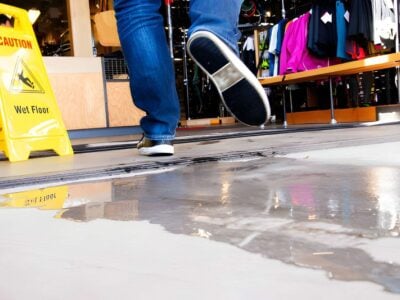




A slip and fall claim sounds simple until you’re actually in one. New York law doesn’t ask whether a hazard existed, it asks whether the property owner knew or should have known about it, and the rules for proving that shift depending on whether you fell on a sidewalk, in a store, or on city-owned property.
Choosing a lawyer who understands these distinctions from the start can be the difference between a case that gets dismissed early and one that actually gets you compensated.
Prior results do not guarantee a similar outcome.
What Makes New York Slip and Fall Cases Harder to Prove Than People Expect?
In Gordon v. American Museum of Natural History, New York’s highest court held that a property owner can only be held liable if they had actual notice of the hazard, or constructive notice, meaning the condition was visible, apparent, and existed long enough before the accident that a reasonable property owner should have discovered and fixed it.
This standard trips up a lot of injured people. A “general awareness” that spills or hazards sometimes happen isn’t enough.
You generally need evidence tied to the specific condition that caused your fall, like how long a puddle had been there, whether employees walked past it, or whether there had been prior complaints about the same recurring spot.
This is exactly why a lawyer’s approach to gathering evidence in the days and weeks after your fall matters so much.
Who Is Responsible for a Sidewalk Injury in New York City?
Since 2003, NYC Administrative Code Section 7-210 shifted the duty to maintain sidewalks, and legal liability for sidewalk injuries, from the City of New York to the private property owners whose buildings sit next to those sidewalks.
This duty is nondelegable, meaning an owner can’t avoid liability just because they hired a contractor or leased the building to a tenant who was supposed to handle it.
There’s one significant exception. Section 7-210 does not apply to owner-occupied one, two, or three family homes used exclusively as a residence.
If all three of those conditions are met, liability for that sidewalk generally stays with the City, which brings an entirely different, and much stricter, set of procedural rules into play.
What Happens if My Fall Was Caused by Snow or Ice?
New York recognizes what’s known as the storm in progress doctrine, established in Solazzo v. New York City Transit Authority. Under this rule, a property owner generally isn’t liable for a fall caused by snow or ice while a storm is actively happening, or for a reasonable time immediately afterward, since the law recognizes it isn’t practical to expect continuous clearing during active weather.
Once the storm ends, that protection doesn’t last indefinitely. New York City Administrative Code Section 16-123 generally requires property owners to begin clearing snow and ice within four hours after precipitation stops, not counting overnight hours.
Whether a storm had truly ended, and how much time had passed, are often the exact questions insurance companies fight hardest over in winter slip and fall cases.
Porter Law Group has written more specifically about how the storm in progress doctrine applies in real cases, if you want a deeper look at how courts evaluate the timing.
What Is New York’s Pothole Law and Why Does It Matter If the City Owns the Property?
If your fall happened on a street, curb, or a sidewalk that the City of New York is still responsible for, a different and much stricter rule applies.
Under Administrative Code Section 7-201(c)(2), commonly called the Pothole Law, you generally cannot sue the City for a defective condition unless the City received prior written notice of that specific defect, typically at least 15 days before your accident.
A phone call to 311 isn’t automatically enough to satisfy this requirement unless it was properly logged as a written notice of the specific hazard.
This is a hard, well-documented barrier that has ended many otherwise strong cases, which is why identifying early on whether a private owner or the City is responsible for the location where you fell is one of the most important things a lawyer can do.
What Should You Look for in a Slip and Fall Lawyer?
Look for a lawyer who moves quickly to document the scene, since hazardous conditions get cleaned up, repaired, or disappear entirely within hours or days.
Photos, incident reports, surveillance footage, and witness information all become harder to obtain the longer a case sits.
Ask how the attorney plans to establish notice, since this is usually the single hardest element to prove in a New York slip and fall case.
A lawyer should be comfortable requesting maintenance logs, sweep sheets, prior complaint records, and surveillance video before that evidence is discarded.
A lawyer should also be able to quickly determine whether your case involves a private owner, a City-owned sidewalk or street, or a hybrid situation, since each comes with different deadlines and different legal standards.
Finally, look for a firm that’s transparent about how contingency fees work. At Porter Law Group, you pay nothing unless we win your case.
What Questions Should You Ask During a Consultation?
| Question | Why It Matters |
|---|---|
| How do you establish that the property owner had notice of the hazard? | Notice is usually the hardest element to prove in a New York slip and fall case |
| Who owned, leased, or controlled the property where I fell? | Liability can fall on an owner, a tenant, a management company, or the City, depending on the facts |
| Is the location where I fell a private sidewalk, a City sidewalk, or City property? | This determines who can be sued and which deadlines apply |
| If the fall involved snow or ice, how do you handle the storm in progress defense? | Insurers frequently rely on this defense, and timing evidence is critical |
| How do you preserve surveillance footage and maintenance records? | This evidence is often overwritten or discarded within days or weeks |
| Have you handled cases requiring prior written notice against the City? | This is a strict, well-litigated requirement that can end a case early if missed |
| How do contingency fees and case costs work? | You should understand exactly what you owe and when, before you sign anything |
What Red Flags Should You Watch for When Hiring a Lawyer?
A few warning signs tend to separate firms that understand New York premises liability law from those that don’t.
- Assuming every fall automatically means the property owner is liable, without discussing notice
- No plan for quickly requesting surveillance footage, maintenance logs, or incident reports
- Not asking who owns or maintains the specific location where you fell
- Guaranteeing a settlement amount before reviewing photos or medical records
- Pressure to sign representation paperwork before you’ve had a chance to ask questions
What Are the Key Deadlines in a New York Slip and Fall Case?
| Situation | Deadline | Rule |
|---|---|---|
| Claim against a private property owner | 3 years from the date of the fall | CPLR 214 |
| Claim against the City of New York or another municipality | Notice of claim within 90 days; lawsuit generally within 1 year and 90 days | General Municipal Law 50-e |
| Wrongful death claim | 2 years from the date of death | EPTL 5-4.1 |
| Injury victims who were minors at the time of the fall | Clock pauses until age 18 | CPLR 208 |
If you’re not sure whether a private owner or the City is responsible for where you fell, that uncertainty is a reason to talk to a lawyer immediately, not a reason to wait. The 90-day notice of claim deadline for municipal claims can pass quickly, sometimes before medical treatment is even finished.
Summing It Up
Choosing the right slip and fall lawyer in New York means finding someone who understands that these cases are won or lost on notice, and that the rules change entirely depending on who owns or maintains the property where you fell.
A lawyer who treats every fall the same way may be missing deadlines or evidence that can’t be recovered later.
Porter Law Group has built its reputation on trial-tested representation for injured New Yorkers, and our attorneys work on a contingency fee basis, meaning you pay nothing unless we win.
If you or a loved one has been hurt in a fall, reach out to discuss what happened and what your legal options look like.
Call 833-PORTER9 or email info@porterlawteam.com to schedule a free consultation.
Prior results do not guarantee a similar outcome.
Frequently Asked Questions
Do I have to prove the property owner knew about the hazard that caused my fall?
Generally, yes. Under Gordon v. American Museum of Natural History, you must show the owner had actual notice of the hazard, or constructive notice, meaning it was visible and existed long enough that a reasonable owner should have discovered and fixed it.
Can I sue New York City if I fell on a sidewalk?
It depends on the property. Under NYC Administrative Code 7-210, private property owners are generally responsible for the sidewalks abutting their property, with an exception for owner-occupied one, two, or three family homes, where the City generally remains responsible instead.
Is a property owner liable if I fell during a snowstorm?
Usually not while the storm is actively happening. Under the storm in progress doctrine from Solazzo v. New York City Transit Authority, liability generally doesn’t attach until a reasonable time after the storm ends, which in New York City is generally within four hours of the precipitation stopping.
What is New York City’s Pothole Law?
Administrative Code Section 7-201(c)(2) requires that the City receive prior written notice of a specific street or sidewalk defect, generally at least 15 days before an accident, before it can be held liable. A verbal 311 complaint alone is often not enough to satisfy this requirement.
How much does a slip and fall lawyer cost in New York?
Most plaintiff-side personal injury attorneys, including Porter Law Group, work on a contingency fee basis. You pay nothing upfront, and there is no fee unless the firm recovers compensation on your behalf.
This article is for informational purposes only and does not constitute legal advice. Attorney advertising. Prior results do not guarantee similar outcomes.