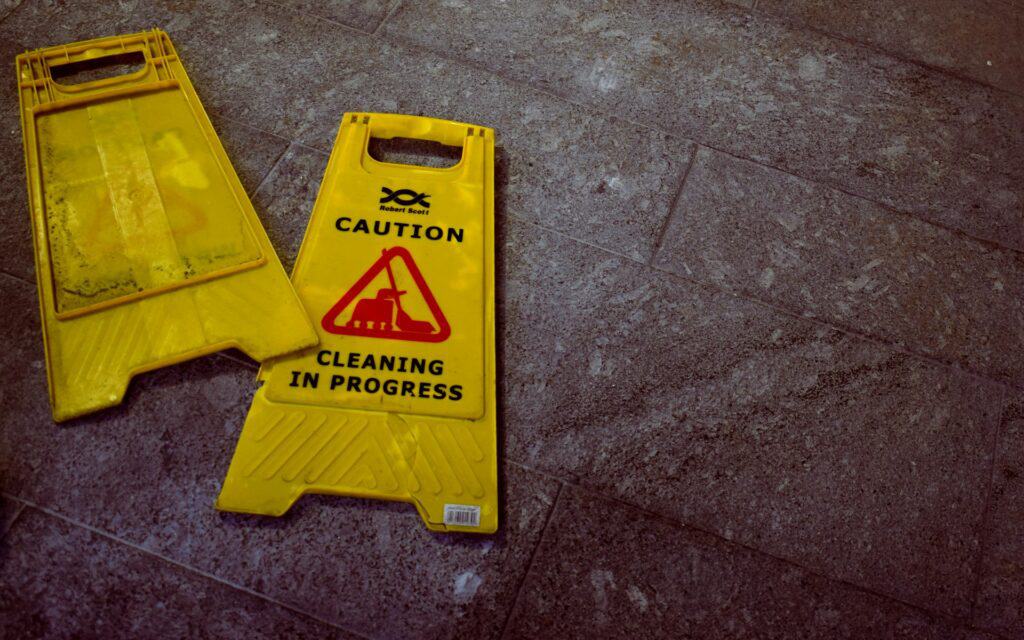

Premises liability covers a lot more than slipping on a wet floor. It includes assaults enabled by a broken lobby door, injuries from a landlord who never fixed a known hazard, and accidents where the property’s owner, on paper, isn’t actually the one legally responsible.
Figuring out who’s really liable, and why, is often the hardest part of these cases, and it’s exactly where the right lawyer earns their fee.
Prior results do not guarantee a similar outcome.
What Makes Premises Liability Broader Than a Typical Slip and Fall Claim?
New York holds property owners and occupiers to a single standard of reasonable care under the circumstances, a rule that came out of the landmark case Basso v. Miller and replaced an older, more complicated system that assigned different duties depending on whether you were classified as an invitee, a licensee, or a trespasser.
Porter Law Group has covered how that classification history still shapes premises cases today. What that standard actually requires looks very different depending on the type of case.
A store owner’s duty around a spilled drink is a notice question. A landlord’s duty around a broken buzzer system that let in an attacker is a foreseeability and security question.
A property manager’s duty around a collapsing porch or a malfunctioning elevator is a maintenance and inspection question. These aren’t interchangeable, and a lawyer needs to know which framework actually applies to what happened to you.
Does It Matter If You Were Injured While Hiking, Biking, or Fishing on Someone’s Land?
Under General Obligations Law Section 9-103, New York’s recreational use statute, a landowner generally owes no duty to keep their property safe for people engaging in activities like hiking, hunting, fishing, cross-country skiing, horseback riding, or bicycle riding, and doesn’t have to warn visitors about hazardous conditions on the land for those purposes.
This immunity isn’t absolute. It generally doesn’t apply if the landowner charged a fee for access, or if the injury resulted from a willful or malicious failure to warn about a known danger, as opposed to ordinary carelessness.
It also isn’t relevant to most typical premises cases, a store, an apartment building, an office.
But if your injury happened on undeveloped or rural land while engaged in one of the statute’s listed activities, a lawyer needs to evaluate this defense early, since it can significantly limit or even eliminate a claim that would otherwise look straightforward.
Who Is Actually Responsible, the Property Owner or Someone Else Who Controls It?
In Henry v. Hamilton Equities, New York’s highest court reaffirmed that an out-of-possession landlord, meaning an owner who has leased the property to a tenant and given up control of it, is generally not liable for injuries caused by conditions on that property.
There are real exceptions. An out-of-possession landlord can still be held liable if they’re contractually obligated by the lease to make repairs or maintain the premises, or if they kept a right to re-enter and inspect the property and the hazard involved a significant structural or design defect that violated a specific safety statute.
This is why identifying who actually had control over the location where you were hurt, not just who’s listed on the deed, is one of the first things a serious premises liability investigation should do.
What Is a Negligent Security Claim, and When Is a Landlord Responsible for Someone Else’s Crime?
This is a distinct category of premises liability that a lot of injured people don’t realize applies to their situation.
Under Burgos v. Aqueduct Realty Corp., New York landlords have a common-law duty to take minimal precautions to protect tenants and guests from foreseeable criminal conduct by third parties, things like maintaining working locks, functioning intercoms, and secured entrances.
Two things generally have to be true to win one of these cases.
First, the crime has to have been reasonably foreseeable, usually shown through prior criminal incidents in the building or nearby.
Second, you generally have to show the security failure was the actual cause of the crime, meaning the attacker gained access because of the negligent condition, not that a criminal act simply happened to occur on the property.
In Scurry v. New York City Housing Authority, the courts confirmed that even an attack that targeted a specific victim can still support liability if a broken door lock or similar security failure created the opportunity for the attacker to get inside.
A lawyer unfamiliar with negligent security claims may not recognize this as a viable theory at all, especially in cases that look, on the surface, like they’re only about a criminal defendant.
What Should You Look for in a Premises Liability Lawyer?
Look for a lawyer who asks detailed questions about who owned, managed, and controlled the property, not just who was named on a lease or deed. As the sections above show, the answer isn’t always obvious, and getting it wrong can mean suing the wrong party entirely.
If your case involves an assault, robbery, or other crime, ask specifically whether the attorney investigates negligent security as a separate theory of liability, since this is often overlooked by lawyers who default to treating the incident as purely a criminal matter.
A lawyer should also move quickly to preserve evidence like maintenance records, prior complaint logs, incident reports, and surveillance footage, all of which tend to disappear or get overwritten the longer a case sits.
Finally, look for a firm that’s transparent about how contingency fees work. At Porter Law Group, you pay nothing unless we win your case.
What Questions Should You Ask During a Consultation?
| Question | Why It Matters |
|---|---|
| Who actually owned, managed, or controlled the property where I was hurt? | Liability can fall on an owner, a tenant, a management company, or more than one of them |
| If a landlord leased out the property, could they still be liable? | Out-of-possession landlords are generally protected unless a specific exception applies |
| If my injury involved a crime, will you investigate a negligent security claim? | This is a separate theory of liability many lawyers overlook |
| How do you establish that the property owner had notice of the hazard or risk? | Notice, whether of a physical hazard or a security risk, is usually the hardest element to prove |
| How do you preserve maintenance records and surveillance footage? | This evidence is often overwritten or discarded within days or weeks |
| How do contingency fees and case costs work? | You should understand exactly what you owe and when, before you sign anything |
What Red Flags Should You Watch for When Hiring a Lawyer?
A few warning signs tend to separate firms that understand New York premises liability law from those that don’t.
- Assuming the property owner is automatically liable without investigating who actually controlled the property
- Dismissing an assault or crime-related injury as a purely criminal matter without considering a negligent security claim
- No plan for preserving maintenance logs, complaint records, or surveillance footage quickly
- Guaranteeing a settlement amount before reviewing the facts of who owned or managed the property
- Pressure to sign representation paperwork before you’ve had a chance to ask questions
What Are the Key Deadlines in a New York Premises Liability Case?
| Situation | Deadline | Rule |
|---|---|---|
| Claim against a private property owner or manager | 3 years from the date of the injury | CPLR 214 |
| Claim against the City of New York or another municipality | Notice of claim within 90 days; lawsuit generally within 1 year and 90 days | General Municipal Law 50-e |
| Wrongful death claim | 2 years from the date of death | EPTL 5-4.1 |
| Injury victims who were minors at the time of the incident | Clock pauses until age 18 | CPLR 208 |
Summing It Up
Choosing the right premises liability lawyer in New York means finding someone who knows that these cases aren’t one-size-fits-all.
Whether your injury involved a hazardous condition, an out-of-possession landlord’s limited duties, or a security failure that enabled someone else’s crime, the legal theory that applies changes who can be sued and what has to be proven.
Porter Law Group has built its reputation on trial-tested representation for injured New Yorkers, and our attorneys work on a contingency fee basis, meaning you pay nothing unless we win.
If you or a loved one has been hurt on someone else’s property, reach out to discuss what happened and what your legal options look like.
Call 833-PORTER9 or email info@porterlawteam.com to schedule a free consultation.
Prior results do not guarantee a similar outcome.
Frequently Asked Questions
Can I sue a landlord who no longer manages the property directly? It depends. Under Henry v. Hamilton Equities, an out-of-possession landlord is generally not liable for conditions on the property unless they’re contractually obligated to make repairs, or they kept the right to re-enter and the hazard involved a significant structural defect that violated a specific safety statute.
Can a landlord be held responsible if I was attacked by someone else on the property? Potentially, yes. Under Burgos v. Aqueduct Realty Corp., landlords have a duty to take minimal security precautions to protect tenants and guests from foreseeable criminal conduct. You generally need to show the crime was foreseeable and that a security failure allowed the attacker access.
Does it matter if the person on my property was a licensee, invitee, or trespasser? Not the way it used to. Since Basso v. Miller, New York applies a single reasonable care standard to all lawful visitors rather than varying the duty based on these older classifications, though the facts underlying them can still matter to the overall analysis.
How long do I have to file a premises liability lawsuit in New York? Generally three years from the date of the injury, under CPLR 214. If a municipal or government-owned property was involved, a Notice of Claim is generally required within 90 days under General Municipal Law 50-e.
Can I sue a landowner for an injury while hiking or biking on their property? It depends. Under General Obligations Law Section 9-103, landowners generally aren’t liable for injuries to people engaging in activities like hiking, hunting, fishing, or biking on their land, unless they charged a fee for access or willfully failed to warn about a known danger.
How much does a premises liability lawyer cost in New York? Most plaintiff-side personal injury attorneys, including Porter Law Group, work on a contingency fee basis. You pay nothing upfront, and there is no fee unless the firm recovers compensation on your behalf.
This article is for informational purposes only and does not constitute legal advice. Attorney advertising. Prior results do not guarantee similar outcomes.