
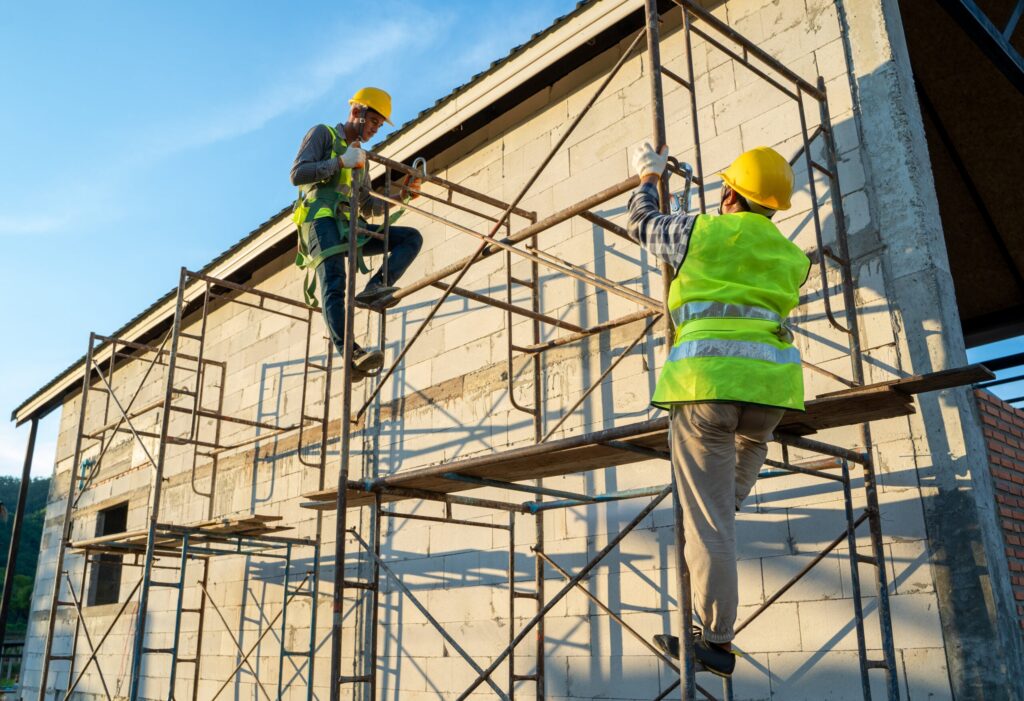

One moment, workers are doing their jobs, or pedestrians are walking below. The next, tons of metal and equipment come crashing down.
The short answer is yes, you can usually sue after a scaffolding collapse in New York, but the real answer depends heavily on who you were and what you were doing when it happened.
A construction worker on the scaffold, and a pedestrian walking underneath it, have two genuinely different legal paths forward.
Prior results do not guarantee a similar outcome.
Why Does It Matter Whether You Were a Worker or a Pedestrian?
New York has some of the strongest worker protection laws in the country for construction site accidents, centered on Labor Law Section 240(1), often called the Scaffold Law. It places absolute responsibility on property owners and general contractors to provide proper safety equipment for gravity-related hazards, scaffolding collapses, falls from height, and falling objects.
If a scaffold collapses because it wasn’t properly braced, secured, or erected, the owner and contractor can be held strictly liable, even if the injured worker made a mistake or was partially at fault.
That protection is specifically for workers performing construction-related tasks. If you were a pedestrian, a delivery person, or a building tenant when scaffolding collapsed and hurt you, the Scaffold Law doesn’t apply to you.
You still generally have the right to sue, but your claim is built on ordinary negligence and premises liability instead, and unlike a Scaffold Law claim, you do have to show fault.
Can You Sue If You Were Working on the Scaffold When It Collapsed?
If you were a construction worker on the scaffold, you likely have a strong claim under Labor Law Section 240(1). Courts have interpreted this statute as creating strict liability: if the required safety equipment was absent, defective, inadequate, or improperly placed, and that failure caused your injury, the property owner and general contractor are liable.
A scaffold that wasn’t properly braced and tipped over, wasn’t tied off to the building, had missing or broken planks, or collapsed because it was erected incorrectly are all covered.
Your own mistake usually doesn’t defeat this kind of claim. In Zimmer v. Chemung County Performing Arts (65 N.Y.2d 513, 1985), New York’s Court of Appeals established that an owner or contractor who fails to provide adequate safety devices for elevation-related work is absolutely liable, regardless of industry custom or how careful they otherwise were, because the duty the statute creates is nondelegable.
Courts have consistently held since then that a worker’s own negligence doesn’t excuse a defendant who violated the statute and proximately caused the injury.
That said, absolute liability isn’t unlimited. In Blake v. Neighborhood Housing Services of New York City, the Court of Appeals recognized a real limit: if a worker’s own conduct, misusing an otherwise adequate safety device, or refusing to use equipment that was available, was the sole proximate cause of the accident, there’s no liability under the statute at all.
This is a narrow defense, and the burden of proving it falls on the defendant, not you, but it’s a genuine limit worth understanding rather than assuming the Scaffold Law guarantees automatic recovery in every case. It generally doesn’t apply where a safety device was missing, defective, or inadequate in the first place, which is the more common fact pattern in an actual collapse.
What About Workers’ Compensation?
If you were hurt on the job, workers’ compensation is generally your only remedy against your direct employer, a no-fault system that pays medical benefits and wage replacement without requiring you to prove anyone was negligent.
But it doesn’t prevent you from suing other parties responsible for your injury. In most scaffolding collapse cases, that means you can still pursue the property owner, the general contractor, the construction manager, subcontractors who weren’t your direct employer, or an equipment manufacturer if a defective component contributed to the collapse.
Many construction workers pursue both at once: workers’ comp provides immediate medical coverage and partial wage replacement while you recover, and a third-party lawsuit seeks full compensation, including pain and suffering, which workers’ comp doesn’t cover.
If you recover money from that third-party case, your workers’ comp carrier generally has a lien on it for benefits already paid.
Can You Sue If You Weren’t a Construction Worker?
Yes, though the legal path is different. In a negligence-based scaffolding collapse case, you need to prove the party responsible for the scaffold owed you a duty of care, breached that duty by failing to properly install, secure, inspect, or maintain it, and that the breach caused your injuries.
These cases can still be strong ones. Property owners, general contractors, and scaffolding companies all have clear duties to keep their equipment from endangering the public, and a scaffold collapsing onto a sidewalk or street is often powerful evidence in itself that someone fell short of that duty.
You may also have a claim if you were hurt by falling debris even when the scaffold itself didn’t fully collapse. Sidewalk sheds and protective structures exist specifically to protect pedestrians from falling objects, and if those protections were absent or inadequate, that can support a negligence claim of its own.
Who Can Be Held Responsible for a Scaffolding Collapse?
Property owners are frequently liable, especially for injured workers, since Labor Law 240(1) imposes a non-delegable duty they can’t escape simply by hiring a contractor and delegating safety responsibility.
General contractors face the same strict liability standard for worker injuries and can also be liable to pedestrians for negligence if they failed to properly supervise the work.
Subcontractors who erected, maintained, or dismantled the scaffold can be defendants too, particularly when they weren’t the injured worker’s direct employer.
Equipment manufacturers may be liable if a defective component, a coupler, brace, or plank, contributed to the collapse, and construction or project managers can be responsible if they had real authority over the worksite and failed to ensure proper safety measures.
How Does Liability Get Divided Among Multiple Responsible Parties?
This is genuinely more technical than most articles on this topic let on, and it changes significantly depending on which type of claim you’re bringing.
In a Labor Law 240(1) case, property owners and general contractors are jointly and severally liable for the full judgment, regardless of their relative degree of fault, because their duty to provide proper safety equipment is what’s known as a non-delegable duty.
Under CPLR Section 1602, claims resting on a non-delegable duty like this are specifically exempted from the general rule that would otherwise limit a low-fault defendant’s share of the damages. In practice, that means you can collect the full amount from either the owner or the contractor, or both, so you’re not stuck with a partial recovery just because one of them can’t pay.
In an ordinary negligence case, the kind a pedestrian brings, CPLR Section 1601 works differently. Economic damages like medical bills and lost wages are always fully joint and several, regardless of any defendant’s fault percentage.
Non-economic damages, pain and suffering, are treated differently: a defendant found 50 percent or less at fault only owes their proportionate share of that portion, but a defendant found more than 50 percent at fault remains fully responsible for the entire non-economic award if the other defendants can’t pay.
This 50 percent line is the detail a lot of general-audience articles get wrong or leave out entirely, and it can matter enormously if one of the responsible parties turns out to be underinsured.
What Are the Key Deadlines in a New York Scaffolding Collapse Case?
Situation | Deadline | Rule |
|---|---|---|
Claim against a private property owner, contractor, or manufacturer | 3 years from the date of the collapse | |
Notice of claim if a government entity or public project was involved | 90 days | |
Wrongful death claim | 2 years from the date of death |
Missing the 90-day notice of claim deadline against a government entity can be fatal to your case, and courts have very limited discretion to excuse a late filing. If there’s any possibility a government entity might be responsible, that’s a reason to talk to an attorney immediately, not a reason to wait.
Summing It Up
Workers on the scaffold have powerful protection under Labor Law 240(1), which can create strict liability against property owners and general contractors regardless of relative fault.
Pedestrians and others injured by a collapse pursue negligence claims instead, where proving fault matters and the details of how liability gets divided among multiple defendants can meaningfully affect what you actually recover.
Porter Law Group has built its reputation on trial-tested representation for injured New Yorkers, and our attorneys work on a contingency fee basis, meaning you pay nothing unless we win.
If you or someone you love has been hurt in a scaffolding collapse, reach out to discuss what happened and what your legal options look like.
Call 833-PORTER9 or email info@porterlawteam.com to schedule a free consultation.
Prior results do not guarantee a similar outcome.
Frequently Asked Questions
Does my own mistake bar my claim if I was working on the scaffold?
Generally, no. Under Labor Law 240(1), a worker’s own negligence usually isn’t a complete defense when the required safety devices were absent, defective, or inadequate in the first place. The one real exception is the “sole proximate cause” defense from Blake v. Neighborhood Housing Services: if adequate safety equipment was available and your own conduct, not the equipment, was entirely to blame, there’s no liability. This is narrow, and the defendant has to prove it, not you.
Can I sue if I was just walking near a construction site when scaffolding collapsed?
Yes, though your claim is based on negligence and premises liability rather than the Scaffold Law, meaning you’ll need to show the responsible party breached a duty of care that caused your injury, rather than relying on strict liability.
If I win a workers’ compensation claim, can I also sue the property owner or contractor?
Often, yes. Workers’ compensation is generally your exclusive remedy against your own employer, but it doesn’t prevent a separate negligence or Labor Law claim against other parties responsible for the collapse, like the property owner, general contractor, or a different subcontractor.
How is liability divided if multiple companies were responsible for the collapse?
It depends on the type of claim. Labor Law 240(1) claims against owners and contractors carry full joint and several liability regardless of fault percentage. In an ordinary negligence claim, a defendant found more than 50% at fault remains fully liable for pain and suffering damages too, while a defendant found 50% or less generally only owes their proportionate share of that portion, under CPLR 1601.
How much does a scaffolding collapse lawyer cost in New York?
Most plaintiff-side personal injury attorneys, including Porter Law Group, work on a contingency fee basis. You pay nothing upfront, and there is no fee unless the firm recovers compensation on your behalf.
This article is for informational purposes only and does not constitute legal advice. Attorney advertising. Prior results do not guarantee similar outcomes.