
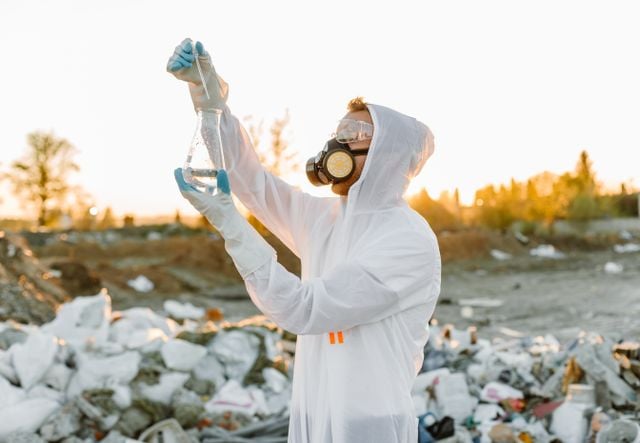

For decades, military bases across the country relied on firefighting foam containing PFAS chemicals to combat fuel fires during training and emergency response.
The foam worked well for its intended purpose, but it left behind a toxic legacy that continues to affect service members, their families, and nearby communities today.
If you or a loved one served at, or lived near, a military installation where drinking water was contaminated with PFAS, you likely have legal options.
Veterans and their families can pursue civil lawsuits against the manufacturers of these chemicals and firefighting foams, and may separately qualify for VA disability benefits.
Prior results do not guarantee a similar outcome.
New York’s Own PFAS Contamination Story
The clearest example sits in Orange County: PFOS was detected in Washington Lake, the City of Newburgh’s primary drinking water reservoir, in 2014. When the EPA lowered its short-term exposure guidance to 70 ppt in May 2016 and the city’s levels exceeded it, the city manager declared a state of emergency.
New York switched Newburgh to the Catskill Aqueduct within weeks, and the state listed Stewart Air National Guard Base as a state Superfund site in August 2016, specifically to hold the U.S. Department of Defense responsible for cleanup. Investigators traced the source to PFAS-containing firefighting foam used for training and emergency response at the base.
A granular activated carbon filtration system at the city’s water plant was completed in January 2018, and federal exposure assessments have continued to monitor the area since. As of recent state updates, PFAS contamination remains present in Washington Lake and on the base itself, and remediation is ongoing.
Stewart isn’t the only documented New York site. A 2023 Air Force and NYSDEC investigation plan for Niagara Falls Air Reserve Station confirms AFFF containing PFOS and PFOA was stored, used, and disposed of there in connection with firefighting and training activities dating back to 1970, and the Air Force has since funded interim measures including alternate drinking water for affected private well owners and treatment systems to limit further groundwater migration.
A 2020 preliminary environmental assessment for the Albany Army Aviation Support Facility No. 3 in Latham identified AFFF as a primary PFAS concern and found a “potentially complete” pathway for groundwater to reach residents downgradient of the facility.
Other New York military sites, including Griffiss and Plattsburgh Air Force Bases, appear in federal environmental cleanup databases as well, though the scope of PFAS-specific drinking water impact varies by site.
What Are PFAS and Why Are Military Bases Contamination Hotspots?
Per- and polyfluoroalkyl substances (PFAS) are synthetic chemicals developed for resistance to heat, water, and oil, and used for decades in nonstick cookware, stain-resistant fabrics, food packaging, and, critically for the military, aqueous film-forming foam (AFFF) used to extinguish fuel fires.
PFAS don’t break down naturally in the environment or the body, earning them the nickname “forever chemicals.”
When military firefighters used AFFF during training drills and emergency responses at airfields and installations, those chemicals seeped into the ground and migrated into drinking water sources serving both base personnel and surrounding communities.
How Much PFAS in Drinking Water Is Too Much?
Federal standard. In April 2024, the EPA finalized the first national drinking water rule for PFAS, setting enforceable limits of 4 parts per trillion (ppt) for both PFOA and PFOS, an extraordinarily small amount, along with a hazard index approach for four additional PFAS chemicals.
Public water systems must complete monitoring by 2027 and reach full compliance by 2029. Notably, the EPA set a health-based goal of zero for PFOA and PFOS, meaning the enforceable 4 ppt limit is a practical regulatory threshold, not a declaration that lower levels are entirely safe.
New York’s standard. New York adopted its own limit of 10 ppt for PFOA and PFOS before the federal government acted, which was ahead of its time when set but is now less protective than the 4 ppt federal standard.
New York continues to enforce its 10 ppt limit during the transition period before 2029, and a bill introduced in the state Senate in early 2026 aimed to codify the stricter federal limits on New York’s own timeline.
National scope. EPA monitoring data found that roughly 8% of U.S. public water systems had at least one PFAS chemical above the new limits, and separate U.S. Geological Survey research estimated PFAS are present in a substantial share of tap water samples nationwide, indicating contamination extends well beyond known military or industrial hotspots.
Can You Sue Over PFAS Contamination at Military Bases?
Yes, though the path runs around the government rather than through it. Service members generally cannot sue the federal government for injuries that occur “incident to service,” a legal barrier that’s been interpreted broadly and has blocked many veterans from seeking compensation for harms that would be compensable in a civilian context.
Because of this, PFAS lawsuits tied to military base contamination focus on the private manufacturers of AFFF and PFAS chemicals, on the theory that these companies designed, manufactured, and sold dangerous products while concealing known health and environmental risks from both the government and end users.
The AFFF multidistrict litigation. Federal PFAS and AFFF claims are consolidated in MDL 2873, in the U.S. District Court for the District of South Carolina. As of mid-2026, this includes roughly 15,000 plaintiffs, including firefighters, military personnel, airport workers, residents near contaminated bases, and water utilities. Relevant claim categories include:
Occupational exposure claims, from military firefighters and other personnel who repeatedly used AFFF or were directly exposed during their duties
Community water claims, from residents who lived near bases with documented PFAS groundwater contamination
Water utility claims, from municipal systems that sued manufacturers for contamination of source water linked to nearby installations
The court has selected bellwether cases focused on kidney cancer, testicular cancer, and thyroid disease to test legal theories and shape settlement negotiations.
A kidney cancer bellwether trial originally set for October 2025 was vacated, and as of the most recent reporting, no new personal injury trial date has been set and no global personal injury settlement has been reached.
Veterans and families with viable claims can still file individually; those cases are then “tagged” to the MDL and consolidated with the others, benefiting from shared discovery while keeping their own claim independent.
Legal theories generally include:
Product liability, arguing AFFF and PFAS-containing products were defectively designed and unreasonably dangerous given their foreseeable use at military bases, and that manufacturers failed to warn users about known cancer and health risks
Negligence, alleging manufacturers breached their duty of care by selling these products without adequate testing or warnings, and by failing to disclose contamination risks to the government and users
Nuisance or trespass, in some contamination cases, against utilities or industrial operators near bases
What Challenges Do These Claims Face?
Medical causation. Courts require evidence linking PFAS exposure to a specific person’s disease, not just general evidence that PFAS are hazardous. Defense experts often dispute whether a plaintiff’s exposure level was sufficient, whether the disease has other causes, and whether the science supports causation in that individual case.
Statutes of limitations. Time limits for filing vary by state and often start when the person knew or should have known about the disease and its potential cause, which for decades-old exposure can be a genuinely complicated determination, particularly if contamination at a specific base only became public knowledge recently.
Documenting exposure, since relevant records, water testing data, environmental investigations, and AFFF use history, may be scattered across military records, EPA and state databases, and internal company documents, sometimes requiring formal discovery or Freedom of Information Act requests to obtain. Veterans who served decades ago or moved between multiple bases may find reconstructing their exact exposure history difficult without this kind of assistance.
Frequently Asked Questions
I lived in Newburgh or near Stewart Air National Guard Base. Does that automatically mean I have a claim?
Not automatically, but it’s absolutely worth investigating. New York has already officially identified the base as the contamination source and designated it a state Superfund site specifically to hold the Department of Defense responsible for cleanup, which is a stronger starting evidentiary position than many other locations. You’d still need a qualifying diagnosis and expert support connecting that diagnosis to your specific exposure history, but the underlying contamination isn’t in dispute.
If I can’t sue the military directly, is a lawsuit even worth pursuing?
Yes. The claims in the AFFF litigation target the private manufacturers of the foam and chemicals, not the government, and that path remains fully open regardless of the general bar on suing the military itself.
Can I file a VA claim and a civil lawsuit at the same time?
Yes, and many veterans do both. They’re separate systems with separate standards of proof, and pursuing one doesn’t require giving up the other, though any eventual recoveries may need to be coordinated to avoid a double recovery for the same harm.
My diagnosis isn’t kidney, testicular, or thyroid cancer. Do I still have a claim?
Possibly. Those three conditions currently have the most developed litigation framework because the evidence connecting them to PFAS is strongest, but other conditions with growing scientific support, such as ulcerative colitis or certain reproductive cancers, may still support a claim with strong medical records and expert opinion connecting your diagnosis to your exposure.
How do I find out if my base had documented PFAS contamination?
An attorney can help access military records, EPA and state environmental databases, and, where necessary, Freedom of Information Act requests to establish contamination history at a specific installation, which can be difficult to compile on your own, especially for older or since-closed bases.
I live in New York now but was exposed at a base in another state. Does that affect where I can file?
It can, and where a claim is filed and which law applies depends on the specific facts, including where you currently live and where the case is filed relative to the ongoing multidistrict litigation. An attorney can evaluate the best approach for your specific situation.
If You Believe You Were Exposed to PFAS at a Military Base
PFAS contamination at military installations is a serious, ongoing issue affecting thousands of veterans and their families, and the legal and scientific understanding of it continues to develop quickly.
Porter Law Group represents New York veterans and families in complex toxic exposure cases, working with experienced medical and scientific experts to evaluate each client’s case.
If you have questions about PFAS exposure or want to discuss a potential claim, call 833-PORTER9, email info@porterlawteam.com, or reach us through our contact page for a free, confidential consultation. Prior results do not guarantee a similar outcome.
This article is for informational and educational purposes only. It is not a substitute for medical advice from a qualified healthcare provider or legal advice based on your specific circumstances.