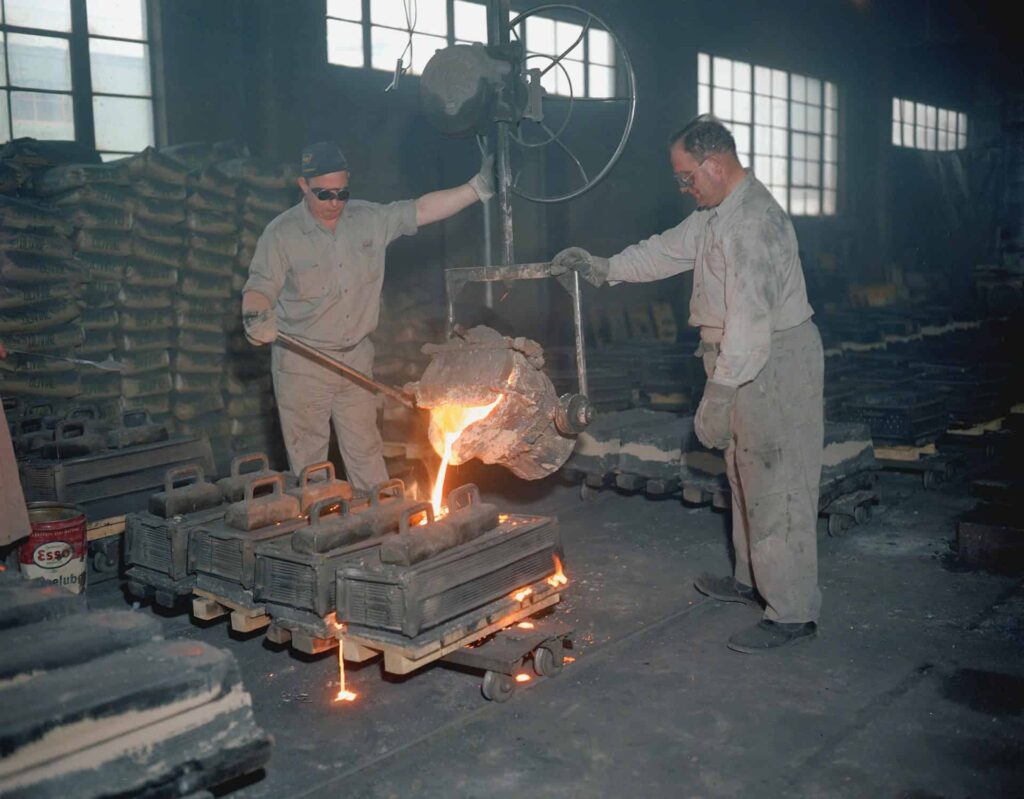

For decades, factories across New York relied on a solvent called trichloroethylene, or TCE, to degrease metal parts and clean machinery.
Workers breathed the vapors, touched contaminated surfaces, and went home with the chemical on their clothes, often without ever being told what it was.
Years or decades later, some of those same workers are now facing kidney cancer, liver cancer, or non-Hodgkin lymphoma, the three cancers most consistently linked to TCE, and only learning the connection after the diagnosis arrives.
Talk With a New York Personal Injury Lawyer at the Porter Law Group. Free, no-obligation, confidential.
When Should You Reach Out
The short answer is as soon as possible after a cancer diagnosis, especially if you have any reason to connect it to your old job, even if you’re not certain TCE was involved or whether your exposure was significant enough to matter.
That uncertainty is exactly what an initial case evaluation is for, not a reason to wait. Timing matters because evidence disappears: witnesses move away, companies close, and records get lost or destroyed the longer you wait.
How New York’s Discovery Rule Protects Former Factory Workers
If you were exposed to TCE in the 1980s and weren’t diagnosed until now, that doesn’t automatically mean you’re out of time.
New York applies a discovery rule specifically for latent toxic exposure under CPLR 214-c, meaning the three-year filing clock generally starts running when you discover your injury, typically at diagnosis, rather than when the original exposure happened decades ago.
New York’s courts have made clear that “discovering the injury” generally means discovering the underlying disease itself, not the later discovery that TCE specifically caused it.
That means the clock can start running at diagnosis even before you have any idea a chemical was involved, which makes waiting for certainty about the cause a genuinely risky strategy.
There’s a narrow additional path, CPLR 214-c(4), that can allow one more year to file if you discover the cause within five years of discovering the injury, but it comes with a demanding requirement to show the scientific knowledge to identify that cause simply wasn’t available sooner.
What Is TCE and Why Was It Used in Factories
Trichloroethylene is a clear, sweet-smelling liquid that evaporates quickly and dissolves grease and oil extremely effectively, which made it a standard industrial solvent from the 1940s through the 1990s in manufacturing plants, aerospace facilities, and metal fabrication shops.
Workers were exposed mainly through inhalation, since TCE evaporates at room temperature and built up in poorly ventilated spaces, and through direct skin contact from handling parts pulled straight out of degreasing tanks or wiping equipment down with solvent-soaked rags.
Many workers only knew it by a trade name, or simply called it “degreaser” or “solvent.” If you remember a chemical smell, open tanks, a haze in the air, or handling parts fresh from a cleaning process.
What Cancers Has TCE Been Linked To
The EPA’s own chemical risk assessment identifies TCE as carcinogenic to humans by all routes of exposure, specifically pointing to kidney cancer (renal cell carcinoma), liver tumors, and non-Hodgkin lymphoma as the cancer types central to that assessment.
ATSDR identifies degreasing operations specifically as a significant occupational exposure setting, alongside chemical manufacturing, dry cleaning, automotive repair, printing, and several other industrial processes.
A federal carcinogen classification tells you TCE is capable of causing these cancers under some circumstances, which is called general causation. It doesn’t automatically prove that TCE caused any one person’s specific cancer, which is called specific causation and requires its own case-by-case medical and scientific analysis.
A cancer diagnosis after years of factory work doesn’t automatically mean you have a winning claim, but it’s exactly the kind of situation that deserves a real evaluation rather than an assumption either way.
Can You Sue for Cancer from Workplace TCE Exposure
Yes, you’ll need to identify who’s actually responsible, which can include your former employer, whoever manufactured the TCE or TCE-containing products used at your plant, or third-party contractors who managed safety or industrial hygiene at the site.
New York’s workers’ compensation system generally bars you from suing your own employer directly for a workplace illness, though that exclusivity doesn’t extend to a manufacturer, a supplier, or another company that wasn’t your direct employer.
What Evidence Do You Need
Employment records are the starting point: pay stubs, W-2s, union records, or pension documents showing where you worked and when.
Industrial hygiene records, Safety Data Sheets, and product labels help establish that TCE was actually present at your workplace, and if the plant has closed, an attorney can often still track these down through discovery or from surviving corporate records.
Coworkers who remember the same conditions, the smell of solvents, the lack of ventilation, or other workers from the same plant who developed similar cancers, can meaningfully strengthen your case.
On the medical side, your diagnosis, pathology reports, and treatment records establish that you have cancer, and a medical expert, typically an occupational medicine specialist or toxicologist.
Summing It Up
If you worked around degreasing operations or industrial solvents and have been diagnosed with kidney cancer, liver cancer, or non-Hodgkin lymphoma, or if you’ve learned that other workers from your old plant developed similar illnesses, those are strong signals your situation deserves a closer look.
Porter Law Group works with industrial hygienists and medical experts to reconstruct decades-old exposure histories and connect them to a specific diagnosis.
If you worked in a factory where solvents were used and you’ve been diagnosed with cancer, Porter Law Group can help you understand your options.
Call 833-PORTER9, email info@porterlawteam.com, or visit porterprotects.com/contact. Prior results do not guarantee a similar outcome.
Frequently Asked Questions
I don’t remember the exact chemical I worked with, just that it smelled strong. Can I still investigate a claim?
Yes. Most workers knew products by trade names, brand names, or generic terms like “degreaser,” not by the chemical name trichloroethylene. An attorney or industrial hygienist can often identify the actual chemical through old Safety Data Sheets, purchase records, or product labels, even decades after the fact, so not knowing the exact name shouldn’t stop you from having your situation reviewed.
Is EPA’s rule restricting TCE relevant to my old exposure?
Not directly, but it’s useful context. The EPA rule targets a phaseout of most current and future TCE uses; as of the most recent update, certain exemption-related provisions remain postponed until May 18, 2026 while litigation continues. It reflects the federal government’s own risk findings about TCE, which can support your case’s general causation, but it doesn’t change the timeline or requirements for a claim based on exposure that already happened years ago.
My old employer no longer exists. Does that end my case?
Not necessarily. A manufacturer of the TCE-containing product, a contractor responsible for safety at the site, or another company that wasn’t your direct employer can often still be pursued even if your former employer has closed. Many manufacturers of older industrial chemicals have also established bankruptcy trust funds specifically to compensate people harmed by their products.
Can I pursue both workers’ compensation and a lawsuit?
Often, yes. Workers’ compensation generally addresses your own employer under a no-fault system with its own two-year deadline, while a civil lawsuit against a manufacturer or other third party follows a different discovery-based deadline. These aren’t mutually exclusive, and many former factory workers pursue both at the same time, since they cover different responsible parties and different types of compensation.
How do I know if I waited too long to file?
It depends heavily on when you were diagnosed and when you learned, or reasonably should have learned, of a possible connection to your old job, not on how long ago the original exposure happened. Because these deadlines run from discovery rather than exposure, many former factory workers are still within their filing window even decades later. The only way to know for certain is to have your specific timeline reviewed.
This article is for informational and educational purposes only. It is not a substitute for medical advice from a qualified healthcare provider or legal advice based on your specific circumstances.