
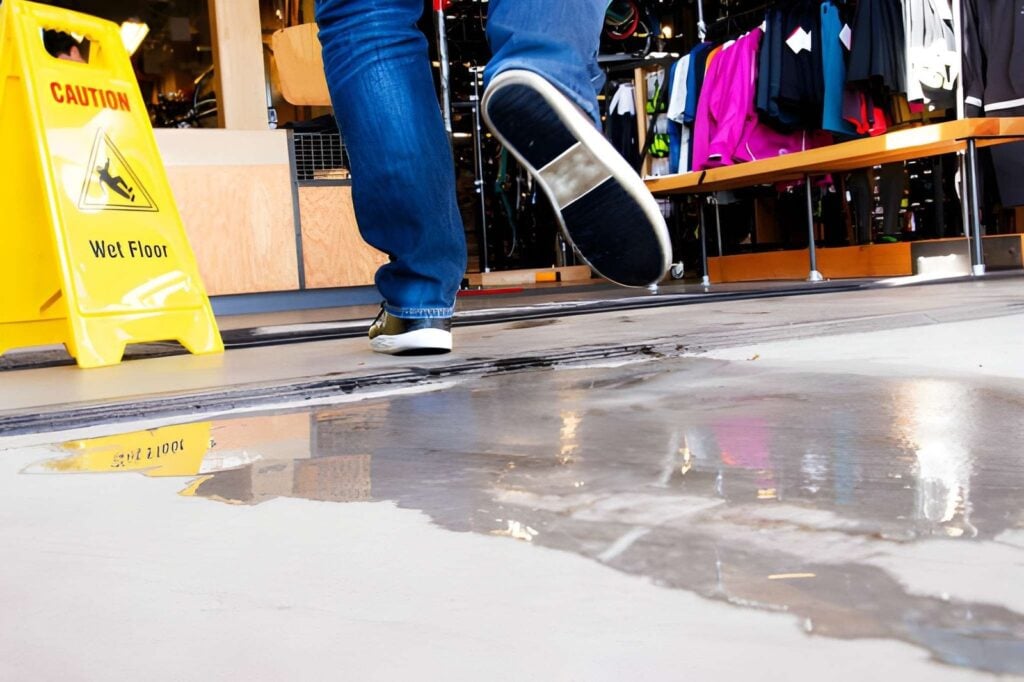

Under New York premises liability law, whoever owns, occupies, or controls a property must act reasonably to keep it in reasonably safe condition. That applies to retailers, grocery and warehouse stores, home improvement centers, and shopping centers.
An object in an aisle doesn’t prove negligence by itself. What matters is where the object was, who put it there, how long it stayed, how visible it was in that setting, and whether the store took reasonable steps to protect customers.
Prior results do not guarantee a similar outcome.
When Does a Pallet or Box Become an Unreasonable Risk?
Stores have to display merchandise, restock shelves, and use equipment to run their business, so not every object in an aisle supports a claim. The question is whether the object’s placement, size, height, or surroundings created a tripping risk the store should have prevented or warned about.
Factors that can make an object hazardous include:
It extends into a route people are expected to use. That includes aisles, entrances, exits, checkout lanes, and doorways to stockrooms or receiving areas.
It partly blocks a doorway or passage that someone has to move through.
The aisle is narrow or congested, leaving little room to maneuver.
Shoppers have to turn, reach, or look up at shelves while passing it.
It’s low to the ground or blends into the floor. Examples include pallet edges, the forks of a pallet jack, or flattened boxes.
Poor lighting, glare, shadows, or crowds make it hard to see.
The store’s layout funnels people past it, including around blind corners and endcaps.
Someone has to maneuver a cart, carry items, or watch children while getting around it.
It was left unattended or outside its usual spot. An example is a pallet jack left somewhere other than its normal charging or storage location.
It stayed in place long enough that employees should have noticed and corrected it.
Employees routinely leave objects in that area, creating a recurring pattern.
There were no markings, cones, barriers, or tape despite a foreseeable risk, and no alternative such as closing the aisle during stocking.
Being visible doesn’t make an object safe. Stores know customers look at shelves, compare prices, and manage children while they shop. They’re expected to arrange their premises with that normal behavior in mind.
How Does Notice Work in Store Trip and Fall Cases?
Notice is often the most contested issue. The store generally must have created the condition, known about it, or had the chance to discover it through reasonable inspection.
Creation. When a store employee placed or left the pallet, pallet jack, box, cart, or display where the fall happened, the store may be responsible for its own conduct. In that case, you generally don’t need to separately prove notice or how long the object was there. The question becomes whether the store acted reasonably in placing and managing it.
Actual notice. This applies when:
Store staff saw the obstruction before the fall
A shopper or employee reported it
Surveillance or internal records show management knew about it
The store’s routine stocking practices produced the condition
Constructive notice. This requires evidence that the specific condition was visible and apparent and had been there long enough that the store should have found and corrected it.
A general awareness that clutter sometimes appears isn’t enough. The evidence has to relate to the particular object that caused the fall. Useful evidence includes:
Surveillance video showing when the object appeared and how long it stayed
Aisle inspection or safety logs showing whether anyone checked the area
Stocking schedules and employee assignments showing who worked there
Photos showing dust, dirt, scuffing, or wear that suggests the object had been there a while
Employee testimony about how long the display or obstruction had been in place
Prior complaints or similar incidents in the same spot
Store policies on aisle inspections, merchandising, and equipment storage
When a store argues it lacked constructive notice, it’s generally expected to show when that specific area was last inspected before the fall.
General testimony about routine walk-throughs usually isn’t enough on its own. A photo taken after the fall shows what the object looked like, but not how long it had been there. That’s why video, employee testimony, and store records matter so much.
What Are Common Store Trip Hazards?
The same legal principles apply to every object, but each type raises its own questions.
Pallets and bulk merchandise. These are common in warehouse stores, home improvement centers, and grocery stores. Claims tend to be stronger when the pallet:
Extends beyond the display area into a customer walkway
Partly blocks a doorway or entrance
Has a low or protruding edge that’s hard to see
Sits near an intersection or endcap where customers turn
Forces shoppers around it in a congested area
Blends into the floor surface
Stores often respond that the pallet was a customary display, clearly visible, and reasonably placed. The outcome depends on exactly where it sat and what surrounded it.
Pallet jacks and stocking equipment. The low forks of a pallet jack are easy to miss, especially near doorways and receiving areas. Key questions include:
Where the equipment was supposed to be stored or charged
Who left it where it was
Whether it sat in a path people had to use
Whether the area was marked or closed off
These questions can matter to delivery drivers and vendor staff as well as shoppers. A worker hurt at a store they don’t work for may have a claim against the store, though it can interact with workers’ compensation.
Boxes and stocking materials. Boxes left in aisles during restocking raise questions like these:
Was the box empty, partly filled, or collapsed?
Was it in the normal walking path?
Was an employee actively stocking nearby, or had they moved on?
Was the aisle still open to customers?
Were cones or barriers in place?
Did the box stay behind after the stocking was done?
A working employee nearby may help the store’s defense, but it isn’t conclusive, especially if customers were still expected to use the aisle.
Shopping carts and stocking carts. The risk depends on whether the cart was:
Left unattended or parked around a corner
Partly hidden by merchandise
Angled across the aisle
Blocking the only route through
An employee standing nearby doesn’t automatically clear the store. The question is still whether the cart was reasonably positioned.
Displays and endcaps. Displays can become hazardous when they:
Narrow the aisle
Create blind corners
Stick out past their intended footprint
Force customers to walk close to an edge
A display’s sales purpose doesn’t make it safe or unsafe. The whole arrangement is what gets evaluated.
How Does Comparative Fault Affect Your Claim?
New York’s pure comparative negligence rule applies to store falls under CPLR 1411(a). If you’re found partly at fault, your recoverable damages are reduced by your share of fault, but your claim isn’t barred. That’s true even if your share is larger than the store’s.
The 2026 amendment that bars recovery when an injured person is more at fault than the defendants applies only to motor vehicle personal injury cases. It does not apply to premises claims like these.
Who Can Be Held Responsible?
Responsibility follows control of the area and who created or should have fixed the condition. Depending on the facts, potential parties include:
The retail store operator
A parent or corporate entity that controlled store operations or policies
The property owner or shopping center operator, especially for common areas
A tenant responsible for that part of the premises under its lease
A merchandising or display company that built or placed the display
A vendor whose promotional display created the hazard
A delivery or third-party stocking company whose workers left pallets, jacks, or boxes behind
In malls and shopping centers, responsibility is often divided between the tenant and the landlord, depending on the lease and where the fall happened.
Identifying every party early matters, because it also determines which deadlines apply.
What Evidence Should You Preserve After a Store Fall?
Stores clear hazards, move displays, and change layouts quickly, and surveillance video may be recorded over on a routine cycle. If you’re physically able, collect what you can right away.
Photograph and video the object from several angles before it’s moved.
Capture the surroundings. Include the aisle or doorway, nearby displays, the floor, the lighting, any signs or barriers, and the sightlines from the direction you were walking.
Estimate the object’s size and how much clear walking space was left.
Photograph your footwear and clothing, since the store may later point to them.
Note the store location, aisle number, date, and time.
Get witness names and contact information. That includes shoppers and employees who saw the fall or the object.
Ask for an incident report, get the report number, and note the names of managers or staff involved.
Keep receipts and loyalty card records that confirm you were in the store.
Write down what happened while it’s fresh. Include your direction of travel, what the object looked like, whether it moved, whether there were warnings, what employees said, and whether staff moved it after you fell.
Keep notes of every conversation with store staff or insurers.
Send a written preservation request. Identify the date, time, and location, and send it by certified mail or email so there’s a record. Ask the store to keep:
Surveillance video from before and after the fall
Incident reports and inspection logs
Stocking schedules and employee assignments
Equipment storage records
What Injuries Commonly Result From Trip and Fall Accidents?
Tripping over a low object happens suddenly, and people often can’t catch themselves. Common injuries include:
Wrist and hand fractures from trying to break the fall
Shoulder injuries, including rotator cuff tears and dislocations
Knee injuries, including meniscus and ligament tears
Ankle fractures and sprains
Hip fractures, especially in older adults
Back and neck injuries
Concussions and other brain injuries
Soft tissue injuries that become painful hours or days later
Some people are left with nerve damage, chronic pain, or permanent mobility limits. Falls are especially serious for older adults. The CDC reports that falls among adults 65 and older caused more than 43,000 deaths and about 4.5 million emergency department visits nationwide in 2024.
It also reports that more than 95 percent of hip fractures are caused by falling. These are national figures for falls of all kinds, not store falls specifically, but they show why safe walkways matter.
What Time Limits Apply to Store Trip and Fall Claims?
The deadline depends on who owns and operates the property. Missing one can end a claim regardless of the facts.
Situation | Deadline | Law |
|---|---|---|
Privately owned or operated store, landlord, or shopping center | Lawsuit within 3 years of the fall | |
Property owned or run by a city, county, town, village, fire district, school district, or other public corporation | Notice of claim within 90 days, and a lawsuit within 1 year and 90 days | GML 50-e and 50-i |
Fatal fall | Wrongful death lawsuit within 2 years of the death | EPTL 5-4.1 |
Injured child | The deadline is generally paused until the child turns 18 | CPLR 208 |
Don’t assume you have three years. A store inside a government-owned building, transit station, or airport may bring short notice rules into play, and some public authorities have their own.
If a 90-day notice deadline is missed, a court has discretion to allow a late notice in some circumstances. That isn’t guaranteed, and it can’t go past the deadline for filing the lawsuit itself. Settlement talks with an insurer generally don’t pause any deadline.
Frequently Asked Questions
What if I tripped over another customer’s cart, not the store’s?
A claim may still be possible, but it depends on notice. The store generally isn’t responsible for a cart another shopper left moments earlier. If the cart sat in the aisle long enough that employees should have noticed and moved it, the analysis changes. Video and witness accounts showing how long it was there usually decide that question.
What if the store won’t give me the surveillance video?
Stores usually don’t hand over video on request, and that alone doesn’t hurt your claim. What matters is that the video is preserved. A written preservation request sent quickly puts the store on notice to keep it. If a lawsuit is filed, the video and related records can be requested through the formal exchange of evidence in the case. Delay is the real risk, because many systems record over footage automatically.
Can I still have a claim if I didn’t report the fall before leaving?
Yes, possibly. Reporting it on the spot is best, because it creates a record and often prompts an incident report. If you left without reporting it, notify the store in writing as soon as you can. Include the date, time, aisle, and what happened, and ask the store to preserve video and records. Receipts, loyalty card data, and photos on your phone can help confirm you were there.
Should I accept the store’s offer to cover my medical bills?
Be careful before agreeing to anything. An offer to pay bills may come with a release that gives up any further claim, including for injuries that turn out to be worse than they first seemed. Some fall injuries take weeks to fully show themselves. Before signing a release or giving a recorded statement, it’s reasonable to talk with an attorney about what the document covers.
What if I saw the pallet before I tripped over it?
That doesn’t necessarily end a claim. Having seen the object may affect whether the store needed to warn you, and the store may argue you share some fault. But the store’s separate duty to keep walkways reasonably safe can still apply. The questions become whether the placement was unreasonably dangerous and whether you had a reasonable way around it. Any fault you share generally reduces your recovery rather than barring it.
Summing It Up
A pallet, pallet jack, box, cart, or display in a store can support a New York premises claim, but its presence alone isn’t enough.
The claim turns on whether the store created an unreasonable hazard, knew or should have known about it, and failed to move it, guard it, or warn people.
If you were hurt tripping over a pallet, box, cart, or display in a New York store, Porter Law Group can review what happened and explain your options. We also handle slip and fall accidents involving spills, wet floors, and other store hazards.
We handle injury cases on a contingency basis, so you pay no attorney fee unless we recover compensation for you. Call 833-PORTER9, email info@porterlawteam.com, or contact us online to schedule a free consultation.
This article is for informational and educational purposes only. It is not a substitute for medical advice from a qualified healthcare provider or legal advice based on your specific circumstances.
Prior results do not guarantee a similar outcome.