


Listeria is one of the few foodborne infections that can pass from a pregnant woman to her baby. The mother may feel only mildly ill, or not ill at all, while the infection reaches the placenta. The results can include pregnancy loss, premature birth, and serious illness in a newborn.
The medical link between contaminated food and harm to a baby is well established. The legal question is harder. An infection does not by itself show that a company or a provider was at fault, and tracing an illness to one food takes evidence that is easy to lose.
This guide covers the warning signs, the foods involved, what a New York claim has to prove, and the deadlines that apply.
Prior results do not guarantee a similar outcome.
What Is Listeria and Why Does Pregnancy Raise the Risk?
Listeriosis is an infection caused by the bacterium Listeria monocytogenes, usually picked up from contaminated food. Unlike many foodborne germs, Listeria can keep growing at refrigerator temperatures. That is why chilled, ready-to-eat foods come up so often in outbreaks.
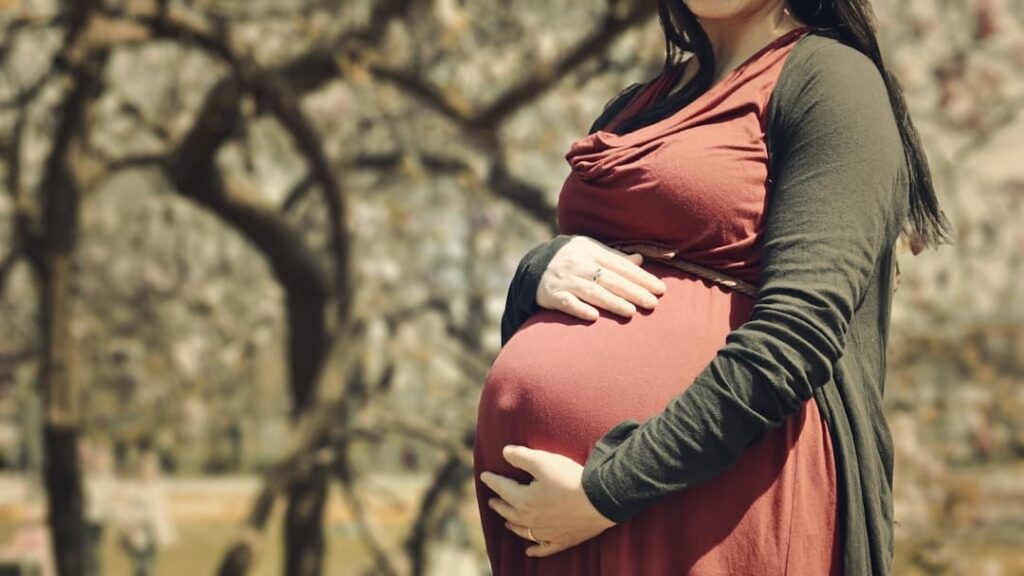
Pregnancy changes the odds. The CDC’s guidance on safer food choices for pregnant women states that pregnant women are 10 times more likely to get a Listeria infection. The illness in the mother is often mild, which makes it easy to miss.
The infection is still rare. The CDC’s page on people at increased risk for Listeria infection puts it at about 1 in 25,000 pregnant women each year. Among those who do become ill, the CDC reports that about 1 in 4 lose the pregnancy or lose the baby shortly after birth. That figure applies to confirmed illness. It does not describe everyone who ate a recalled food.
What Symptoms Should You Watch For?
In pregnancy, the usual signs are fever and flu-like symptoms such as muscle aches and fatigue. According to the CDC’s page on symptoms of Listeria infection, these symptoms are usually mild, and some pregnant people never have any.
Symptoms of the invasive form of the illness usually start within two weeks of eating contaminated food. The CDC’s clinical guidance on Listeria exposure describes three situations for higher-risk patients, including pregnant patients, who ate a recalled or implicated food:
No symptoms. Most experts believe no testing or treatment is indicated. The patient is told to come back if symptoms develop within two months.
Mild symptoms without fever. Watchful waiting is one reasonable approach. A blood culture is another. Experts differ on whether to start antibiotics while results are pending.
Fever above 100.6°F with compatible symptoms and no other known cause. The guidance calls for a blood culture and treatment for presumed listeriosis.
The CDC describes this as a framework built on limited evidence and not as a practice guideline. The fever number is written for clinicians. It is not a reason to wait before calling about symptoms that worry you.
How Can Listeria Harm a Pregnancy or a Newborn?
The infection can pass to the baby during pregnancy or around the time of delivery. The CDC lists these possible outcomes of infection during pregnancy:
Miscarriage
Stillbirth
Premature delivery
Life-threatening infection of the newborn
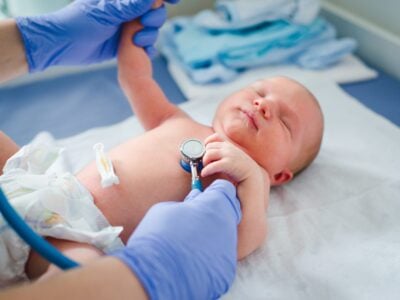
In newborns, serious Listeria infection can take the form of sepsis, which is an infection of the bloodstream, or meningitis, which is an infection of the lining around the brain and spinal cord. Babies who survive meningitis can be left with lasting problems, including hearing loss, seizures, and developmental delays.
How a child does depends on many things, including how early the baby was born and how quickly the infection was found and treated.
Timing helps doctors work out where a newborn’s infection came from. The CDC’s clinical overview says infection that appears within the first 6 days of life is usually acquired before birth, through the placenta. For infection that appears between 7 and 28 days, the source is less clear and may include exposure during delivery or in the hospital.
Prematurity complicates the picture. Many babies affected by Listeria are born early, and early birth carries its own risks of long-term problems. Sorting out which effects came from the infection and which came from prematurity is a medical question, and it matters in a legal claim too.
Outbreaks show how severe this infection can be across all age groups. The CDC reported that a 2024 outbreak linked to meats sliced at delis involved 61 illnesses, 60 hospitalizations, and 10 deaths in 19 states. Those totals cover everyone affected, not pregnancy cases alone.
Can Contaminated Food Lead to a Legal Claim in New York?
Yes, when the evidence connects a specific contaminated food to the infection and the infection to the harm. A diagnosis alone doesn’t establish that anyone was legally responsible. A claim generally has to show four things:
The food was contaminated. Lab testing of the product, a recall, or a public health investigation can show this.
You ate that food. Receipts, packaging, loyalty card records, and the accounts of people who shared the meal help prove it.
The food caused the infection. Timing matters, and so does lab work. Public health laboratories can compare the genetic fingerprint of bacteria from a patient with bacteria from a food or from other patients.
The infection caused the injury. Medical records and expert review connect the infection to the pregnancy loss, the early delivery, or the newborn’s illness.
These cases are hard to prove for practical reasons. The mother’s symptoms may be mild, the food is usually gone by the time anyone suspects it, and people eat many different things in the two weeks before they feel sick.
The infection is sometimes identified only after delivery. Even with a confirmed infection, a premature birth or a poor outcome does not prove that anyone was negligent.
Who May Be Responsible for Contaminated Food?
Contamination can happen at any point between the farm and the plate, so more than one business may be involved. Depending on the facts, the parties can include:
The manufacturer or processor that made or packaged the food
A distributor or wholesaler that stored and shipped it
The grocery store or deli that sliced, repackaged, or sold it
A restaurant or caterer that prepared and served it
Naming a business here doesn’t mean it was at fault. Where the contamination occurred has to be traced with evidence. Our food poisoning practice page explains how these claims are investigated.
A healthcare provider’s role is a separate question. Care is reviewed as a possible medical malpractice claim only when it departed from accepted practice and that departure caused or worsened an injury.
Not testing a patient who ate a recalled food but had no symptoms is not, by itself, a departure, since the CDC’s framework generally doesn’t call for testing in that situation.
What Legal Grounds Apply to a Contaminated Food Claim?
New York law offers three main grounds against a food business. They overlap, and a single case often relies on more than one.
Strict product liability. Food that reaches the consumer contaminated is treated as a defective product. The claim focuses on the condition of the food and doesn’t require proof that the company was careless. Our product liability practice page covers how these claims work.
Negligence. This asks whether a business failed to use reasonable care, for example in sanitation, temperature control, or testing.
Breach of warranty. Under UCC 2-314, a merchant who sells food impliedly promises that it is fit for its ordinary purpose, which for food means safe to eat. The statute treats serving food or drink for value, on the premises or elsewhere, as a sale. UCC 2-318 extends that protection to people who could reasonably be expected to eat the food, not only the person who bought it.
What Should Families Do After a Suspected Exposure?
Get medical care first, then keep what you still have. Most of these steps take only a few minutes.
Call your healthcare provider. Report any fever or flu-like symptoms, name the food, and say that you are pregnant. For a newborn who seems ill, seek care right away.
Don’t eat any more of the food. If some is left, ask your local health department whether it wants the product for testing and how to store it safely in the meantime.
Keep the packaging and receipts. Photograph the label, the lot number, and the use-by date.
Write down a food history. List what you ate over the past several weeks, where it came from, and when symptoms began.
Report the illness to your local health department. A report helps officials spot outbreaks. It is not a legal claim and doesn’t stop any deadline.
Request complete medical records. Ask for prenatal, delivery, newborn, lab, and pathology records. Public Health Law 18 gives patients and parents the right to request them.
Save recall notices. Keep letters, emails, and screenshots of any notice about the product.
A legal claim is never a substitute for medical care.
How Does New York Treat Pregnancy Loss and Newborn Injury Claims?
The answer depends on whether the baby was born alive, and the rules differ in ways many families don’t expect.
A baby who is born alive and injured. The child has a claim for injuries caused before birth, and it is separate from any claim the mother has. Parents may have a related claim for medical expenses. A mother generally cannot recover for her own emotional distress over the child’s injury unless she suffered an independent physical injury herself. Our birth injury practice page explains how these claims are evaluated.
A baby who is born alive and later dies. The estate’s personal representative can bring a wrongful death claim under EPTL 5-4.1. EPTL 5-4.3 limits that claim to the family’s financial losses, such as medical and funeral expenses. The estate may bring a separate claim for the child’s own conscious pain and suffering.
A miscarriage or stillbirth. New York does not allow a wrongful death claim on behalf of a baby who was not born alive. The mother has her own claim for the injury she suffered. In a food case, that includes the infection itself and the physical and emotional effects of the loss. In a medical malpractice case, New York has since 2004 allowed a mother to recover for emotional distress when malpractice causes a miscarriage or stillbirth, even without a separate physical injury.
These are hard distinctions to read about after a loss. They affect which claims are available, who can bring them, and how the deadlines run.
What Deadlines Apply to a Listeria Claim in New York?
Several clocks can run at once, and the shortest is 90 days when a public entity is involved.
Claim | Deadline | Source |
|---|---|---|
Product liability or negligence claim by the mother | 3 years from the injury | CPLR 214 |
Breach of warranty claim | 4 years from when the food was delivered | UCC 2-725 |
Medical malpractice claim | 2 years and 6 months from the act or omission, or from the end of continuous treatment for the same condition | CPLR 214-a |
Child’s own product or negligence claim | Paused during childhood, then 3 years from the 18th birthday | CPLR 208 and CPLR 214 |
Child’s own medical malpractice claim | Paused during childhood, but no more than 10 years from the malpractice | CPLR 208 |
Wrongful death | 2 years from the date of death | EPTL 5-4.1 |
Claim against a public entity, such as a public hospital or school district | Notice of claim within 90 days, lawsuit within 1 year and 90 days | General Municipal Law 50-e and 50-i |
Two cautions apply. The pause for children covers the child’s own claim. It does not extend a parent’s claim, and it doesn’t automatically extend the 90-day notice period. And a long deadline on paper doesn’t preserve evidence. Food, packaging, and store records are usually gone within weeks.
Frequently Asked Questions
Do I need a recall or a declared outbreak to bring a claim?
No. A recall is not a legal requirement. Recalls and outbreak announcements usually come only after several illnesses have been traced to one source, so a single case can occur before any notice is issued. A recall makes it easier to show the food was contaminated, but you still have to prove that you ate that product and that it caused the infection.
What if I already threw away the food and the packaging?
A claim can still be investigated. Purchases can often be shown through card statements, store loyalty accounts, online grocery orders, and delivery app histories. Stores and suppliers keep their own shipment and lot records for a time. Lab results from the mother or the baby can also be compared with outbreak data. How much can be rebuilt depends on how quickly those records are requested.
Can I bring a claim if I was sick but my baby was born healthy?
Possibly. A person made ill by contaminated food can have a claim for her own illness, medical costs, and time missed from work, whether or not the baby was affected. The claim rests on the same proof, which is that a specific food was contaminated and caused the infection. What it covers depends on how serious the illness was and what treatment it required.
Does it matter whether the food came from a restaurant or from a store?
Both can be responsible, though the proof differs. A packaged product usually has a brand and lot number that can be traced to a plant. A restaurant or deli meal has no label, so the evidence tends to be receipts, the accounts of others who ate there, and health department inspection or sampling records. New York’s warranty law treats a meal served for payment as a sale of food.
Who brings the claim when a newborn is the one who was harmed?
A parent or guardian usually brings the claim on the child’s behalf, and a court must approve any resolution of a child’s claim. If the baby died, the claim is brought by the personal representative of the baby’s estate, who is appointed by the Surrogate’s Court. Parents may also have claims of their own. The right structure depends on the family’s circumstances.
Summing It Up
Listeria is unusual among foodborne infections because a mild illness in the mother can have serious consequences for the baby. Whether that harm supports a legal claim in New York depends on proof, which means identifying the food, confirming the infection, and connecting the two to what happened to the pregnancy or the newborn.
If a Listeria infection affected your pregnancy or your newborn in New York, Porter Law Group can review what happened and explain the deadlines that may apply. Call 833-PORTER9, email info@porterlawteam.com, or reach us through our contact page. Contacting the firm does not create an attorney-client relationship.
This article is for informational and educational purposes only. It is not a substitute for medical advice from a qualified healthcare provider or legal advice based on your specific circumstances.
Attorney Advertising. Prior results do not guarantee a similar outcome.