
The Brooklyn Navy Yard, established in 1801, served as one of America's most important naval shipbuilding facilities for over 150 years. The shipyard played a crucial role during World War II, employing over 70,000 workers and producing battleships, aircraft carriers, and other vital naval vessels that contributed significantly to the Allied victory.
During its peak operations, the Brooklyn Navy Yard was a bustling industrial complex spanning over 200 acres along the East River, with numerous dry docks, machine shops, and manufacturing facilities. Like many shipyards of its era, the extensive use of asbestos-containing materials in shipbuilding and repair operations was common practice, potentially exposing thousands of workers to harmful asbestos fibers.
Exposure to asbestos can lead to several devastating health conditions, including mesothelioma, lung cancer, and asbestosis. Other serious conditions linked to asbestos exposure include ovarian cancer, laryngeal cancer, renal (kidney) cancer, and chronic obstructive pulmonary disease (COPD).
Settlement
Jury Verdict
Settlement
Settlement
The lawyers at the Porter Law Group have decades of experience representing individuals and families whose lives have been devastated by catastrophic injuries. We have obtained some of the largest settlements and verdicts in courts throughout the State of New York. We are a state-wide firm that handles cases with a hometown feel.
Our clients come to us looking for guidance and answers. With seasoned trial lawyers, the Porter Law Group has the resources necessary to help you navigate the most complex cases, against goliath insurance companies that will stop at nothing to prevent you from receiving the compensation you deserve.
You only get one chance to hire the best lawyer for you and your family. Hire the lawyers most recommended by former clients and local attorneys, and the firm that obtains superior results.
When you or a loved one's life has been devastated by a serious personal injury in Brooklyn, don't hire a lawyer without calling the Porter Law Group to learn why so many of our clients are thankful they trusted us with their case in their time of need.
If you or a loved one worked at the Brooklyn Navy Yard and have been diagnosed with an asbestos-related illness, you may be entitled to significant compensation. The Porter Law Group has extensive experience in handling complex personal injury cases. We understand the challenges faced by individuals and families affected by these devastating diseases and are committed to fighting for your rights.
Don't let the statute of limitations prevent you from seeking justice. Reach out to the Porter Law Group today for a free, no-obligation consultation. We work on a contingency fee basis, meaning you don't pay unless we win your case. To learn more about our proven success record, view the results we've achieved for previous clients throughout the State.
Brooklyn Navy Yard used asbestos extensively throughout its shipbuilding operations from the 1930s until its closure as a naval facility in 1966. Asbestos was prized in shipbuilding for its exceptional heat resistance, fire protection properties, and insulating capabilities, making it ideal for naval vessels and industrial facilities. Virtually every ship built at the Brooklyn Navy Yard from the 1930s onward contained asbestos in various components.
Ships constructed and repaired at the facility incorporated asbestos in numerous critical areas. Boiler insulation included both internal refractory lining and external wrapping, while steam pipe and hot water pipe insulation ran throughout vessels. Engine room components and machinery, as well as electrical wiring insulation, contained asbestos materials. Asbestos gaskets were installed in valves, pumps, and pipe connections, while asbestos rope seals were used in high-heat applications. Fire-resistant asbestos blankets protected surrounding areas during welding operations, and protective clothing worn by welders and foundrymen included asbestos fibers in leggings, aprons, and gloves.
The Brooklyn Navy Yard facility itself contained numerous sources of asbestos exposure beyond the ships. An onsite shop manufactured asbestos-containing cloths used as insulation for steam and water pipes on ships and in the shipyard's central power plant and boiler shop. Workers in the mixing room combined magnesium oxide and raw asbestos fibers to make insulation materials. The pipe shop used asbestos in manufacturing lagging materials, while building insulation in walls, ceilings, boilers, and incinerators throughout the yard contained asbestos.
Insulators and laggers faced the most intensive asbestos exposure at Brooklyn Navy Yard, as they directly applied, removed, and repaired asbestos insulation throughout naval vessels. These workers routinely handled raw asbestos fibers, mixing them into insulating cement and cutting pre-formed insulation to fit around pipes, boilers, and equipment. Removing degraded asbestos insulation from ships and machinery released substantial concentrations of airborne fibers in confined spaces below deck.
Boilermakers and boiler room workers maintained and repaired massive boiler systems that powered naval vessels, which were heavily insulated with asbestos materials. Their work involved removing degraded asbestos insulation, replacing asbestos gaskets and rope seals, and reinstalling new asbestos materials in confined boiler rooms where limited air circulation concentrated airborne fibers. Boilermakers experienced high exposure levels due to the release of asbestos dust during maintenance work on boilers and connected pipes and conduits.
Pipefitters and plumbers routinely worked with asbestos-containing gaskets, packing materials, and insulated pipes throughout ships. These workers cut, fitted, and replaced components that released asbestos fibers into confined spaces, and often had to remove old asbestos insulation to access pipes requiring repair. Electricians worked with asbestos-insulated wiring, electrical panels, and fire protection components, drilling through asbestos-containing bulkheads and experiencing both direct and bystander exposure during maintenance operations.
Welders and metal workers experienced significant bystander exposure even though they didn't primarily work with asbestos. They needed to remove asbestos insulation to access metal components requiring welding or cutting, and the intense heat from welding could degrade nearby asbestos materials, releasing fibers into work areas. Additional high-risk occupations included shipfitters, machinists, maintenance workers, painters, carpenters, caulkers, engine room workers, and engineers who encountered asbestos materials throughout their duties.

Brooklyn Navy Yard Asbestos Exposure History?
Get a free case review.
The Brooklyn Navy Yard was officially established on February 23, 1801, when the U.S. Navy purchased 40 acres from John Jackson, including an existing shipyard where the USS Adams (a 28-gun frigate) had been built in 1799. The first ship built under Navy management was the USS Peacock, a sloop of war launched in September 1813 during the War of 1812. The USS Ohio, the first ship of the line, had its keel laid in 1817 and was launched on May 30, 1820.
The yard entered its peak production period during World War II, when the government annexed adjacent land (including the nation's second-largest produce market) to construct the world's largest dry docks and crane. By 1944, more than 70,000 workers (including women hired for the first time as mechanics and technicians) worked in shifts around the clock. The yard built battleships and aircraft carriers, repaired more than 5,000 ships, and converted another 250 vessels, becoming the largest industrial center in the Navy and the largest employer in New York State. World War II officially ended on September 2, 1945, when Japan signed unconditional surrender aboard the yard-built USS Missouri (nicknamed "Mighty Mo").
In 1963, Defense Secretary Robert McNamara began studying the feasibility of closing redundant military installations to save money. Despite worker protests in Washington D.C. and Madison Square Garden, McNamara announced in November 1964 that the New York Naval Shipyard would close. The yard officially closed on June 25, 1966, after 165 years of "Service to the Fleet," employing more than 9,000 workers at the time and operating as the oldest continually active industrial plant in New York State.
The yard was sold to the City of New York in 1967 to create an industrial park. Today, the Brooklyn Navy Yard is a thriving 300-acre city-owned industrial park home to over 450-500 businesses and approximately 12,000 jobs. The Brooklyn Navy Yard Development Corporation (BNYDC) oversees ongoing redevelopment, with recent projects including a $2.5 billion master plan to add 5.1 million square feet of vertical manufacturing space. The facility focuses on modern manufacturing, green technology, renewable energy projects, and historic preservation while maintaining environmental compliance with city and state regulations.
Veterans who were exposed to asbestos during military service at Brooklyn Navy Yard may qualify for VA disability compensation if they develop asbestos-related illnesses. To be eligible for VA disability benefits, veterans must have a service-connected disability with a rating of at least 10 percent. Qualifying requires proving that asbestos exposure occurred during active duty, obtaining a diagnosis of an asbestos-related illness, and providing a statement from a doctor linking the diagnosis to military asbestos exposure.
The VA assigns disability ratings based on the severity of the condition and functional limitations. Veterans with mesothelioma or severe asbestosis often receive a 100% VA disability rating, which maximizes their monthly benefits. As of 2025, veterans with 100% disability ratings can receive almost $4,000 per month, with additional compensation available for veterans with dependents if the disability rating is at least 30 percent. The PACT Act has expanded coverage for various toxic exposures, including certain presumptive conditions related to asbestos exposure.
Additional support for veterans includes VA health care services, pensions, and survivor benefits for dependents of veterans who succumb to asbestos-related illnesses. Veterans and civilian shipyard workers can also pursue compensation through asbestos trust fund claims and personal injury lawsuits against asbestos manufacturers. Many Brooklyn Navy Yard workers have filed claims with the Owens Corning Fibreboard Asbestos Personal Injury Trust and other asbestos trusts, with total compensation often reaching $1 million or more when combining multiple sources.
Civilian workers who developed asbestos-related diseases from Brooklyn Navy Yard exposure can file personal injury lawsuits and asbestos trust fund claims independently of VA benefits. According to the Journal of Environmental Health Research, asbestos-related cancer among sailors is higher than in any other branch of the military, and thousands of Brooklyn Navy Yard workers were potentially exposed during the facility's operations.
Asbestos exposure can lead to a range of serious health conditions, including:
Mesothelioma is a devastating cancer with a long latency period, often taking 20 to 50 years after asbestos exposure for symptoms to appear. If you or a loved one has been diagnosed with mesothelioma and have a history of working at the Brooklyn Navy Yard, you may be eligible for compensation.
The Porter Law Group understands the physical, emotional, and financial toll that mesothelioma takes on patients and their families. We are dedicated to helping you navigate the legal process and fight for the compensation you deserve. Contact us today to schedule a free consultation and learn about your legal options.
Several parties may be held liable for asbestos exposure, including:
Determining liability in asbestos cases can be complex, requiring thorough investigations and research. The Porter Law Group has the resources and expertise to identify potentially responsible parties and build a strong case on your behalf. Contact us today to discuss how we can help you pursue justice.
Asbestos-related diseases have a long latency period, often taking decades for symptoms to manifest. This unique characteristic is taken into account by New York's "discovery rule" for asbestos cases. Under this rule, the statute of limitations for filing a personal injury claim begins when the illness is discovered or should have been discovered with reasonable diligence, rather than from the date of exposure.
For personal injury claims in New York, the statute of limitations is generally three years from the date of discovery. In cases of wrongful death due to asbestos-related diseases, the statute of limitations is two years from the date of death. Given these complex timelines, it's crucial to seek legal counsel as soon as possible.
The Porter Law Group can help you understand how these rules apply to your specific case and ensure your claim is filed within the appropriate timeframe.
In asbestos exposure cases, you may be eligible for compensation for various damages, including:
The Brooklyn Navy Yard served as America's premier naval shipbuilding facility for 165 years after its establishment in 1801. The yard reached peak activity during World War II when approximately 70,000 workers built and repaired naval vessels including the USS Missouri, USS Arizona, and USS Monitor. Defense Secretary Robert McNamara announced plans to close the yard in 1964 as part of cost-saving measures to eliminate redundant military installations.
The New York Naval Shipyard officially closed on June 25, 1966, after employing more than 9,000 workers and operating as the oldest continually active industrial plant in New York State. The city of New York purchased the property in 1967 to create an industrial park. Today, the Brooklyn Navy Yard operates as a thriving 300-acre city-owned industrial park housing over 450-500 businesses with approximately 12,000 jobs. The Brooklyn Navy Yard Development Corporation oversees ongoing redevelopment projects, including a $2.5 billion master plan to add 5.1 million square feet of modern manufacturing space.
Yes, veterans suffering from asbestos-related illnesses such as mesothelioma, asbestosis, or lung cancer may qualify for VA disability compensation. To receive benefits, veterans must prove that asbestos exposure occurred during active duty service and have been diagnosed with an asbestos-related condition. A statement from a physician linking the diagnosis to military asbestos exposure is required for eligibility.
VA disability ratings are based on the severity of the condition and functional limitations, along with factors like dependents, unemployability, and cost-of-living adjustments. Veterans with mesothelioma or severe asbestosis often receive a 100% VA disability rating, which provides the maximum monthly benefit of almost $4,000 as of 2025. Veterans with dependents may receive additional compensation if their disability rating is at least 30 percent. The PACT Act has expanded coverage for toxic exposures, though asbestosis is not currently classified as a presumptive condition and requires veterans to provide sufficient evidence linking their illness to military asbestos exposure.
The average mesothelioma settlement ranges between $1 million and $1.4 million, while the average mesothelioma trial verdict is $2.4 million. Asbestos trust fund claims average between $300,000 and $400,000 per trust, though many victims qualify for claims against multiple trusts, significantly increasing total compensation. The largest asbestos settlements exceed $10 million, while trial verdicts range from $5 million to $11.4 million.
Settlement amounts vary based on multiple factors including exposure history, severity of disease, number of companies involved, state laws, work history, and individual case circumstances. Settlements typically provide guaranteed compensation within a few months of acceptance and are usually not taxable under federal or state laws. Brooklyn Navy Yard workers diagnosed with mesothelioma have been awarded millions in compensation through lawsuits and trust fund claims. Veterans can also receive VA disability benefits of almost $4,000 per month in addition to lawsuit settlements and trust fund payouts.
The Brooklyn Navy Yard today operates as a modern industrial park with comprehensive environmental and safety standards. The Brooklyn Navy Yard Development Corporation (BNYDC) prioritizes environmental compliance to minimize negative effects on Brooklyn community members and neighbors, following stringent noise, air quality, and other environmental regulations at both city and state levels. BNYDC has implemented significant sustainability efforts including renewable energy projects, solar installations, advanced stormwater management systems, and urban farms on rooftops to reduce the facility's environmental footprint.
The yard's current operations focus on green practices and eco-friendly manufacturing, with ongoing investments in clean technology and sustainable operations. BNYDC has developed resilience strategies to protect the facility from flooding and climate-related risks, including protective barriers designed with elevations of up to 12-13 feet according to FEMA standards. The facility houses over 450-500 businesses including manufacturing companies, a movie studio, and film school, employing approximately 12,000 workers in modern facilities. However, individuals who worked at the Brooklyn Navy Yard during its shipbuilding operations from the 1930s through 1966 may have been exposed to asbestos and should consult with medical professionals if they have health concerns.
Have You Been Affected by Asbestos Exposure at Brooklyn Navy Yard?
Reach out now for a free, no-obligation consultation to understand your rights and options.
At the Porter Law Group, we are committed to providing compassionate, personalized legal representation to individuals and families affected by asbestos exposure. Our team of skilled attorneys has extensive experience in handling complex personal injury cases throughout New York State. We understand the unique challenges faced by asbestos victims and are dedicated to fighting for the compensation you deserve. With our resources, expertise, and commitment to client satisfaction, we strive to achieve the best possible outcome for your case.
The Porter Law Group offers comprehensive legal support for asbestos exposure victims. We handle all aspects of your case, from conducting thorough investigations and gathering evidence to negotiating with insurance companies and representing you in court if necessary. Our team works diligently to build a strong case, proving the connection between your asbestos exposure and your illness. We aim to secure fair compensation for your medical expenses, lost wages, pain and suffering, and other damages related to your condition.
If you or a loved one has been diagnosed with an asbestos-related illness after working at the Brooklyn Navy Yard or any other industrial facility in New York, don't face this challenging time alone. The Porter Law Group is here to help you navigate the legal process and fight for the compensation you deserve.
Call us today at 833-PORTER9 or email info@porterlawteam.com for a free, no-obligation consultation. Remember, we work on a contingency fee basis, so you don't pay unless we win your case. Let us put our experience and resources to work for you and your family.
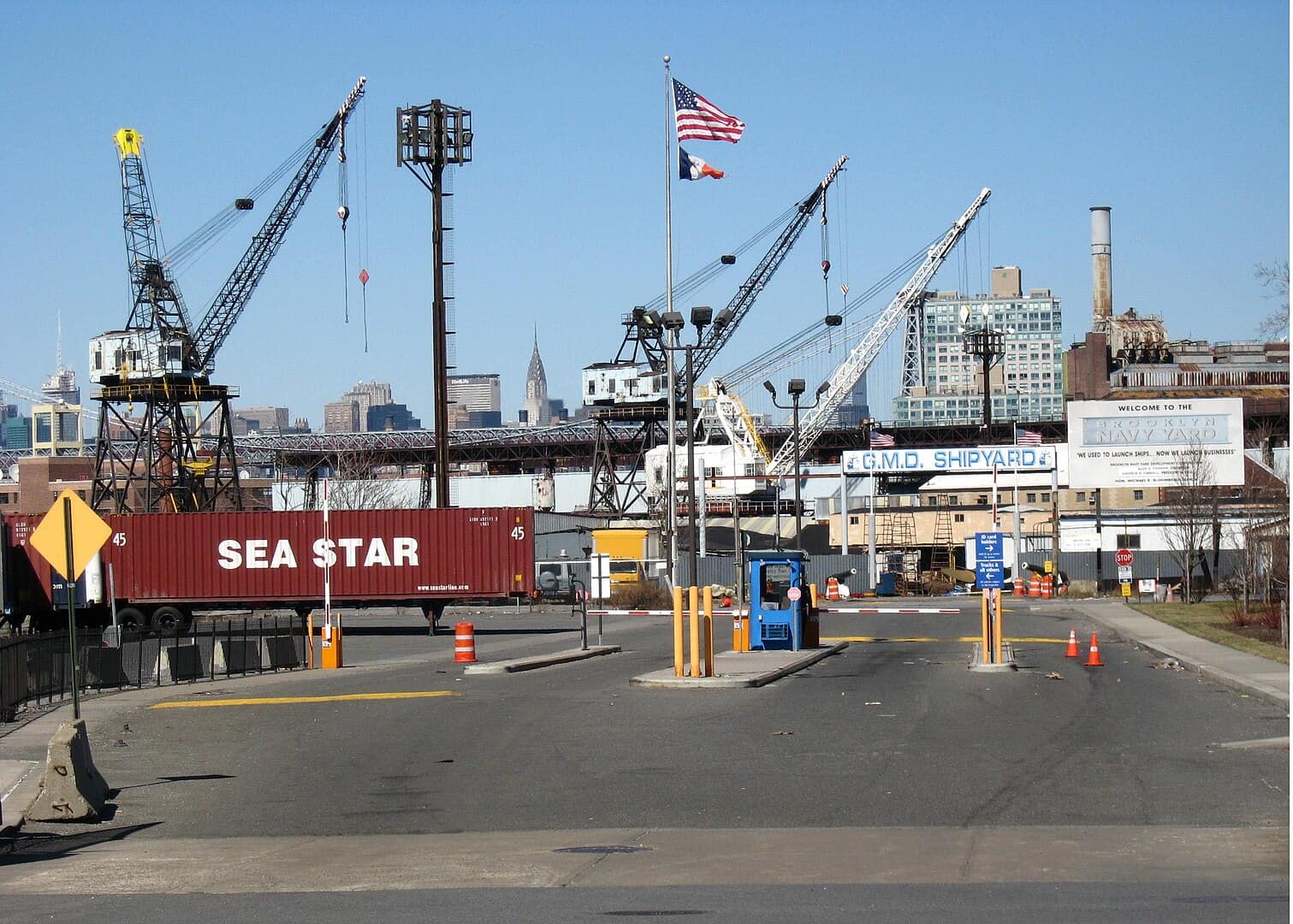
Post Image: By Jim.henderson at en.wikipedia - Own workTransferred from en.wikipedia, Public Domain, https://commons.wikimedia.org/w/index.php?curid=17872886

Avoid sharing confidential information via contact form, text, or voicemail as they are not secure. Please be aware that using any of these communication methods does not establish an attorney-client relationship. *By appointment only.
The information contained on this site is proprietary and protected. Any unauthorized or illegal use, copying, or dissemination will be prosecuted to the fullest extent of the law. All content on this site is provided for informational purposes only. It is not, nor should it be taken as medical or legal advice. None of the content on this site is intended to substitute for medical advice, diagnosis, or treatment. Attorney Advertising.
We serve clients in every city and county in New York State. These include places like: The Adirondacks, Albany, Alexandria Bay, Amsterdam, Astoria, Auburn, Ballston Spa, Batavia, Beacon, Binghamton, Brooklyn, Buffalo, Canandaigua, Carthage, Cattaraugus, Catskill, Cayuga Lake, Cazenovia, Chelsea, Clayton, Clifton Park, Cobleskill, Colonie, Cooperstown, Corning, Cortland, Delhi, Delmar, Dunkirk, East Aurora, East Hampton, Elmira, Fayetteville, Finger Lakes, Flushing, Fredonia, Fulton, Garden City, Geneva, Glen Cove, Glens Falls, Gloversville, Gouverneur, Great Neck, Greenwich Village, Hamilton, Hammondsport, Harlem, Haverstraw, Hempstead, Herkimer, Hornell, Hudson, Huntington, Ilion, Ithaca, Jamaica, Jamestown, Johnstown, Kingston, Lake George, Lake Placid, Lewiston, Little Falls, Liverpool, Lockport, Long Island City, Lowville, Malone, Manhattan, Manlius, Massena, Medina, Middletown, Monticello, Montauk, Mount Vernon, New Paltz, New Rochelle, Newburgh, Niagara Falls, North Tonawanda, Norwich, Nyack, Ogdensburg, Old Forge, Olean, Oneida, Oneonta, Ossining, Oswego, Penn Yan, Peekskill, Plattsburgh, Port Chester, Potsdam, Poughkeepsie, Queens, Rhinebeck, Riverhead, Rochester, Rome, Rye, Sag Harbor, Saranac Lake, Saratoga Springs, Schenectady, Seneca Falls, Seneca Lake, Skaneateles, SoHo, Southampton, Spring Valley, Staten Island, Stony Brook, Suffern, Syracuse, Tarrytown, The Bronx, Thousand Islands, Ticonderoga, Troy, Tupper Lake, Utica, Warsaw, Waterloo, Watertown, Watkins Glen, Wellsville, White Plains, Williamsburg, Woodstock, Yonkers, and many more communities throughout New York State.
Copyright © 2025, Porter Law Group. Personal Injury Lawyers
Made with 💛 by Gold Penguin


