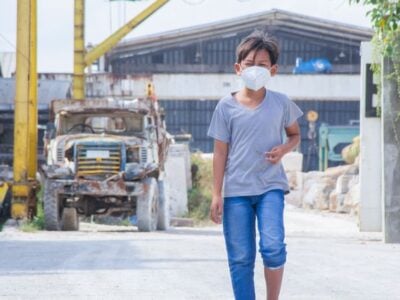
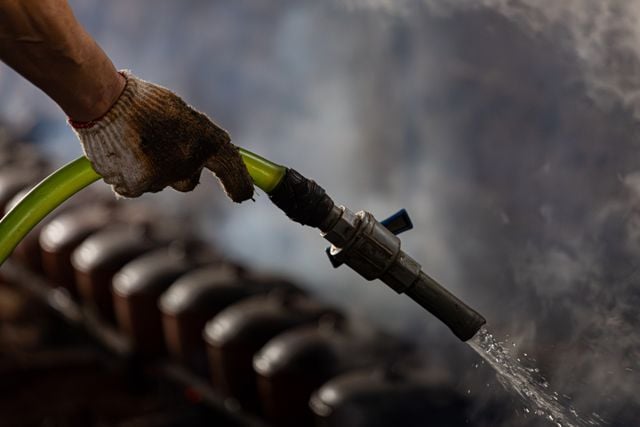

If you’ve worked in a synthetic rubber plant, a tire factory, a plastics facility, or a petrochemical operation, there’s a real chance you were exposed to 1,3-butadiene.
This colorless, highly flammable gas is a basic building block for synthetic rubber and many plastics. It is also a recognized human carcinogen. The strongest evidence comes from worker studies showing that leukemia risk rose with the amount of butadiene people breathed on the job over the years.
In December 2025, the EPA finalized a risk evaluation finding unreasonable inhalation risks to workers in 11 industrial uses of the chemical.
Many workers don’t know they were exposed or what protections the law requires. Often they find out only after a diagnosis, years after the exposure ended.
This guide explains what butadiene is and what the science shows about cancer, what OSHA requires, and what options New York workers and families have.
Prior results do not guarantee a similar outcome.
What Is 1,3-Butadiene?
1,3-Butadiene is a gas at room temperature with a mild, gasoline-like odor. It’s extremely flammable and can form explosive mixtures with air. Industry uses it mainly as a raw material that gets turned into other products.
Because it’s a gas, workers are exposed mainly by breathing it in. People encounter low levels in everyday life from vehicle exhaust, gasoline vapor, and cigarette smoke.
The EPA’s risk evaluation for 1,3-butadiene explains that finished consumer products contain only tiny amounts. It describes the concern as one about industrial workplaces, where exposure can be much higher.
That’s why occupational exposure is the focus of most of the research and regulation. Working near a finished tire isn’t the issue. The issue is breathing airborne butadiene where it’s made, handled, or turned into other products.
What Does the Science Say About Butadiene and Cancer?
Butadiene’s classification as a human carcinogen built up over decades. The National Toxicology Program first listed it in 1989 as reasonably anticipated to cause cancer. Its Report on Carcinogens profile for 1,3-butadiene explains that the listing was upgraded to “known to be a human carcinogen” in 2000. The upgrade was based on evidence from human studies, including excess leukemia among workers in the synthetic rubber industry.
The International Agency for Research on Cancer rated butadiene “probably carcinogenic to humans” in the 1990s. In 2008, it moved butadiene to Group 1, carcinogenic to humans, based on sufficient evidence of increased leukemia risk in people.
OSHA’s butadiene health effects page notes that the EPA also classifies it as a known human carcinogen. The EPA’s 2025 evaluation lists leukemia, bladder cancer, anemia, and reduced birthweight pregnancies among the health risks from high industrial exposure.
The biology helps explain why. When butadiene enters the body, liver enzymes break it down into reactive compounds called epoxides.
These compounds can bind to DNA and cause mutations. Butadiene has been found to damage genetic material in virtually every laboratory test system used to study it. People also vary in how efficiently they metabolize it.
The most important human evidence comes from long-term studies of synthetic rubber workers. A 2021 study of 21,087 workers at six North American synthetic rubber plants, followed through 2009, measured cumulative exposure in “ppm-years.” That unit combines how much butadiene was in the air with how many years a person worked in it.
Leukemia rates rose as cumulative exposure rose. Workers in the highest exposure group had about 2.5 times the leukemia death rate of unexposed workers.
The trend was statistically significant for leukemia overall and especially for lymphoid leukemia. The study did not find a consistent link with myeloid leukemias, non-Hodgkin lymphoma, or multiple myeloma.
Most of these workers were also exposed to styrene, but the butadiene pattern was clearer and more consistent than the styrene pattern.
What Does OSHA Require for Butadiene Exposure?
OSHA’s butadiene standard, 29 CFR 1910.1051, applies to workplaces where employees may be exposed. It took effect after OSHA issued its final rule in November 1996. That rule replaced an old limit that had allowed exposures up to 1,000 parts per million averaged over a workday. The current standard sets:
Limit | Level |
|---|---|
Permissible exposure limit (PEL) | 1 ppm as an 8-hour time-weighted average |
Short-term exposure limit (STEL) | 5 ppm over any 15 minutes |
Action level | 0.5 ppm as an 8-hour time-weighted average |
Employers must measure exposure from air samples taken in workers’ breathing zones and repeat monitoring on a schedule tied to the results.
They must notify each affected employee of the results within 15 working days. If a limit was exceeded, they must also give written notice of the corrective action they’re taking and when it will be completed.
Where exposures exceed the limits, employers must do several things:
Mark off regulated areas
Use engineering controls and work practices first, with respirators as a supplement
Follow a written compliance plan that includes regular leak detection
Rotating workers in and out of exposed jobs isn’t allowed as a way to comply. Where exposures exceed the action level, employers must also run an exposure goal program aimed at keeping normal exposures below it.
At sites with more than one employer, the company that sets up a regulated area must tell contractors and other employers where it is and who can enter. Employers must also provide training at the start of the job and at least once a year after that, and they must plan for emergencies.
Employers must keep exposure monitoring records for at least 30 years. They must keep medical screening records for the length of employment plus 30 years. Under OSHA’s records rule, 29 CFR 1910.1020, employees can see and copy their own records.
OSHA has said an employer that can’t provide access within 15 days of a request must explain the delay and give a date. OSHA has also confirmed the 30-year retention requirement, which matters for cancers that appear long after the exposure.
Two points matter for anyone exposed before the late 1990s. The old limit of 1,000 ppm was far higher than today’s 1 ppm. And OSHA’s monitoring requirements didn’t exist until the new standard took effect, so many earlier exposures were never measured.
Those exposures can still be reconstructed, but it takes other evidence.
Can You Get Compensation for Cancer Linked to Butadiene in New York?
There are two main paths, and they often run side by side.
Workers’ compensation
New York workers’ compensation covers occupational diseases, including cancers caused by workplace exposures. According to the Workers’ Compensation Board’s occupational disease page, a worker disabled by an occupational disease receives the same benefits as a worker hurt in an on-the-job accident.
Claims are filed on an Employee Claim, Form C-3. It’s a no-fault system, so you don’t have to prove your employer was careless. You do have to show your illness is related to your work.
Claims against other companies
A lawsuit may be possible against companies other than your employer that contributed to the exposure. Examples include a chemical supplier or equipment maker that failed to warn about cancer risks, or the owner of a plant where you worked as a contractor.
Under New York product liability law, a supplier can be responsible for inadequate warnings about known hazards. These claims can include categories of harm that workers’ compensation doesn’t cover, such as pain and suffering.
How Long Do You Have to File a Claim in New York?
Cancers from chemical exposure often appear years after the exposure ends, and New York’s deadlines account for that in specific ways.
Situation | Deadline | Law |
|---|---|---|
Workers’ compensation for an occupational disease | Within 2 years after disablement and after you knew or should have known the disease was caused by your work | |
Lawsuit against a third party for the latent effects of exposure | 3 years from when the injury was discovered, or should have been discovered, whichever is earlier | |
Claim against a public entity | Notice of claim within 90 days, measured from discovery of the injury in latent exposure cases | GML 50-e and CPLR 214-c |
Wrongful death | 2 years from the date of death | EPTL 5-4.1 |
The lawsuit deadline under CPLR 214-c generally runs from discovery of the illness, not from discovery of its cause. The law allows a limited extra window when the medical or scientific knowledge needed to identify the cause didn’t exist yet, but that exception has strict conditions.
When a worker has died, dependents filing for workers’ compensation must also meet the time limits. Because the workers’ compensation and lawsuit deadlines run on different clocks, it’s best to get advice soon after a diagnosis.
New York’s wrongful death law currently limits the family’s recovery to financial losses, such as funeral costs, medical bills, and lost support. It does not include compensation for grief. The estate may also pursue the worker’s own claim for pain and suffering before death. What any claim may include depends on the diagnosis, the exposure evidence, and the parties involved.
Frequently Asked Questions About Butadiene Exposure
I worked in a rubber plant before the late 1990s. Does the old exposure limit matter?
It can. Before OSHA’s current standard took effect, the federal limit allowed far higher exposures, and routine monitoring wasn’t required. That means many workers from that era had significant exposures that were never measured. A claim can still be built. Industrial hygienists can estimate past exposures using several sources: job titles, plant processes, production records, published studies of similar facilities, and coworker accounts.
I smoked for years. Can I still bring a claim?
Possibly. Smoking is a known risk factor for some leukemias, and defendants will raise it. But having more than one risk factor doesn’t automatically defeat a claim. The question is whether your work exposure was a substantial factor in causing your cancer. Experts weigh your exposure history, your diagnosis, and your other risk factors together.
I was a contractor working inside someone else’s plant. Who might be responsible?
Contractors can be in a different legal position than plant employees. Your own employer is generally covered by workers’ compensation. The plant owner, if it isn’t your employer, may face a separate claim if it controlled the work area or knew about the hazard and didn’t protect you. OSHA’s standard requires the owner to tell other employers on site where its regulated areas are. Suppliers of the chemical or equipment may also be responsible for inadequate warnings. Identifying every company involved in the work site matters.
My spouse died of leukemia after years at a petrochemical plant. Can our family file a claim?
Yes, potentially. Families can pursue workers’ compensation death benefits, and the estate may bring wrongful death and survival claims against responsible third parties. Deadlines still apply. A wrongful death lawsuit must generally be filed within two years of the death, and workers’ compensation has its own timing rules. Records of your spouse’s work history, medical screening results, and exact diagnosis are especially important.
Do I need to know exactly how much butadiene I breathed?
No. Few workers know their exact exposure levels, and many older exposures were never measured. Claims often combine several kinds of evidence: job duties, how long you held each job, the processes in your work area, any monitoring data that exists, and testimony from people who worked alongside you. Experts use that information to estimate cumulative exposure in ppm-years, the same measure researchers use in worker studies.
Summing It Up
1,3-Butadiene is a recognized human carcinogen. Worker studies show leukemia risk rising with cumulative exposure, most clearly for lymphoid leukemia, and federal regulators continue to find serious inhalation risks to workers in industrial settings.
If you or a family member developed leukemia or another blood cancer after working in rubber, tire, plastics, or petrochemical manufacturing, Porter Law Group can review your work history and explain your options.
Our firm has recovered more than $500 million for injured New Yorkers. You can see examples on our results page.
We handle toxic exposure cases on a contingency basis, so you pay no attorney fee unless we recover compensation for you. Call 833-PORTER9, email info@porterlawteam.com, or contact us online to schedule a free consultation.
This article is for informational and educational purposes only. It is not a substitute for medical advice from a qualified healthcare provider or legal advice based on your specific circumstances.
Prior results do not guarantee a similar outcome.