


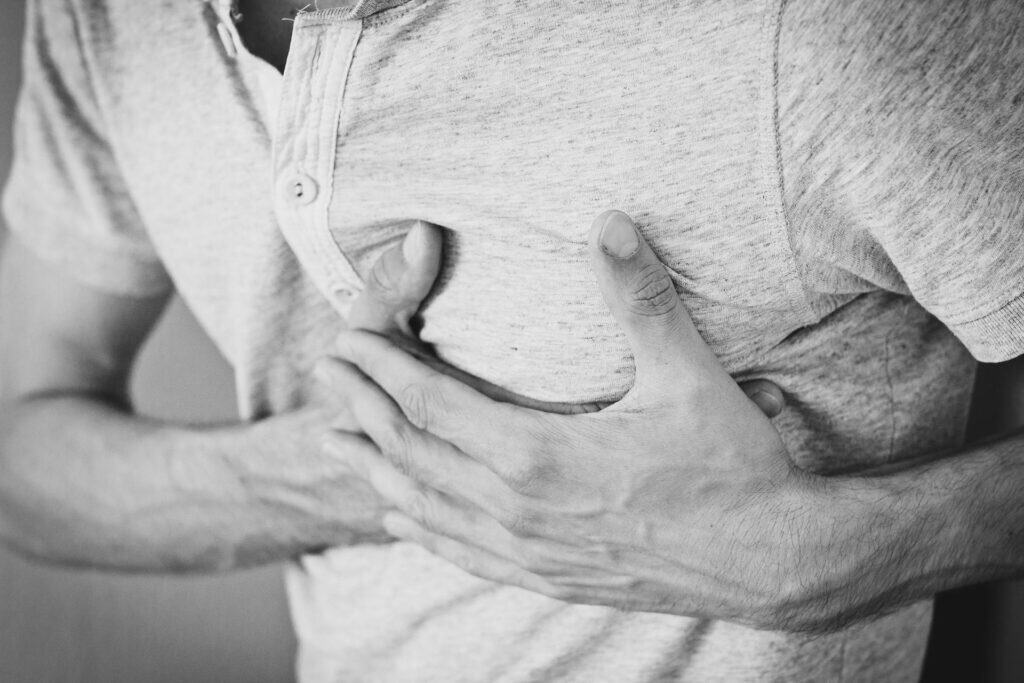
Getting into a car accident is jarring enough. But when you start feeling chest pain afterward, the situation becomes genuinely frightening. That tightness in your chest could be something minor, or it could signal a serious injury that needs immediate medical attention.
Chest injuries from car accidents are more common and more dangerous than most people realize. They're the second leading cause of death in motor vehicle crashes, right after head injuries. And here's what makes them particularly scary: many chest injuries don't show obvious symptoms right away. You might walk away from an accident feeling mostly okay, only to develop serious complications hours or even days later.
If you've been in a car accident and are experiencing any chest discomfort, this article will help you understand what might be happening medically, what treatment options exist, and how New York's insurance laws affect your ability to get compensation for your injuries.
Why Chest Injuries Happen in Car Accidents
The mechanics of a car crash create the perfect conditions for chest trauma. When your vehicle suddenly stops during a collision, your body keeps moving forward at whatever speed you were traveling. Even with a seatbelt on, your chest absorbs enormous force as it decelerates rapidly.
Blunt chest trauma occurs in up to 50% of all fatal motor vehicle accidents. That statistic alone should make anyone take chest pain after an accident seriously. The sudden compression and deceleration can cause everything from bruised ribs to severe, life-threatening internal injuries.
Seatbelts save lives, there's no question about that. But they also create a specific injury pattern. The diagonal strap crosses your chest, and during impact, it can fracture your sternum or ribs even as it prevents you from going through the windshield. Doctors sometimes call sternal fractures "typical seat belt trauma" because they see them so often in people who were properly restrained during crashes.
The steering wheel presents another major danger, particularly in older vehicles without modern airbag systems. Direct impact against the steering wheel can cause severe chest wall injuries and damage to internal organs.
What Types of Chest Injuries Happen in Car Accidents
Not all chest injuries are the same. Some heal with rest and pain management, while others require emergency surgery. Understanding the different types helps you recognize what might be happening to your body after a crash.
Rib Fractures
Broken ribs are the most common chest injury in car accidents. They occur in the majority of blunt chest trauma cases. While a single fractured rib is painful, it's usually not life-threatening. The real danger comes when multiple ribs break simultaneously.
Fractured ribs can puncture or tear your lungs, blood vessels, or the pleura (the membrane surrounding your lungs). This can lead to pneumothorax, where air leaks into the space around your lung and causes it to collapse. Hemothorax is similar but involves blood filling that space instead of air.
Multiple rib fractures significantly increase both the severity of complications and the risk of death. Your ribs protect vital organs, and when several break, that protection is compromised.
Sternal Fractures
Your sternum, or breastbone, runs down the center of your chest. Fractures here occur in about 4% of motor vehicle crash victims. The numbers have actually increased over the past decade as seatbelt use has become mandatory, which sounds counterintuitive until you understand the mechanism.
The seatbelt strap creates a concentrated line of force across your chest during impact. That force, combined with your body's forward momentum, can fracture the sternum even as the belt prevents more catastrophic injuries.
Sternal fractures typically cause tenderness, swelling, and a crackling sensation over the breastbone. You might see visible deformity or bruising in a diagonal line across your chest. Between 66% and 83% of all sternal fractures result from traffic accidents, making this injury pattern something emergency room doctors monitor carefully.
What concerns doctors most about sternal fractures is what they might indicate about other injuries. The sternum sits close to your heart, and the same force that broke the bone could have injured your heart or major blood vessels. Sternal fractures are also associated with thoracic spine injuries, particularly when the upper portion of the sternum (called the manubrium) breaks.
Flail Chest
This is one of the most serious chest wall injuries you can sustain. Flail chest happens when multiple adjacent ribs break in multiple places, creating a segment of your chest wall that's no longer connected to the rest of your rib cage. This "floating" segment moves independently, often in the opposite direction from the rest of your chest when you breathe.
If emergency responders identify flail chest at an accident scene, protocols require transport to the highest-level trauma center available. The injury indicates severe force and often comes with other life-threatening damage.
Pulmonary Contusion
Think of this as a deep bruise to your lung tissue itself. The blunt impact from a car crash can bruise the delicate tissue of your lungs without breaking ribs or penetrating the chest wall. Pulmonary contusions are common in severe accidents and can significantly impair your ability to breathe properly.
The tricky part about pulmonary contusions is that they often worsen over the first 24 to 48 hours after injury. You might feel relatively okay immediately after the accident, then find yourself struggling to breathe a day later as the injured lung tissue swells and fills with fluid.
Cardiac Injuries
Your heart sits behind your sternum, protected by your rib cage. But in a severe enough impact, that protection isn't always sufficient. Cardiac injuries from car accidents can range from minor bruising of the heart muscle to life-threatening tears in the heart or major blood vessels.
Complex cardiac arrhythmias (irregular heartbeats), new heart murmurs, low blood pressure, or chest pain that feels like angina can all indicate cardiac injury. The challenging aspect of these injuries is that symptoms may not be clearly apparent when you first arrive at the emergency department. Sometimes the signs only appear hours later when continuous monitoring picks up an abnormal heart rhythm.
Other Serious Internal Injuries
Less common but extremely serious injuries include diaphragmatic rupture (a tear in the muscle that separates your chest from your abdomen), tracheobronchial injury (damage to your windpipe or the airways leading to your lungs), and disruption of the pulmonary artery. That last one is rare but usually fatal because the pulmonary artery carries blood from your heart to your lungs, and if it tears, you can bleed to death internally within minutes.
How Doctors Diagnose Chest Injuries
If you go to the emergency room with chest pain after a car accident, expect a thorough evaluation. Doctors follow specific protocols because missing a chest injury can be fatal.
The physical examination comes first. The doctor will look for visible signs: bruising in the pattern of a seatbelt, swelling over your sternum, deformity of the chest wall. They'll listen to your heart and lungs with a stethoscope, checking for abnormal sounds that might indicate fluid or air where it shouldn't be. They'll gently press on your ribs and sternum, feeling for areas of tenderness or that distinctive crackling sensation (called crepitation) that indicates broken bones.
But physical examination alone isn't enough. Many serious chest injuries don't produce obvious external signs at first.
Portable chest X-rays are typically the first imaging test ordered. They're quick, available in every emergency department, and can identify many fractures and lung injuries. However, X-rays miss things. Studies show that CT scans are far superior for demonstrating significant lesions that initial chest radiography overlooks.
For this reason, if you had significant chest impact in your accident, your doctor should order a CT scan even if the chest X-ray looks normal. The CT provides detailed cross-sectional images that can reveal fractures, internal bleeding, lung contusions, and organ damage that X-rays miss.
If there's any possibility of cardiac injury based on the mechanism of your accident or your symptoms, expect cardiac monitoring. This includes serial 12-lead electrocardiograms (EKGs) repeated over several hours to watch for delayed arrhythmias, measurements of cardiac enzymes in your blood (which rise when heart muscle is damaged), and often an echocardiogram (ultrasound of your heart) to visualize the heart's structure and function.
Some hospitals use Holter monitors, which are portable devices that continuously record your heart rhythm for 24 hours or longer. This catches arrhythmias that might only happen intermittently.
Accurate diagnostics and early management are essential to prevent serious complications and death. If you feel like your doctor isn't taking your chest pain seriously or isn't ordering adequate testing, you have every right to advocate for yourself and request more comprehensive evaluation.
How Chest Injuries Are Treated
The good news is that 90% of thoracic trauma patients can be treated with conservative methods rather than surgery. The bad news is that the remaining 10% need surgical intervention, sometimes on an emergency basis.
Conservative Treatment
For most chest injuries, treatment focuses on supporting your body's natural healing while managing complications. Appropriate airway management ensures you're getting enough oxygen. This might mean supplemental oxygen through a nasal cannula or, in more severe cases, mechanical ventilation.
Volume support refers to IV fluids to maintain your blood pressure, particularly if you've lost blood from internal bleeding. For pneumothorax or hemothorax (air or blood in the space around your lung), doctors perform tube thoracostomy. This means inserting a chest tube between your ribs to drain the unwanted air or fluid and allow your lung to re-expand.
Pain control deserves special mention because it's sometimes the most basic and best treatment for chest injuries. Broken ribs hurt intensely, and that pain makes you take shallow breaths to avoid moving your chest. Shallow breathing leads to areas of your lung not expanding fully, which can cause pneumonia and other complications.
Effective pain management lets you breathe deeply and cough to clear your lungs, which is crucial for recovery. This might involve oral pain medications, injectable medications, or even epidural analgesia (the same type of pain relief used during childbirth) for more severe rib fractures.
Surgical Treatment
Only about 10% of thoracic trauma patients require surgery, and only 15% of patients with chest trauma who arrive alive at the hospital need emergency thoracotomy (opening the chest surgically).
Surgical intervention becomes necessary when there's uncontrolled bleeding, massive air leaks that won't resolve with chest tubes alone, or direct damage to the heart or major blood vessels. For flail chest, surgical fixation of the ribs might be performed to stabilize the chest wall and improve breathing.
Hospital Stay and Recovery
The length of hospitalization depends entirely on the severity of your injuries and any complications that develop. For isolated sternal fractures in people who were wearing seatbelts, the average hospital stay is less than two days, and with proper monitoring, there's essentially no incidence of cardiac complications or deaths.
More complex injuries obviously require longer stays. About 36% of people with blunt chest trauma have associated injuries to other parts of their body, which can extend hospitalization significantly.
When to Seek Medical Care Immediately
Some symptoms after a car accident should send you straight to the emergency room, even if you think you're probably fine. With chest injuries, "probably fine" can turn into "life-threatening" faster than you'd imagine.
Go to the emergency room or call 911 if you experience any of the following after a car accident, even if it's hours or days later: difficulty breathing or shortness of breath, rapid or irregular heartbeat, chest pain that worsens when you breathe deeply or cough, coughing up blood, dizziness or feeling faint, severe pain in your chest or upper abdomen, visible bruising or deformity of your chest wall, or a sensation that your chest is moving abnormally when you breathe.
Don't talk yourself out of getting checked because you don't want to waste anyone's time or you're worried about the cost. Medical professionals would much rather evaluate you and find nothing serious than have you stay home and suffer a preventable death or complication.
How New York's No-Fault Insurance Covers Chest Injuries
New York has a unique insurance system that affects how you get compensated for injuries from car accidents. Understanding this system is crucial because it determines what benefits you can access immediately and when you can pursue additional compensation.
Personal Injury Protection Benefits
New York operates under a no-fault insurance system. This means that after a car accident, your own insurance company pays for your medical bills and certain other expenses, regardless of who caused the accident. You don't have to prove the other driver was at fault to access these benefits.
These benefits fall under Personal Injury Protection, or PIP. Every auto insurance policy in New York must include at least $50,000 in PIP coverage per person. This covers all necessary medical expenses including hospital stays, surgery, nursing care, ambulance transport, X-rays, CT scans, prescription medications, and prosthetic devices. It also covers physical therapy and rehabilitation when your doctor refers you for these services.
Beyond medical bills, PIP pays 80% of your lost earnings from work, up to $2,000 per month, for up to three years from the date of the accident. It also provides up to $25 per day for other reasonable and necessary expenses for up to one year.
There's no time limitation on medical benefits, provided that within one year after the accident, it's clear that you may need additional medical care in the future. This matters for chest injuries that sometimes require ongoing treatment or develop delayed complications.
Some people purchase optional enhanced coverage called Optional Basic Economic Loss (OBEL), which provides an additional $25,000 that can be applied to lost earnings and therapy after your initial $50,000 in PIP is exhausted.
Filing Your No-Fault Claim
You need to file your no-fault claim within 30 days of the accident. Your insurance company will send you forms to complete, and you'll need to provide medical records and bills. The insurance company must pay valid claims promptly under New York law.
If you're seeing a new doctor for your chest injury, make sure they're aware they need to submit proper documentation to your no-fault insurer. Some medical providers, especially specialists, might not be familiar with no-fault billing requirements, and gaps in proper documentation can cause delays in payment.
When You Can Sue for Additional Compensation
Here's where New York's system gets more complicated. While your no-fault insurance pays regardless of fault, it also restricts your ability to sue the at-fault driver in many cases. You cannot sue for pain and suffering unless your injury meets specific criteria that New York law defines as a "serious injury."
This threshold exists because legislators wanted to prevent lawsuits over minor accidents that result in soft tissue injuries and temporary discomfort. But chest injuries from car accidents often easily meet the serious injury threshold, which means you may have the right to pursue additional compensation beyond your no-fault benefits.
What Qualifies as a Serious Injury
New York Insurance Law defines serious injury as a personal injury that results in one of the following:
death,
- Dismemberment
- Significant disfigurement
- A fracture
- Loss of a fetus
- Permanent loss of use of a body organ or body system
- Permanent consequential limitation of use of a body organ or member
- Significant limitation of use of a body function or system, or a medically determined injury that prevents you from performing substantially all of the material acts of your usual and customary daily activities for at least 90 days during the 180 days immediately following the accident
Notice that "a fracture" is explicitly listed. This is huge for chest injury victims. If you have fractured ribs or a fractured sternum from your car accident, you automatically qualify to pursue a lawsuit for pain and suffering damages, regardless of how quickly you heal or whether you have any permanent limitations.
The permanent limitation categories also matter for severe chest injuries. If your chest trauma causes permanent respiratory limitations or permanent loss of lung function, you may qualify under the permanent consequential limitation or significant limitation categories.
Even without fractures or permanent damage, if your chest injury prevents you from performing substantially all of your usual daily activities for at least 90 days within the first 180 days after the accident, you meet the serious injury threshold. "Substantially all" is a high bar though. New York courts have interpreted this strictly. You can't just be limited in some activities; you have to be substantially unable to perform your normal routine.
What Additional Compensation Means
If your injury meets the serious injury threshold, you can file a lawsuit against the at-fault driver seeking compensation for pain and suffering, future medical expenses that exceed your no-fault limits, full lost earnings (not just the 80% that no-fault pays), loss of enjoyment of life, and other non-economic damages.
These damages can be substantial, particularly for serious chest injuries that leave you with chronic pain, permanent breathing difficulties, or inability to return to physically demanding work.
The Importance of Medical Documentation
To successfully pursue a claim for serious injury, you need solid medical documentation. This isn't just about having evidence that you were hurt. It's about having the specific type of evidence that proves your injury meets the legal definition of serious.
For fractures, you need X-rays or CT scans clearly showing the broken bones. For permanent limitations, you need detailed physician reports documenting what you can and cannot do, serial examinations over time showing that limitations persist, objective testing results like pulmonary function tests demonstrating reduced lung capacity, and consistent treatment records without unexplained gaps.
Insurance companies and defense lawyers scrutinize these cases carefully. They look for any evidence that you're exaggerating your limitations or that your injury wasn't as severe as you claim. Gaps in treatment are particularly damaging because they suggest you weren't really that injured. If you stop seeing your doctor for months at a time, then suddenly restart treatment right before filing a lawsuit, it raises red flags.
This is why following through with all recommended medical care is crucial, not just for your health but for your legal rights. Complete every test your doctor orders. Attend every follow-up appointment. Follow prescribed treatment plans. Keep a detailed log of your daily limitations, particularly if you're trying to meet the 90/180 day rule.
How Long You Have to Take Legal Action
New York's statute of limitations for personal injury cases is generally three years from the date of the accident. This gives you three years to file a lawsuit against the at-fault driver.
However, don't wait until the deadline approaches to consult with a lawyer. Memories fade, evidence disappears, and medical records become harder to obtain as time passes. If you think you might have a serious injury claim, talk to a personal injury attorney within the first few months after your accident.
The Reality of Chest Injury Severity
It's worth stepping back and looking at the bigger picture of just how dangerous chest injuries can be. The mortality rate from blunt chest trauma ranges from 9% to 60% depending on the severity and associated injuries. These aren't minor bumps and bruises. They're potentially life-threatening conditions that require sophisticated medical care and sometimes emergency surgery.
Even among people who survive, chest trauma can cause lasting complications. Chronic pain from rib fractures that don't heal properly, reduced lung capacity from pulmonary contusions, anxiety and post-traumatic stress from the fear of another cardiac episode. These aren't just medical issues; they're life-altering conditions that affect your ability to work, care for your family, and enjoy activities you used to love.
The statistics bear out the seriousness. Blunt chest trauma is the second leading cause of death in motor vehicle accidents. It's greater than 15% of all trauma admissions to emergency departments worldwide. In fatal motor vehicle accidents, up to half involve chest trauma.
Understanding these numbers isn't about fear-mongering. It's about recognizing that if you're experiencing chest pain after a car accident, taking it seriously is the right response. Seeking immediate medical evaluation isn't overreacting; it's the medically appropriate decision.
Working With Medical Teams
Optimal management of serious chest injuries requires an interdisciplinary team. You might see cardiologists, cardiothoracic surgeons, imaging radiologists, and trauma specialists all involved in your care. This level of coordination is necessary because chest injuries can affect multiple organ systems simultaneously.
Don't hesitate to ask questions. If a specialist recommends a procedure you don't understand, ask them to explain it in plain language. If you're not sure why you need a particular test, ask. Good doctors appreciate patients who take an active interest in their care, and understanding what's happening to your body helps reduce anxiety.
If you feel like something isn't right, speak up. You know your body better than anyone else. If your pain is getting worse instead of better, if you're having new symptoms, or if something just feels wrong, tell your medical team. Complications from chest injuries can develop quickly, and early recognition can be lifesaving.
Looking at the Practical Side
Let's talk about the practical realities of dealing with a chest injury from a car accident. Your PIP coverage provides up to $50,000, which sounds like a lot until you start adding up actual costs. A few days in the hospital can easily run tens of thousands of dollars. CT scans, multiple consultations with specialists, ongoing physical therapy, all of it adds up fast.
If you have a serious chest injury requiring surgery, intensive care, or extended hospitalization, you could blow through $50,000 before you even leave the hospital. This is why understanding your legal rights to pursue additional compensation is so important. If the other driver caused the accident and you have a fractured rib or sternum, you're not limited to your no-fault benefits. You can seek full compensation for all your medical expenses, your actual lost wages (not just 80%), and damages for your pain and suffering.
But here's the thing: insurance companies don't just hand over money because you deserve it. They have lawyers whose job is to pay you as little as possible. They'll argue your injury isn't as serious as you claim, that you had pre-existing conditions, that you're exaggerating your limitations, that the accident wasn't entirely their insured's fault.
This is why having your own attorney matters. A personal injury lawyer who regularly handles car accident cases understands the medical evidence needed to prove serious injury, knows how to value your claim properly including future medical needs and long-term limitations, can negotiate effectively with insurance adjusters who are trying to minimize your claim, and isn't afraid to take your case to trial if the insurance company won't make a fair settlement offer.
Most personal injury attorneys work on contingency, meaning they don't get paid unless you recover compensation. Their fee comes as a percentage of what they recover for you. This arrangement means you can afford quality legal representation even if you don't have money to pay a lawyer upfront.

Suffering From Chest Injuries After a Car Accident?
Reach out to the Porter Law Group for a free, no-obligation consultation.
Summing It Up
Chest injuries from car accidents range from relatively minor rib bruises that heal in a few weeks to life-threatening damage requiring emergency surgery. The challenge is that the severity isn't always immediately apparent. Some of the most dangerous chest injuries present with subtle symptoms at first, only revealing their true severity hours or days later.
If you've been in a car accident with any impact to your chest, get medical evaluation even if you feel mostly okay. Insist on comprehensive imaging, not just a quick X-ray. Request cardiac monitoring if there was significant chest impact. Document everything with photographs, detailed notes about your symptoms and limitations, and consistent medical care.
Under New York's no-fault system, your own insurance provides immediate benefits regardless of who caused the accident. But if your injury is serious, particularly if it includes any fractures, you have the right to pursue additional compensation from the at-fault driver. That compensation can make the difference between financial devastation and being able to focus on your recovery without worrying about how you'll pay your bills.
The medical research is clear that immediate diagnostics leading to appropriate therapy is essential for saving lives. Don't wait to see if your chest pain goes away on its own. Don't worry about being an inconvenience to the emergency department. Your life and health are worth more than any amount of awkwardness or expense.
And if you're dealing with a serious chest injury from someone else's negligence on the road, know that the law provides pathways for you to get full compensation for what you've been through. You don't have to accept $50,000 in no-fault benefits as the final word on what your suffering is worth, particularly when the actual costs of your injury far exceed that amount.


