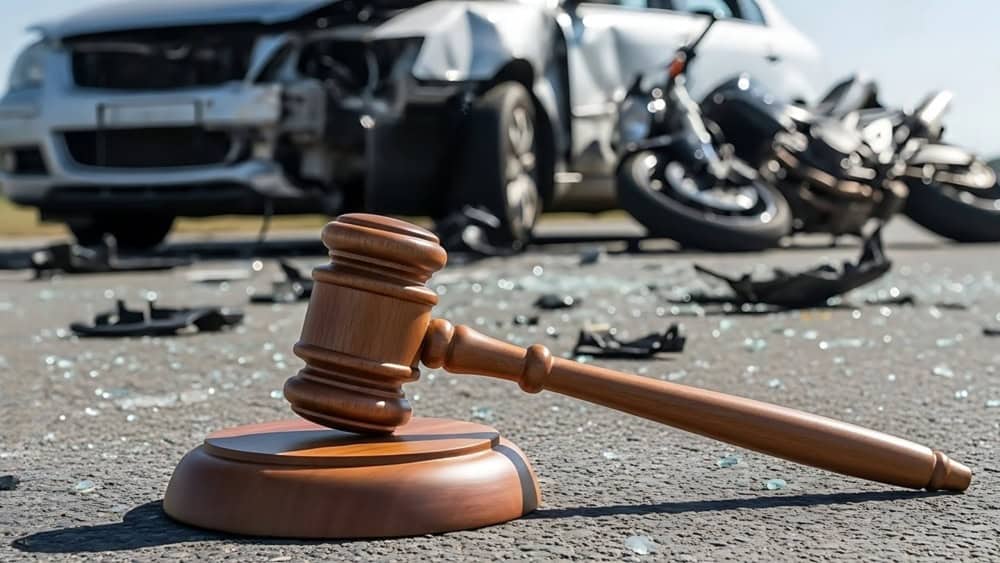


After an accident, you’re dealing with two very different types of harm. Your car might be totaled, and you might also be nursing a broken arm or dealing with back pain that won’t go away. These aren’t just different problems. They’re actually different legal claims with different rules, different insurance coverage, and different paths to getting compensated.
Prior results do not guarantee a similar outcome.
Understanding the distinction between personal injury claims and property damage claims matters because it affects how quickly you get paid, what insurance covers your losses, and whether you can take legal action at all. New York handles these claims separately, and the state’s no-fault insurance system adds another layer of complexity that can catch people off guard.
What Does a Personal Injury Claim Actually Cover?
A personal injury claim focuses on harm to your body and the ripple effects that follow. This includes the immediate physical injuries from an accident, but it extends far beyond that initial moment of impact.
When you file a personal injury claim, you’re seeking compensation for medical treatment costs, including emergency room visits, surgery, physical therapy, and ongoing care. You’re also looking at lost wages from time you couldn’t work, whether that’s a few days or several months. If your injuries are severe enough that you’ll need future medical care or you’ve lost the ability to earn what you used to, those future losses count, too.
The claim also accounts for what the law calls non-economic damages. This covers pain and suffering, emotional distress, loss of enjoyment of life, and permanent disability or disfigurement. These aren’t as easy to calculate as a hospital bill, but they’re real losses that deserve compensation.
In New York, your own insurance pays first through Personal Injury Protection, commonly called PIP or no-fault coverage. Every driver must carry at least $50,000 in PIP coverage, and this pays for your medical bills and a portion of lost wages regardless of who caused the accident. You don’t need to prove anyone was at fault. You just file a claim with your own insurance company, and they pay up to the policy limits.
What Falls Under Property Damage Claims?
Property damage claims cover the physical damage to your vehicle and any personal belongings that were damaged or destroyed in the accident. This might include your car, a bicycle, a laptop that was in your bag, or even a phone that got crushed.
The focus here is purely on tangible items and their repair or replacement costs. You’re not recovering anything for injuries, lost time at work, or emotional distress through a property damage claim. It’s strictly about fixing or replacing things.
Unlike personal injury claims that start with your own PIP coverage, property damage claims typically go through the at-fault driver’s liability insurance. New York requires drivers to carry at least $10,000 in property damage liability coverage per accident. If someone hits your car and they’re at fault, their insurance should pay to fix your vehicle.
You can also file through your own collision coverage if you have it, though this isn’t required by law. This can speed things up since you’re dealing with your own insurance company, but you’ll usually need to pay your deductible first.
How Does New York’s No-Fault System Treat These Claims Differently?
New York’s no-fault insurance system creates a fundamental split in how these claims work. The system was designed to get people quick access to medical care and wage replacement after car accidents without getting bogged down in fault disputes. But it only applies to personal injuries, not property damage.
For personal injuries, you start by filing with your own PIP coverage. Your insurance company pays your medical bills and a portion of your lost earnings up to $50,000, no questions asked about who caused the accident. This happens relatively quickly because there’s no need to investigate fault or wait for the other driver’s insurance to accept liability.
Property damage doesn’t get this treatment, and if someone damages your car, you need to establish who was at fault and pursue their liability insurance. This means the claims process involves investigation, potentially disputed liability, and negotiations with another insurance company that has every incentive to pay as little as possible.
The minimum liability coverage requirements reflect this difference too. New York requires $25,000 per person and $50,000 per accident for bodily injury liability, plus $50,000 per person and $100,000 per accident for death benefits. Property damage liability only requires $10,000 per accident, which often isn’t enough to cover the full damage to newer vehicles.
Can You Sue for Personal Injury in New York?
This is where things get tricky. You can’t sue for personal injury damages in most car accident cases in New York, at least not right away. The no-fault system restricts your ability to file a lawsuit unless you meet specific criteria.
For claims subject to New York’s no-fault threshold, recovering pain and suffering from the at-fault driver generally requires meeting what’s called the serious injury threshold. New York Insurance Law defines serious injury as:
- Death;
- Dismemberment;
- Significant disfigurement;
- A fracture;
- Loss of a fetus;
- Permanent loss of use of a body organ, member, function or system;
- Permanent consequential limitation of use of a body organ or member;
- Significant limitation of use of a body function or system.
The 2026 reforms removed a former category, the 90/180-day rule for non-permanent injuries, for lawsuits commenced on or after May 26, 2026. Lawsuits commenced before that date are still evaluated under the prior definition.
You can also sue if your economic losses exceed $50,000, though this is less common since that’s a substantial amount of medical bills and lost wages.
If you don’t meet this threshold, you’re limited to recovering through your PIP coverage. You can’t sue for pain and suffering or other non-economic damages no matter how much the accident affected your life.
Property damage claims face no such restriction. If someone damages your property and their insurance won’t pay what it’s worth, you can sue them in small claims court (for amounts up to $10,000) or regular civil court. You don’t need to meet any injury threshold because the no-fault system simply doesn’t apply to property damage.
How Does Fault Affect Your Recovery?
Even when you can sue for personal injury beyond no-fault benefits, New York’s comparative negligence rule affects how much you can recover. The state follows a comparative fault rule, which means your recovery gets reduced by your percentage of fault, and in a personal injury case covered by New York’s no-fault motor vehicle law and commenced on or after May 26, 2026, you are barred from recovering if your fault is greater than the combined fault of the parties you are suing.
If you’re found 30% responsible for an accident and your damages total $100,000, the award would be reduced to $70,000. If you’re 40% at fault, the award would be reduced to $60,000. This applies whether you’re settling with an insurance company or a jury awards you damages at trial.
The same rule applies to property damage claims. If you share some fault for the accident that damaged your car, your recovery gets reduced proportionally. Insurance adjusters will absolutely use this against you, arguing that you were partially responsible to reduce what they have to pay.
One important distinction is that your percentage of fault doesn’t affect your PIP benefits. Those are yours regardless of who caused the accident, even if you were entirely at fault. This is the core principle of no-fault insurance. You might not be able to sue the other driver if you caused the accident, but your own insurance still covers your medical bills and lost wages up to the policy limits.
What Evidence Do You Need for Each Type of Claim?
Both personal injury and property damage claims require you to prove negligence, which means showing that someone else owed you a duty of care, breached that duty, and caused damages as a result. But the type of evidence differs significantly.
For property damage claims, you need documentation of the damage and its cost to repair or replace. This typically includes photos of the damage, repair estimates from body shops or mechanics, receipts for any repairs you’ve already paid for, and documentation of the item’s value before the damage occurred. The claims process is relatively straightforward because the damages are tangible and calculable.
Personal injury claims require much more extensive documentation. You need complete medical records showing the nature and extent of your injuries, bills for all treatment received, documentation of any ongoing medical needs, and expert opinions about future care requirements if your injuries are permanent. You’ll also need proof of lost wages through pay stubs, tax returns, and potentially testimony from your employer.
If you’re trying to meet the serious injury threshold to sue beyond no-fault, you need medical evidence specifically establishing that your injury qualifies. This might mean diagnostic imaging showing a fracture, medical opinions about permanent limitations, or detailed records proving you couldn’t perform your daily activities for the required time period. Insurance companies fight these claims aggressively, scrutinizing medical records for any evidence that your injury wasn’t as serious as you claim.
For pain and suffering damages, you’re often relying on your own testimony, testimony from family members about how the injury affected your life, and medical opinions about the nature and duration of your pain. This is inherently more subjective than proving how much it cost to fix your car.
Why Do These Claims Move at Different Speeds?
Insurance companies almost always settle property damage claims faster than personal injury claims, and there are good reasons for this beyond just the insurance company being difficult.
Property damage is immediate and calculable. The car is damaged or it isn’t. It costs a specific amount to fix or replace. Once you get a couple of repair estimates, there’s not much room for dispute about the basic facts. Insurance adjusters can inspect the damage, agree on a value, and cut a check relatively quickly.
Personal injuries are different because you might not know the full extent of your injuries for months after an accident. Back pain that seems minor at first can turn into a herniated disc requiring surgery. Concussion symptoms can persist and develop into post-concussion syndrome. Soft tissue injuries can lead to chronic pain conditions.
Responsible handling of a personal injury claim often means waiting until you’ve reached what doctors call maximum medical improvement, the point where your condition has stabilized and you know what your long-term prognosis looks like. Settling before you reach this point means you might accept compensation that doesn’t cover all your medical needs.
Insurance companies know this and use it to their advantage. They’ll often make quick settlement offers early in the process, before you know how bad your injuries really are. They’re betting that you need money now and will accept less than the claim is actually worth. This is especially common with soft tissue injuries that insurance adjusters routinely undervalue.
The separate timelines create a practical problem for accident victims. You might get your car fixed or replaced within a few weeks, but you’re still dealing with medical treatment and fighting for fair compensation for your injuries months later. This is why many people end up settling property damage claims while their personal injury claims are still pending.
What Happens When Your Damages Exceed Insurance Coverage?
The minimum insurance requirements in New York often aren’t enough to fully compensate serious injuries or damage to newer vehicles. When the at-fault driver’s insurance limits are too low, you have a few options.
For personal injury, you might have underinsured motorist coverage on your own policy. In New York this is supplementary uninsured/underinsured motorist (SUM) coverage.
If it applies, it may provide additional compensation, subject to the policy’s conditions and limits and reduced by amounts recovered from the at-fault driver’s liability insurance. It does not automatically pay every remaining loss. It’s optional coverage in New York, but it can provide important protection when you’re hit by someone with minimal insurance.
You could also sue the at-fault driver personally for the amount their insurance doesn’t cover. But this often isn’t practical because people who carry only minimum insurance usually don’t have significant assets to collect from. You might win a judgment but never actually recover the money.
For property damage, the same principles apply. If your car is worth $25,000 and the at-fault driver only has the minimum $10,000 in property damage coverage, you’re facing a $15,000 gap. Your own collision coverage would cover this if you have it. Otherwise, you’re looking at suing the driver personally, with all the same collection challenges.
This is why your own insurance coverage matters so much. Collision coverage, comprehensive coverage, and underinsured motorist coverage all protect you when the other driver’s insurance isn’t enough. These aren’t required by law, but they can make the difference between being made whole and being stuck with significant out-of-pocket losses.
How Do Settlement Negotiations Differ?
Insurance adjusters approach these claims with different strategies because the stakes and uncertainties are different.
Property damage negotiations tend to be more straightforward because the damages are objective. You can get multiple repair estimates. You can look up the fair market value of your vehicle. There’s less room for the insurance company to lowball you when the numbers are clear. That doesn’t mean they won’t try, but you have concrete evidence to push back with.
Personal injury negotiations involve much more subjectivity, especially when it comes to non-economic damages like pain and suffering. There’s no objective formula for calculating what your pain is worth. Insurance companies use various multipliers and per diem methods, but these are just starting points for negotiation. They’ll argue your injuries aren’t as severe as you claim, that you didn’t need all the treatment you received, or that your prior medical history contributed to your current condition.
The serious injury threshold adds another layer to personal injury negotiations in car accident cases. If there’s any question about whether you meet the threshold, the insurance company will argue that you don’t and therefore can’t sue for non-economic damages. This gives them leverage to pressure you into accepting a lower settlement that only covers economic losses.
Insurance adjusters also know that personal injury plaintiffs are often desperate for money. Medical bills are piling up. You’re not working. The financial pressure builds. They’ll drag out negotiations hoping you’ll accept less just to get some money in hand. This is less effective with property damage claims because the amounts are usually smaller and the financial pressure isn’t as intense.
What Time Limits Apply to Filing These Claims?
New York’s statute of limitations gives you three years from the date of the accident to file a lawsuit for either personal injury or property damage. This might seem like plenty of time, but it can disappear quickly when you’re dealing with medical treatment, recovery, and trying to negotiate with insurance companies.
The three-year deadline is firm. If you miss it, you lose your right to sue, no matter how strong your case is. There are very limited exceptions, such as for minors whose deadline doesn’t start running until they turn 18, but these are narrow and don’t apply in most cases.
There are shorter deadlines for claims against government entities. If a city bus hit you or you were injured because of a dangerous condition on a municipal road, you typically have only 90 days to file a notice of claim. Missing this deadline can bar your case entirely.
For PIP claims, you need to file within 30 days of the accident or as soon as reasonably practical. Insurance companies will deny claims for late filing, though courts sometimes excuse short delays if you have a good reason.
These deadlines apply independently to personal injury and property damage claims. You could theoretically file a property damage lawsuit and let the personal injury statute of limitations expire, though this would be unusual. More commonly, people settle property damage claims quickly while keeping their options open for personal injury claims as their medical treatment continues.
Do You Need a Lawyer for Both Types of Claims?
Property damage claims often don’t require a lawyer, especially when the damages are clear and the insurance company is being reasonable. If your car was totaled and the other driver’s insurance accepts liability, you can usually negotiate a fair settlement on your own using market value data and repair estimates.
Personal injury claims are different, especially if your injuries are serious. The insurance company has lawyers and adjusters whose job is to minimize what they pay. They know the law, they know what evidence matters, and they know how to use the system to their advantage.
An experienced personal injury attorney understands what your case is actually worth, including damages you might not have considered. They know how to gather and present medical evidence to meet the serious injury threshold. They understand the tactics insurance companies use and how to counter them. They can handle negotiations while you focus on recovering.
The contingency fee structure means you don’t pay anything upfront and only pay attorney fees if you recover compensation. Most personal injury attorneys take between 33% and 40% of your recovery, but they often recover significantly more than you would on your own, even after their fee comes out.
For cases involving both personal injury and property damage, an attorney can handle both claims together, ensuring that settlement of one doesn’t inadvertently affect the other. Insurance companies sometimes pressure people to sign releases that cover both types of damages when settling property damage claims, which could bar your personal injury claim later.
Learn about all your legal options and what damages you can recover from an experienced personal injury attorney.
Summing It Up
Personal injury claims and property damage claims might arise from the same accident, but New York treats them as distinct legal matters with different rules, different insurance coverage, and different paths to compensation. Understanding these differences helps you protect your rights and make informed decisions about how to handle your claims.
Personal injury claims cover harm to your body, including medical costs, lost wages, and pain and suffering. New York’s no-fault system provides quick access to up to $50,000 through your own PIP coverage, but generally restricts your ability to recover compensation for pain and suffering unless you meet the serious injury threshold. These claims often take months or years to resolve fully because you need to understand the long-term impact of your injuries.
Property damage claims focus on repairing or replacing tangible items damaged in an accident. These go through the at-fault driver’s liability insurance and typically settle more quickly because the damages are immediate and calculable. There’s no serious injury threshold to worry about, and you can sue in small claims or civil court if the insurance company won’t pay fair value.
Both types of claims are subject to New York’s comparative negligence rule, which reduces your recovery by your percentage of fault. But your PIP benefits remain available regardless of who caused the accident, providing a safety net for medical costs and lost wages.
The key is treating these as separate claims with separate considerations. Don’t let pressure to settle your property damage claim quickly affect your personal injury claim, which might not be ready to settle for months. Don’t assume that because your car was fixed easily, your injury claim will be straightforward. And don’t navigate serious injury claims alone when insurance companies have teams of lawyers and adjusters working to minimize what they pay.
If you’re dealing with significant injuries from an accident, talking with an experienced personal injury attorney can help you understand the full value of your claims and the best strategy for recovering fair compensation for all your losses, whether they damaged your property, your body, or both. Reach out to the Porter Law Group by calling 833-PORTER9, or email info@porterlawteam.com with your case details and schedule a consultation. It’s free, you are under no obligations, and your information will remain absolutely confidential.