


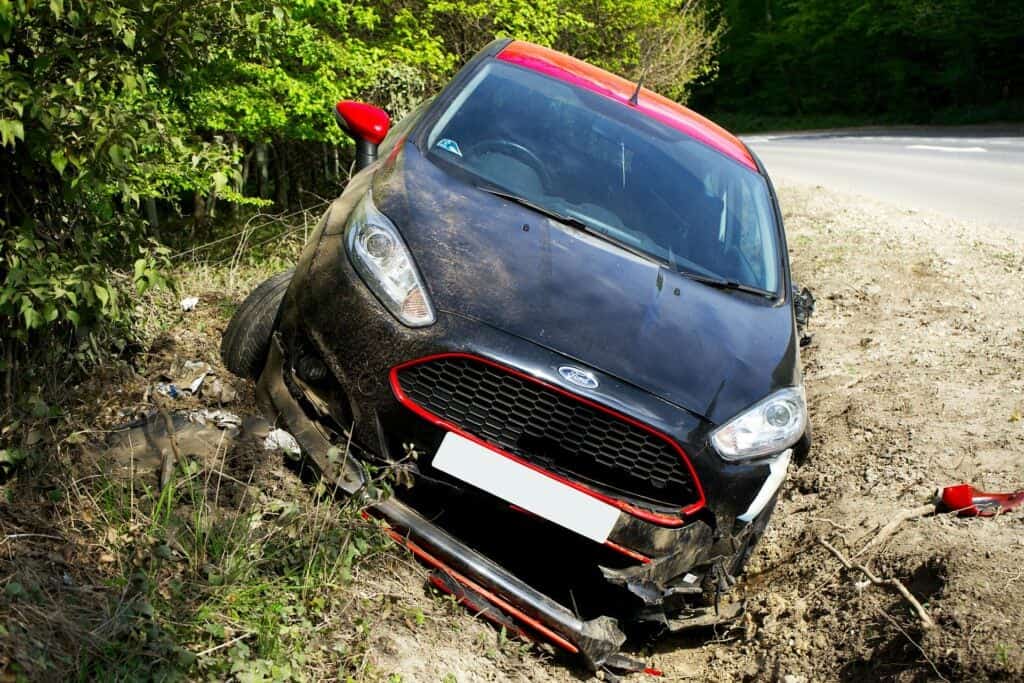
When someone crashes into your car, you probably assume that getting it repaired through insurance will make everything right again. But many New York drivers don't realize that even after professional repairs restore your vehicle to perfect working condition, its value has permanently dropped. This loss is called diminished value, and it represents real money you'll lose when you eventually sell or trade in your vehicle.
The financial impact isn't small. A car with an accident history typically loses 10 to 25 percent of its market value, sometimes more depending on the severity of the damage. If you own a $40,000 vehicle, you're looking at a potential loss between $4,000 and $10,000. That's money you'll never recover when you go to sell, even though your car drives perfectly and looks flawless after repairs.
Hurt in a Car Accident?
CONTACT USOur Recent Case Results
Settlement
Jury Verdict
Settlement
Settlement
What makes this particularly frustrating is that insurance companies often don't volunteer information about diminished value claims. Many accident victims in New York have no idea they might be entitled to compensation for this loss. Some insurers actively try to avoid paying these claims altogether, leaving drivers to absorb thousands of dollars in losses they never caused.
What Exactly Is Diminished Value?
Diminished value is the difference between what your car was worth before the accident and what it's worth after repairs, even when those repairs are completed to factory standards. It's the discount that every potential buyer, dealership, and trade-in evaluator will apply once they see accident history on a vehicle report.
Think about your own car-buying experience. When you're comparing two identical vehicles and one has been in an accident while the other hasn't, which would you choose? Most people pick the clean-history vehicle or demand a significant price reduction on the one with accident records. That price difference is diminished value, and it affects nearly every vehicle that's been in a reportable collision.
The loss persists regardless of repair quality. You could take your car to the most expensive, highest-rated body shop in New York, use only original manufacturer parts, and have everything restored to perfect mechanical and cosmetic condition. The accident still shows up on Carfax and AutoCheck reports, and buyers still discount the value accordingly.
How New York's No-Fault System Affects Your Claim
New York operates under a no-fault insurance system, which shapes how all accident claims work in the state. Under this system, your own insurance policy (or the policy covering the vehicle you were in) pays for your immediate medical expenses and lost wages after an accident, regardless of who caused the collision. Every vehicle registered in New York must carry at least $50,000 in no-fault coverage per person.
This system handles your immediate needs efficiently, but it doesn't address everything. No-fault coverage focuses on medical bills and lost income, not property damage or diminished value. For those losses, you need to look beyond the no-fault system.
The no-fault framework means that even if another driver caused your accident, your own insurance initially covers your medical treatment. But when it comes to your vehicle's lost value, the at-fault driver's insurance becomes the relevant party. This is where diminished value claims enter the picture, separate from the no-fault medical and wage loss benefits.
Can You Sue for Diminished Value After an Accident?
If another driver caused your accident, you have legal grounds to pursue compensation for diminished value. The at-fault driver's insurance company has a legal obligation to make you whole again, which means restoring you to the financial position you occupied before their insured driver hit you.
Making you whole includes more than just fixing visible damage. It encompasses the full economic loss you suffered, including the permanent reduction in your vehicle's market value. When an insurance company pays to repair your car but ignores the diminished value, they haven't fully compensated you for your loss.
Most states recognize the right to pursue diminished value claims when you're not at fault for an accident, and the principle generally applies in New York. The at-fault driver's liability coverage should compensate you for all damages their negligence caused, including both repair costs and the permanent value loss your vehicle sustained.
However, successfully recovering diminished value compensation often requires persistence. Unlike straightforward repair claims where the insurance company can see the damaged parts and replacement costs, diminished value is less tangible. Insurers sometimes dispute these claims or offer settlements far below the actual loss.
Why Insurance Companies Resist Paying These Claims
Insurance companies frequently try to avoid paying diminished value claims, and their reasons are purely financial. Every dollar they pay in diminished value claims reduces their profit margins. Since many vehicle owners don't know these claims exist, insurers can often avoid payment simply by not mentioning the possibility.
A growing number of accident victims across the country have come forward claiming they were never paid what they were owed for diminished value losses. The problem became so widespread that a class action lawsuit against Allstate in Washington resulted in a $10 million settlement over allegations the insurer failed to pay diminished value claims owed to policyholders.
When you file a claim, the insurance adjuster might tell you that repairs fully compensated you, that diminished value isn't covered under the policy, or that you need to prove the loss before they'll consider payment. These responses are often negotiating tactics rather than accurate statements of your rights.
Initial settlement offers rarely represent fair compensation. Insurance companies know that many claimants will accept the first number presented, especially if they're unfamiliar with diminished value concepts. The adjuster's job includes settling claims for as little as possible, which means their opening offer typically leaves substantial money on the table.
How Much Money Are We Really Talking About?
The financial stakes in New York accident claims are significant. The average personal auto injury claim in New York is $46,726, more than twice the national average of $28,045. This elevated figure reflects New York's higher cost of living and medical expenses compared to most other states.
Beyond injury claims, New York drivers face the third-highest auto repair costs in the United States, at $864 more than the national average. The state also has the third-highest average injury claim severity in the country and the eighth-highest frequency of personal auto accidents, at 3.09 accidents per driver.
These statistics translate to higher insurance premiums. The average auto insurance premium in New York exceeds $4,000 annually, nearly $1,500 above the national average. Despite paying these elevated premiums, New York drivers still struggle to recover full compensation for losses like diminished value.
When you consider that accident history can reduce a vehicle's value by 10 to 25 percent or more, the dollars add up quickly. On a newer vehicle worth $50,000, you're potentially losing $5,000 to $12,500 in value. For families who depend on their vehicle's trade-in value to afford their next car, this loss can be devastating.
What Determines How Much Value Your Car Lost?
Several factors influence how much value your vehicle loses after an accident:
Severity of the damage. A minor fender bender that required replacing a bumper cover affects value differently than a collision that damaged the frame, deployed airbags, or required extensive structural repairs.
Age and pre-accident value of the vehicle. A three-year-old luxury vehicle with low mileage will suffer a larger absolute dollar loss than a ten-year-old economy car, even if both sustained similar damage.
Quality of repairs. Certified facilities using original manufacturer parts maintain value better than budget shops using aftermarket components. However, even the highest-quality repairs can't eliminate accident history stigma.
Vehicle type and market perception. Luxury vehicles, sports cars, and trucks often experience more pronounced diminished value than economy sedans.
Extent of damage relative to vehicle value. If repair costs approach a large percentage of pre-accident value, buyers worry about hidden damage, future mechanical problems, or the possibility of a salvage title.
Getting Your Vehicle Properly Appraised
To recover fair compensation for diminished value, you need documentation proving how much value your vehicle lost. This requires a professional diminished value appraisal from someone qualified to assess vehicle values and calculate the specific loss your car sustained.
A diminished value appraisal differs from a standard vehicle appraisal. The appraiser must determine what your specific vehicle would have sold for immediately before the accident, then calculate what it would sell for now with accident history and repairs completed. The difference represents your diminished value claim.
Professional appraisers use several methodologies to calculate diminished value. The most common approach examines comparable vehicle sales, comparing prices for similar vehicles with clean histories against those with accident records. Some appraisers also consider the 17c formula, which was developed following a Georgia court case and provides a structured calculation method.
Getting an appraisal before negotiating with the insurance company strengthens your position significantly. Instead of arguing about whether diminished value exists or how much it might be, you're presenting documented evidence of a specific loss. This shifts the conversation from abstract concepts to concrete numbers.
The cost of a professional appraisal typically ranges from a few hundred to several hundred dollars, depending on the vehicle and the appraiser's qualifications. This upfront investment usually pays for itself many times over in increased settlement amounts. Insurance companies take documented claims more seriously than unsupported demands.
Steps to Protect Your Diminished Value Claim
The actions you take immediately after an accident can significantly impact your ability to recover diminished value compensation later:
Document the scene. Take photos from multiple angles showing all damage to your vehicle, the other vehicle, and the surrounding area. Photograph road conditions, traffic signs, and anything else that might be relevant.
Get a police report filed. Even if the accident seems minor, official documentation creates an authoritative record of what happened, who was involved, and the investigating officer's observations.
Choose your repair facility carefully. Certified shops with manufacturer training provide better repairs that maintain as much value as possible. Use original equipment manufacturer parts when feasible.
Keep detailed records. Save itemized invoices, parts receipts, and before-and-after photos to demonstrate that your vehicle was properly fixed.
Don't accept the initial settlement without scrutiny. Ask whether the settlement includes compensation for diminished value and request a breakdown showing allocations for diminished value versus repair costs.
Be aware of time limits. Confirm New York's statute of limitations for diminished value claims with current legal sources. Missing deadlines can forfeit your right to compensation.
Understanding Liability Coverage Limits
When pursuing diminished value compensation, you're claiming against the at-fault driver's liability insurance. New York requires drivers to carry minimum liability coverage of $25,000 per person for bodily injury, but this minimum often proves inadequate in serious accidents.
Many drivers carry higher liability limits such as $100,000, $250,000, or $500,000 per person. These higher limits provide more compensation available for all your damages, including property damage, medical expenses, lost wages, pain and suffering, and diminished value.
The at-fault driver's policy limits often represent the practical ceiling on your recovery. If the at-fault driver carries only minimum coverage and multiple people were injured in the accident, the available insurance money might be exhausted before your diminished value claim gets addressed. In these situations, the at-fault driver's personal assets become relevant, though most individuals don't have significant assets beyond their insurance coverage.
Understanding the available insurance coverage early in the claims process helps you make strategic decisions. If you know the at-fault driver has substantial liability coverage, you can pursue your diminished value claim more aggressively. If coverage is limited and multiple claims exist, you might need to prioritize which damages to emphasize.
When Legal Representation Makes Sense
Many diminished value claims can be resolved directly with insurance companies, especially when the loss is well-documented and the insurer acts reasonably. However, some situations benefit from legal representation:
The insurance company denies your diminished value claim outright.
The diminished value loss is substantial and warrants professional negotiation.
Liability is disputed, multiple parties share responsibility, or the insurer claims you contributed to the accident.
Your claim involves significant injury claims in addition to diminished value.
An experienced car accident attorney can review denials, negotiate with insurers, and pursue litigation if necessary. Attorney involvement often results in higher net recoveries even after fees are paid.
The Bigger Picture of Vehicle Value Loss
Diminished value represents just one aspect of the financial impact accidents have on New York drivers. The combination of high repair costs, elevated injury claim expenses, and frequent accidents creates an expensive environment for vehicle ownership in the state.
New York's position as having the third-highest auto repair costs in the nation means that accidents here are more expensive to fix than in most other states. Higher repair costs often correlate with more severe damage, which in turn leads to greater diminished value losses.
The state's elevated accident frequency means more New York drivers will face these issues. With 3.09 accidents per driver, a significant portion of the state's driving population will eventually deal with diminished value questions.
These factors combine to make diminished value claims particularly important for New York drivers. When you're already paying some of the highest insurance premiums in the country, recovering full compensation for all your losses becomes essential to maintaining your financial stability after an accident someone else caused.

Get a Free Case Review
Talk to our experienced car accident lawyers and know all your legal options for recovery in a free, no-obligation consultation.
Summing It Up
Diminished value represents real money that you lose when someone else's negligence damages your vehicle. Even perfect repairs can't erase accident history, and that history permanently reduces what your car is worth. For many New York drivers, this loss amounts to thousands of dollars they'll never recover when they sell or trade in their vehicle.
The challenge is that insurance companies don't advertise diminished value claims and often resist paying them. Many accident victims never learn they're entitled to this compensation, while others who do ask face lowball offers or outright denials. Recovering what you're owed typically requires understanding your rights, documenting your loss, and persistently pursuing fair compensation.
Start by recognizing that if another driver caused your accident, you're entitled to be made whole. That means compensation for all your losses, not just the cost of repairs. Get professional documentation of your vehicle's value loss through a qualified appraiser. Don't accept initial settlement offers without understanding what they include and whether they fairly compensate you for diminished value.
New York's no-fault system handles your immediate medical needs, but it doesn't address your vehicle's lost value. For that compensation, you need to pursue a claim against the at-fault driver's liability insurance. Know the coverage limits you're dealing with, keep detailed records of everything, and don't let insurance company resistance discourage you from pursuing what you're legally entitled to receive.
If you're struggling to get fair compensation for your vehicle's diminished value, or if the insurance company has denied your claim, legal guidance can help you understand your options and pursue the full recovery you deserve. Reach out to the Porter Law Group today. Fill out our online form for a free consultation and know your options. You can also call 833-PORTER9 or email info@porterlawteam.com to get started.


