


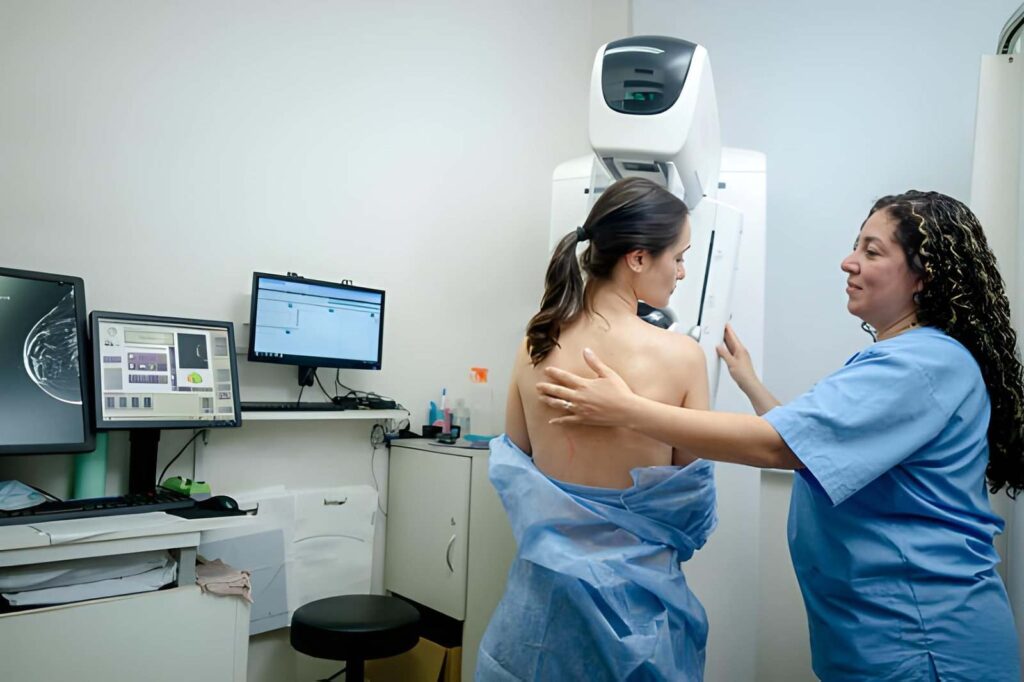

Finding out you have breast cancer is terrifying enough. Learning that it could have been caught earlier, that someone missed the signs or failed to order the right tests, adds another layer of trauma no one should have to face. If you’re reading this because a doctor dismissed your concerns, misread your mammogram, or failed to follow up on suspicious findings, you deserve answers about what happened and whether you have legal options.
Breast cancer is the most common cancer diagnosis among women in the United States, with over 300,000 new cases expected this year. In New York, rates run even higher than the national average, particularly among women between 25 and 49. With numbers like these, screening protocols and early detection matter enormously. When the system breaks down, when a radiologist overlooks something on an image or a primary care doctor waves away a lump you can feel, the consequences can be devastating.
Prior results do not guarantee a similar outcome.
Not every delayed diagnosis amounts to malpractice. Medicine involves judgment calls, and cancer can be aggressive or subtle in ways that make early detection genuinely difficult. But when a healthcare provider fails to meet basic standards of care, when they ignore established screening guidelines or don’t act on clear warning signs, and when that failure causes you real harm, you may have grounds for a lawsuit.
Could You Have a Case? Start Here
Before diving into the legal details, ask yourself these questions. If you answer yes to most of them, it’s worth talking to a cancer attorney:
- Did you report symptoms like a lump, nipple discharge, skin changes, or pain that a doctor dismissed without ordering imaging or a biopsy?
- Were you in the appropriate age range for screening (generally 40 and up) but never offered or referred for mammography despite regular doctor visits?
- Did you receive an abnormal mammogram result (something labeled BI-RADS 4 or 5, or any report mentioning suspicious findings) that was never followed up with additional testing?
- Was your cancer ultimately diagnosed at a later stage than it likely would have been if your earlier concerns had been properly investigated?
- Did you only recently discover through medical records or a second opinion that an earlier test was misread or that results were never communicated to you?
- Are you still within the legal time limits to file (generally within 2.5 years of discovering the negligence, but never more than 7 years from when it occurred)?
If several of these apply to your situation, keep reading. Understanding what makes a breast cancer case viable in New York requires looking at both the medical realities of how this disease should be detected and managed, and the legal framework that governs malpractice claims.
What Does the Medical Standard of Care Require?
The foundation of any medical malpractice case rests on a concept called the “standard of care.” This isn’t about expecting perfection from doctors. It means asking whether a reasonably competent physician in the same specialty, faced with the same situation, would have acted differently.
For breast cancer, the standard of care is shaped heavily by national screening guidelines that have evolved as research has clarified who benefits most from regular mammography. The U.S. Preventive Services Task Force now recommends that average-risk women get mammograms every two years starting at age 40 and continuing through 74. The American Cancer Society recommends annual screening beginning at 45, with the option to start at 40. The American College of Obstetricians and Gynecologists, in an update from last year, also recommends routine screening starting at 40.
These aren’t arbitrary suggestions. They reflect decades of data showing that catching breast cancer early, before it spreads beyond the breast tissue itself, dramatically improves survival. About 64% of breast cancers in the U.S. are caught while still localized, and those patients have a five-year survival rate approaching 100%. When cancer has spread to nearby lymph nodes (regional disease), that drops to 87%. If it has metastasized to distant organs, five-year survival falls to 33%. That progression from one stage to the next can happen in months or a couple of years, which is why timely screening and follow-up matter so much.
New York courts recognize these guidelines as part of the standard of care. When a woman in her 40s, 50s, or 60s sees a primary care doctor or OB-GYN regularly but is never offered screening mammography, that can constitute negligence. When a radiologist reads a mammogram and labels something as benign that meets the criteria for immediate biopsy, that can be malpractice. When a provider feels a lump during an exam but tells the patient it’s probably nothing and doesn’t order any imaging, that can form the basis of a lawsuit.
The standard also accounts for individual risk factors. Women with BRCA gene mutations, a strong family history of breast or ovarian cancer, or prior chest radiation need more intensive screening, often starting younger and including MRI in addition to mammography. Failing to recognize high-risk status and adjust screening accordingly is another way providers can fall short of the required standard.
When Symptoms Get Dismissed Without Proper Testing
One of the most common scenarios in breast cancer malpractice cases involves a woman who knows something is wrong. She feels a lump, notices her nipple has started to invert or discharge fluid, sees a patch of thickened or dimpled skin. She goes to her doctor, describes what she’s experiencing, and expects to be taken seriously.
Instead, she hears that it’s probably a cyst or normal fibrocystic changes. She’s told to monitor it and come back if it gets worse. No imaging is ordered. No ultrasound, no diagnostic mammogram, no biopsy. Months pass. The symptoms persist or worsen. When she finally insists on testing or gets a second opinion, cancer is confirmed, and it has already spread.
This pattern happens far too often. Breast tissue can feel lumpy, particularly in younger women or those with dense breasts, and many lumps are indeed benign. But the standard of care doesn’t allow doctors to guess or rely on reassurance alone when a patient reports a new, distinct lump or other worrying symptoms. Guidelines are clear: palpable masses need imaging evaluation, and if imaging raises suspicion, biopsy should follow.
Consider this scenario. A 48-year-old woman notices a hard, fixed lump in her left breast. She schedules an appointment with her primary care doctor, who performs a brief exam and tells her it feels like a harmless cyst. He doesn’t order a mammogram or ultrasound. He advises her to return in six months if it’s still there. Eight months later, bothered by the persistence of the lump, she sees a different doctor who immediately orders imaging. The mammogram and ultrasound reveal a suspicious mass. Biopsy confirms invasive ductal carcinoma, and staging scans show lymph node involvement. Had imaging been ordered at her first visit, experts might conclude the cancer would likely have been node-negative and localized, requiring less aggressive treatment and offering better long-term prognosis.
That difference, that window where action should have been taken but wasn’t, is what malpractice law tries to address. The legal question isn’t whether the first doctor should have known with certainty that it was cancer. It’s whether a competent doctor in his position would have ordered appropriate testing to rule it out.
What Happens When Imaging Is Misread or Results Are Ignored
Another major category of breast cancer malpractice involves failures after testing has actually been done. Mammograms, ultrasounds, and MRIs don’t interpret themselves. Radiologists review the images and issue reports using a standardized system called BI-RADS (Breast Imaging Reporting and Data System) that categorizes findings from 0 (needs more images) to 6 (known cancer). Categories 4 and 5 indicate findings suspicious enough to warrant biopsy. Category 3 findings are probably benign but require short-interval follow-up, typically in six months.
Mistakes happen at multiple points in this process. A radiologist might miss a visible mass or classify something suspicious as benign. The report might correctly note concerning findings, but the ordering physician never sees it or fails to communicate it to the patient. A patient might be told her mammogram was “normal” when the actual report recommended follow-up imaging or biopsy.
Imagine a woman who gets her annual screening mammogram at age 52. The radiologist’s report describes an irregular mass in the upper outer quadrant of the right breast and assigns a BI-RADS 4 classification, recommending biopsy. But due to a breakdown in communication, no one calls the patient to schedule that biopsy. She assumes everything is fine because she never heard otherwise. A year later, at her next routine mammogram, the mass has grown significantly. Biopsy reveals an aggressive cancer that has spread to her lymph nodes. She learns only then, by reviewing her prior mammogram report, that the suspicious finding was already visible a year earlier.
This isn’t about blaming the patient for not being proactive enough. Patients rely on their healthcare providers to follow through on abnormal results. When those systems fail, the consequences fall on the patient in the form of more advanced disease, harsher treatment, and worse outcomes.
Pathology errors represent another vulnerable point. After a biopsy, a pathologist examines the tissue sample under a microscope. Misidentifying cancer cells as benign tissue, or failing to recognize atypical features that warrant further investigation, can delay diagnosis just as surely as never doing the biopsy at all. These cases often require expert review by another pathologist to establish that the initial reading fell below the standard of care.
How Stage at Diagnosis Affects Your Case
The harm in a delayed breast cancer diagnosis isn’t always about whether the patient will survive. It’s about how much harder treatment becomes and how much more the patient has to endure.
A woman diagnosed with early-stage, localized breast cancer might be a candidate for lumpectomy (removing just the tumor and a margin of healthy tissue) followed by radiation. She might avoid chemotherapy entirely if her tumor has favorable characteristics. Her prognosis is excellent, and her treatment, while still difficult, is relatively less invasive.
That same woman, diagnosed a year or two later after negligent delay, might now have cancer in her lymph nodes or even distant metastases. She might need a full mastectomy, possibly on both sides if genetic testing reveals high-risk mutations. She’ll likely undergo months of chemotherapy with all its brutal side effects, followed by radiation, followed by years of hormonal therapy. Her five-year survival probability is lower. She faces a lifetime of anxiety about recurrence.
This difference is the core of causation in breast cancer malpractice cases. The law doesn’t require you to prove that the negligence made your cancer incurable when it otherwise would have been cured. New York recognizes what’s called a “loss of chance” theory, meaning you can recover damages if the malpractice significantly reduced your chances of a better outcome, even if you can’t prove with certainty that earlier diagnosis would have saved your life.
Expert testimony drives these cases. Medical experts review your records, imaging, and pathology. They offer opinions on when the cancer was likely present, what stage it would have been at if diagnosed earlier, and how treatment and prognosis would have differed. They explain to a jury why the delay mattered in concrete, medical terms.
Understanding New York’s Statute of Limitations for Cancer Cases
Even if you have a strong case on the medical merits, timing matters enormously in medical malpractice law. New York has specific rules about how long you have to file a lawsuit, and breast cancer cases fall under a special provision called Lavern’s Law.
The general rule in New York is that medical malpractice lawsuits must be filed within two and a half years from the date of the negligent act. But cancer cases often don’t fit neatly into this framework because patients may not realize something was missed until much later. You might trust your doctor when she says your mammogram was normal, only discovering years later, after a cancer diagnosis, that the report actually showed suspicious findings that were never followed up.
Lavern’s Law, enacted in 2018, addresses this problem. For cases involving negligent failure to diagnose cancer, the two-and-a-half-year clock doesn’t necessarily start running when the negligence occurred. Instead, it starts when you knew or reasonably should have known both that the negligence happened and that it caused you injury. This might be when you finally see the old mammogram report, when a new doctor tells you the prior biopsy was misread, or when your oncologist explains that your cancer could have been caught much earlier.
There’s an important outer limit, though. No matter when you discover the negligence, you can’t file a lawsuit more than seven years after the negligent act itself. So if a radiologist misread your mammogram in 2018, you have until 2025 to file, even if you only learned about the error in 2024.
These rules can get complicated quickly, especially if there was ongoing treatment or multiple potential points of negligence. Courts have also ruled that Lavern’s Law can’t revive claims that were already time-barred before the law took effect. If you think you might have a case, don’t wait to consult an attorney. Statutes of limitation are unforgiving, and once the deadline passes, you lose your right to sue regardless of how strong your case might be on the merits.
What Counts as Real Harm in These Cases
To have a viable malpractice claim, it’s not enough to show that a doctor made a mistake. You also have to demonstrate that the mistake caused you actual, measurable harm. In the context of breast cancer, this typically means showing that the delay resulted in more advanced disease and therefore more aggressive treatment than you otherwise would have needed.
The harms can be physical. Maybe you needed a mastectomy when lumpectomy would have sufficed. Maybe you required chemotherapy when earlier diagnosis would have meant hormone therapy alone. Maybe cancer spread to your bones or liver when it could have been contained to the breast tissue. These differences aren’t trivial. They represent additional surgeries, months of debilitating treatment, permanent disfigurement, and increased risk of death.
The harms are also emotional and financial. More advanced cancer means more time away from work, more medical bills, more childcare expenses while you’re in treatment. It means living with the knowledge that you have a worse prognosis than you might have had. It means looking at your children and wondering if you’ll see them graduate, get married, have kids of their own.
Some cases tragically end in death. When breast cancer goes undiagnosed until it’s metastatic and incurable, when a patient dies as a direct result of medical negligence, surviving family members can bring a wrongful death claim. These cases seek damages not just for the patient’s pain and suffering, but for the economic and emotional losses the family suffers from losing their loved one.
New York law does impose limits on what you can recover. Pain and suffering damages have practical caps based on what juries typically award and what courts will uphold. But economic damages like lost wages, medical expenses, and the cost of future care have no such limits and can be substantial in cases involving young patients or those requiring years of ongoing treatment.
How New York Differs in Cancer Incidence and Outcomes
New York isn’t just another state when it comes to breast cancer. Research shows that New York State has higher incidence rates for several common cancers, including breast cancer, compared to national averages. This is particularly pronounced among younger adults between 25 and 49.
Within New York, outcomes vary significantly by geography and demographics. A study of over 82,000 breast cancer cases diagnosed in New York City between 2000 and 2016 found that while white women had the highest overall incidence rates, Black and Latina women were less likely to be diagnosed at the earliest, most treatable stage. These women also had higher mortality-to-incidence ratios, meaning they were more likely to die from their disease relative to how often they were diagnosed with it.
These disparities matter in the context of medical malpractice because they suggest systemic failures in screening access and quality of care. When patients in certain communities receive substandard care, when their symptoms are dismissed more readily or their access to timely imaging is limited, the legal system provides one avenue for accountability.
The sheer volume of breast cancer cases in New York also means that screening systems handle enormous throughput. Radiology practices read thousands of mammograms. Primary care doctors see hundreds of patients with breast-related complaints. In high-volume settings, mistakes can happen more easily. A radiologist rushing through reads might miss a subtle finding. A busy practice might fail to track down a patient after an abnormal result. These aren’t excuses, legally speaking. They’re explanations for how systems fail, and patients shouldn’t bear the cost of those systemic failures.
Building Your Case Starts With Medical Records
If you suspect you might have a breast cancer malpractice case, the first concrete step is gathering your medical records. You’ll need everything related to your breast cancer diagnosis and any care you received in the years leading up to it.
This means office visit notes from your primary care doctor and OB-GYN, especially any documentation of breast exams or discussions about symptoms you reported. It means copies of all imaging reports (mammograms, ultrasounds, MRIs) and, if possible, the actual image files on CD. It means pathology reports from any biopsies. It means genetic testing results if you’ve had BRCA or other cancer risk panels done. It means all records from your oncologist, surgeon, and radiation oncologist documenting your diagnosis, stage, and treatment plan.
You have a legal right to these records under federal HIPAA law and New York State law. Most providers have a medical records department or health information management office you can contact. There may be fees for copying, but they can’t deny you access to your own records. Get everything. Even records that seem tangential might contain crucial details about when symptoms were first reported or when results should have been communicated.
Once you have your records, they need expert review. Medical malpractice cases in New York require expert testimony. You can’t just tell a jury that your doctor messed up and expect them to take your word for it. You need a breast imaging radiologist, breast surgeon, oncologist, or other qualified physician to review your case and provide a written opinion that the care you received fell below the accepted standard and that this deviation caused your injuries.
Finding the right experts is something medical malpractice attorneys handle. They have networks of physicians who do this kind of review work and who understand the legal standards for causation and damages. An experienced attorney can get your records reviewed quickly and give you an honest assessment of whether you have a case worth pursuing.
Why Many Cases Don’t Go to Trial
Medical malpractice litigation is expensive and time-consuming for both sides. Defense attorneys, retained by the doctor’s malpractice insurance carrier, know when they have a weak case. Insurance companies would rather settle a case with clear liability than risk a large jury verdict.
Many breast cancer malpractice cases settle before trial, sometimes even before a lawsuit is formally filed. Settlement negotiations can happen after your attorney has gathered evidence, retained experts, and sent a demand package to the insurance carrier laying out the facts and damages. If the other side recognizes they’re likely to lose at trial, they may offer a settlement that compensates you fairly without requiring months or years of litigation.
Settlements have advantages. You get compensation sooner. You avoid the stress and uncertainty of trial. You don’t have to testify in detail about your cancer and treatment in front of strangers. But settlements also require you to give up your right to pursue the case further, so it’s crucial that any settlement offer adequately reflects your damages.
Some cases do go to trial, either because the defense won’t offer enough to settle or because the facts are genuinely disputed and need a jury to decide them. Trials can take a week or more. You’ll likely need to testify. Your experts will testify. The defense will present their own experts saying the care was fine. The jury deliberates and reaches a verdict.
New York juries can be unpredictable, but in clear-cut cases where negligence is well-documented and harm is obvious, they tend to side with patients. Even the threat of a trial can motivate insurance companies to settle on better terms.
What to Look for in a Medical Malpractice Attorney
Not every personal injury lawyer handles medical malpractice cases. These cases require specialized knowledge of both medicine and the procedural rules that govern malpractice litigation in New York. When you’re looking for representation, prioritize experience with breast cancer cases specifically if possible, or at minimum significant experience with cancer misdiagnosis and delayed diagnosis cases.
Ask about the attorney’s track record. Have they taken cases like yours to verdict? What settlements have they achieved? Do they have relationships with credible medical experts who can review your records and testify if needed? Medical malpractice defense attorneys are often highly skilled, and you need someone equally capable on your side.
Also ask about costs. Most medical malpractice attorneys work on a contingency fee basis, meaning they don’t get paid unless you win or settle. The fee is typically a percentage of your recovery, often around one-third. But even on contingency, these cases involve significant upfront costs for expert fees, medical record retrieval, court filing fees, and deposition expenses. Make sure you understand who pays those costs and what happens if the case doesn’t succeed.
A good attorney will be realistic with you from the start. They’ll tell you if your case is strong, if it’s borderline, or if you don’t have enough to proceed. They’ll explain the likely timeline and what to expect at each stage. They won’t make promises about outcomes, because no ethical attorney can guarantee results in litigation. But they should give you a clear sense of whether pursuing a lawsuit makes sense for your situation.
Talk to our experienced medical malpractice lawyers, know your options, and then decide whether you want to work with us. No cost, no-obligation, confidential.
Summing It Up
Breast cancer is frightening enough without wondering if it could have been caught sooner. If you’re dealing with that question, if you’ve learned that someone missed signs on an earlier test or dismissed symptoms you reported, you’re right to ask whether you have legal options.
A viable breast cancer lawsuit in New York typically involves a clear deviation from the standard of care, such as failing to order appropriate imaging when a patient reports a lump, misreading a mammogram that shows suspicious features, or not following up on abnormal results. It requires showing that this failure caused real harm, usually in the form of diagnosis at a later stage requiring more aggressive treatment and carrying worse prognosis. And it requires acting within the legal time limits, which under Lavern’s Law can extend to two and a half years from when you discovered the negligence, but never more than seven years from when it occurred.
If your situation fits these criteria, gathering your medical records and consulting with an experienced medical malpractice attorney is the next step. These cases require expert review and careful legal analysis, but they exist precisely because patients like you deserve accountability when the healthcare system fails them at a moment when early detection could have made all the difference. Reach out to the Porter Law Group for a free consultation, and know more about how you can recover the best compensation possible. Call 833-PORTER9 or email info@porterlawteam.com to get started.