


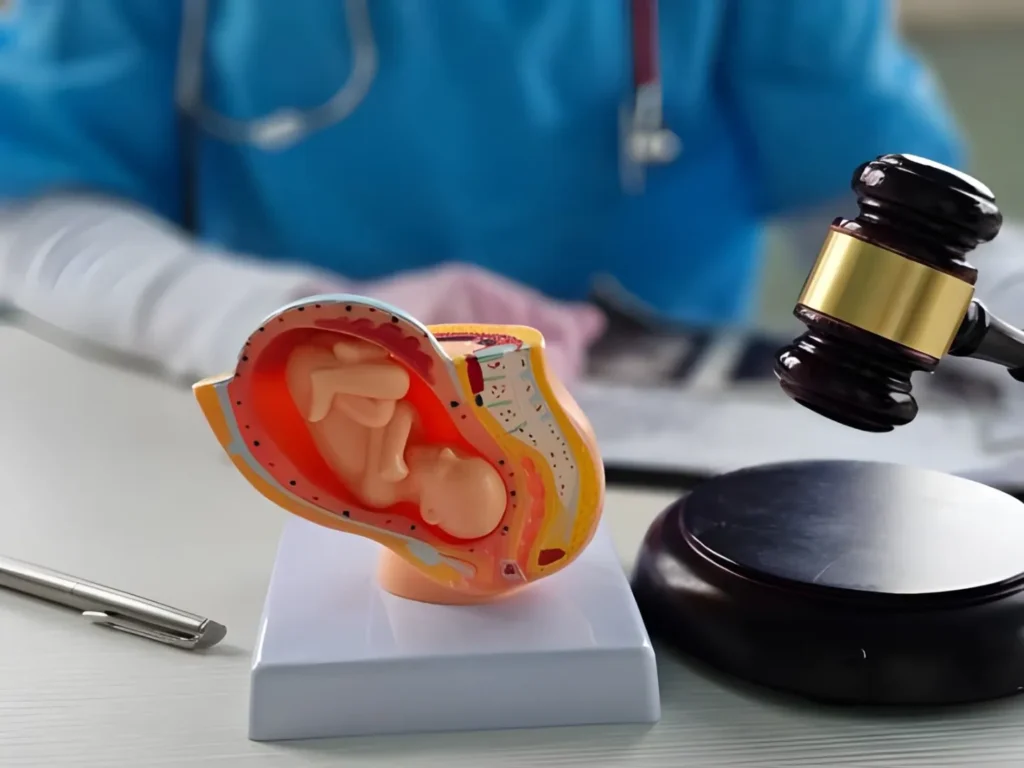

Giving birth should be one of the most closely monitored medical events of a person’s life. Doctors, nurses, and midwives are trained to manage every stage of labor and delivery, including the moments after your baby is born. But when something goes wrong in that final stage and the placenta is not properly delivered or removed, the consequences can be life-altering. Retained placenta can cause severe hemorrhage, infection, emergency surgery, and in the worst cases, the permanent loss of a woman’s ability to have children. If you or someone you love suffered serious complications after delivery that you believe were preventable, understanding your legal rights is an important first step.
Prior results do not guarantee a similar outcome.
Quick Checklist: Signs Your Retained Placenta Case May Involve Medical Negligence
- The placenta was not delivered within 30 minutes after birth and your provider took no action
- You experienced heavy bleeding after delivery that went unaddressed or was addressed too slowly
- You were discharged without anyone confirming the placenta had been fully removed
- You returned to the hospital days or weeks later with fever, pain, or heavy bleeding caused by retained tissue
- You required emergency surgery, a blood transfusion, or a hysterectomy due to complications
- Imaging (ultrasound, CT scan) later confirmed retained placental tissue that should have been detected earlier
- Your provider failed to respond appropriately to warning signs you reported after going home
- You were not given uterotonic medications during the third stage of labor despite recognized bleeding risk
What Is a Retained Placenta?
After a baby is delivered, the placenta, which is the organ that supported the pregnancy, needs to follow. This final phase of labor is called the third stage, and under normal circumstances it wraps up within about 30 minutes. A retained placenta is exactly what it sounds like: the placenta, or pieces of it, stay inside the uterus when they shouldn’t. According to medical research, this complicates roughly 2 to 3 percent of vaginal deliveries, which makes it a known, anticipated risk that experienced OB providers are expected to be prepared for. The problem is not just that it happens, but what can go wrong when it isn’t caught or treated correctly.
There are a few reasons a placenta might not deliver properly. Sometimes the uterus simply stops contracting the way it should. Other times, the placenta has attached too deeply into the uterine wall, a condition called placenta accreta spectrum, which can make removal far more complicated. A “trapped” placenta is another scenario, where the cervix closes before the placenta passes through. Regardless of the cause, once a provider recognizes that the placenta has not delivered within the expected window, or that tissue has been left behind, they are expected to act.
How Dangerous Is a Retained Placenta?
The short answer is that retained placenta can be extremely dangerous, and the research backs that up. It is recognized as one of the leading causes of serious postpartum hemorrhage. In a study of 296 women with retained placenta, the median measured blood loss was around 1,300 mL and more than 95% of those women experienced postpartum hemorrhage. That is not a minor complication. That is a medical emergency.
Beyond hemorrhage, retained placental tissue creates an environment where infection can take hold quickly. Endometritis, a uterine infection, is a known consequence when tissue is left behind. When hemorrhage is severe or infection becomes uncontrollable, the treatment of last resort is often a hysterectomy, the surgical removal of the uterus. For a woman who intended to have more children, that outcome is not just a physical loss. It is the permanent end of a deeply personal possibility. In rare and devastating cases, retained placenta complications have resulted in maternal death.
What Should Your Doctors Have Been Doing?
The standard of care in obstetrics is well-established when it comes to the third stage of labor and what follows. Providers are expected to actively manage placental delivery, which typically involves administering uterotonic drugs, using controlled cord traction, and monitoring closely for signs of excessive bleeding. If the placenta does not deliver within the accepted timeframe, escalation to manual removal in an operating room setting, with anesthesia and blood products on hand, is the recommended course of action.
After delivery, whether vaginal or cesarean, providers are also expected to inspect the placenta to confirm it has been delivered whole and intact. If there is any reason to suspect incomplete delivery, such as a placenta that looks fragmented or a patient who is bleeding more than expected, the appropriate next step is imaging and further evaluation. Think of it this way: if a nurse notices that a new mother is soaking through pads rapidly and spiking a fever two days after birth, the standard of care requires that retained tissue be ruled out before she is simply sent home with antibiotics.
When Does Retained Placenta Become Medical Malpractice?
Not every difficult birth outcome is the result of negligence. Medicine involves real risk, and not every complication means someone made a mistake. But when a provider’s failure to follow accepted medical standards leads directly to patient harm, that is where the legal concept of medical malpractice enters the picture.
In New York, a retained placenta lawsuit typically rests on four elements. First, there has to be a provider-patient relationship, which is established the moment you are admitted for labor and delivery. Second, there has to be a breach of the standard of care, meaning the provider did something a competent OB would not have done, or failed to do something a competent OB would have. Third, that breach has to be the cause of your injury. Fourth, you have to have suffered actual, documentable harm. All four pieces need to be present. A case where a provider monitored closely, acted promptly, and a complication still occurred is very different from a case where warning signs were ignored for hours while a patient lost dangerous amounts of blood.
The kinds of scenarios that may support a malpractice claim include a provider who documented heavy bleeding in the chart but did not escalate care, a surgical team that failed to inspect the placenta after a cesarean section, or a hospital that discharged a postpartum patient with complaints of unusual pain without ordering an ultrasound. Expert testimony from an OB specialist is almost always required to explain what proper care would have looked like and where the care actually given fell short.
What Injuries and Losses Can You Recover Damages For?
If negligent care caused your retained placenta complications, New York law allows you to seek compensation for the full scope of what you lost. That includes economic losses like the cost of emergency surgery, blood transfusions, ICU care, additional hospitalizations, and any future medical treatment you need as a result of what happened. If you missed work during your recovery, or if your injuries limit your ability to work going forward, those losses are part of the picture too.
Non-economic damages cover the things that do not come with a bill but are no less real: the physical pain, the psychological trauma, the fear of almost dying, the grief of waking up in the ICU instead of holding your newborn. If a hysterectomy was performed because of negligent care, the loss of fertility is its own category of compensable harm. And in the most tragic cases, where a mother dies from retained placenta complications, her family may have grounds for a wrongful death claim under New York law.
How Long Do You Have to File a Lawsuit in New York?
The clock on a medical malpractice claim in New York starts earlier than most people expect. Under CPLR Section 214-a, you generally have two and a half years from the date of the negligent act or from the last date of treatment in a continuous treatment relationship to file your case. For many retained placenta injuries, that window starts at delivery or shortly after. Two and a half years may feel like a long time when you are in the middle of recovery, but between gathering records, finding qualified experts, and filing paperwork, it moves faster than you think.
There is a separate rule worth knowing about called the foreign object exception. In cases where a surgical tool or other object is left inside a patient’s body, the statute of limitations runs one year from when the patient discovered or reasonably should have discovered it, even if that falls outside the standard 2.5-year window. Whether retained placental tissue qualifies as a “foreign object” under this rule is a genuinely contested legal question in New York, not something you should assume applies without speaking to an attorney. New York courts have analyzed this issue on a case-by-case basis.
What Evidence Matters Most in These Cases?
Building a retained placenta lawsuit requires a clear evidentiary record, and most of that record lives in your medical chart. Delivery notes, operative reports, nursing documentation, vital signs, postpartum assessments, and discharge records all paint a picture of what was known, when it was known, and what was done about it. Imaging studies like ultrasounds or CT scans that identified retained tissue after the fact can be particularly powerful because they confirm what was missed.
Pathology reports matter too. If removed tissue was sent to a lab, that report can establish what was left behind and when. Witness accounts from family members who were present during delivery or who accompanied you to a follow-up visit add context that charts sometimes miss. All of this gets reviewed by a medical expert who can say clearly whether the care you received measured up to what a competent provider should have done.
Schedule your free consultation today
How Do You Know If You Have a Case?
The honest answer is that you cannot fully know without a legal and medical review of your specific records. What you can do is recognize the pattern. If your complications were severe, if warning signs were documented but ignored, if you left the hospital and returned days later because something had clearly been missed, if you required a hysterectomy after what was described to you as a routine delivery, those are the kinds of facts that a retained placenta lawsuit is built from. You deserve to have someone review your situation carefully rather than guess.
At Porter Law Group, we handle medical malpractice cases throughout New York and we understand how much is at stake for the people and families on the other side of these claims. If you believe negligent obstetric care caused you serious harm, we are here to talk through what happened and help you figure out whether you have a path forward.
This article is for informational purposes only and does not constitute legal or medical advice. Every case is different, and the information here should not be used as a substitute for consultation with a licensed New York attorney or your own healthcare provider.