
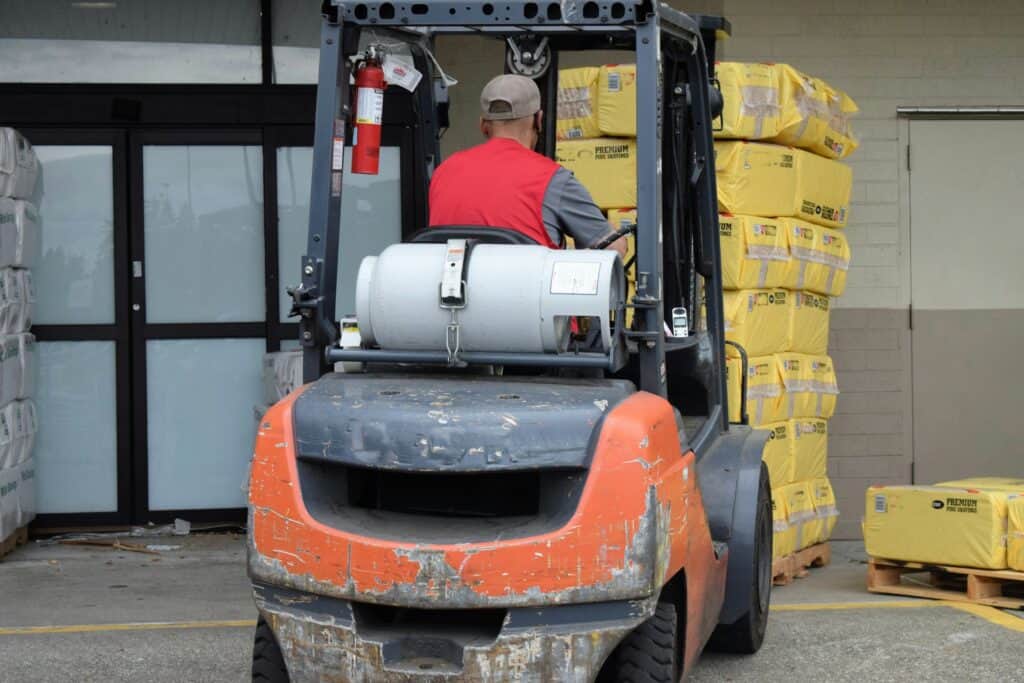

New York’s Scaffold Law can provide crucial protections for workers injured in construction vehicle accidents involving height risks. This law holds property owners and contractors responsible for gravity-related injuries, which may include incidents involving cranes, forklifts, and dump trucks.
Struck-by incidents – when a worker is hit by a moving object, such as a vehicle, falling material, or swinging equipment – are a leading cause of deaths and injuries in construction. Approximately 75% of fatalities involve heavy equipment like trucks or cranes. In 2020, the construction sector saw 150 deaths and 14,000 nonfatal injuries from struck-by incidents, with the nonfatal injuries alone costing $1.4 billion in workers’ compensation.
If you or a loved one has been injured in a heavy vehicle accident on a New York construction site, seek the help of an experienced construction attorney. They can help you better understand your legal options, as the Scaffold Law may entitle you to compensation beyond workers’ compensation.
Contact us today for a free, no obligation, review of your case.
What Is the Scaffold Law and How Does It Apply to Construction Vehicles?
The Scaffold Law, officially known as New York Labor Law § 240, protects workers from height-related risks on construction sites. Despite its name, this law covers more than just scaffolding accidents. It can apply to various situations where gravity-related hazards are present, which may include incidents involving construction vehicles.
The Scaffold Law requires property owners and contractors to provide proper protection for workers against falling and being struck by falling objects. This protection may extend to work involving:
- Cranes, hoisting equipment, and elevated work platforms
- Forklifts and aerial lifts
- Dump trucks during loading and unloading
Remember that each incident is unique. An expert New York construction vehicle accident lawyer will help you determine if the Scaffold Law applies to your injury.
Different Types of Construction Vehicles
Let’s look at specific scenarios where the Scaffold Law might apply to a construction vehicle accident:
Crane Operations
You’re operating a crane and fall while climbing down from the cab because there’s no proper ladder or handholds. Even if the operator made a mistake, the Scaffold Law likely applies here, as it’s a height-related injury due to a lack of safety equipment.
Dump Truck Incidents
You’re working below a raised dump truck bed when improperly secured materials fall and injure you. This scenario falls under the Scaffold Law because it involves a gravity-related risk directly tied to the vehicle’s operation.
Aerial Lifts and Forklifts
You fall from an elevated forklift platform because a safety harness wasn’t provided. The Scaffold Law would apply, as it involves both height and inadequate safety measures.
Loading/Unloading Accidents
You’re unloading materials in the bed of a raised dump truck. If you get injured falling from this elevated part of the vehicle due to a lack of proper fall protection, a Scaffold law violation may be claimed.
In each of these cases, you may have grounds for a claim under Labor Law § 240, in addition to any workers’ compensation benefits.
What Are the Key Elements of a Scaffold Law Claim in Vehicle Accidents?
For a stronger claim under the Scaffold Law involving construction vehicles, your case must include:
- Gravity-Related Injury
The injury must result from a fall from height or from being struck by a falling object, for example, falling from an aerial lift or being hit by materials from a raised forklift.
- Lack of Proper Protection
Evidence must show that adequate safety measures were not in place. This could include the absence of safety harnesses, guardrails, or proper securing mechanisms for elevated loads.
- Qualifying Work Activities
The injury must occur during construction, demolition, repair, alteration, painting, or cleaning of a building or structure.
- Strict Liability
Unlike typical personal injury cases, Scaffold Law imposes strict liability. If these elements are met, the property owner or contractor can be held liable regardless of their direct involvement or the worker’s potential negligence.
The key here is establishing that your injury was directly related to the effects of gravity and that your employer did not provide sufficient protection. This could include situations where safety equipment was absent, inadequate, or defective.
Get in touch today and let us help you secure the full compensation you deserve.
Benefits of Filing a Scaffold Law Claim
- Strict Liability Advantage. The strict liability standard significantly simplifies the legal process for injured workers. Unlike typical personal injury cases, you don’t need to prove negligence. If a violation of the Scaffold Law leads to your injury, the responsible parties are automatically liable.
- Expanded Compensation. Unlike workers’ compensation, which limits the types of damages you can recover, a Scaffold Law claim allows for broader compensation, including:
- Full lost wages (past and future)
- Complete medical expenses
- Pain and suffering damages
- Loss of quality of life
- Potential for Third-Party Claims. The Scaffold Law allows you to pursue claims against parties other than your employer, which can lead to additional compensation beyond workers’ compensation benefits.
- A Safer Workplace. By holding property owners and contractors strictly liable, the law incentivizes better safety practices on construction sites, potentially preventing future accidents.
Speak to an Expert Scaffold Law Attorney
New York’s Scaffold Law protects construction workers, including those working with or around vehicles. The Porter Law Group can help you secure compensation beyond standard workers’ comp if you’ve been injured in a construction vehicle accident involving elevation-related risks.
Given the specific requirements and time limits for these claims, it is crucial to contact an attorney promptly. Reach out to us today at our toll-free number, 833-PORTER9. You can also email info@porterlawteam.com to schedule a free, non-obligatory consultation.
Remember, you’re not alone. Our seasoned construction attorneys will evaluate your case, outline your rights, and help you seek full compensation under the law.