


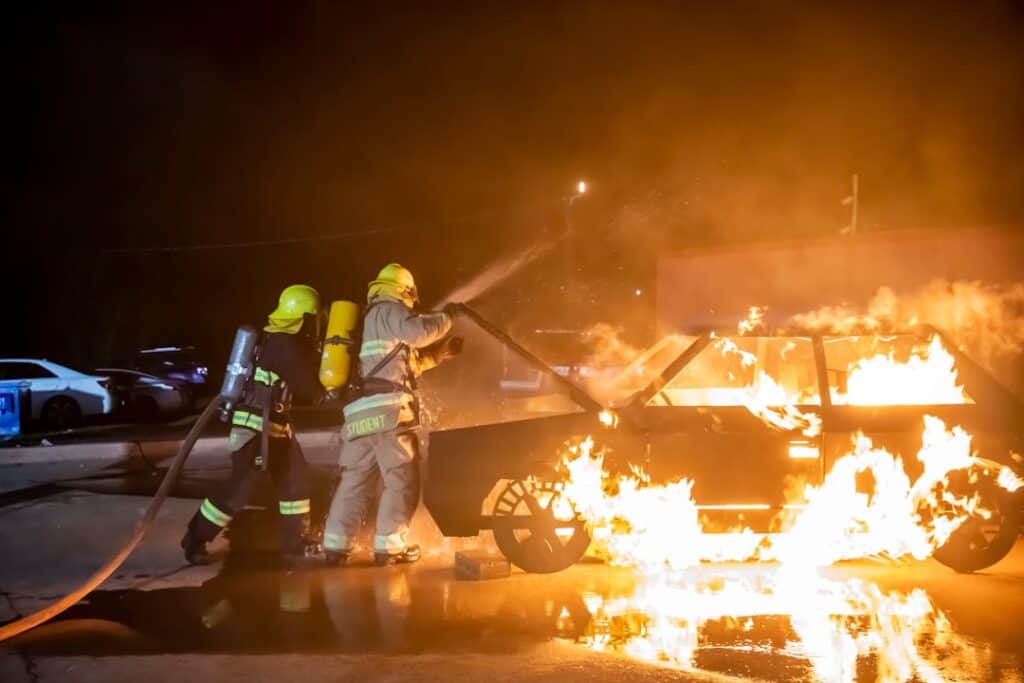

Burn injuries in New York come from a wider range of causes than almost any other type of personal injury claim, and each one runs on different legal rules.
A fire caused by a defective e-bike battery is a product liability case.
A gas explosion involves a utility company held to an unusually high standard.
A fire in a rental building can turn on whether the landlord met specific fire safety requirements.
Choosing a lawyer who identifies the right legal theory quickly, rather than treating every burn case the same way, often determines how much of your recovery you’re able to access.
Prior results do not guarantee a similar outcome.
What Makes New York Burn Injury Claims Different From Other Personal Injury Cases?
Most personal injury claims involve a single, fairly obvious legal theory. Burn cases are different because the source of the fire or heat determines almost everything else, who can be sued, what has to be proven, and what deadlines apply.
A lawyer needs to correctly identify whether your injury involved a defective product, a utility company’s negligence, a landlord’s fire safety violations, a workplace accident, or some combination, before they can even begin building your case.
Getting this wrong at the outset can mean missing a party who bears real responsibility.
Are Lithium-Ion Battery and E-Bike Fires a Product Liability Case?
This has become one of the most significant burn injury issues in New York City specifically.
Lithium-ion batteries that power e-bikes and e-scooters can enter a state called thermal runaway, an uncontrolled, self-sustaining chemical reaction that can turn a battery fire into a life-threatening event within seconds, often blocking the only exit from an apartment before anyone reaches the door.
In response, New York City’s Local Law 39 of 2023 now requires e-bikes, e-scooters, and their batteries sold, leased, or distributed in the city to be certified to specific safety standards (UL 2849 for e-bikes, UL 2272 for e-scooters, and UL 2271 for batteries sold separately).
A statewide certification law followed in 2024. Uncertified, counterfeit, and improperly repaired batteries remain the leading cause of these fires.
If you were injured by one of these fires, this is generally a strict products liability case, meaning you don’t need to prove anyone was careless, only that the battery or device was defective and that the defect caused your injury.
New York’s strict liability framework can reach the entire chain of commerce: the manufacturer, the importer, the distributor, and the retailer who sold an uncertified or defective product.
Do Gas and Electric Utility Companies Owe a Higher Duty of Care?
Yes, and this is a distinction worth knowing if your injury involved a gas leak or explosion. New York courts have held that companies supplying gas or other inherently dangerous utilities owe a degree of care proportionate to the hazards of the product they’re supplying, a higher standard than ordinary negligence.
In Jackson v. Gas Co., the court reaffirmed that a gas supplier’s duty scales with the danger involved, meaning something less than a reported leak complaint or a documented safety failure can still establish a breach.
These cases often involve multiple potential defendants beyond the utility itself, including contractors who may have struck a gas line, property owners with outdated or poorly maintained gas systems, and equipment manufacturers if a defective valve or regulator was involved.
What Fire Safety Duties Do Landlords Have?
Under Multiple Dwelling Law Section 68 and New York City Administrative Code Section 27-2045, landlords of multiple dwellings are required to install a working smoke detector in every unit.
Once installed, the responsibility to maintain that detector generally shifts to the tenant, with one important exception: if the detector becomes inoperable within one year of installation through no fault of the tenant, the landlord remains responsible for it.
This split matters in fire injury cases. An insurer may try to argue a tenant was responsible for a missing or non-functioning smoke detector, when the facts actually place that responsibility back on the landlord under the statute.
What If You Were Burned in a Workplace Accident?
Workplace burn injuries generally follow the same framework as other construction and industrial accidents in New York.
Your employer’s workers’ compensation coverage is usually your exclusive remedy against your employer, but you may still be able to pursue a separate claim against the property owner, general contractor, or equipment manufacturer if their negligence contributed to the fire or explosion.
Severe burns are also one of the injury types that can meet the “grave injury” threshold under Workers’ Compensation Law, which matters for how liability gets distributed among the parties who caused the accident, even though it doesn’t limit your own right to recover.
What Should You Look for in a Burn Injury Lawyer?
Look for a lawyer who asks detailed questions about exactly how the fire started before assuming which legal theory applies.
The difference between a product liability case, a landlord negligence case, and a utility liability case changes who gets sued and what evidence needs to be preserved immediately.
Burn injuries also tend to involve extensive medical treatment, including skin grafts, reconstructive surgery, and long-term rehabilitation.
A lawyer should be comfortable working with burn specialists and life-care planners to accurately value future medical needs, not just past medical bills.
Documentation of scarring and disfigurement deserves its own attention, separate from medical bills.
New York courts specifically scrutinize whether a pain-and-suffering award is reasonable in light of the visible, permanent impact of a burn injury, which means photographs, expert testimony on permanency, and a clear record of how the scarring affects daily life all matter to the value of your case, not just the cost of treatment.
Ask how the attorney plans to preserve physical evidence, especially the device or battery involved in a fire, since this evidence is often damaged, discarded, or lost during cleanup or a fire investigation if it isn’t secured quickly.
Finally, look for a firm that’s transparent about how contingency fees work. At Porter Law Group, you pay nothing unless we win your case.
What Questions Should You Ask During a Consultation?
| Question | Why It Matters |
|---|---|
| What caused the fire, and which legal theory applies to my case? | The source of the fire (product, utility, landlord, workplace) determines who can be sued |
| If a battery or device was involved, can you preserve it as evidence? | This physical evidence is often central to a product liability claim and can be lost quickly |
| Was the device or battery UL-certified? | Uncertified batteries are the leading cause of e-bike and e-scooter fires in New York City |
| If a gas or electrical utility was involved, how do you obtain their inspection and complaint records? | Utilities may be slow to release this evidence once their own investigation is complete |
| How do you value future medical needs like skin grafts or reconstructive surgery? | Burn injuries often require ongoing treatment well beyond the initial hospital stay |
| How do you document scarring and disfigurement as part of my damages? | New York courts specifically scrutinize this evidence when reviewing pain-and-suffering awards |
| How do contingency fees and case costs work? | You should understand exactly what you owe and when, before you sign anything |
What Red Flags Should You Watch for When Hiring a Lawyer?
A few warning signs tend to separate firms that understand the range of New York burn injury law from those that don’t.
- Treating every fire case the same way without asking what actually caused the fire
- No plan for preserving a battery, device, or other physical evidence involved in the fire
- Not asking whether the product involved was certified or where it was purchased
- Guaranteeing a settlement amount before identifying the responsible party or parties
- Pressure to sign representation paperwork before you’ve had a chance to ask questions
What Are the Key Deadlines in a New York Burn Injury Case?
| Situation | Deadline | Rule |
|---|---|---|
| Claim against a private party, manufacturer, or utility | 3 years from the date of the injury | CPLR 214 |
| Claim against a municipal entity | Notice of claim within 90 days | General Municipal Law 50-e |
| Wrongful death claim | 2 years from the date of death | EPTL 5-4.1 |
| Injury victims who were minors at the time of the fire | Clock pauses until age 18 | CPLR 208 |
Summing It Up
Choosing the right burn injury lawyer in New York means finding someone who identifies the actual cause of your fire and builds your case around the legal theory that fits, whether that’s a defective battery, a negligent utility, an unsafe building, or a workplace accident. A lawyer who treats every burn case as a generic personal injury claim may be missing responsible parties and real compensation.
Porter Law Group has built its reputation on trial-tested representation for injured New Yorkers, and our attorneys work on a contingency fee basis, meaning you pay nothing unless we win.
If you or a loved one has suffered a burn injury, reach out to discuss what happened and what your legal options look like.
Call 833-PORTER9 or email info@porterlawteam.com to schedule a free consultation.
Prior results do not guarantee a similar outcome.
Frequently Asked Questions
Can I sue over a fire caused by an e-bike or e-scooter battery?
Often, yes. These cases generally proceed as strict products liability claims, meaning you need to show the battery or device was defective, not that a specific person was careless. New York’s strict liability rules can reach the manufacturer, importer, distributor, and retailer, particularly where the battery lacked required UL certification under NYC Local Law 39.
Do gas companies have a higher legal duty than an ordinary business?
Yes. New York courts have held that suppliers of gas and similar hazardous utilities owe a degree of care proportionate to the danger involved, a higher standard than ordinary negligence, as reaffirmed in Jackson v. Gas Co.
Is my landlord responsible if my smoke detector wasn’t working?
It depends on timing. Under Multiple Dwelling Law Section 68, landlords must install working smoke detectors, and tenants generally take over maintenance afterward, except that landlords remain responsible if a detector fails within one year of installation through no fault of the tenant.
Can I pursue a claim if I was burned at work?
In most cases, workers’ compensation is your exclusive remedy against your employer, but you may still be able to sue a property owner, general contractor, or equipment manufacturer whose negligence contributed to the fire or explosion.
How much does a burn injury lawyer cost in New York?
Most plaintiff-side personal injury attorneys, including Porter Law Group, work on a contingency fee basis. You pay nothing upfront, and there is no fee unless the firm recovers compensation on your behalf.
This article is for informational purposes only and does not constitute legal advice. Attorney advertising. Prior results do not guarantee similar outcomes.

