

New York premises liability law imposes specific obligations on property owners, businesses, and landlords to maintain safe conditions for anyone who lawfully enters their premises.
When those obligations aren’t met and someone gets hurt, the owner can be held financially responsible.
According to New York premises liability standards, all property owners must adhere to building codes and safety standards, regularly inspect their property for hazards, promptly address dangerous conditions, and warn visitors about hazards they can’t immediately fix.
Cutting corners on any of these obligations is exactly the kind of conduct that turns a preventable accident into a viable legal claim.
Reach out to our legal team for a free consultation today.
What Does New York Law Actually Require of Property Owners?
The legal duty imposed on property owners in New York is rooted in negligence and premises liability law. Every property owner and occupier owes a duty to maintain their premises in a reasonably safe condition for lawful visitors. That duty breaks down into four concrete obligations:
Regular inspections — conducting routine walk-throughs to identify hazards before someone is hurt
Prompt hazard correction — fixing dangerous conditions within a reasonable time once discovered
Adequate warnings — posting clear warnings about hazards that cannot be immediately fixed
Building code compliance — meeting minimum safety standards for lighting, handrails, flooring, and walkways
The New York State Property Maintenance Code establishes minimum requirements for premises, structures, equipment, and facilities to ensure a reasonable level of safety from hazards. They are legally enforceable obligations, and failure to meet them is evidence of negligence when someone is injured as a result.
What Are the Most Common Slip and Fall Hazards That Create Liability?
The hazards that appear most frequently in New York slip and fall claims are the same ones property owners are most commonly cited for failing to address. According to the New York State Insurance Fund and CDC workplace safety guidance, the most common preventable hazards include:
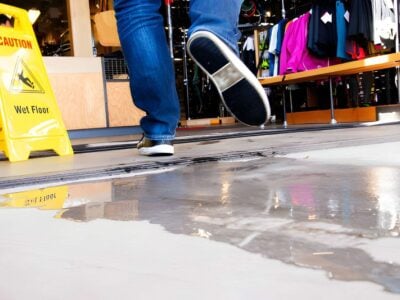
Wet and slippery floors without adequate warnings
A store employee who mops a floor and walks away without posting a wet floor sign has created a hazard directly. A spill left unaddressed for an extended period while staff walked past it establishes constructive notice because the store’s own inspection obligations required them to find it.
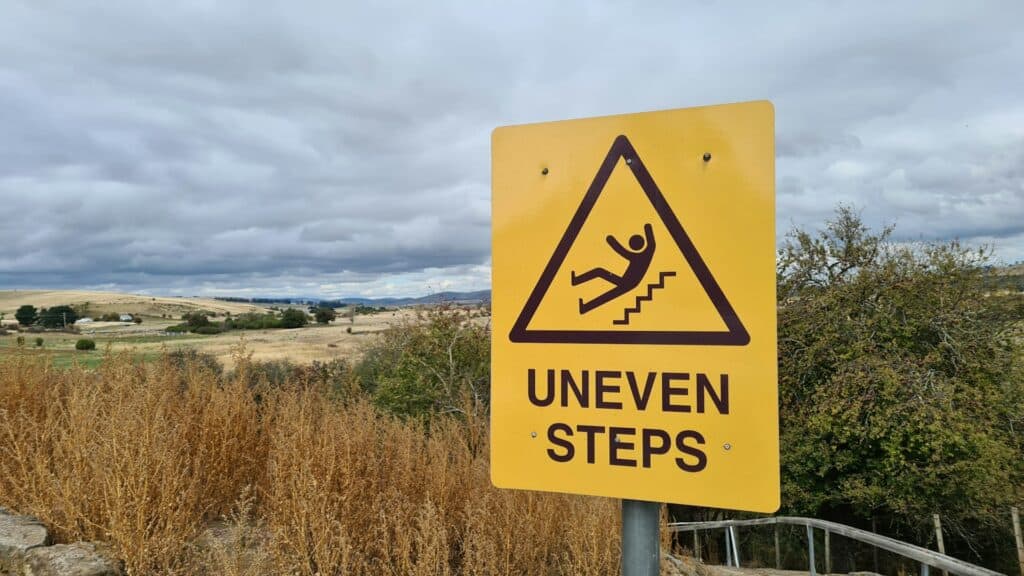
Uneven and damaged walking surfaces
Cracked sidewalks, broken pavement, torn or bulging carpet, loose floorboards, and damaged tiles are all conditions property owners are expected to repair within a reasonable time. A known defect that sits unaddressed for weeks or months is exactly the type of failure that establishes negligence.
Inadequate lighting
According to New York premises liability standards, property owners must maintain adequate lighting in hallways, stairways, work areas, and parking lots. A hallway light broken for months creates constructive notice because any reasonable inspection system would have detected it.
Missing or defective handrails
Stairs without handrails on both sides, loose or wobbly handrails that people trust with their weight, and stairwells that don’t meet building code requirements all represent failures property owners are obligated to correct.
Untreated ice and snow
Property owners are generally required to clear ice and snow within a reasonable time after a storm ends. An icy parking lot, an untreated walkway, or a surface that was salted but allowed to refreeze is a condition the owner had both the obligation and the opportunity to address.
Clutter and obstacles in walkways
Extension cords across hallways, merchandise blocking aisles, stored items on stairs, and debris in pathways are all hazards that a reasonable inspection protocol would catch and remove. These are not accidents of circumstance. They are evidence of a property that isn’t being maintained.
How Should Property Owners Prevent Falls on Their Premises?
According to New York City Bar Association guidance, preventive measures like cleaning spills promptly, posting warning signs, and fixing broken steps are not just safety best practices. They are also evidence that a property owner exercised reasonable care.
Here is what reasonable fall prevention looks like for commercial properties and landlords:
For floors and walking surfaces:
Clean up spills immediately, not “in a few minutes,” and place wet floor signs until the surface is fully dry
Mop only one side of a hallway at a time when possible, leaving a dry path for people passing through
Use non-skid waxes, grit-coated surfaces, and non-slip mats in wet or high-traffic areas
Repair uneven floor surfaces, re-lay bulging carpets, and replace damaged tiles promptly
Document the time and scope of every cleaning and repair
For lighting:
Replace burned-out bulbs in stairwells, hallways, parking lots, and storage areas promptly
Ensure lighting in all areas meets the minimum standards required by applicable building codes
Inspect lighting regularly as part of routine walk-throughs and log the results
For walkways and exits:
Keep aisles, passageways, and exits clear of obstacles, merchandise, and equipment at all times
Avoid running cords and hoses across walkways by using floor plugs or cord covers
Remove seasonal hazards including wet leaves, sand, and debris from exterior walkways
For stairs and handrails:
Install and maintain handrails on both sides of all interior and exterior stairs
Inspect all handrails and grab bars regularly for looseness and repair immediately when found
Ensure stair edges are clearly visible and in good condition
For winter weather:
Apply sand or ice melt after clearing ice, not just scraping surfaces down to a slick base
Have a documented snow and ice removal protocol in place before winter storms arrive
Clear building entrances, sidewalks, and parking lots within a reasonable time after a storm ends
For inspections and documentation:
Conduct routine walk-throughs and document findings in writing
Create a hazard reporting system that employees can use to flag unsafe conditions
Act on hazard reports promptly and document when and how each was resolved
A property owner who can show a documented inspection schedule and a history of prompt hazard correction is in a very different legal position than one who had no maintenance protocol at all. The absence of any inspection process is itself evidence of negligence.
What Is a Reasonable Inspection Schedule Under New York Law?
Property owners often try to defend slip and fall claims by arguing they didn’t know about the hazard.
New York courts look closely at whether that defense holds up given what the owner’s inspection practices actually were.
Constructive notice is based on the principle that property owners have a duty to maintain safe conditions and regularly inspect their premises. What qualifies as reasonable depends on:
The type of property and its purpose
The volume of foot traffic through each area
The nature and severity of the specific hazard
Whether similar conditions had previously occurred at the same location
When a property owner has no documented inspection schedule, no cleaning logs, and no maintenance records, that absence of process is itself evidence of negligence.
What Happens When a Business Ignores Its Own Safety Protocols?
Many retail chains, restaurant groups, and commercial landlords have written safety policies specifically because they understand their legal obligations. When they fail to follow those policies, the consequences for a slip and fall claim are significant.
The documents that become relevant include:
Security footage showing employees or managers passing the hazard without acting
Cleaning and inspection logs with gaps or missing entries
Employee training records showing staff were taught the protocol but didn’t follow it
Prior incident reports from the same location documenting a recurring problem
Internal communications acknowledging the hazard that were never acted upon
Our attorneys can obtain these records through the discovery process, and what they reveal about the gap between written policy and actual practice often tells the story of what really happened.
What Are Landlords Required to Maintain in Apartment Buildings?
Residential landlords in New York face obligations specific to multi-unit housing under both premises liability law and the New York City Housing Maintenance Code.
Under NYC Housing Maintenance Code Title 27, landlords must keep the premises in good repair and maintain public parts of the building in a clean and sanitary condition.
Landlords are generally responsible for common areas including:
Hallways and stairwells
Lobbies and building entrances
Elevators and service areas
Parking lots and exterior walkways
Any shared space tenants don’t individually control
A broken handrail in a stairwell, inadequate lighting in a building hallway, or ice buildup on a shared exterior walkway all fall squarely within the landlord’s maintenance obligation.
Who Is Responsible for Sidewalk Falls in New York City?
Under NYC Administrative Code § 7-210, owners of property adjacent to a public sidewalk are responsible for maintaining that sidewalk in a reasonably safe condition. This includes:
Repairing cracks, raised slabs, and other defects
Clearing snow and ice within a reasonable time after storms
Removing debris, dirt, and other materials that create slip hazards
This obligation is non-delegable. Hiring a snow removal contractor does not transfer the legal duty away from the property owner. If the contractor fails and someone is injured, the property owner remains responsible.
One-, two-, and three-family owner-occupied residential properties are exempt from this obligation, and in those cases the city may bear responsibility subject to prior written notice requirements.
The city may also retain liability for defects caused by its own tree roots, fire hydrants, or utility access points.
For falls on government-controlled property, General Municipal Law § 50-e requires a sworn Notice of Claim within 90 days of the accident. Missing that deadline typically ends the claim regardless of how clear the negligence was.
What Are the Deadlines for Filing a Slip and Fall Claim in New York?
Whether you are pursuing a claim against a private property owner, a commercial business, a landlord, or a government entity, these deadlines determine whether you have a case at all.
Type of defendant | Deadline | Legal basis |
|---|---|---|
Private property owner or business | 3 years from date of injury | |
Government entity | 90-day Notice of Claim, then 1 year and 90 days to file suit | GML § 50-e and GML § 50-i |
Wrongful death from a fall | 2 years from date of death |
The three-year window sounds generous. It isn’t. Surveillance footage is typically overwritten within 30 to 90 days. Witnesses move on. Hazards get repaired. Inspection logs get discarded in routine document purges. Every day that passes before an attorney sends a preservation letter is a day that critical evidence can disappear.
For government property cases, the 90-day Notice of Claim deadline under General Municipal Law § 50-e is the most urgent deadline in the case. Courts rarely grant extensions, and missing it typically ends the claim entirely regardless of how serious the injury was.
Reach out to our legal team for a free consultation today.
Summing It Up
Property owners in New York have clear legal obligations to inspect their premises, fix known hazards within a reasonable time, and warn visitors about conditions they haven’t yet addressed.
When they fail to meet those obligations and someone is seriously hurt, that failure is the foundation of a premises liability claim.
Proving it requires evidence gathered close to the time of the fall, before footage is overwritten and hazards are quietly repaired.
Porter Law Group sends preservation letters, investigates the property owner’s maintenance history, and identifies every party whose negligence contributed to the fall. No upfront cost, no fee unless we win.
Contact us before that evidence disappears.
Frequently Asked Questions
What are property owners legally required to do to prevent slip and fall accidents in New York?
Property owners must regularly inspect their premises for hazards, fix dangerous conditions within a reasonable time, warn visitors about hazards they cannot immediately address, and comply with minimum safety standards under the New York State Property Maintenance Code. Failing any of these obligations creates liability exposure when someone is injured.
What are the most common slip and fall hazards that lead to liability?
According to the New York State Insurance Fund, the most common hazards include wet floors without warning signs, uneven or damaged walking surfaces, poor lighting, missing or defective handrails, untreated ice and snow, and clutter in walkways. Any hazard the owner created, knew about, or should have discovered through reasonable inspection creates potential liability.
How should businesses prevent falls on their premises?
Businesses must clean spills immediately, keep walkways clear, maintain adequate lighting, repair damaged flooring and stairs promptly, document all inspections, and have a written hazard response protocol in place. According to the NYC Bar Association, following these practices also demonstrates reasonable care if a claim is later filed.
What is constructive notice and why does it matter?
Constructive notice means the hazard existed long enough and was visible enough that a reasonable property owner conducting routine inspections should have found it. A property owner who claims ignorance about a condition that would have been obvious to anyone checking the premises is still liable under this standard.
Are landlords responsible for falls in common areas of apartment buildings?
Yes. Landlords are generally responsible for maintaining hallways, stairwells, lobbies, elevators, and exterior walkways. Under the NYC Housing Maintenance Code, landlords in New York City must keep public parts of the building in good repair.
Who is responsible for a slip and fall on a NYC sidewalk?
Under NYC Administrative Code § 7-210, the adjacent property owner is responsible for most sidewalks, including snow and ice removal. One-, two-, and three-family owner-occupied homes are exempt, in which case the city may bear responsibility subject to prior written notice requirements.
How long do I have to file a slip and fall claim in New York?
Three years from the date of injury for most private property cases under CPLR § 214. Falls on government property require a Notice of Claim within 90 days under General Municipal Law § 50-e and a lawsuit within one year and 90 days under GML § 50-i.
Contact Porter Law Group
Michael S. Porter, J.D.
Phone: +1 833-767-8379
Email: info@porterlawteam.com