


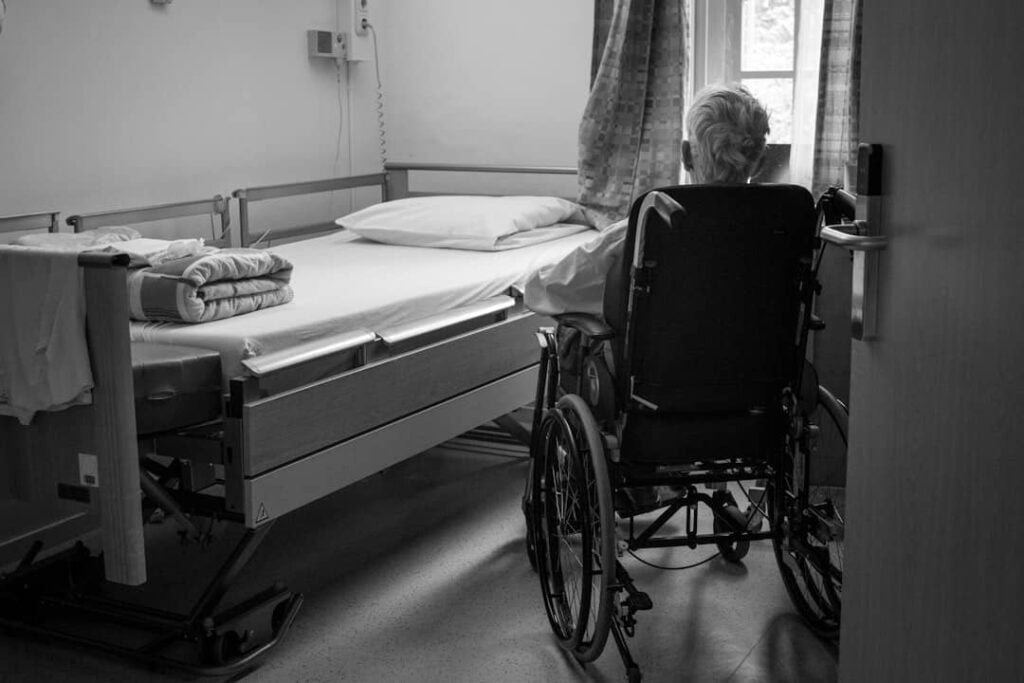

A pressure ulcer, commonly called a bedsore, develops when prolonged pressure cuts off blood flow to skin and tissue, usually over a bony area like the tailbone, heels, or hips.
Most pressure ulcers in nursing home residents are preventable with proper care, which is exactly why federal and New York law both treat them as a serious indicator of whether a facility is meeting its basic obligations.
That said, a bedsore alone doesn’t automatically prove neglect. If your loved one developed a pressure ulcer in a New York nursing home, we can help you understand whether the records support a neglect claim.
Prior results do not guarantee a similar outcome.
When a Bedsore May Signal Neglect
A pressure ulcer becomes stronger evidence of neglect, rather than an unfortunate medical complication, when the record shows specific gaps:
No documented skin assessment at admission.
No individualized risk assessment despite obvious risk factors, a care plan that doesn’t address turning, nutrition, or moisture management.
Repositioning records that are absent, generic, or contradicted by family observations
A wound that progressed to a severe stage without any documented earlier intervention.
Family members who visit regularly and consistently find their loved one in the same position, or who notice a resident left in wet or soiled bedding for extended periods, are often observing exactly the kind of gap that later shows up as a documentation problem in the medical record.
How Common Are Pressure Ulcers in Nursing Homes
The CDC’s most cited national data found that roughly 11 percent of nursing home residents have a pressure ulcer at any given time, with prevalence across various studies ranging from about 2 to 28 percent depending on the facility and resident population.
Stage 2 ulcers are the most common. This frequency matters legally, because it means facilities can’t credibly claim ignorance about the risk. National data, federal regulations, and clinical guidelines all treat pressure ulcer prevention as a core, well-understood responsibility of long-term care, not a novel or unpredictable problem.
The Stages of a Pressure Ulcer
Pressure injuries are staged by depth of tissue damage, and the stage matters legally because more severe stages typically reflect a longer period without intervention.
Stage 1 involves intact skin with persistent redness that doesn’t fade under pressure, and it’s potentially reversible with immediate care.
Stage 2 involves partial thickness skin loss, appearing as a shallow open wound or blister.
Stage 3 involves full thickness skin loss extending into fatty tissue, creating a crater-like wound.
Stage 4 is the most severe, with tissue loss exposing muscle, tendon, or bone, and it carries serious risks of bone infection and sepsis.
A resident who develops a Stage 3 or Stage 4 wound almost always did so by progressing through earlier, more visible stages first, which is exactly why the absence of documented earlier-stage findings is often itself a red flag.
Who Is Most at Risk
Immobility is the single greatest risk factor, since residents who can’t reposition themselves depend entirely on staff to do it for them. Advanced age, diabetes, poor circulation, malnutrition, low body weight, incontinence, and cognitive impairment that prevents a resident from communicating discomfort all compound the risk.
Medical devices like oxygen tubing, catheters, and splints can also create pressure points if not properly monitored. None of this excuses a facility from providing care.
It defines exactly what the facility should have assessed and planned for using tools like the Braden Scale, a standard risk-assessment instrument that evaluates mobility, nutrition, moisture, and related factors.
What The Federal Law Requires
Under 42 C.F.R. § 483.25(b)(1), surveyed as tag F686, a nursing facility must ensure that a resident who enters without a pressure ulcer doesn’t develop one unless the resident’s clinical condition demonstrates it was unavoidable, and must provide treatment to promote healing and prevent new ulcers for a resident who already has one.
This puts the burden on the facility. CMS guidance defines an ulcer as avoidable when the facility failed to evaluate the resident’s risk, failed to implement individualized interventions, failed to monitor whether those interventions worked, or failed to revise its approach when needed.
An ulcer is only considered unavoidable when the facility did all of those things and the wound still developed anyway. That’s a genuinely high bar, and it means the facility, not the family, has to justify why a wound happened.
New York’s Specific Pressure Sore Rule
New York’s own regulation, 10 NYCRR § 415.12(c), uses notably direct language: a resident who enters without pressure sores must not develop them unless the resident’s clinical condition shows they were unavoidable “despite every reasonable effort to prevent them.”
A facility claiming a wound was unavoidable should be able to point to contemporaneous records showing those reasonable efforts were actually made, not just assert it after the fact once a family raises concerns.
New York’s nursing home administration regulations also specifically require programming aimed at preventing pressure sores, including body alignment and turning protocols, individualized exercise, and special skin care procedures, tailored to each resident’s condition rather than a single fixed schedule applied to everyone.
What Legal Claims Are Available
A pressure ulcer case can proceed under a few different, sometimes overlapping theories.
An ordinary negligence or medical malpractice claim requires showing the facility owed a duty of care, breached it by falling short of accepted standards for prevention or treatment, and that the breach caused the wound or allowed it to worsen, resulting in real damages.
Separately, New York Public Health Law § 2801-d creates its own private right of action when a nursing home deprives a resident of a statutory right, such as adequate and appropriate care, and that deprivation causes injury; this claim can run alongside a negligence theory rather than replacing it.
Where a severe, untreated pressure ulcer leads to a fatal complication like sepsis or a bone infection, a wrongful death claim may also be available to the family.
Severity alone doesn’t decide a case. A Stage 3 or Stage 4 wound generally presents stronger evidence simply because it usually reflects a longer period of unaddressed risk, but even a Stage 1 or 2 injury can support a claim when it fits a pattern of broader neglect at the facility.
How to Report and What Deadlines Apply
You can file a complaint with the New York State Department of Health through its Nursing Home Complaint Hotline at 1-888-201-4563 or its online complaint form, generally for events that occurred within the past year.
A regulatory complaint isn’t a substitute for legal advice, and a facility’s lack of a citation doesn’t by itself prove proper care was given.
Filing deadlines depend on how the claim is classified.
A claim treated as medical malpractice generally must be filed within two and a half years of the act or omission, while a claim based on ordinary negligence can fall under New York’s longer three-year window instead.
A wrongful death claim generally must be filed within two years of death. Because this classification is genuinely fact-specific, it’s worth having your situation reviewed rather than assuming either deadline on your own.
Summing It Up
The presence of a pressure ulcer starts the conversation, but the facility’s own documentation, or the lack of it, usually decides the case.
If your loved one developed a pressure ulcer in a New York nursing home, Porter Law Group can help you understand your options. Call 833-PORTER9, email info@porterlawteam.com, or visit porterprotects.com/contact.
Frequently Asked Questions
My father developed a bedsore, but the nursing home says it was unavoidable. Does that end the conversation?
Not necessarily. A facility can only support that claim by pointing to actual records showing it assessed the risk, implemented an individualized prevention plan, monitored it, and adjusted care as needed. An unsupported assertion of “unavoidable,” without documentation showing those steps were genuinely taken, is worth having reviewed rather than accepted at face value.
Does a state survey citation for a pressure ulcer mean the facility neglected my loved one?
Not automatically. A regulatory citation shows the facility fell short of a specific federal care requirement, but it doesn’t automatically satisfy the separate legal definition of neglect, which requires its own analysis of whether the facility’s failure caused or risked causing harm. A citation is valuable supporting evidence, though, and often documents exactly the kind of gap a civil claim needs to establish.
My mother’s pressure ulcer was only Stage 2. Is it even worth pursuing?
Possibly, depending on the circumstances. Stage 3 and 4 wounds tend to present stronger cases simply because they usually reflect a longer unaddressed risk period, but a Stage 1 or 2 wound can still support a claim, particularly if it fits a broader pattern of missed assessments, understaffing, or repeated complaints that went unanswered at the facility.
How do I find out if a specific nursing home has a history of pressure ulcer problems?
New York publishes nursing home quality measures, including the percentage of long-stay residents with pressure ulcers, through its public Nursing Home Profiles. This data can provide useful context about a facility’s overall track record, though it’s risk-adjusted and doesn’t by itself prove or disprove negligence in any one resident’s specific case.
Is there a single deadline for filing a pressure ulcer claim in New York?
No, and this is a common point of confusion. The deadline depends on how the claim is classified: medical malpractice generally carries a two-and-a-half-year deadline, ordinary negligence can carry a longer three-year window, and wrongful death claims generally must be filed within two years of death. Because the right classification depends on the specific facts, it’s worth having your timeline reviewed rather than assuming one deadline applies.
This article is for informational and educational purposes only. It is not a substitute for medical advice from a qualified healthcare provider or legal advice based on your specific circumstances.