

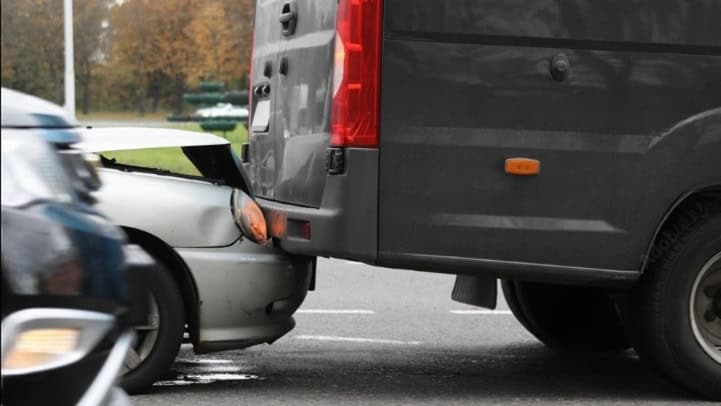
Underride truck accidents are some of the most devastating crashes that can happen on any road. When a passenger car slides beneath the body of a large truck trailer, the roof gets sheared off and the passenger compartment gets crushed, often with little or no warning. According to the Insurance Institute for Highway Safety (IIHS), these crashes kill or severely injure an estimated 400 to 500 people every year across the United States. Survivors of underride collisions in New York have recovered settlements ranging from $250,000 to over $5 million, and a large portion of these cases involve families who have lost a loved one.
If you or someone you love was hurt in an underride crash, you may be entitled to compensation, and the experienced underride accident lawyers at Porter Law Group are ready to help you fight for it.
Prior results do not guarantee a similar outcome.
Why Choose Porter Law Group for Underride Accident Cases?
Underride cases are not like ordinary car accident claims. To win, your attorney must show that the crash could have been survived if the truck had the right safety equipment, or that the safety guard already on the truck failed to work the way it should. This takes specialized knowledge, expert engineers, and trial experience that most firms simply do not have.
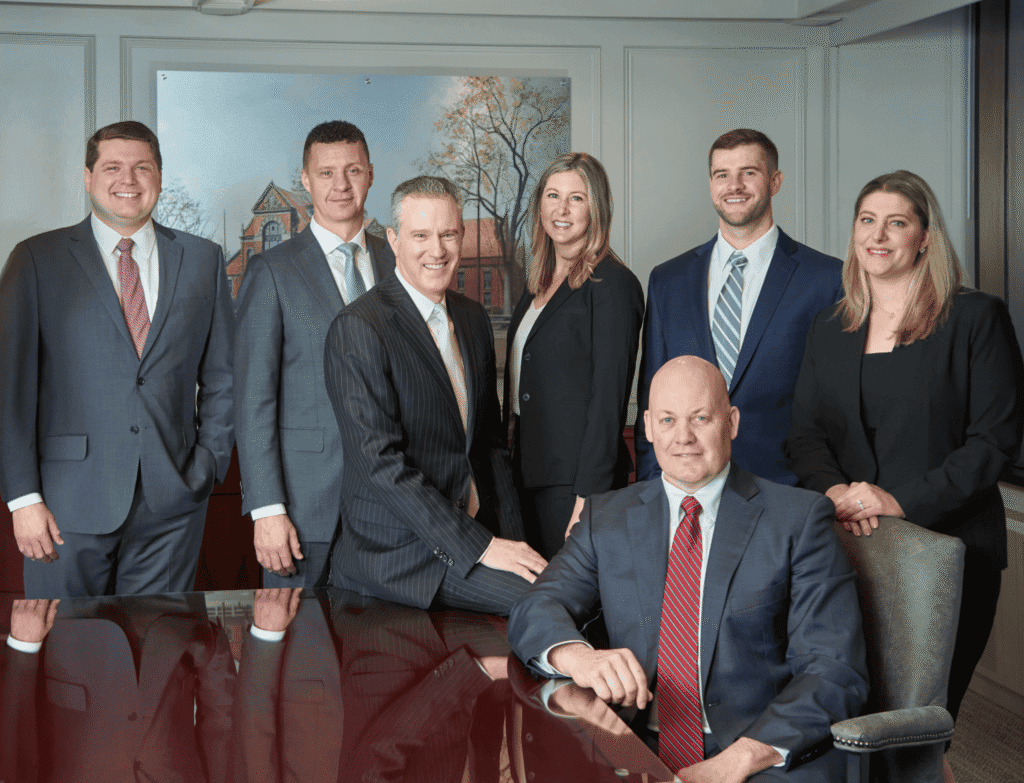
Porter Law Group has recovered more than $500 million for injured clients since 2009. Our published jury verdicts show results 20 to 34 times higher than what insurance companies initially offered. Led by Harvard-educated attorney Michael S. Porter, a former U.S. Army JAG Corps Captain with over 20 years of trial experience, our firm works with engineers who study underride guard designs, crash forces, and federal safety standards. Seven of our eight attorneys are recognized by Super Lawyers, a distinction earned by fewer than 5% of attorneys in New York.
REQUEST A NO-OBLIGATION CASE REVIEW
How Do Underride Truck Accidents Happen?
When a car or smaller vehicle runs into or under a large truck trailer, the problem is the height difference. Truck trailers sit roughly 4 to 5 feet off the ground. That means the vehicle’s front end, bumper, airbags, and crumple zones all pass underneath the trailer instead of absorbing the impact. The trailer edge hits at windshield level, which is where the people are.
There are three main types of underride crashes:
Rear underride happens when a car strikes the back of a stopped or slowing truck. This is common on highways when a truck is parked on the shoulder without warning lights or reflectors, when traffic slows suddenly and the car behind cannot stop in time, or when a truck pulls slowly onto a road from a side street. These crashes almost always cause catastrophic injuries because the car slides directly under the rear of the trailer.
Side underride happens when a car strikes the side of a trailer, usually at an intersection. Because the car hits the trailer perpendicularly, the driver’s or passenger’s side of the vehicle takes the full force. T-bone collisions involving trucks at intersections frequently result in side underride, especially when a truck runs a red light or fails to yield.
Offset underride happens when only one corner of the car goes under the trailer, such as during a lane change or sideswipe. This is the hardest type for rear guards to prevent because the impact happens at the edge of the guard rather than in the center.
| Rear Underride | Side Underride | |
| How it happens | Car strikes the back of a stopped or slow-moving trailer | Car strikes the side of a trailer at an intersection or lane crossing |
| Guard required by law? | Yes, on most trailers | No, side guards are still voluntary under federal law |
| Common New York scenarios | Highway shoulder stops, construction zones, rural routes | NYC intersections, two-lane upstate highway crossings |
| Fatality rate | Extremely high | Extremely high |
FIND OUT WHO IS LIABLE FOR YOUR UNDERRIDE ACCIDENT
Who Is Liable in an Underride Truck Accident in New York?
One of the most important things to know is that more than one party can be responsible for your injuries. New York law allows you to pursue compensation from every party whose negligence contributed to the crash.
The truck driver may be at fault if they stopped on the highway without putting out warning reflectors, failed to turn on hazard lights, or made an unsafe move across traffic lanes. Fatigued or distracted drivers who park in dangerous spots or miss traffic signals are common causes of underride crashes.
The trucking company can be held responsible when they fail to keep safety equipment in working order, skip required maintenance on underride guards, or choose not to install available side guard protection on their trailers. Trucking companies have a duty to keep their vehicles safe, and when they fall short of that duty, they can be held accountable.
The trailer manufacturer can face liability if the underride guard was defective or failed to perform the way it should have during the crash. Crash tests have shown that many older-style guards fail when the impact hits at an angle or only part of the trailer, even though stronger guard designs are available. When a manufacturer keeps selling trailers with guards that are known to fail, that is a product liability issue.
Government entities may share responsibility in cases where a dangerous intersection layout, missing barriers, or a poorly designed construction zone contributed to the crash. These types of claims have a shorter filing deadline, so acting quickly is essential.
New York’s comparative negligence law means that even if you were partly at fault for the crash, you can still recover compensation. Each responsible party is assigned a percentage of fault and pays accordingly.
What Compensation Can You Recover After an Underride Accident?
Because underride crashes bypass all of the vehicle’s built-in safety features, injuries are almost always severe. The compensation available reflects that reality.
Economic damages cover your out-of-pocket losses, including medical bills, future medical care, lost wages, and the income you may never be able to earn again because of your injuries. Serious brain injuries can result in lifetime care costs exceeding $2 million. Spinal cord injuries can cost between $1.2 million and $5 million over a lifetime. Amputation injuries, which can happen when the trailer edge strikes the side of the vehicle, often exceed $2 million in total costs.
Non-economic damages cover losses that cannot be put on a receipt, including physical pain, emotional suffering, disfigurement, and the inability to enjoy life the way you once did. New York generally does not cap compensation for pain and suffering.
A narrow exception can limit recovery to $100,000 for certain at-fault drivers. Under Insurance Law 5104(d), in motor vehicle lawsuits commenced on or after May 26, 2026, that limit on non-economic damages applies only when the injured person was operating a motor vehicle, was partly at fault but not barred from recovery by CPLR 1411, had a serious injury, and was either driving an uninsured vehicle they were responsible for insuring (a coverage lapse of less than thirty days does not count), driving while impaired and convicted of it, or committing a felony or fleeing from one while driving and convicted of that felony. The limit does not apply to claims for injuries resulting in death.
Wrongful death claims are available when someone loses their life in an underride crash. Families who have lost a loved one can pursue compensation for their loss of financial support, companionship, and more. These settlements in New York regularly reach between $1 million and $10 million.
Punitive damages may apply in cases where a trucking company knowingly kept a broken or non-compliant guard in service, or where a manufacturer continued selling trailers with guards that were known to fail.
FIND OUT WHAT YOUR UNDERRIDE ACCIDENT CASE IS WORTH
Case Results
Porter Law Group’s published results include more than 50 cases at or above $1 million, anchored by a $17.8 million settlement and a $13.5 million jury verdict.
$5,700,000 Settlement: A 52-year-old man suffered a lower limb amputation in a commercial trucking accident. Porter Law Group established liability through driver logbook violations and secured a settlement covering lifetime prosthetic costs and lost earning capacity.
$3,400,000 Jury Verdict: A 40-year-old man sustained a traumatic brain injury in a vehicle collision. The insurer offered $100,000. Porter Law Group secured $3.4 million, a 34-times increase over the pre-trial offer.
Every case is different. Past results do not guarantee future outcomes.
What Should You Do After an Underride Truck Accident in New York?
1. Call 911 immediately. Underride crashes are life-threatening emergencies. Do not try to move anyone who is injured, because the vehicle’s crushed structure makes secondary injuries a serious risk.
2. Document the damage if you can. Take photos of the vehicle’s position under the trailer, the condition of the underride guard, the truck’s DOT number, carrier name, and license plates. If the guard is bent, broken, missing, or leaves gaps at the sides, photograph that specifically.
3. Get emergency medical care. These crashes frequently cause brain injuries, spinal damage, facial injuries, and crush trauma. Get to a trauma center right away, even if you feel okay.
4. Do not let the trucking company touch the trailer. The trailer and its underride guard must be preserved exactly as they were after the crash. A lawyer can send a legal demand to the carrier requiring them to preserve the evidence before it disappears.
5. Contact a truck accident lawyer immediately. Time is critical. An attorney can send evidence preservation letters within 24 hours, bring in engineering experts to inspect the guard, and act before the trucking company’s legal team gets a head start.
Porter Law Group offers free consultations and works on a contingency-fee basis, meaning you pay nothing unless we recover compensation for you.
Talk to our experienced underride accident lawyers and know all your legal options for recovery in a free, no-obligation consultation.
Underride Accident Lawyer Near You in New York
Porter Law Group represents underride accident victims and surviving families throughout New York State. Our attorneys handle cases in every county and jurisdiction, including:
- Syracuse (Headquarters): 100 Madison Street, 15th Floor, Syracuse, NY 13202
- New York City: by appointment
- Buffalo: by appointment
- Rochester: by appointment
- Albany: by appointment
- Saratoga Springs: by appointment
We also serve clients in Yonkers, White Plains, Utica, Binghamton, Long Island, and communities throughout Upstate New York. Wherever you are in the state, our team is ready to help.
Call (833) PORTER-9 to speak with an experienced underride accident attorney today.
Frequently Asked Questions About Underride Truck Accidents in New York
What is an underride truck accident?
An underride accident happens when a car or smaller vehicle slides beneath the body of a truck trailer during a crash. Because the trailer sits so high off the ground, the vehicle’s bumper, hood, and airbags all pass underneath it, and the trailer itself hits the passenger area directly. This is why these crashes are so deadly: the vehicle’s built-in safety features never get the chance to work.
How much is an underride accident settlement worth in New York?
Settlements for underride accidents in New York generally range from $250,000 on the lower end to over $5 million for catastrophic injuries. Wrongful death cases regularly exceed $2 million. The exact value depends on the severity of injuries, whether the crash was fatal, how many parties share fault, and whether the trailer was missing required or available safety guards. When a trailer manufacturer is also liable, that typically adds a separate source of insurance coverage and can increase the total recovery.
Who can be held responsible for an underride crash?
The truck driver, the trucking company, and the trailer manufacturer can all share responsibility depending on the facts of your case. The driver may have created an unsafe situation. The company may have failed to maintain or equip the trailer properly. The manufacturer may have sold a trailer with a guard that was not strong enough to do its job. In some cases, a government agency may also share responsibility for a dangerous road design. New York law lets you pursue every party whose negligence contributed.
Is there a law requiring side underride guards on trucks?
No. Federal regulations require rear underride guards on most trailers, but side guards are not currently required. Even so, the absence of a legal requirement does not mean a trucking company or manufacturer is off the hook. When a proven safety solution exists and a company chooses not to use it, that decision can still support a negligence or product liability claim in court.
How much does it cost to hire Porter Law Group for an underride accident case?
Nothing upfront. Porter Law Group works on a contingency-fee basis, which means you do not pay any fees unless we recover compensation for you. There are no hourly charges, no retainers, and no out-of-pocket costs for engineering experts, accident reconstruction, or litigation. If we do not win, you owe us nothing.
What Clients Say About Porter Law Group
Meet the Attorney

Michael S. Porter, J.D.
Founder and managing partner of Porter Law Group. Harvard University (B.A., 1994), Syracuse University College of Law (J.D., 1997). Former U.S. Army JAG Corps Captain, Airborne Training School graduate. Super Lawyers 14 consecutive years, 10.0 Superb on Avvo, Distinguished rating from Martindale-Hubbell. Over 20 years of trial experience and $500 million in recoveries.
Reviewed by Michael S. Porter, J.D. | Last updated: [April, 2026]
Contact Porter Law Group Today
Underride truck accidents are among the most serious crashes on the road, and the evidence that wins these cases can disappear quickly once a trucking company gets involved. Do not wait.
Phone: +1 833-767-8379
Email: info@porterlawteam.com
Monday to Friday: 8 AM to 5 PM | Saturday and Sunday: Closed