


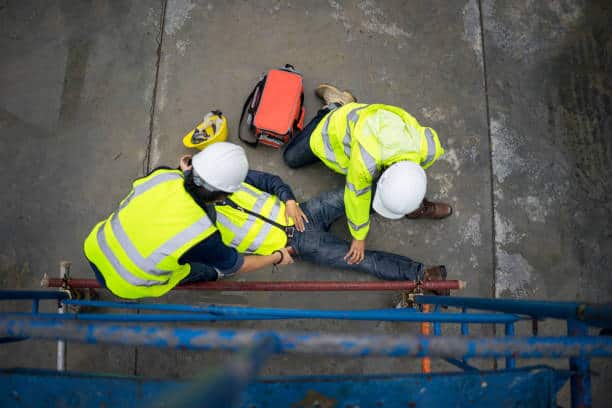

Construction workers trust that the scaffolds they climb every day have been properly checked. Under federal safety rules, scaffolds must be inspected by a qualified person before each work shift, and again after anything that could compromise their stability.
When that inspection doesn’t happen, or happens carelessly, workers fall from heights that cause life-changing injuries.
Whether that inspection actually took place often becomes one of the central questions in figuring out what went wrong and who’s responsible.
Prior results do not guarantee a similar outcome.
Why Are Pre-Shift Scaffold Inspections Legally Required?
Under 29 CFR 1926.451(f)(3), OSHA’s federal construction standard, scaffolds and their components must be inspected for visible defects by a competent person before each work shift, and again after any occurrence that could affect the scaffold’s structural integrity, a storm, a delivery truck bumping a support, or a dropped load nearby.
The rule exists because scaffolds face constant stress. Overnight weather can loosen connections. Morning deliveries can bump support structures.
A plank that looked fine the day before might have cracked overnight. Without a fresh inspection each shift, workers step onto platforms that may no longer be safe.
Porter Law Group has written in more depth about the full OSHA scaffold standard, including load capacity and guardrail requirements, if you want the complete regulatory picture.
Who Qualifies as a Competent Person?
Under 29 CFR 1926.32(f), a competent person is someone capable of identifying existing and predictable hazards and who has the authority to take prompt corrective action to fix them.
For scaffold inspections, that means real training and experience with scaffold systems specifically, not just general construction experience or seniority.
A skilled carpenter or an experienced foreman doesn’t automatically qualify unless they’ve received specific training on scaffold hazard recognition, and critically, they need actual authority to stop work if they find a problem.
If a defect is found, the response has to be immediate: repair, replacement, or tagging the scaffold out of service until it’s fixed.
What Does a Missing Inspection Actually Mean for an Injury Case?
Under NYC Building Code Section 3314.4.3, most scaffolds must be inspected daily before use by a competent person, and a written record of that inspection has to be maintained and available on site, a requirement the federal standard simply doesn’t impose.
Suspended scaffolds face an even more specific rule under Section 3314.4.3.4, requiring a signed, dated pre-shift checklist kept on site. For a construction accident in New York City specifically, this means the absence of any inspection record isn’t just suspicious, it’s itself a documented code violation, not merely a gap in best practice.
When those logs don’t exist, or show clear gaps, that absence becomes meaningful evidence that inspections weren’t happening consistently, or in NYC, evidence of an independent regulatory violation in its own right.
Coworkers who were present that morning can also fill in the picture, whether they saw anyone actually inspecting the scaffold, whether there was a real routine, or whether people just climbed up and started working.
How Does This Connect to New York’s Scaffold Law?
This is where a missing OSHA-required inspection and New York’s own worker protections work together. Under Labor Law Section 240(1), property owners and general contractors can be held strictly liable when a worker falls because a scaffold lacked adequate safety devices, regardless of who was personally negligent or whether they were involved in day-to-day inspections at all.
A missing pre-shift inspection doesn’t need to be proven as its own separate violation to support a 240(1) claim, but it’s powerful supporting evidence that the required protections weren’t actually in place when they should have been.
Labor Law Section 241(6) adds another layer, requiring compliance with New York’s own Industrial Code safety regulations, some of which go further than the baseline OSHA standard.
A violation of one of these specific rules can support a claim even in situations where 240(1) doesn’t apply. In Rizzuto v. L.A. Wenger Contracting Co., the Court of Appeals explained exactly how this works: unlike a 240(1) violation, a 241(6) violation doesn’t create automatic liability on its own.
It’s “some evidence of negligence” the jury weighs alongside everything else, but it comes with a genuine advantage for injured workers, the general contractor can be held liable for a subcontractor’s negligence in violating the Code even without proving the contractor actually controlled or supervised that specific work.
A missing or non-compliant inspection tied to a specific Industrial Code or Building Code provision, rather than a vague claim that “safety could have been better,” is what actually moves a 241(6) case forward.
What Are the Key Deadlines in a New York Scaffold Fall Case?
Situation | Deadline | Rule |
|---|---|---|
Claim against a private property owner or contractor | 3 years from the date of the fall | |
Notice of claim if a government entity or public project was involved | 90 days | |
Wrongful death claim | 2 years from the date of death |
Summing It Up
Pre-shift scaffold inspections aren’t optional, they’re a mandatory federal safety standard, and in New York, a missed or inadequate inspection can become powerful evidence supporting a claim under the state’s Scaffold Law.
Porter Law Group has built its reputation on trial-tested representation for injured New Yorkers, and our attorneys work on a contingency fee basis, meaning you pay nothing unless we win.
If you or someone you love was hurt in a scaffold fall, reach out to discuss what happened and what your legal options look like.
Call 833-PORTER9 or email info@porterlawteam.com to schedule a free consultation.
Prior results do not guarantee a similar outcome.
Frequently Asked Questions
Do I need to prove the scaffold inspection was skipped to win my case?
Not necessarily. Under Labor Law 240(1), your claim generally rests on whether the required safety devices were actually in place, not on proving a specific procedural violation. But a missing or inadequate inspection is strong supporting evidence that they weren’t.
Does New York City require scaffold inspections to be documented in writing?
Yes, and this goes further than federal law. Under NYC Building Code Section 3314.4.3, most scaffolds must be inspected daily with a written record kept on site, unlike the federal OSHA standard, which doesn’t require documentation at all. In New York City, a missing inspection log isn’t just suspicious, it’s itself a code violation.
How does a missing inspection actually function as evidence in court?
Under Rizzuto v. L.A. Wenger Contracting Co., a violation of a specific Industrial Code or Building Code provision, tied to a concrete requirement rather than a general safety complaint, counts as “some evidence of negligence” under Labor Law 241(6), and can make a general contractor liable for a subcontractor’s violation even without proving the contractor directly controlled that work.
How often does OSHA require scaffolds to be inspected?
Before each work shift, and again after any event that could affect the scaffold’s structural integrity, like a storm, an equipment impact, or a modification to the structure, under 29 CFR 1926.451(f)(3).
What makes someone qualified to inspect a scaffold?
OSHA requires a “competent person,” someone with specific training and experience in scaffold systems who has real authority to stop work and require corrections. General construction experience or a supervisory title alone doesn’t automatically qualify someone for this role.
Can I still have a case if there’s no written inspection record either way?
Often, yes. The absence of documentation isn’t necessarily fatal to your case, and it can itself become evidence, especially combined with witness testimony about what actually happened on site that morning.
How much does a scaffold injury lawyer cost in New York?
Most plaintiff-side personal injury attorneys, including Porter Law Group, work on a contingency fee basis. You pay nothing upfront, and there is no fee unless the firm recovers compensation on your behalf.
This article is for informational purposes only and does not constitute legal advice. Attorney advertising. Prior results do not guarantee similar outcomes.