


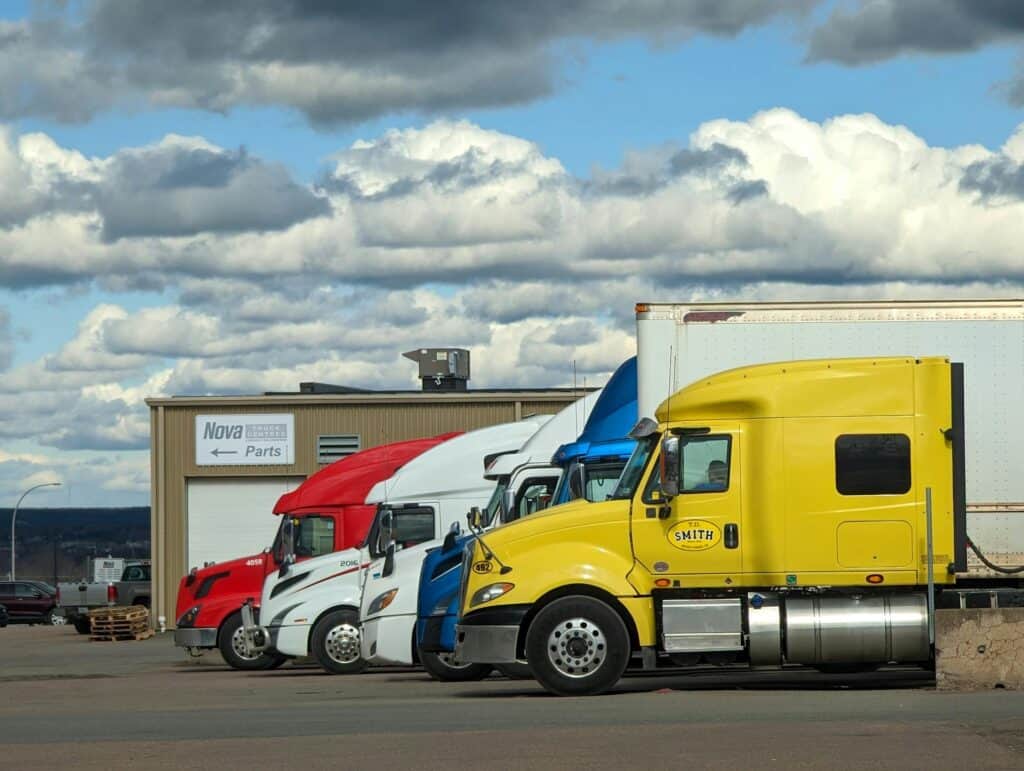
When a massive commercial truck collides with a passenger vehicle on a New York highway, the results are often catastrophic. The sheer size difference between an 80,000-pound tractor-trailer and a typical sedan means that even seemingly minor truck accidents can result in life-altering injuries or death. Understanding the different types of truck accidents that occur across New York's highways and city streets can help you recognize what happened in your situation and what legal options may be available.
Truck accidents don't all look the same. The type of collision that occurs often depends on factors like road conditions, driver error, mechanical failures, and the specific challenges of navigating New York's congested urban corridors and busy interstate highways. Each type of accident presents unique dangers and often involves different questions of liability.
What Makes Truck Accidents Different From Regular Car Crashes
Before diving into specific types of truck accidents, it's important to understand why these collisions are fundamentally different from typical car accidents. Commercial trucks, especially semi-trailers, operate under different physics than passenger vehicles. They require significantly longer stopping distances, have massive blind spots on all sides, and their high center of gravity makes them prone to tipping in situations where a car would remain stable.
The statistics paint a sobering picture. In 2021, the United States saw 523,000 large truck accidents, representing a 26% increase from the previous year. What's particularly alarming is that 72% of fatalities in these crashes were occupants of other vehicles, not the truck drivers themselves. This pattern holds true in New York, where through the first three quarters of 2025, 633 New Yorkers suffered serious injuries specifically in truck-related incidents.
Semi-trailer trucks are involved in 53% of all deadly large truck collisions nationwide, making them the most dangerous category of commercial vehicle on the road. When you're sharing New York's highways with these vehicles, whether on I-95 through the Bronx, the Long Island Expressway, or the Thruway upstate, you're navigating alongside vehicles that can cause devastating harm in a collision.
Rear-End Truck Accidents
Rear-end collisions involving trucks are among the most common types of truck accidents on New York roads. These crashes typically occur when a large truck strikes the back of a smaller vehicle, often in stop-and-go traffic or when traffic suddenly slows on the highway.
The mechanics of truck braking explain why these accidents happen so frequently. A fully loaded tractor-trailer traveling at highway speeds can require the length of two football fields to come to a complete stop. When truck drivers follow too closely, become distracted, or fail to recognize slowing traffic ahead, they simply cannot stop in time. The truck's momentum carries it forward into the vehicle ahead with devastating force.
New York's notorious traffic congestion creates perfect conditions for rear-end truck accidents. The Cross Bronx Expressway, the Brooklyn-Queens Expressway, and the approaches to the George Washington Bridge regularly experience sudden slowdowns and complete stops. A truck driver navigating these corridors faces constant braking and acceleration, and a single moment of inattention can result in a catastrophic rear-end collision.
The 2025 implementation of congestion pricing in Manhattan's Congestion Relief Zone has helped reduce these types of accidents. The program reduced vehicle miles traveled by 7.1% in the zone and decreased overall crashes by 7%. With less gridlock and smoother traffic flow, trucks have fewer opportunities to rear-end stopped vehicles.
When a truck rear-ends your vehicle, the injuries are often severe. The force of impact can cause traumatic brain injuries, spinal cord damage, and crush injuries. Because the truck strikes from behind, occupants often have no warning and no opportunity to brace for impact, increasing the severity of whiplash and neck injuries.
Jackknife Truck Accidents
A jackknife accident occurs when a truck's trailer swings out to form a 90-degree angle with the cab, resembling a folding pocket knife. These accidents are particularly dangerous because the swinging trailer can sweep across multiple lanes of traffic, striking numerous vehicles and creating a barrier that blocks the entire roadway.
Jackknifing typically happens when a truck driver brakes too hard or too suddenly, causing the trailer's wheels to lock up while the cab continues moving forward. The trailer then pivots around the connection point, swinging outward. This is especially common on wet or icy roads, conditions that New York drivers face regularly during winter months and spring rainstorms.
New York's major highways like I-87 and the Thruway see jackknife accidents during adverse weather conditions. When a winter storm hits and roads become slick, the risk of jackknifing increases dramatically. Even experienced truck drivers can lose control when their trailers start to slide on ice or hydroplane on standing water.
Improper braking technique isn't the only cause of jackknife accidents. Mechanical failures in the braking system, uneven brake wear between the tractor and trailer, or improperly maintained brakes can all contribute. Sometimes the issue is how the cargo is loaded. If weight is distributed unevenly in the trailer, it affects how the truck handles and increases the likelihood of jackknifing during braking or turning.
The reduction in truck traffic on major New York corridors in 2025 has also helped decrease jackknife incidents. Truck traffic dropped 10.2% on the BQE and 9.2% on the Major Deegan Expressway, meaning fewer trucks on the road during dangerous weather conditions. However, jackknife accidents remain a serious threat, particularly on highways that curve or have steep grades.
Rollover Truck Accidents
Rollover accidents happen when a truck tips onto its side or roof. These are among the most dramatic and dangerous types of truck accidents because a rolling truck can crush multiple vehicles, spill cargo across the roadway, and create hazardous conditions that lead to secondary crashes.
Trucks are inherently prone to rollovers because of their high center of gravity. Unlike a passenger car that sits low to the ground, a truck's cargo sits high above the road surface. This makes trucks susceptible to tipping when taking curves too fast, making sudden steering movements, or encountering strong crosswinds.
Semi-trailers are particularly vulnerable to rollovers, which explains why they're involved in 53% of all fatal large truck crashes. When a semi-trailer begins to tip, its massive weight and momentum make it nearly impossible to recover. The truck goes over, often sliding across multiple lanes and striking everything in its path.
Speed is a major factor in rollover accidents. New York highways have posted speed limits, but some truck drivers exceed these limits to meet tight delivery schedules. When a truck enters a curve or exit ramp too fast, physics takes over. The centrifugal force pushes the truck's center of gravity outward, and if that force exceeds the truck's stability threshold, it rolls.
Cargo loading plays a critical role in rollover risk. When cargo is loaded improperly, with too much weight on one side or stacked too high, it shifts the truck's center of gravity. As the truck navigates curves or makes evasive maneuvers, the unbalanced load can cause the entire vehicle to tip. Trucking companies and loading dock personnel have a responsibility to ensure cargo is properly secured and balanced, but this doesn't always happen.
The curved sections of highways like the BQE present elevated rollover risks. These older roadways were designed before modern truck traffic volumes and sometimes have sharper curves than newer interstate highways. The 2025 reduction in truck traffic on these routes has likely prevented some rollover accidents, but the fundamental risk remains whenever trucks navigate these challenging roadways.
Truck Intersection Accidents
Intersections are particularly dangerous locations for truck accidents. These crashes occur when trucks fail to yield the right of way, run red lights, or attempt to navigate turns that their size makes difficult. Intersection accidents often result in T-bone or side-impact collisions that expose vehicle occupants to direct impact with little protection.
Trucks face unique challenges at intersections. Their length makes it difficult for drivers to judge whether they have enough space to clear an intersection before the light changes. Their weight means they cannot stop quickly if a light turns yellow. Their height can obstruct the driver's view of traffic signals or other vehicles, creating blind spots that lead to collisions.
New York City's dense network of intersections creates countless opportunities for truck accidents. Delivery trucks navigating Queens or Brooklyn must constantly deal with traffic lights, pedestrian crossings, and vehicles entering from side streets. The complexity of urban intersections, combined with the pressure to make deliveries on tight schedules, can lead to dangerous decisions.
The statistics show that intersection accidents have a particularly high fatality rate. When a truck runs a red light or fails to yield, it often strikes another vehicle broadside at full speed. The side of a passenger vehicle offers minimal protection compared to the front or rear, and occupants on the struck side face direct impact.
Congestion pricing has had a measurable impact on intersection safety in Manhattan. With overall crashes down 7% in the Congestion Relief Zone and traffic injuries reduced by 8%, fewer vehicles at intersections means fewer opportunities for catastrophic truck crashes. The reduction in truck traffic specifically, down 10.2% on some major routes, has removed some of the largest and most dangerous vehicles from the city's busiest intersections.
Underride Truck Accidents
Underride accidents are among the most horrific types of truck crashes. These occur when a smaller vehicle slides underneath a truck's trailer, typically in rear-end collisions where a car strikes the back of a truck or in side underride accidents where a car slides under the side of a trailer.
The danger of underride accidents lies in how the impact affects the passenger vehicle. Instead of striking a solid barrier that would deploy airbags and crumple zones, the car slides under the trailer. The trailer often shears off the top of the vehicle at windshield height, causing catastrophic injuries to anyone inside. Airbags don't deploy because the front of the vehicle doesn't experience sufficient impact, and the vehicle's safety features are rendered useless.
Federal regulations require trucks to have rear underride guards, metal bars that hang down from the back of trailers to prevent cars from sliding underneath. However, these guards are not required on the sides of trailers, and even rear guards don't always prevent underride in high-speed crashes. Many guards are poorly maintained, improperly installed, or simply not strong enough to stop a vehicle traveling at highway speeds.
The statistics on underride accidents are particularly grim. Remember that 72% of fatalities in truck accidents are occupants of other vehicles, not truck drivers. Underride collisions contribute significantly to this disparity. The truck driver, sitting high in a protected cab, often walks away from accidents that kill everyone in the passenger vehicle.
New York's urban density amplifies underride risks. In city traffic, cars frequently travel behind or alongside trucks making deliveries. If a truck stops suddenly or makes an unexpected maneuver, a following vehicle can slide underneath before the driver has time to react. At night or in poor visibility, it can be difficult to judge the distance to a truck's trailer, especially if the truck's rear lights are dim or malfunctioning.
Sideswipe and Wide-Turn Truck Accidents
Sideswipe accidents happen when a truck strikes a vehicle traveling alongside it, while wide-turn accidents occur when a truck needs to swing wide to complete a turn and strikes vehicles in adjacent lanes. Both types of accidents stem from the fundamental challenge of maneuvering a vehicle that can be 75 feet long through spaces designed for much smaller vehicles.
Truck drivers have massive blind spots, sometimes called "no-zones," on all four sides of their vehicles. These blind spots extend for many feet in front of the cab, alongside both the tractor and trailer, and far behind the trailer. A passenger vehicle can completely disappear in these blind spots, invisible to the truck driver even when checking mirrors. When a truck changes lanes or drifts within its lane, it can strike a vehicle the driver never saw.
Wide-turn accidents are particularly common in New York City, where trucks making deliveries must navigate tight corners designed for much smaller vehicles. To make a right turn, a truck often must first swing left to give the trailer enough room to clear the corner. If a vehicle is positioned on the truck's right side, it can be caught between the turning trailer and the curb, crushed as the truck completes its turn.
Queens and Brooklyn see frequent wide-turn accidents because of the volume of delivery trucks navigating residential and commercial streets. A truck turning from one narrow street onto another must execute a complex maneuver, and if the driver doesn't properly clear the intersection or if another vehicle moves into the truck's turning path, a collision becomes inevitable.
The 633 truck-related serious injuries recorded in the first three quarters of 2025 include many sideswipe and wide-turn accidents. These collisions might not seem as dramatic as rollovers or jackknife crashes, but they can still cause severe injuries. When a truck's trailer strikes a car, it can push the vehicle into other traffic, into parked cars, or onto the sidewalk. Occupants suffer injuries from the initial impact and from secondary collisions.
What Role Do Road Conditions Play in New York Truck Accidents?
New York's diverse geography and climate create varied conditions that contribute to different types of truck accidents. The state's roadways range from modern interstate highways to aging urban infrastructure, each presenting unique challenges for truck drivers.
Winter weather is a major factor in New York truck accidents. Snow, ice, and freezing rain create slippery conditions that increase stopping distances and reduce traction. A truck that can barely stop on dry pavement becomes nearly impossible to stop on ice. This leads to rear-end collisions, jackknife accidents, and loss of control crashes. Upstate highways like I-90 and I-87 regularly experience winter storms that create treacherous driving conditions.
Construction zones present another significant hazard. New York constantly maintains and upgrades its aging infrastructure, creating work zones with narrow lanes, shifted traffic patterns, and reduced speed limits. Trucks navigating these zones face challenges from reduced space, unclear lane markings, and the presence of construction workers and equipment near the roadway.
The condition of the roadways themselves contributes to accidents. Potholes, uneven pavement, and deteriorating road surfaces can cause trucks to lose control or experience mechanical failures. A pothole that would merely jostle a passenger car can damage a truck's steering or suspension, potentially causing the driver to lose control.
Highway-rail grade crossings represent a specific type of hazard. In 2025, New York experienced 30 collisions at these crossings, resulting in 7 fatalities. Some of these involved trucks that either became stuck on the tracks or attempted to beat an oncoming train. The length of tractor-trailers means they need significant time and distance to clear railroad crossings, and misjudgments can be fatal.
New York's older urban highways, like the Cross Bronx Expressway and the BQE, were designed decades ago for much lighter traffic and smaller vehicles. These routes have sharp curves, short merge lanes, and limited sight distances that create challenges for modern truck traffic. The 4.3% reduction in truck traffic on the Cross Bronx in 2025 has helped, but these structural limitations remain.
Can You Sue After a Truck Accident in New York?
Yes. After a truck accident in New York, you have the right to pursue compensation for your injuries and losses. Truck accident cases are fundamentally different from typical car accident claims because of the severity of injuries involved, the complexity of determining liability, and the presence of commercial insurance policies with much higher coverage limits.
New York operates under a no-fault insurance system for basic economic losses like medical bills and lost wages up to certain limits. However, when injuries meet the state's "serious injury" threshold, you can step outside the no-fault system and file a lawsuit against the at-fault party. Given that 101,000 injury-causing truck accidents occurred nationwide in 2020, and truck accidents typically result in severe injuries, most truck accident victims in New York meet this threshold.
Determining who to sue in a truck accident case is more complex than in a regular car accident. The truck driver may be liable for negligent driving, but trucking companies often bear responsibility under legal principles like respondeat superior, which holds employers liable for their employees' actions. The company that loaded the truck's cargo might be liable if improper loading caused a rollover or jackknife. The truck's owner, if different from the company operating it, could be responsible for maintenance failures. Parts manufacturers might be liable if defective brakes or steering components contributed to the crash.
Federal regulations govern the trucking industry, and violations of these regulations can establish negligence in a lawsuit. Truck drivers must comply with hours-of-service rules that limit how long they can drive without rest. Trucking companies must maintain their vehicles according to federal standards. Drivers must hold proper commercial licenses and meet medical fitness requirements. When these regulations are violated and an accident occurs, it significantly strengthens your case.
The commercial insurance policies covering trucks typically have much higher limits than personal auto policies. While a typical car might carry $100,000 in liability coverage, commercial trucks often carry $1 million or more. This means there's actually insurance available to compensate you for catastrophic injuries that might exceed the limits of a regular auto policy.
Evidence is crucial in truck accident cases, and much of it is time-sensitive. Trucks are equipped with electronic logging devices that record hours of service, speed, and other data, but this information can be overwritten or lost if not preserved quickly. Trucking companies must maintain maintenance records, driver qualification files, and other documents, but these can disappear if not secured through legal process. Taking action quickly helps preserve the evidence you need to prove your case.
What Should You Do Immediately After a Truck Accident?
The moments and days after a truck accident are critical for both your health and your legal rights. Your immediate priority should always be medical care.
Even if you don't think you're seriously injured, get evaluated by a medical professional. Some injuries, particularly internal injuries and traumatic brain injuries, don't show symptoms immediately but can be life-threatening if untreated.
If you're physically able at the accident scene, gather whatever information and evidence you can. Take photos of the vehicles, the roadway, traffic signals, skid marks, and any visible injuries. Get the truck driver's information, including their commercial driver's license number, the trucking company's name, and the truck's identification numbers. Collect contact information from witnesses who saw the accident happen.
Report the accident to police and ensure an official accident report is filed. This report becomes an important piece of evidence in your case. Be careful about what you say to the truck driver, the trucking company's representatives, or insurance adjusters. Don't admit fault or say you're not injured. Simply stick to the facts of what happened.
Keep detailed records of everything related to the accident. Save all medical bills, prescription receipts, and documentation of medical treatment. Keep a journal of your symptoms, pain levels, and how your injuries affect your daily life. Document any time you miss from work and any wages you lose. Take photos of your injuries as they heal. This documentation becomes crucial evidence of your damages.
Contact an attorney who handles truck accident cases before speaking with insurance companies. Trucking company insurers often contact accident victims quickly, sometimes while they're still in the hospital, trying to get recorded statements or offer quick settlements. These early settlement offers are almost always far less than what your case is actually worth. An attorney can handle these communications and protect your rights while you focus on recovery.

Hurt in a New York Truck Accident?
Get a free consultation with our experienced truck accident attorneys. No cost, no-obligation, confidential.
Summing It Up
Truck accidents in New York take many forms, from rear-end collisions in Manhattan traffic to jackknife crashes on icy upstate highways to rollover accidents on curved sections of the BQE. Each type of accident presents unique dangers, but they all share common factors. Massive vehicles, severe injuries, and complex liability questions that go far beyond typical car accident cases.
The encouraging news is that New York has made progress in reducing truck accidents. The 2025 implementation of congestion pricing reduced crashes by 7% in Manhattan's Congestion Relief Zone and decreased truck traffic on major corridors by up to 10%. Traffic fatalities hit a record low, down 19% from 2024. These improvements show that policy changes and infrastructure investments can make roads safer.
However, 633 New Yorkers still suffered serious injuries in truck-related incidents in just the first three quarters of 2025. Hundreds more experienced injuries that didn't meet the threshold for "serious" but still required medical treatment and time away from work. Nationally, 523,000 large truck accidents occurred in 2021, with 72% of fatalities being occupants of other vehicles. The risk remains real every time you share the road with commercial trucks.
If you've been involved in a truck accident, understanding what type of accident occurred helps you understand what happened and why. It informs questions about liability and which parties might be responsible. It shapes the evidence you need to prove your case and the experts who might need to testify about vehicle dynamics, trucking industry standards, or accident reconstruction.
Most importantly, remember that truck accidents are fundamentally different from car accidents. The injuries are more severe, the stakes are higher, and the legal process is more complex. These cases involve federal regulations, commercial insurance policies, multiple potentially liable parties, and trucking companies with teams of lawyers protecting their interests. Having someone on your side who understands these cases and can fight for the compensation you deserve makes all the difference in getting your life back on track after a devastating truck accident.


