


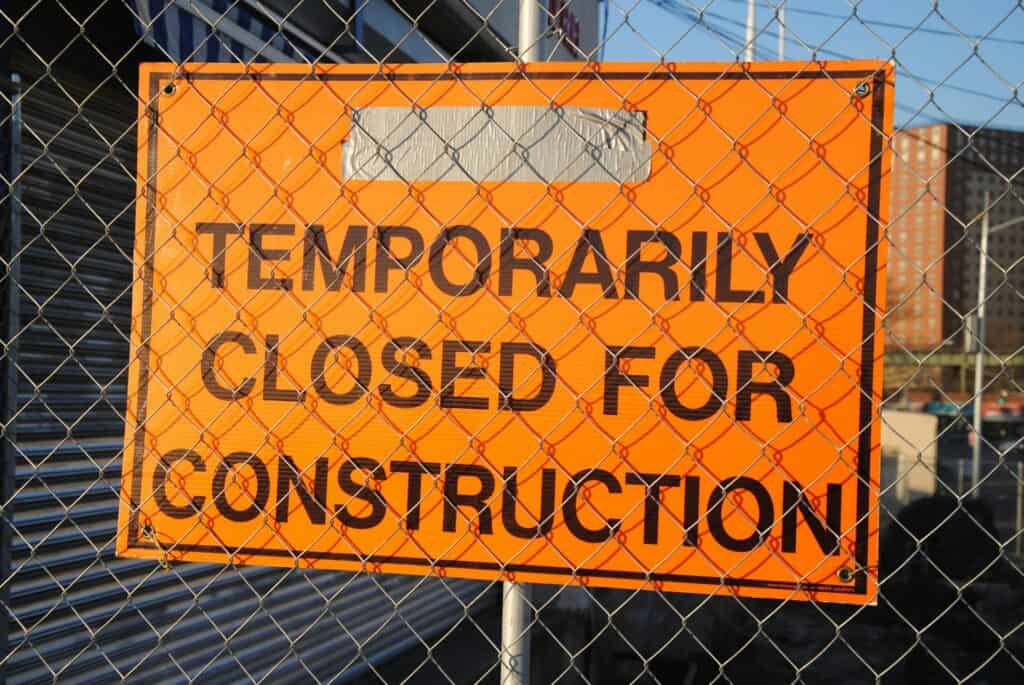
Construction zones are hazardous by nature. Heavy equipment operates inches from traffic, lanes shift without warning, and workers share the road with drivers rushing to their destinations. When an accident happens in one of these areas, figuring out who's at fault becomes complicated quickly.
The answer isn't always straightforward. Unlike a typical rear-end collision, construction zone accidents can involve multiple responsible parties, from the driver who was speeding to the contractor who set up confusing signage to the government agency that approved a flawed traffic plan. Understanding who might be liable matters because it determines who can be held accountable and where compensation might come from.
Injured in a Construction Zone?
CONTACT USOur Recent Case Results
Settlement
Jury Verdict
Settlement
Settlement
Why Construction Zone Accidents Happen So Often
The numbers tell a sobering story. Between 2018 and 2022, highway work zone crashes across the United States killed 4,316 people. That number climbed from 756 deaths in 2018 to 891 in 2022. In New York alone, 225 people died in work zone crashes during that same period.
In 2024, New York recorded 450 "work zone intrusions," where vehicles entered closed work areas, resulting in four deaths and 161 injuries to both workers and vehicle occupants. These aren't just statistics. They represent real people who were injured or killed in areas that should have been made safer.
More than half of worker deaths in highway work zones involve vehicles or equipment operating in or near the work area. In 2023, New York State (excluding New York City) saw 177 fatal work injuries, with construction accounting for 36 of those deaths. Sixteen were from falls, slips, and trips.
These accidents happen for predictable reasons. Drivers speed through posted work zone limits, get distracted, or fail to see changing traffic patterns. Contractors set up inadequate signage or leave equipment in travel lanes. Government agencies approve work zone plans that don't meet safety standards. Each of these failures can lead to a crash, and often several failures happen at once.
Who Can Be Held Liable in a Construction Zone Accident
Determining responsibility after a construction zone accident depends on who created the hazard or failed to prevent it. Multiple parties can share fault, and the law recognizes several potential defendants.
Drivers and Vehicle Owners
Drivers bear responsibility when they violate traffic laws in construction zones. Speeding through reduced speed limits, ignoring lane closure signs, driving while distracted or impaired, or failing to yield to construction workers all constitute negligence. If someone else owns the vehicle, that owner may also face vicarious liability for the driver's actions.
Contractors and Subcontractors
General contractors and their subcontractors control how work zones are set up and maintained. They're responsible for proper traffic control devices, safe layout design, adequate worker training, and keeping equipment and debris out of travel lanes. When they fail in these duties, they can be held liable for resulting accidents.
Property and Project Owners
Property owners and the entities funding construction projects carry unique responsibilities under New York law. They hold non-delegable safety duties that can't be passed off to contractors, particularly regarding worker safety. Even if they never set foot on the site or directed the day-to-day work, they may still be liable when accidents occur.
Government and Transportation Agencies
State and local government agencies design work zone traffic plans, approve contractor proposals, and inspect ongoing work. When they approve defective designs, fail to follow required standards like the Manual on Uniform Traffic Control Devices (MUTCD), or neglect inspection duties, they can be held responsible. Government liability comes with procedural hurdles like notice of claim requirements and potential sovereign immunity limits, but it's not impossible to pursue.
Equipment and Vehicle Manufacturers
Defective equipment contributes to some construction zone accidents. Faulty brakes, malfunctioning warning devices, or defective construction equipment can all create hazards. When equipment defects cause crashes, manufacturers and maintenance contractors may be liable under products liability law.
Employers
Employers have workers' compensation obligations to their injured employees. They may also face negligence claims from non-employees under New York Labor Law Section 200 and common law, particularly when they retained control over the work that caused an injury.
A single construction zone crash often involves overlapping claims against several of these parties. A speeding driver might share fault with a contractor who created a confusing traffic pattern, while the government agency that approved an inadequate work zone plan also bears responsibility.
How New York's Labor Law Affects Construction Zone Cases
New York's Labor Law creates special protections for construction workers that don't exist in most other states. These laws fundamentally change who can be held responsible when workers get hurt in construction zones.
What Labor Law Section 200 Covers
Labor Law Section 200 codifies the common law duty of owners and general contractors to provide a safe workplace. However, liability under this section typically requires that the owner or contractor had authority to control the specific work that caused the injury. If the hazard came entirely from a contractor's chosen work methods and the owner had no supervisory control, the owner usually isn't liable under Section 200.
The Non-Delegable Duty Under Section 241(6)
Labor Law Section 241(6) goes much further. It imposes a non-delegable duty on owners and contractors to provide "reasonable and adequate protection and safety" to workers through compliance with specific Industrial Code regulations. The key word is "non-delegable." An owner or general contractor can be held liable even if they hired someone else to control the work or traffic.
To bring a claim under Section 241(6), the injured worker must point to a concrete, specific Industrial Code provision that was violated, not just general safety standards. Courts dismiss claims that rely only on broad safety language. But when a specific regulation applies, like those governing traffic control in work zones, protections for workers near moving equipment, or required safety barriers, owners and general contractors face strict liability.
The Scaffold Law's Absolute Liability
Labor Law Section 240(1), known as the Scaffold Law, provides exceptional protection for workers exposed to elevation-related hazards. When required safety devices like fall protection, scaffolding, or proper ladders are missing or inadequate, and a worker falls or is struck by a falling object, the law imposes absolute or strict liability on property owners and general contractors.
This means if a construction worker in a work zone falls from height due to inadequate fall protection, the owner and general contractor are liable regardless of whether they actually controlled the work or even knew about the hazard. They can't delegate this responsibility to anyone else.
These Labor Law provisions allow injured construction workers to pursue claims against owners and general contractors in addition to receiving workers' compensation benefits from their employers. For workers injured in construction zones, this creates multiple potential sources of compensation.
What Traffic Control Standards Require in New York
Liability for construction zone crashes often hinges on whether the work zone met applicable safety standards. New York has adopted comprehensive requirements that govern how construction zones must be set up and maintained.
State and Federal Requirements
New York municipalities must adopt work zone traffic policies that are consistent with the MUTCD, the federal standard for traffic control devices. The New York State Department of Transportation (NYSDOT) publishes its own Work Zone Traffic Control Manual with detailed guidance. Following NYSDOT's standard plans offers liability protection to municipalities and provides consistent, predictable guidance to drivers.
In New York City, the Department of Transportation's Maintenance and Protection of Traffic guidelines and Work Zone Traffic Control Manual dictate how contractors must set up work zones, including specifications for lane closures, signage, and protection of all road users.
Why Compliance Matters for Liability
When agencies or contractors deviate from these adopted standards without justification, that deviation becomes evidence that they breached their duty of care. If a crash occurs and the work zone layout doesn't conform to MUTCD, NYSDOT, or NYC DOT specifications, plaintiffs can argue the agency or contractor failed to meet the recognized standard of care.
Courts don't require perfection, but they do expect compliance with adopted safety manuals. A work zone that meets these standards provides "positive guidance" to drivers and workers, clearly communicating what's expected and where hazards exist. One that falls short creates hidden dangers and confusion, which courts view as negligent.
How Federal Safety Rules Factor Into Responsibility
Federal occupational and highway safety rules don't directly create private lawsuits, but they strongly influence what courts and juries consider reasonable care in construction zones.
OSHA's Construction Standards
The Occupational Safety and Health Administration's construction standards include requirements for motor vehicles and mechanized equipment operating in work zones. These rules address everything from equipment maintenance to worker training to traffic control around construction equipment. OSHA and National Institute for Occupational Safety and Health (NIOSH) data confirm that most worker fatalities in highway work zones involve being struck by construction equipment or passing vehicles.
The Federal Highway Administration's Work Zone Rule
The FHWA Work Zone Safety and Mobility Rule requires agencies on federal-aid projects to systematically address safety and mobility impacts. This includes using positive protection devices (like concrete barriers), temporary traffic control devices, and sometimes law enforcement presence in work zones. While this rule applies directly only to federal-aid projects, it reflects best practices that influence the standard of care across all work zones.
Federal guidance on work zone liability makes clear that potential defendants include highway agencies, design consultants, contractors, subcontractors, and inspection consultants, depending on who designed, implemented, maintained, or inspected the work zone. The key question is always whether the work zone complied with applicable statutes, regulations, and adopted manuals.
Real Scenarios That Show How Liability Gets Determined
Understanding abstract legal principles helps, but seeing how they apply to actual situations makes the law clearer.
When a driver speeds through a posted work zone speed limit and rear-ends stopped traffic, liability typically falls on the driver under basic negligence principles and negligence per se for violating speed laws. The vehicle owner may also face vicarious liability. This is one of the more straightforward scenarios.
When lane shifts are marked with confusing or missing signs and a driver hits a barrier or worker, liability shifts toward those who designed and set up the work zone. The highway agency, design consultant, general contractor, and traffic control subcontractor all potentially share fault for failing to follow MUTCD and NYSDOT work zone standards.
If a worker is struck by a contractor's dump truck inside the work area, multiple legal theories come into play. OSHA safety failures, Labor Law Section 200 (if the owner or contractor controlled the work), and Section 241(6) (via Industrial Code rules on traffic and equipment) all provide potential claims. The general contractor, subcontractor employer, and project owner may all be liable, with the owner's duty being non-delegable.
When a construction worker falls from height due to lack of proper fall protection, Labor Law Section 240(1) creates absolute liability for the property owner and general contractor. This strict liability applies regardless of who actually controlled the work or created the hazard.
If a worker is injured because the site lacks required guards, protections, or other Industrial Code-specified safety measures, Labor Law Section 241(6) creates non-delegable liability for the owner and general contractor, regardless of who controlled the details of the work.
When poor inspection and oversight by a city or state results in a work zone plan that doesn't meet adopted standards, the government agency and its consultants may be liable for negligent planning and oversight. However, these claims face procedural hurdles like notice of claim requirements and potential sovereign immunity defenses.
If a crash is caused by defective truck brakes in a work zone, products liability law allows claims against the vehicle or equipment manufacturer, the maintenance contractor, and possibly the fleet owner for negligent maintenance.
How Courts Actually Determine Who's Responsible
When a construction zone accident case reaches court, judges and juries work through a step-by-step analysis to assign responsibility.
What Laws and Standards Applied
The first question is always what legal requirements governed the situation. This includes the New York Vehicle and Traffic Law, local work zone ordinances, NYSDOT and NYC DOT manuals, the MUTCD, OSHA standards, and the New York Industrial Code for Labor Law Section 241(6) claims. Different standards apply to drivers, contractors, agencies, and property owners.
Did Anyone Violate a Safety Rule
Courts then examine whether any party violated a statute or regulation intended to protect against the type of harm that occurred. Speed limits, required signage, positive protection devices, and specific Industrial Code provisions all create clear benchmarks for safe conduct. Violations of these rules constitute strong evidence of negligence or, in some cases, create liability automatically.
Who Had Control or a Non-Delegable Duty
Control matters enormously in construction zone cases. Owners and general contractors may be liable simply because they hold statutory non-delegable duties under Labor Law Sections 240 and 241(6), even if another entity did the day-to-day work. For other claims, actual control over the work or the hazard determines liability.
Did the Work Zone Meet Its Own Plan and Governing Standards
Courts scrutinize whether contractors and agencies followed their own approved work zone plans and the governing manuals. A work zone that deviates from its approved plan or creates a confusing or hazardous layout that violates MUTCD or NYSDOT standards demonstrates negligence.
Was the Injured Person a Worker or Road User
The injured person's status shapes available claims. Workers can pursue Labor Law and OSHA-based arguments that aren't available to passing motorists. Road users focus more on negligence by drivers, agencies, and contractors, without access to Labor Law's special protections.
Once courts identify which parties were negligent, they allocate fault between them under New York's comparative negligence rules. A plaintiff who was partially at fault can still recover damages, but their award is reduced by their percentage of responsibility. Courts then overlay workers' compensation rules, Labor Law provisions, and governmental immunity doctrines as relevant.

Get a Free Case Review
Talk to our experienced personal injury lawyers and know all your legal options for recovery in a free, no-obligation consultation.
What This Means If You've Been Injured
Construction zone accidents are complicated because responsibility is rarely clear-cut. Multiple parties often share fault, and determining who bears the greatest responsibility requires careful investigation of what standards applied, who violated them, and who had legal duties that couldn't be delegated to others.
If you've been injured in a construction zone, whether as a worker or as someone passing through, documenting everything early matters. Photographs of the scene, witness information, police reports, and medical records all become crucial evidence. Understanding which legal theories might apply to your situation helps in pursuing appropriate claims.
The law recognizes that construction zones are inherently dangerous and places responsibility on those who create those dangers or fail to adequately protect against them. Drivers must exercise greater caution. Contractors must follow traffic control standards. Government agencies must design safe work zones and ensure compliance. Property owners must fulfill non-delegable safety duties. Equipment manufacturers must produce reliable safety devices.
When any of these parties fails in their responsibilities and someone gets hurt, the law provides pathways to hold them accountable. That accountability serves two purposes: it provides compensation to injured people and creates incentives for everyone involved in construction work to prioritize safety. Given that hundreds of people die in work zone crashes every year in New York alone, that accountability matters more than ever.
Understanding your rights under New York law is the first step toward making informed decisions about your future. Reach out to the Porter Law Group today. Fill out our online form for a free consultation and know your options. You can also call 833-PORTER9 or email info@porterlawteam.com to get started.


