
Asbestos is a naturally occurring mineral fiber once treated as a miracle material in construction and manufacturing, prized for decades because it resisted heat, didn’t conduct electricity, and insulated better than almost anything else available.
The problem is that this “miracle material” turned out to be deadly. When asbestos-containing materials are damaged or disturbed, they release microscopic fibers that lodge permanently in the lungs or chest lining once inhaled, causing inflammation, scarring, and cancer that can take decades to show up.
Many older buildings, homes, and schools in New York still contain asbestos materials today, and people living or working in them can be at risk without ever knowing it.
Prior results do not guarantee a similar outcome.
What Are the Types of Asbestos?
Asbestos isn’t one substance. It’s a legal and scientific term covering six naturally occurring fibrous minerals, all regulated under the same federal definition (Federal Register, EPA final rule):
Chrysotile, also called white asbestos, is the only member of the serpentine family, with curly, flexible fibers. It was by far the most widely used type in the United States, found in roofing, brake pads, gaskets, and cement products.
Amosite, or brown asbestos, was commonly used in cement sheets, pipe insulation, and ceiling tiles.
Crocidolite, or blue asbestos, has extremely fine, needle-like fibers and is generally considered the most hazardous type. Research comparing fiber potency has found crocidolite roughly 500 times more potent than chrysotile per unit of exposure for causing mesothelioma (Hodgson and Darnton meta-analysis).
Anthophyllite, tremolite, and actinolite round out the six regulated fiber types, used in more limited quantities but still linked to the same diseases as the others.
Chrysotile, amosite, and crocidolite belong to two different mineral families, serpentine and amphibole, and that structural difference matters.
Amphibole fibers are straight and needle-like, which makes them easier to inhale deeply and harder for the body to break down, while chrysotile’s curlier fibers tend to clear from lung tissue somewhat faster.
That said, every major health authority, including the World Health Organization and the EPA, classifies all six types as carcinogenic, and there is no known safe level of exposure to any of them.
Most asbestos use in the United States was banned or phased out over time, but chrysotile remained legal in certain products until the EPA finalized a rule banning its ongoing use on March 18, 2024, the first ban issued under the 2016 amendments to the federal Toxic Substances Control Act (EPA).
Even now, that rule doesn’t reach every use, and the five other fiber types were not addressed by it, which is part of why asbestos remains a live legal and health issue rather than a purely historical one.
What Was Asbestos Used For?
Asbestos’s fire resistance, durability, and insulating properties made it valuable across a striking range of industries throughout the 20th century.
Construction companies used it in insulation, roofing materials, floor tiles, ceiling tiles, cement, and pipe wrapping. Shipbuilders relied on it heavily for its fire-resistant qualities, especially in engine rooms and boiler areas. Automotive manufacturers used it in brake pads and clutches.
It also showed up in textiles, protective clothing for firefighters and industrial workers, and even some consumer products.
Where Is Asbestos Found Today?
Asbestos use has been heavily restricted, but it was never completely banned in the United States, and materials installed decades ago remain in place in countless buildings across New York. Schools, hospitals, government buildings, and commercial properties built before the 1980s frequently contain asbestos materials, and many of these buildings remain in active use today.
Industrial facilities, power plants, refineries, and shipyards used enormous quantities of asbestos, and workers in these environments often faced high exposure levels.
Even family members could be exposed when a worker carried asbestos fibers home on their clothing, hair, or skin, a pattern known as secondary or take-home exposure that has been traced to mesothelioma cases in people who never worked with asbestos directly.
Where Is Asbestos Found in Homes?
Homes built before the 1980s commonly contain asbestos in a range of everyday materials, including:
Popcorn or textured ceilings
Vinyl floor tiles and the adhesive backing underneath them
Roof shingles and siding
Insulation wrapped around pipes and furnaces
Vermiculite insulation, sometimes found in attics
Older cement products used in foundations or exterior walls
None of this means a home is automatically dangerous. Undisturbed asbestos materials in good condition are generally considered low-risk.
How Does Asbestos Exposure Happen?
The danger from asbestos comes almost entirely from breathing in its fibers.
When asbestos-containing material is cut, sanded, drilled, broken, or simply deteriorates with age, it can release fibers into the air that are light enough to stay airborne for hours and travel through a building’s ventilation system.
Once inhaled, these fibers become embedded deep in lung tissue or in the mesothelium, the thin membrane lining the lungs, chest wall, and abdomen.
Because the fibers are so small and durable, the body can’t effectively remove them, and their presence causes chronic inflammation and scarring that can eventually lead to cellular mutation and cancer.
Health authorities have not identified any exposure level that’s guaranteed safe, though higher and longer exposure generally does increase risk.
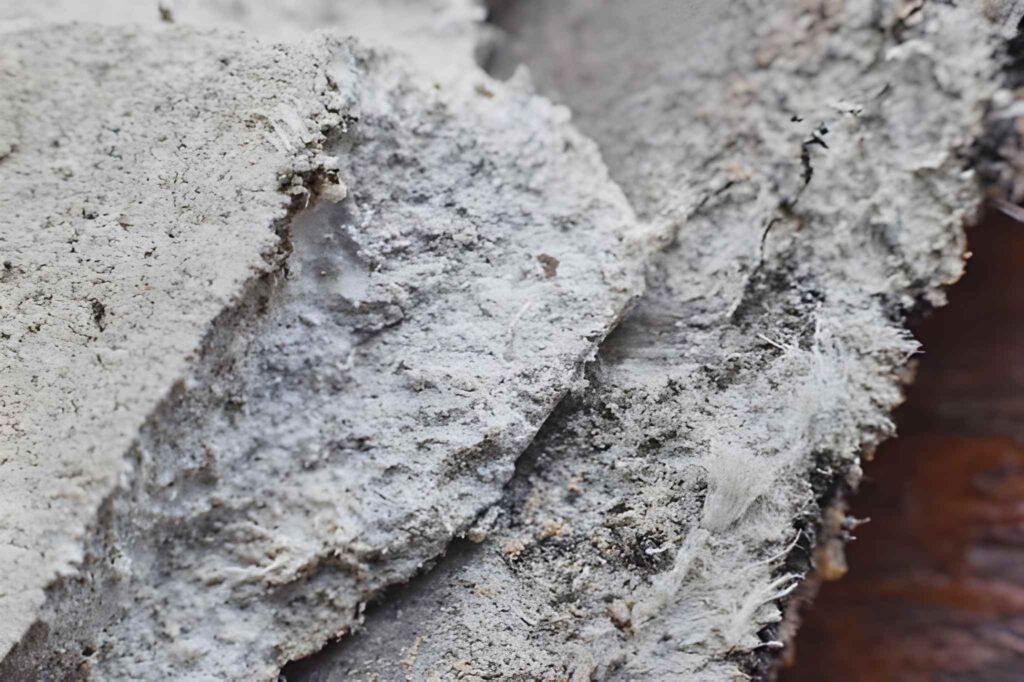
Asbestos regulations frequently use the term friable to describe material that can be crumbled, pulverized, or reduced to powder by hand pressure when dry.
Friable material releases fibers far more easily than non-friable material like intact vinyl tile or solid cement siding, which is why the same asbestos-containing product can be low-risk when solid and firmly bonded, but genuinely dangerous once it’s damaged, sanded, or starts to break down.
What Diseases Does Asbestos Cause?
Asbestos exposure is directly linked to several serious, often fatal diseases, and what makes them especially difficult is that they typically don’t appear until decades after the exposure that caused them.
Mesothelioma is a rare, aggressive cancer that develops in the mesothelium lining the lungs, abdomen, or heart. Asbestos exposure is the established cause, and the vast majority of people diagnosed with mesothelioma have a documented history of exposure, with the disease often appearing 30 to 40 years after that exposure occurred (Agency for Toxic Substances and Disease Registry).
Lung cancer caused by asbestos is actually more common than mesothelioma, though it draws less attention because lung cancer has many potential causes. Asbestos-related lung cancer looks clinically identical to lung cancer from other causes, but the risk rises sharply with asbestos exposure, and rises even further in people who also smoked, since the combination has a synergistic effect that multiplies risk well beyond what either factor causes alone.
Asbestosis is a chronic, progressive scarring of lung tissue that isn’t cancer but can be severely disabling, causing shortness of breath, persistent cough, and reduced ability to exercise or perform daily tasks. There’s no cure, and it can continue progressing even after exposure stops.
The National Cancer Institute has also found sufficient evidence linking asbestos exposure to cancers of the larynx and ovary, alongside mesothelioma and lung cancer, with more limited evidence pointing to elevated risk of stomach, pharyngeal, and colorectal cancers as well (National Cancer Institute).
Beyond cancer, asbestos exposure can cause pleural plaques (areas of thickened lung lining that mark past exposure), pleural thickening, and pleural effusions where fluid builds up around the lungs.
If you or a family member may have been harmed by a doctor's error in New York, the team at Porter Law Group can review the medical records and your options at no cost.
Who Is Most at Risk for Asbestos Exposure?
Certain occupations have historically carried much higher exposure risk.
Construction workers, especially those involved in demolition or renovation of older buildings, insulation workers, pipefitters, and steamfitters worked directly with asbestos materials for decades.
Shipyard workers, particularly those active from the 1940s through the 1970s, experienced some of the highest exposure levels in any industry.
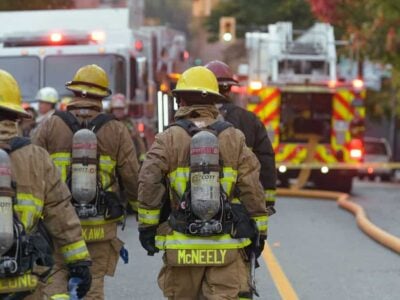
Auto mechanics working on brakes and clutches, firefighters responding to fires in older buildings, and power plant and boiler workers all faced regular exposure as part of routine work.
Military veterans, particularly those who served in the Navy, represent a significant share of people later diagnosed with asbestos-related disease, since ships and submarines contained extensive asbestos materials, often in confined, poorly ventilated spaces.
What Should You Do If You Suspect Asbestos in Your Home?
If you own or live in a building constructed before 1980, it’s reasonable to assume asbestos-containing materials may be present unless testing proves otherwise.
Do not attempt to test or remove suspected asbestos materials yourself.
Disturbing the material during DIY testing or removal can release exactly the fibers you’re trying to avoid.
In New York, asbestos inspectors must be licensed by the state Department of Labor, and professional abatement must follow strict state notification, containment, and disposal requirements.
If the material is intact and unlikely to be disturbed, the safest approach is often to leave it in place and monitor its condition, an approach known in the industry as operations and maintenance.
If it’s damaged, deteriorating, or likely to be disturbed by planned work, professional removal or encapsulation is usually necessary.
For anyone planning renovation or demolition on an older building, an asbestos inspection should happen before work begins, not after.
How Is Asbestos Regulated in New York?
Asbestos is heavily regulated rather than banned outright, and building owners, employers, and contractors all have specific legal obligations.
At the federal level, the EPA’s Asbestos Hazard Emergency Response Act requires schools to inspect for asbestos-containing materials, maintain a management plan, and take action when materials are damaged, while separate EPA emission standards govern how asbestos must be handled during demolition and renovation, and OSHA sets exposure limits and safety requirements for workers in general industry, construction, and shipyards.
New York layers its own requirements on top of these federal rules.
The New York State Department of Health regulates training and certification for asbestos abatement workers under 10 NYCRR Part 73, while the New York State Department of Labor governs the actual removal, encapsulation, or disturbance of asbestos material under 12 NYCRR Part 56.
The Department of Environmental Conservation regulates how asbestos waste is handled, transported, and disposed of under 6 NYCRR Parts 360 and 364, and within New York City, the Department of Environmental Protection runs its own asbestos control program requiring notification and permitting for abatement work citywide.
What Are the Legal Deadlines for an Asbestos Claim in New York?
Because asbestos diseases can take decades to appear, New York uses a discovery rule specifically for these claims rather than starting the clock on the date of exposure.
Claim Type | Deadline | Legal Basis |
|---|---|---|
Personal injury (mesothelioma, lung cancer, asbestosis) | 3 years from the date the disease is discovered, or reasonably should have been discovered | CPLR § 214-c |
Wrongful death from an asbestos-related disease | 2 years from the date of death | EPTL § 5-4.1 |
This discovery rule exists because asbestos disease typically develops 10 to 40 years after exposure, and a rule based on the date of exposure would bar most claims before anyone even knew they were sick. What matters legally isn’t when the exposure happened.
It’s when the disease was diagnosed, and when the person knew, or reasonably should have known, that it was connected to asbestos.
Summing It Up
Asbestos was used across construction, shipbuilding, and manufacturing for most of the 20th century because of properties that made it genuinely useful, and dangerous properties that took decades to fully understand.
Many older New York buildings and homes still contain it today, and while intact materials generally aren’t an immediate danger, disturbance during renovation, demolition, or simple deterioration can release fibers that cause mesothelioma, lung cancer, asbestosis, and other serious disease years or decades later.
Porter Law Group represents New York families affected by asbestos exposure, whether it happened on a job site decades ago, during military service, or through take-home exposure from a family member’s work.
Because New York’s discovery rule means a viable claim can exist even from exposure that happened long ago, it’s worth having a recent diagnosis evaluated rather than assuming too much time has passed.
If you or someone you love has been diagnosed with an asbestos-related disease, we can help you understand your options.
Frequently Asked Questions
What are the six types of asbestos?
The six regulated types are chrysotile, amosite, crocidolite, anthophyllite, tremolite, and actinolite. Chrysotile is the only serpentine type and was by far the most widely used in the U.S., while the other five are amphibole types with straighter, needle-like fibers that some research suggests are more hazardous.
Is asbestos illegal in the United States now?
Not entirely. The EPA finalized a rule banning ongoing use of chrysotile asbestos, the only type still imported and used in the U.S., on March 18, 2024. The other five fiber types are no longer imported but weren’t addressed by that specific rule, and materials installed decades ago remain in millions of older buildings.
How do I know if my home has asbestos?
You generally can’t tell just by looking, since asbestos fibers are microscopic. If your home was built before 1980, it’s reasonable to assume materials like popcorn ceilings, old vinyl floor tiles, pipe insulation, or vermiculite attic insulation could contain asbestos, and the only reliable way to confirm it is professional testing by a licensed inspector, not a DIY test kit.
What was asbestos commonly used for in older buildings?
Asbestos was used extensively in insulation, roofing, floor and ceiling tiles, cement products, and pipe wrapping in construction, along with fireproofing in shipbuilding and brake and clutch components in the automotive industry. Its heat resistance and insulating properties made it valuable across a wide range of industries throughout the 20th century.
If I was exposed to asbestos decades ago, can I still file a claim in New York?
Often, yes. New York’s discovery rule under CPLR § 214-c starts the three-year filing clock from the date a disease is diagnosed, or reasonably should have been discovered, not from the date of the original exposure. Since asbestos diseases commonly take 10 to 40 years to appear, a recent diagnosis can support a valid claim even if the exposure happened decades ago.
Prior results do not guarantee a similar outcome.
Contact Porter Law Group
Phone: 833-PORTER9
Email: info@porterlawteam.com