
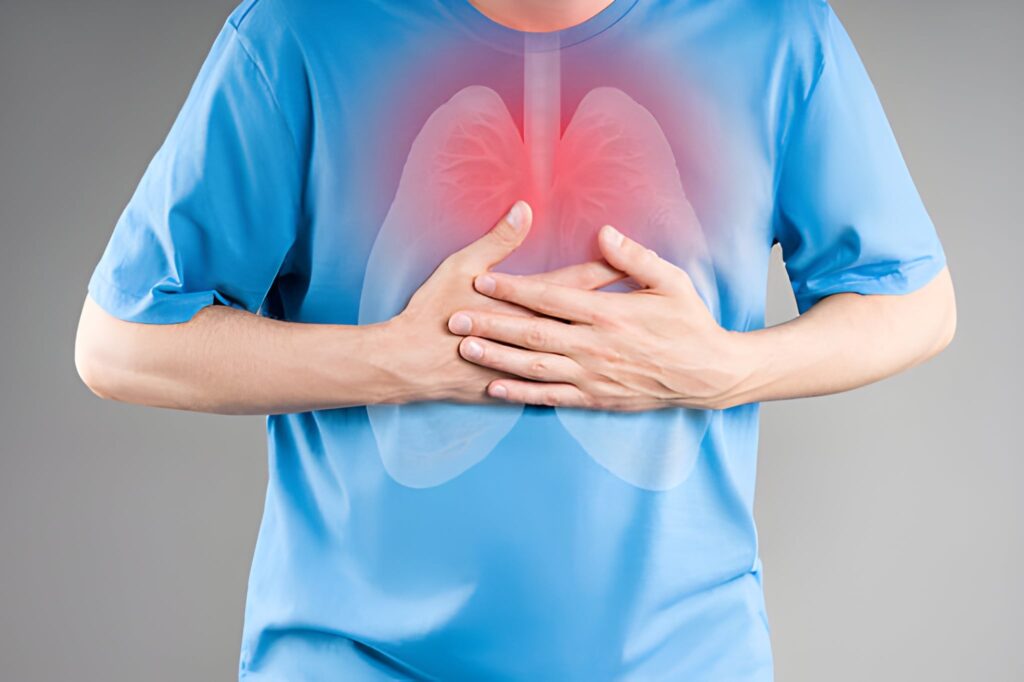

When someone says they have “asbestos poisoning,” they’re usually describing one of several serious diseases caused by breathing in asbestos fibers, even though that’s not actually a formal medical diagnosis.
Doctors instead refer to specific asbestos-related diseases, mainly asbestosis, mesothelioma, and lung cancer, all caused by the same underlying problem: microscopic mineral fibers that lodge permanently in the lungs once inhaled.
Understanding what these fibers actually do to the body matters if you worked in construction, shipyards, or manufacturing, or if you’re dealing with unexplained breathing problems years after working around old insulation, floor tiles, or other building materials.
Prior results do not guarantee a similar outcome.
What Does “Asbestos Poisoning” Actually Mean?
The term “poisoning” suggests something sudden, like a chemical burn or a toxic dose that causes immediate symptoms. Asbestos exposure doesn’t work that way. There’s no acute reaction. Instead, microscopic fibers become embedded in lung tissue and stay there for life, since the body has no effective way to break them down or clear them out.
What people call asbestos poisoning is really a slow disease process that plays out over years or decades, ultimately producing one of a handful of recognized medical conditions: asbestosis, mesothelioma, asbestos-related lung cancer, or pleural disease.
Understanding it that way, as a specific diagnosis rather than a single generic illness, matters both for treatment and for any legal claim, since each condition has its own symptoms, prognosis, and legal considerations.
What Are the Effects of Asbestos Exposure on the Body?
When asbestos fibers are inhaled, they travel deep into the lungs and, in some cases, migrate to the lining surrounding the lungs, chest wall, and abdomen.
Because these fibers are so small and durable, the body’s immune system can’t break them down or effectively expel them the way it clears most other inhaled particles.
Instead, the fibers trigger chronic inflammation as the body repeatedly tries and fails to remove them.
Over years, that persistent irritation leads to scarring, a process called fibrosis. In the lungs, this scarring makes tissue stiff and thick, making it progressively harder for oxygen to pass into the bloodstream. In some people, the same chronic irritation eventually leads to cellular mutations and cancer.
What makes this process so difficult to catch early is its long latency period, the gap between exposure and the first noticeable symptoms, which commonly runs 10 to 40 years and can extend even longer for some conditions (Agency for Toxic Substances and Disease Registry).
Someone exposed on a job site in the 1970s or 1980s may be only now developing symptoms, decades after they last touched an asbestos-containing material.
What Is Asbestosis?
Asbestosis is a chronic, progressive lung disease caused by widespread scarring of lung tissue from inhaled asbestos fibers.
It’s not cancer, but it’s a serious, disabling condition with no cure. Once the scarring occurs, it’s permanent, and the disease can continue to worsen even after asbestos exposure has completely stopped.
As the lungs become increasingly stiff and scarred, they lose their ability to expand fully and transfer oxygen efficiently, which is what drives the hallmark symptoms of shortness of breath and reduced ability to exercise.
Asbestosis generally results from relatively high or prolonged exposure, unlike mesothelioma, which has been linked to much lower exposure levels in some cases. People diagnosed with asbestosis also face an increased risk of developing lung cancer, which is part of why ongoing monitoring matters even after an asbestosis diagnosis.
What Are the Symptoms of Asbestos Poisoning?
Symptoms tend to develop so gradually that people often dismiss them as normal aging or being out of shape, which is part of why the underlying disease can be fairly advanced by the time someone seeks medical care.
Early symptoms:
- Shortness of breath, especially with exertion, like climbing stairs or carrying groceries
- A persistent, dry cough that lingers for weeks or months without producing much phlegm
- Chest tightness or pain, often worse with a deep breath
- Fatigue, as the body works harder to get enough oxygen
Signs of more advanced disease:
- Clubbing of the fingers, a widening and rounding of the fingertips caused by chronically low oxygen levels
- Crackling sounds in the lungs that a doctor can hear with a stethoscope
- Significant, ongoing difficulty breathing even at rest
- Unexplained weight loss, coughing up blood, or new chest or abdominal pain, which can point toward mesothelioma or lung cancer rather than asbestosis alone
- Recurring fluid buildup around the lungs
Because these symptoms overlap with many other, more common respiratory conditions, they’re easy to attribute to something else entirely, especially without a doctor who knows to ask about a history of asbestos exposure. It’s also worth understanding that the latency period itself is genuinely silent. Someone can carry asbestos fibers in their lungs for decades without feeling sick at all, since the damage builds quietly until it eventually crosses a threshold where symptoms appear.
What Are the Asbestos-Related Diseases?
Asbestos exposure is linked to several distinct diseases, each with its own characteristics.
Asbestosis, described above, is chronic lung scarring that isn’t cancer but has no cure and can be severely disabling.
Mesothelioma is a rare, aggressive cancer of the mesothelium, the lining of the lungs, abdomen, or heart. Asbestos exposure is the primary known cause, and the disease is typically diagnosed at an advanced stage, with a latency period commonly cited at 20 to 50 years from exposure to diagnosis.
Lung cancer caused by asbestos looks identical to lung cancer from any other cause, but exposure significantly raises the risk, and that risk multiplies for people who also smoked, since the combined effect is far greater than either factor on its own.
Pleural disease covers a group of related conditions affecting the pleura, the thin membrane surrounding the lungs. This includes pleural plaques, thickened areas that usually don’t cause symptoms but mark a history of exposure, pleural effusion, where fluid builds up around the lungs, and diffuse pleural thickening, which can restrict how well the lungs can expand.
The National Cancer Institute has also found sufficient evidence linking asbestos to cancers of the larynx and ovary, with more limited evidence connecting it to stomach, pharyngeal, and colorectal cancers (National Cancer Institute).
How Is Asbestos-Related Disease Diagnosed?
If you have symptoms and a history of possible asbestos exposure, a doctor will typically start with a detailed occupational history, asking about every job, dates, locations, materials handled, and, where possible, specific products or companies involved. That history matters both medically and, later, legally.
From there, diagnosis usually involves a combination of:
- Chest X-ray, often the first imaging test, which can show scarring or pleural changes, though it may miss early-stage disease. A normal X-ray doesn’t rule out asbestos-related disease, which is why doctors often recommend ongoing surveillance for people with a significant exposure history rather than relying on a single scan.
- CT scan, particularly high-resolution CT, which provides more detailed images and is especially useful for identifying patterns consistent with asbestosis or pleural disease
- Pulmonary function tests, which measure lung capacity and airflow to check for the restrictive breathing pattern typical of asbestosis
- Biopsy, taking a small tissue sample, sometimes the only way to definitively diagnose asbestosis or mesothelioma, done through bronchoscopy or a surgical procedure. Pathologists examining biopsy tissue can also look for asbestos bodies, microscopic asbestos fibers coated in iron and protein by the body’s own immune response, which serve as direct physical evidence of past exposure.
Is There Treatment for Asbestos-Related Disease?
There’s no cure for asbestosis and no way to reverse the lung scarring it causes. Treatment instead focuses on managing symptoms, slowing further complications, and preserving quality of life, and can include:
- Oxygen therapy for low blood oxygen levels, used during activity, sleep, or continuously depending on severity
- Pulmonary rehabilitation, including breathing techniques and exercise programs designed to improve function and reduce deconditioning
- Medications, including bronchodilators to open airways, inhaled corticosteroids to reduce inflammation, and antibiotics for respiratory infections
- Cancer treatment, for mesothelioma or asbestos-related lung cancer, which may involve surgery, chemotherapy, or radiation depending on the type and stage
Quitting smoking is one of the most important steps someone can take, since smoking accelerates disease progression and dramatically increases cancer risk on top of asbestos exposure.
Avoiding any further asbestos exposure matters too, which sometimes means changing jobs or roles if exposure is ongoing.
Can You Sue for an Asbestos-Related Disease?
If you’ve been diagnosed with an asbestos-related disease, you may have real legal options, even if the exposure that caused it happened decades ago.
Potential defendants can include manufacturers of asbestos-containing products, employers who failed to protect workers, property owners who didn’t disclose or address known asbestos hazards, and contractors who handled asbestos improperly.
Compensation in these cases can include medical expenses, both past and future, lost wages and diminished earning capacity, and pain and suffering for the physical and emotional toll of the disease.
Even people with other risk factors, like a smoking history, can still pursue a claim if asbestos exposure contributed to their disease. Many companies that manufactured asbestos products no longer exist as active businesses, but that doesn’t necessarily close the door on compensation.
If you or a family member may have been harmed by a doctor's error in New York, the team at Porter Law Group can review the medical records and your options at no cost.
What Are Asbestos Bankruptcy Trust Funds?
Because so many asbestos manufacturers filed for bankruptcy after decades of litigation, Congress created a specific legal mechanism, Section 524(g) of the U.S. Bankruptcy Code, requiring these companies to set aside dedicated trust funds to compensate people harmed by their products, both now and in the future. More than 60 of these trusts remain active today, together holding tens of billions of dollars specifically earmarked for asbestos victims.
Filing a trust fund claim is a separate process from filing a lawsuit.
It doesn’t require going to court, generally resolves faster, often within a few months, and can be pursued at the same time as a lawsuit against any company still in business that bears responsibility for the exposure.
Many people qualify to file with more than one trust if they were exposed to products from multiple companies over the course of their work history, which is one of the reasons a detailed occupational history matters so much in building a complete claim.
What Are the Legal Deadlines for an Asbestos Disease Claim in New York?
Because these diseases can take decades to appear, New York uses a discovery rule specifically for asbestos and other latent exposure claims, rather than starting the clock on the date of exposure.
| Claim Type | Deadline | Legal Basis |
| Personal injury (mesothelioma, lung cancer, asbestosis) | 3 years from the date the disease is discovered, or reasonably should have been discovered | CPLR § 214-c |
| Wrongful death from an asbestos-related disease | 2 years from the date of death | EPTL § 5-4.1 |
What matters under this rule isn’t when the exposure occurred. It’s when the disease was diagnosed, or reasonably should have been.
That means a diagnosis today can still support a valid claim even if the underlying exposure happened 30 or 40 years ago.
What Should You Do If You Think You Were Exposed to Asbestos?
Talk to your doctor about your work history if you spent time in an industry with common asbestos exposure, even if you feel completely fine right now. Mention every relevant job and ask whether ongoing monitoring makes sense given your history.
If you’re already experiencing symptoms like persistent cough, shortness of breath, or chest pain, seek a medical evaluation promptly rather than waiting to see if things improve on their own.
Keep detailed records of your work history, including dates, locations, job duties, specific products used, and employers, since these details matter for both medical monitoring and any future legal claim.
If you’re diagnosed with an asbestos-related disease, consider speaking with an attorney experienced in these cases before too much time passes, since navigating both trust fund claims and New York’s filing deadlines is easier to do well with guidance from the start.
Summing It Up
What people call asbestos poisoning is really a group of serious, well-documented diseases, asbestosis, mesothelioma, lung cancer, and related pleural conditions, all caused by the same microscopic fibers lodging permanently in lung tissue.
The damage happens slowly, often over decades, which is exactly why so many people are only now being diagnosed from exposure that happened long ago.
Porter Law Group represents New York individuals and families affected by asbestos-related disease, whether the exposure happened on a job site, during military service, or through a family member’s work.
We help clients pursue every available source of compensation, including claims against responsible companies still in operation and claims against the bankruptcy trusts established by companies that are not.
If you’ve been diagnosed with an asbestos-related disease, we can review your work history and explain what your options actually look like.
Frequently Asked Questions
Is asbestos poisoning a real medical diagnosis?
Not formally. “Asbestos poisoning” is a common way people describe the group of diseases caused by asbestos exposure, but doctors diagnose specific conditions instead, most often asbestosis, mesothelioma, or asbestos-related lung cancer, each with its own diagnostic criteria and treatment approach.
What are the earliest symptoms of asbestos-related disease?
Shortness of breath during exertion, a persistent dry cough, chest tightness, and unusual fatigue are typically the first signs, and they tend to develop so gradually that people often mistake them for normal aging or being out of shape rather than a serious underlying disease.
What’s the difference between asbestosis and mesothelioma?
Asbestosis is a non-cancerous, progressive scarring of lung tissue with no cure, generally linked to higher or more prolonged exposure. Mesothelioma is a rare, aggressive cancer of the lining around the lungs, abdomen, or heart, strongly tied to asbestos exposure and considered far more life-threatening, often diagnosed at an advanced stage.
Can you get compensation for asbestos exposure if the company that caused it is no longer in business?
Often, yes. Many companies that manufactured asbestos products filed for bankruptcy and were required to set up dedicated trust funds under federal bankruptcy law specifically to compensate people harmed by their products. These trust fund claims are separate from, and can be pursued alongside, a lawsuit against any other company still in operation that bears responsibility.
How long after asbestos exposure can symptoms of related diseases appear?
Typically 10 to 40 years, though mesothelioma in particular has been documented with a latency period as long as 20 to 50 years. This long delay is exactly why New York law starts the filing clock from the date a disease is diagnosed rather than the date of exposure.
Prior results do not guarantee a similar outcome.
Contact Porter Law Group Phone: 833-PORTER9 Email: info@porterlawteam.com