

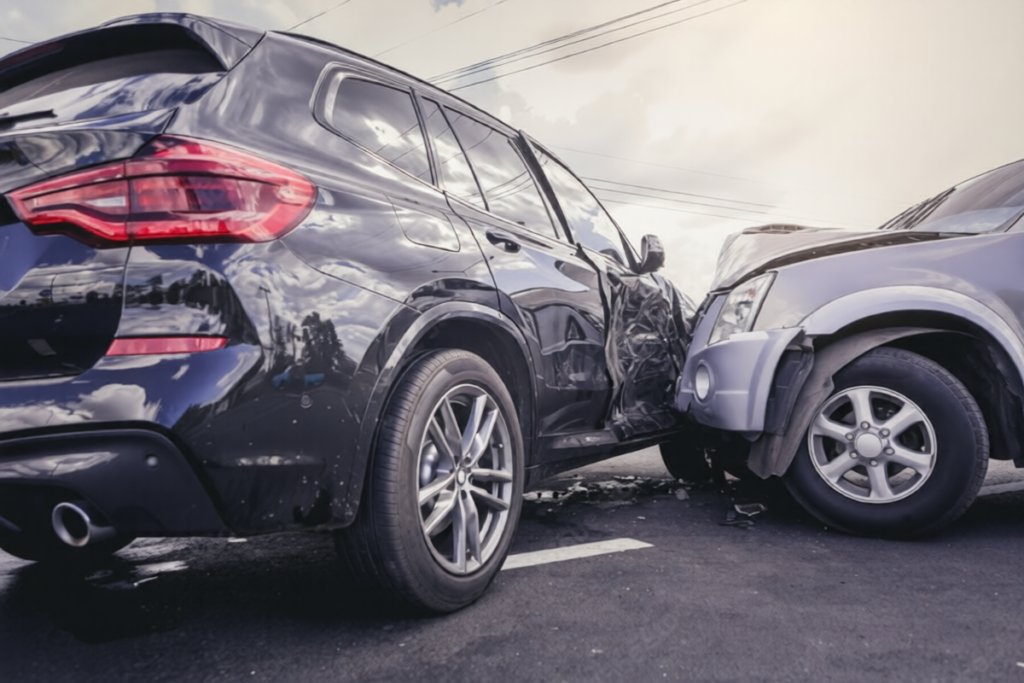

Getting hit by another driver leaves you dealing with injuries, medical bills, and a damaged car, but proving that driver caused the crash takes more than just knowing what happened.
You need evidence that holds up to insurance adjusters and, if it comes to it, a jury.
Here’s what actually proves fault under New York law, and what to do in the hours and days after a crash to protect your case.
Prior results do not guarantee a similar outcome.
What Does Proving Fault Actually Require?
Fault means proving the other driver was negligent, and negligence is a specific legal test with four parts.
Duty of care. Every driver owes a legal duty to operate their vehicle reasonably, which includes following traffic laws and staying alert.
Breach of duty. The other driver did something careless, like running a red light, tailgating, or texting while driving.
Causation. That careless act directly caused the crash, and the crash directly caused your injuries.
Damages. You suffered real harm, whether that’s medical bills, lost income, or pain and suffering.
Proving fault isn’t about who the police blamed on the scene or what an insurance adjuster initially decides. It’s about building evidence that satisfies all four of these elements.
Does a Traffic Violation Automatically Prove Fault in New York?
Often, yes. When a driver violates a specific provision of the Vehicle and Traffic Law, that violation can establish negligence automatically under a doctrine called negligence per se.
If the other driver ran a red light under VTL Section 1111 or followed too closely under VTL Section 1129, and that violation caused the crash, courts can treat the breach of duty as already established. You don’t have to separately prove the driver was careless in the abstract, the violation itself does that work.
This is why identifying a specific traffic law violation in the police report, witness statements, or video footage is one of the strongest ways to prove fault. A documented citation for running a red light or an unsafe lane change gives you a clear legal foundation for the rest of your case.
Does Your Own Fault Matter in New York?
Yes, and this changed in an important way in 2026. New York has long used comparative negligence, meaning your compensation gets reduced by your percentage of fault rather than assigning all-or-nothing blame.
If a jury finds you 30% at fault and the other driver 70% at fault, your award would be reduced to 70% of your damages, and that basic reduction mechanic still applies today whenever the new bar described below doesn’t come into play.
What changed is this: for motor vehicle cases subject to Insurance Law Article 51 and commenced on or after May 26, 2026, a new subsection added to CPLR 1411 bars you from recovering anything at all if your fault is greater than the fault of the person or people you’re suing, combined.
Before this change, New York had no such cutoff at any percentage. If your case was commenced before May 26, 2026, the older rule with no cutoff likely still applies, but this is exactly the kind of detail worth confirming with a lawyer rather than assuming.
Why Does Fault Matter If New York Has No-Fault Insurance?
New York requires all drivers to carry no-fault insurance, which pays your own medical bills and some lost wages through Personal Injury Protection coverage, generally up to $50,000 per person, regardless of who caused the crash. You generally need to file a No-Fault Application with your own insurer within 30 days of the crash.
For a lot of routine crashes, fault genuinely doesn’t matter for getting your medical bills paid at first. It becomes critical once:
Your injuries exceed the $50,000 no-fault limit and you need additional compensation
You want to recover for pain and suffering, which no-fault insurance never covers
You need compensation for property damage or diminished vehicle value beyond your own collision coverage
Your injuries keep you out of work longer than no-fault wage replacement covers
To sue the at-fault driver for pain and suffering, you generally need to show you suffered a “serious injury” as defined under Insurance Law Section 5102(d), a threshold that includes things like fracture, significant disfigurement, or a permanent limitation of use. Without meeting this threshold, you’re generally limited to your no-fault benefits.
What Evidence Actually Proves the Other Driver Was at Fault?
Evidence Type | Why It Matters |
|---|---|
Police report | Documents officer observations, witness statements, and any citations issued |
Photos and video | Captures vehicle positions, damage patterns, and road conditions before anything is moved or cleaned up |
Witness statements | A neutral third party’s account carries real weight in disputed cases |
Links your injuries to the crash and supports how the collision likely occurred | |
Vehicle damage and physical evidence | Corroborates speed, point of impact, and mechanical condition at the time of the crash |
Electronic data | Event data recorders (“black boxes”), phone records, and camera footage can objectively show speed, braking, and driver behavior |
Traffic camera and surveillance footage in particular tends to get overwritten within days or weeks depending on the system, a practical reality rather than a legal deadline, so acting quickly to request and preserve it matters more than almost anything else on this list.
How Does Fault Get Proven in Common Crash Scenarios?
Rear-end collisions. The driver who hits another vehicle from behind is usually presumed at fault, since VTL Section 1129 requires drivers to maintain a reasonable following distance. The rear driver can avoid liability only by showing a non-negligent reason for the collision, like a sudden, unforeseeable stop by the lead vehicle.
Intersection crashes. Fault usually comes down to which driver had the right of way, and a documented signal violation strongly supports negligence per se. Camera footage showing which driver had the green light is often the single most valuable piece of evidence in these cases.
Left turns across oncoming traffic. A turning driver must yield to oncoming traffic, but if the oncoming vehicle was speeding or ran a red light, fault can be shared between both drivers.
Multi-vehicle chain reactions. These cases require reconstructing the sequence of impacts, often with the help of an accident reconstruction expert, since more than one driver’s negligence may have contributed.
Claimed medical emergencies. A driver who claims a sudden medical event, like a heart attack or seizure, can potentially avoid liability if the emergency was truly sudden and unforeseeable. Prior medical records showing the driver knew of a condition, or witness accounts of erratic driving beforehand, often undercut this defense.
What Should You Do Immediately After a Crash?
Call 911 if anyone is injured, since New York requires reporting of injury crashes and a police response creates an official record
Get medical care right away, even if you feel fine, since adrenaline can mask pain and some injuries don’t show symptoms for hours or days
Photograph the scene, including vehicle positions, damage, skid marks, road conditions, and traffic signals, before anything is moved
Exchange information with every driver involved, including license, insurance, and vehicle details
Get names and contact information from any witnesses, and a brief factual description of what they saw
Avoid admitting fault or apologizing, since even a casual “I’m sorry” can be used against you later
In the days that follow, you generally need to file an accident report with the DMV within 10 days if there’s injury or more than $1,000 in property damage, and a no-fault claim with your own insurer within 30 days. Missing either of these deadlines can create real complications for your claim.
What Are the Key Deadlines in a New York Car Accident Case?
Deadline | Rule | What It Means |
|---|---|---|
10 days | DMV accident reporting requirement | Required if the crash involved injury, death, or over $1,000 in property damage |
30 days | No-fault claim filing | Deadline to file your No-Fault Application with your own insurer for PIP benefits |
3 years | General deadline to file a personal injury lawsuit in New York | |
2 years | Deadline to file a wrongful death claim after a fatal crash | |
90 days | Notice of claim deadline if a government or municipal vehicle was involved |
Summing It Up
Proving fault after a car accident takes more than knowing what happened, it takes objective evidence tied to New York’s legal standards for negligence, and it takes speed, since camera footage, black box data, and witness memories all degrade quickly.
The 2026 change to New York’s fault rules makes early, accurate evidence gathering more important than ever, since a disputed fault finding can now affect whether you recover anything at all in a motor vehicle case.
Porter Law Group has built its reputation on trial-tested representation for injured New Yorkers, and our attorneys work on a contingency fee basis, meaning you pay nothing unless we win.
If you’ve been hurt in a car accident and fault is disputed, or your injuries are serious, reach out to discuss what happened and what your legal options look like.
Call 833-PORTER9 or email info@porterlawteam.com to schedule a free consultation.
Prior results do not guarantee a similar outcome.
Frequently Asked Questions
Do I need a police report to prove fault in New York? It isn’t strictly required, but it carries significant weight with insurers and courts. A police report documenting a traffic citation or the officer’s assessment of the scene is often the starting point for settlement negotiations.
What if the other driver claims I was partly at fault? Under New York’s comparative negligence rules, your own fault can reduce your compensation. For motor vehicle cases commenced on or after May 26, 2026, being found more at fault than the other driver, or more at fault than the combined fault of everyone you’re suing, can bar recovery entirely under the new CPLR 1411(b), which makes early evidence gathering especially important in disputed cases.
Do I have to prove a serious injury to sue the other driver? Generally, yes, if you want compensation beyond your no-fault benefits. Under Insurance Law Section 5102(d), you need to meet one of the statutory serious injury categories to pursue a lawsuit for pain and suffering.
How long does black box or camera footage last before it’s lost? It varies, but traffic and surveillance camera footage in particular is often overwritten within days or weeks. Vehicle event data recorder information can also be lost if the vehicle is repaired or totaled, which is why early evidence preservation matters.
How much does a car accident lawyer cost in New York? Most plaintiff-side personal injury attorneys, including Porter Law Group, work on a contingency fee basis. You pay nothing upfront, and there is no fee unless the firm recovers compensation on your behalf.
This article is for informational purposes only and does not constitute legal advice. Attorney advertising. Prior results do not guarantee similar outcomes.
Michael S. Porter, J.D. is the founder and managing partner of Porter Law Group, representing New York families in car accident, medical malpractice, and catastrophic injury cases.