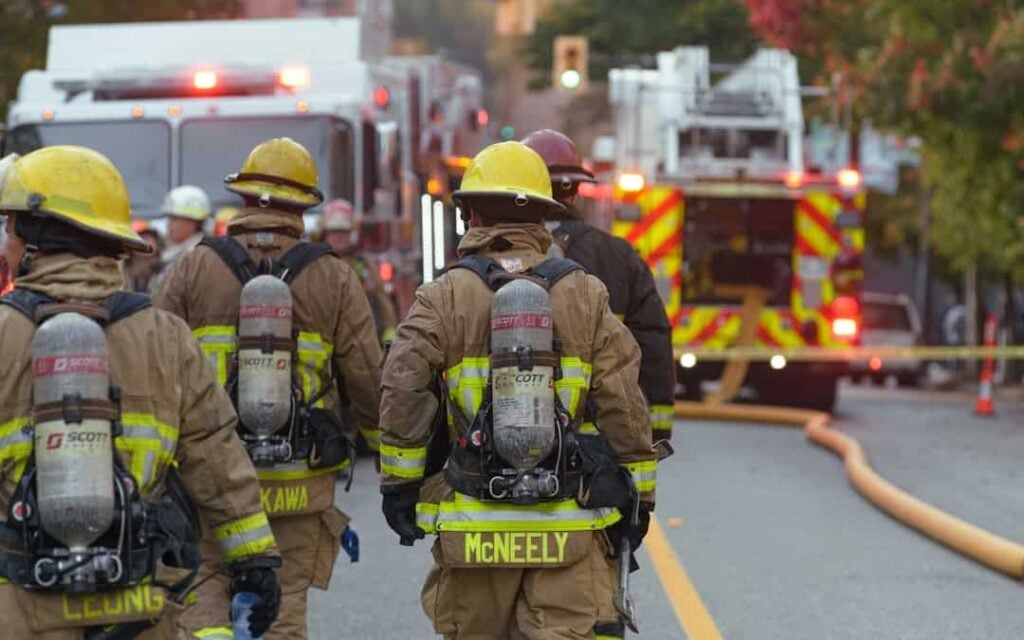

For decades, firefighters and military personnel trusted the equipment and training materials provided to them, showing up to protect communities and respond to emergencies without knowing that the foam designed to save lives might be putting their own health at risk.
Aqueous film-forming foam, known as AFFF, has been the standard for fighting flammable liquid fires since the late 1960s, used at airports, military bases, industrial facilities, and fire training centers across New York and the nation.
This specialized foam contains synthetic chemicals called PFAS that scientists now link to serious health problems, including multiple types of cancer.
Thousands of firefighters and veterans are pursuing legal claims against AFFF manufacturers, alleging these companies knew about the dangers of PFAS exposure for years but failed to warn the people using their products.
If your one of those veteran this article can serve as your guide on PFAS lawsuits in New York.
Prior results do not guarantee a similar outcome.
What is PFAS ?
PFAS stands for per- and polyfluoroalkyl substances, a large family of synthetic chemicals manufactured since the 1950s and found in everyday products like nonstick cookware, stain-resistant carpets, and water-repellent gear.
But the most significant occupational exposure comes from AFFF used to fight fuel fires.
Scientists call PFAS “forever chemicals” because they don’t break down naturally in the environment or the human body. Once PFAS enter the system through skin contact, inhalation, or ingestion, they can remain in the blood and organs for years, building up with each new exposure.
AFFF works by creating a foam blanket over burning fuel that cuts off oxygen and suppresses vapors, which is exactly what makes it so effective, and exactly why the chemicals that make it work are also what make it dangerous.
The foam didn’t just disappear after use, either; it soaked into soil and ran off into groundwater, contaminating drinking water supplies near bases, airports, and training facilities across New York and the country.
How Do Firefighters Get Exposed to PFAS?
Firefighters face several exposure pathways:
Direct AFFF use. Live-fire training drills at airports or military installations could happen monthly or even weekly, creating years or decades of cumulative exposure. Airport crash-rescue teams and industrial firefighters faced similar exposure whenever they responded to actual fuel fires.
Turnout gear. Research from Notre Dame and the National Institute of Standards and Technology found high levels of PFAS in firefighter turnout gear, both new and used, since manufacturers treated the protective fabrics with PFAS for water and stain resistance. Under the hot, humid conditions inside gear during firefighting, these chemicals can release from the fabric and absorb through the skin.
Volunteer service. Volunteer firefighters in smaller New York communities may have had less frequent exposure than career firefighters, but the same underlying risks apply to any contact with AFFF or PFAS-treated gear.
Studies show firefighters have measurably higher PFAS levels in their blood than the general population, and the National Institute for Occupational Safety and Health identifies firefighters as a high-exposure group, maintaining a federal research registry to track health outcomes.
The Cancer Connection
Firefighting as an occupation carries a well-documented cancer burden from the full mix of hazards firefighters face, not just PFAS. In 2022, IARC classified occupational exposure as a firefighter as Group 1, carcinogenic to humans, based on sufficient evidence for mesothelioma and bladder cancer, with limited evidence for colon, prostate, and testicular cancer, melanoma, and non-Hodgkin lymphoma.
A 2025 U.S. mortality study found the strongest associations for skin-cancer mortality (hazard ratio 1.72) and kidney-cancer mortality (hazard ratio 1.39, though that estimate’s confidence interval touched 1.0), with suggestive increases in prostate and colorectal cancer mortality among firefighters with more years in the occupation.
PFAS and AFFF specifically have narrower, but still real, evidence tied to them:
In 2022, the National Academies of Sciences reviewed the evidence and found it sufficient to support an association between PFAS exposure and kidney cancer in adults, with limited or suggestive evidence linking PFAS to testicular cancer, thyroid disease, and ulcerative colitis, among other conditions.
In November 2023, IARC classified PFOA as carcinogenic to humans (Group 1), and PFOS as possibly carcinogenic to humans (Group 2B), based on epidemiological studies, animal research, and mechanistic evidence.
In 2024, the Agency for Toxic Substances and Disease Registry issued clinical guidance recommending that healthcare providers screen patients with high PFAS exposure for kidney and testicular cancer.
It’s genuinely difficult, and often impossible, for general firefighter-cancer studies to isolate PFAS or AFFF from the rest of what firefighters are exposed to, including smoke, diesel exhaust, asbestos, and solvents.
Which cancers have the strongest PFAS-specific evidence?
Kidney cancer has the strongest, most consistent evidence, both from studies of exposed communities and workers and from the biological plausibility of PFAS accumulating in the kidneys.
Testicular cancer has credible, if more limited, supporting evidence; young firefighters and military personnel diagnosed with testicular cancer after AFFF exposure are among the plaintiffs in current litigation.
Thyroid cancer and thyroid disease have biological plausibility, since PFAS interfere with thyroid hormone function.
Liver cancer and liver disease connect to PFAS through the liver’s role in processing and storing these chemicals.
Prostate cancer, pancreatic cancer, and breast cancer, show emerging or suggestive evidence, though it’s less developed than for the cancers above.
How New York Regulates PFAS
New York set its own enforceable drinking water limit for PFOA and PFOS at 10 parts per trillion back in 2020, making it one of the first states to regulate these chemicals directly.
The federal EPA followed in April 2024 with a stricter national standard of 4 parts per trillion for PFOA and PFOS, and New York water systems have until 2029 to come into compliance with that tighter federal number; until then, the state’s own 10 ppt limit remains the enforceable standard.
Separately, New York’s Department of Environmental Conservation has finalized non-enforceable ambient water quality guidance values of 6.7 ppt for PFOA and 2.7 ppt for PFOS, a different, more health-protective benchmark used for environmental assessment rather than drinking water compliance.
Standard | PFOA | PFOS | What it is |
|---|---|---|---|
New York drinking water MCL (2020) | 10 ppt | 10 ppt | New York’s current enforceable public drinking water standard |
New York DEC ambient water guidance (2023) | 6.7 ppt | 2.7 ppt | Non-enforceable health-based guidance, not a drinking water rule |
Federal EPA drinking water MCL (2024) | 4 ppt | 4 ppt | Stricter federal standard; NY systems have until 2029 to comply |
PFAS foam restrictions. Under New York General Business Law § 391-u, it’s generally unlawful to use Class B firefighting foam containing intentionally added PFAS for training purposes, and the law also restricts manufacturers from making, selling, or distributing PFAS-containing Class B foam for use in New York, effective since March 2022.
This isn’t an absolute ban, though:
It doesn’t prohibit using legacy PFAS-containing foam at an actual emergency incident
Sales or distribution required by federal law may still be permitted, and New York’s own guidance specifically names military and civil-aviation fire protection as examples
State agencies can exempt PFAS-containing foam for certain ignitable-liquid fire suppression if no effective, environmentally safe alternative is available
A 2025 bill (S3659A/A1053) would expand manufacturer recall obligations to cover PFAS-containing foam sold before the 2022 restriction took effect. As of this writing, that’s proposed legislation, not current law.
New York Firefighter Cancer Benefits
Separate from a lawsuit against a manufacturer, New York provides certain benefit pathways specifically for firefighters diagnosed with cancer, though eligibility varies significantly by role and location.
NYC paid firefighters. Under General Municipal Law § 207-kk, paid firefighters in a city of one million or more (in practice, New York City) get a rebuttable presumption that certain cancers, including those affecting the lymphatic, digestive, hematological, urinary, neurological, breast, reproductive, or endocrine/thyroid systems, plus melanoma, are line-of-duty related for disability or death benefit purposes, provided the firefighter’s entry physical showed no evidence of the condition.
This presumption also covers retirees within five years of retirement. It’s important to be clear about what this is and isn’t: it’s a rebuttable presumption for benefit eligibility, not an automatic payment, and not a finding that PFAS or AFFF specifically caused the disease.
It also doesn’t apply outside New York City; firefighters elsewhere in the state may be covered by different rules.
Volunteer firefighters. Under General Municipal Law § 205-cc, eligible volunteer firefighters are entitled to enhanced cancer disability benefit coverage, which fire districts, departments, and companies are required to maintain.
A proposed gear restriction. In January 2025, the Governor announced a proposal to prohibit the sale of PFAS-containing firefighting gear in New York, with a proposed 2028 effective date. As of this writing, this remains a proposal rather than enacted law.
These state benefit programs are a different legal track from a product liability claim against an AFFF manufacturer. Depending on your situation, both may be worth exploring, and an attorney can help sort out which applies and what the deadlines and documentation requirements are for each.
Can You Sue for PFAS Exposure and Cancer?
If you worked as a firefighter or in military crash-rescue and later developed cancer or another serious condition, you may have legal options. Several factors matter:
Exposure history. Career firefighters at airports and industrial facilities, and military firefighters at Air Force bases, Navy airfields, and Marine Corps air stations, typically had the highest exposure. Volunteer firefighters who used AFFF in training or responded to fuel fires have potential claims too.
Timing. AFFF came into widespread use around 1967, so most claims involve exposure from the late 1960s through the 2010s, when many departments began phasing out PFAS foam.
Diagnosis. Kidney and testicular cancer have the strongest evidence; thyroid cancer, thyroid disease, prostate cancer, and liver cancer also have credible scientific support.
Latency. Cancer generally takes years or decades to develop after carcinogenic exposure begins, so a diagnosis following years of repeated exposure fits the expected pattern better than one shortly after brief exposure.
Documentation. Employment records showing when and where you worked, training records indicating AFFF use, medical records of your diagnosis and treatment, and any local water testing results all help establish your claim.
You generally don’t need to prove exactly which manufacturer’s specific product you used.
Because AFFF products from different manufacturers contained similar PFAS chemicals and created similar risks, courts have generally allowed these toxic exposure cases to proceed against multiple defendants without requiring plaintiffs to identify one specific product for every exposure.
What Damages Might Be Available?
Medical expenses, covering diagnosis and treatment, including hospital stays, surgery, chemotherapy, radiation, medication, and ongoing monitoring
Lost wages, for income missed during surgery, treatment, and recovery, or reduced hours or a lower-paying role due to health limitations
Loss of earning capacity, if cancer or its treatment permanently affects your ability to work, including early retirement from firefighting or military service
Pain and suffering, for the physical and emotional toll of a cancer diagnosis and treatment
Loss of consortium, compensating a spouse for the loss of companionship and support
In wrongful death cases, funeral and burial expenses, loss of financial support, loss of companionship, and the family member’s pain and suffering before death
How Long Do You Have to File a Claim?
New York’s statute of limitations for personal injury claims generally gives you three years from the date you discovered, or reasonably should have discovered, your injury, which for a PFAS cancer claim usually means three years from diagnosis.
A discovery rule can extend this deadline if you didn’t immediately know your cancer was connected to AFFF exposure, though courts apply this narrowly, so it’s not a basis for indefinite delay.
What Evidence Strengthens an AFFF Cancer Claim?
Employment records, showing department, station assignments, and dates of service, or a DD-214 and service records for military personnel
Training records or incident reports documenting specific dates of AFFF use
Medical records, including pathology reports, imaging, treatment records, and ongoing care documentation
PFAS blood testing results, if available (not required, but valuable objective evidence when it exists)
Water testing results from your fire station, military base, or community
Witness statements from fellow firefighters or service members who can corroborate your AFFF use
Personal records, such as photographs, logbooks, or journals referencing AFFF training or responses
Frequently Asked Questions
Do I need to prove exactly which manufacturer’s foam I used?
Generally no. Because AFFF products from different manufacturers used similar PFAS chemicals and created similar risks, courts have allowed cases to proceed against multiple defendants without requiring plaintiffs to identify a specific product for every exposure. An attorney can explain how this applies to your specific situation.
What if I used AFFF decades ago and only recently developed cancer?
That’s the expected pattern, not an obstacle. Cancer has a long latency period, often taking years or decades to develop after exposure begins, so a diagnosis appearing well after your service or career is consistent with, not contrary to, a PFAS-related claim.
Can I pursue a claim if I already receive VA disability benefits for my condition?
Yes. VA benefits and a civil lawsuit against AFFF manufacturers are entirely separate systems, and pursuing one doesn’t affect the other. Your VA rating and benefits continue regardless of whether you also file a claim against manufacturers.
Is there a settlement I can just join right now?
Not yet for personal injury claims. The settlements finalized so far cover public water system contamination claims, not individual firefighter or veteran cancer claims. The personal injury track is still active litigation, with a global settlement widely anticipated but not yet finalized, so individual cases are still being built and filed in the meantime.
What if I have both AFFF exposure and PFAS-treated turnout gear exposure?
You may have claims connected to both, since they’re handled in separate multidistrict litigations focused on different products. An attorney can evaluate both exposure pathways together rather than treating them as mutually exclusive.
Summing It Up
If you spent years training with or responding to fires using this foam, or wearing PFAS-treated gear, and have since been diagnosed with a related condition, reviewing your exposure history and medical records with an attorney is the clearest way to understand your options.
Porter Law Group represents New York firefighters, veterans, and families affected by toxic exposure, working with experienced medical and scientific experts to evaluate each client’s case.
If you or a loved one developed cancer or another serious condition after AFFF or PFAS exposure, call 833-PORTER9, email info@porterlawteam.com, or reach us through our contact page for a free, confidential consultation. Prior results do not guarantee a similar outcome.
This article is for informational and educational purposes only. It is not a substitute for medical advice from a qualified healthcare provider or legal advice based on your specific circumstances.