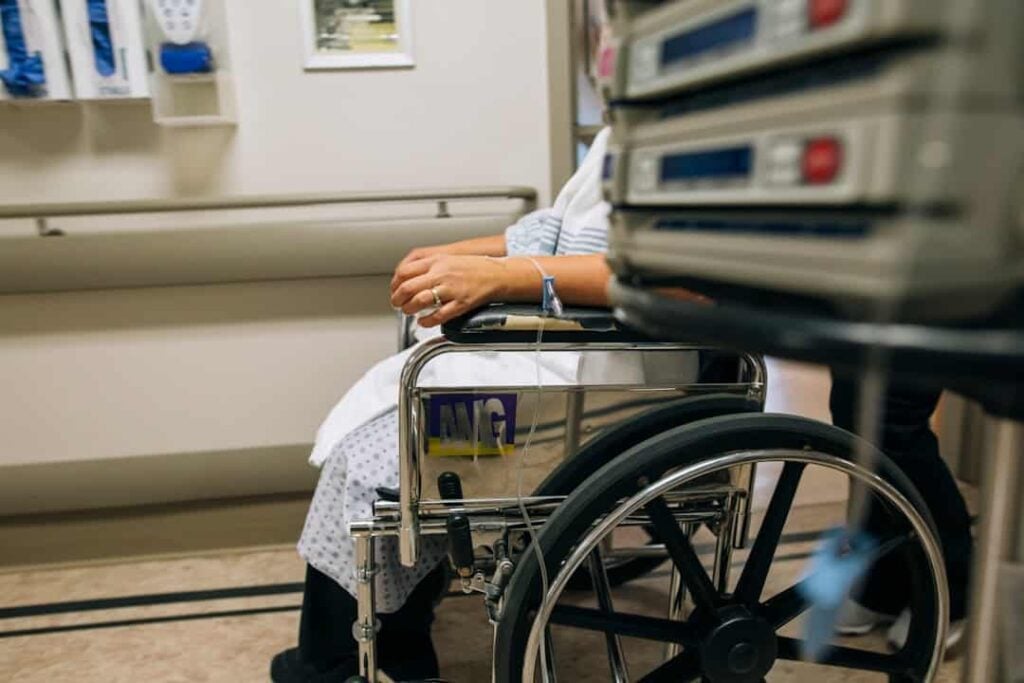

When you place a loved one in a nursing home, you expect them to get the attention and care they need to stay safe. When a facility runs short on nurses and aides, that care can break down in predictable ways.
Understaffing isn’t only a management problem. It can be measured, both federal and New York law regulate it, and it often sits behind the injuries families see.
This guide explains what adequate staffing means, how short staffing leads to bedsores, falls, and missed care, and how to check a facility’s staffing.
Prior results do not guarantee a similar outcome.
What Does Understaffing Mean in a Nursing Home?
Nursing home staffing is usually measured in nursing hours per resident per day. The figure reflects how much direct care time each resident gets from registered nurses, licensed practical nurses, and certified nursing assistants. Facilities report these hours to the federal government through a payroll-based system.
Under Public Health Law 2895-b, every nursing home must maintain a daily average of 3.5 hours of care per resident per day. At least 2.2 of those hours must come from certified nurse aides and at least 1.1 from licensed nurses.
The state checks compliance quarterly using the federal payroll data, and facilities that fall short face civil penalties.
Why Do Falls Happen More Often When Staffing Is Short?
Preventing falls depends on staff being there. Residents need timely help moving from bed to wheelchair and getting to the bathroom.
When staffing is short, those safeguards fail. A resident who has waited too long for help to the bathroom may try to go alone, especially one with dementia who doesn’t recognize their own limits. A resident recovering from a stroke may try to stand without assistance because no one comes.
The results can be life-changing. The CDC reports that more than 95 percent of hip fractures are caused by falling, as noted on its older adult falls page. Many older adults never regain their earlier mobility after a hip fracture. Falls can also cause bleeding in the brain and other brain injuries that require emergency care.
Not every fall is preventable. The questions are whether the facility knew the resident was at risk, whether its care plan addressed that risk, and whether it had enough staff to carry out the plan.
How Does Short Staffing Lead to Pressure Ulcers?
Pressure ulcers, also called bedsores or pressure injuries, form when sustained pressure cuts off blood flow to skin and the tissue beneath it. They usually appear over bony areas like the tailbone, hips, heels, and shoulder blades.
Federal rules put a clear duty on facilities here. Under 42 CFR 483.25, a nursing home must provide care to prevent pressure ulcers. A resident must not develop them unless their clinical condition shows the ulcers were unavoidable. A resident who already has one must get the treatment needed to promote healing, prevent infection, and stop new ulcers from forming.
Advanced pressure ulcers are serious. Deep wounds can lead to bone infection, sepsis, hospitalization, surgery, and death.
When a severe bedsore develops alongside records showing missed turns and thin staffing, that pattern is often central to a nursing home neglect claim.
What Is Missed Care and How Does It Harm Residents?
“Missed care” means necessary tasks that don’t get done because staff are stretched too thin. A resident may be left in soiled linens for hours, raising the risk of skin breakdown and infection. Pain medication may be late or skipped.
These lapses build on each other. Missed care is harder to prove than a fall because it’s defined by what didn’t happen.
Examples include gaps in charting, repeated delays in the same tasks, similar problems among residents on the same unit, and staff accounts of how the shifts actually ran.
New York regulations at 10 NYCRR Part 415 require individualized care plans and the services needed to carry them out. When a facility can’t deliver those services, the shortfall is a regulatory problem as well as a care problem.
How Can You Tell If a Nursing Home Is Understaffed?
Much of it you can see during visits. Watch for:
Call lights that ring for long stretches
Residents left in hallways or in bed with no staff nearby
Staff who seem constantly rushed
Heavy reliance on temporary agency workers
Your loved one telling you they waited a long time for help or didn’t get medication on time
You can also ask the administrator how many aides and nurses work each shift and how many residents each one covers. The answer, or the lack of one, tells you something.
The New York State Department of Health publishes inspection results and deficiency citations. No single number proves neglect. Still, a low staffing rating combined with high rates of pressure ulcers and falls, and a history of related citations, is a warning sign worth taking seriously.
What Does New York Law Say About Staffing and Resident Safety?
New York nursing homes answer to both federal rules for Medicare and Medicaid facilities and state law under Public Health Law Article 28 and 10 NYCRR Part 415. When a resident is hurt, a family may have a claim based on ordinary negligence.
The question there is whether the facility failed to provide reasonable care and whether that failure caused the injury.
New York also gives nursing home residents a specific statutory claim. Under Public Health Law 2801-d, a nursing home that deprives a resident of a “right or benefit” is liable for the injuries that result. That term covers rights created by contract or by any state or federal statute or regulation, which includes staffing and quality-of-care rules.
The facility can defend by showing it exercised all care reasonably necessary to prevent and limit the deprivation and injury. When a deprivation is found to be willful or in reckless disregard of the resident’s rights, the statute allows punitive damages.
A 2801-d claim is in addition to other remedies, so it’s often brought alongside negligence and, when a resident has died, wrongful death.
What Should You Do If You Suspect Understaffing Harmed Your Loved One?
Get medical attention for any injury. Ask that wounds, falls, and changes in condition be documented.
Document what you see. Photograph injuries, including pressure ulcers, with dates. Keep a visit journal noting how long call lights went unanswered, your loved one’s hygiene, and anything they tell you about missed care.
Request records. These include the medical chart, care plan, incident reports, and wound care notes.
Put concerns in writing to the administrator. Keep a copy of what you send.
File a complaint with the state if the problem is serious or continuing. You can submit a Department of Health nursing home complaint online or call the Nursing Home Complaint Hotline at 1-888-201-4563.
Contact the New York Long Term Care Ombudsman Program at 1-855-582-6769. It advocates for residents and helps families work through complaints.
Talk with a New York nursing home neglect attorney. Staffing records and care documentation take time to gather, and the deadlines below keep running.
How Long Do You Have to File a Claim in New York?
The deadline depends on the type of claim and who runs the facility. Missing one can end a claim regardless of the facts.
Situation | Deadline | Law |
|---|---|---|
Negligence claim against a private nursing home | Generally 3 years from the injury | |
Claim under Public Health Law 2801-d | Generally 3 years | CPLR 214 |
Claims treated as medical malpractice, such as a physician’s treatment decisions | 2 years and 6 months, or from the last continuous treatment | |
Wrongful death | 2 years from the date of death | EPTL 5-4.1 |
County-run or other public nursing home | Notice of claim within 90 days, and a lawsuit within 1 year and 90 days | GML 50-e and 50-i |
Neglect cases often involve injuries that developed over weeks or months. That makes it harder to pin down when each deadline started, which is another reason to get legal advice early.
Frequently Asked Questions
If a nursing home meets New York’s 3.5-hour minimum, does that mean staffing was adequate?
Not necessarily. The 3.5-hour figure is a floor measured as a daily average across the whole facility. A home can meet it overall while a particular unit or shift runs short, or while its residents need more care than the minimum provides. New York law separately requires staffing sufficient to meet residents’ needs. The question in a case is whether the staff actually present could provide the care that residents required.
Can we find out how a nursing home was staffed on the days our loved one was hurt?
Partly. Medicare’s Care Compare site shows a facility’s overall staffing levels from payroll data, and the state publishes inspection findings. Shift-by-shift schedules, time records, and assignment sheets usually have to be requested through a lawsuit, where the facility can be required to produce them. Asking the facility to preserve those records early helps make sure they’re still available.
Is every bedsore a sign of neglect?
No. Federal rules recognize that some pressure ulcers are clinically unavoidable, for example in residents with severe illness or poor circulation. The facility has to show that through the resident’s condition and its documentation, though. A bedsore that develops in a resident who came in without one, or that keeps worsening, raises questions about whether prevention and treatment actually happened. Those questions include whether the resident was turned, how often the skin was checked, and whether wound care was provided.
My parent has dementia and can’t tell us what happened. Can we still bring a claim?
Yes. Residents with dementia are often the most dependent on staff and the most vulnerable to missed care, so their inability to describe events doesn’t prevent a claim. These cases rely on the chart, turning and wound logs, incident reports, staffing records, and inspection findings. Staff and family observations help as well. A health care agent, guardian, or estate representative can generally pursue the claim on the resident’s behalf.
Will complaining get my loved one treated worse?
Federal rules protect a resident’s right to raise grievances without fear of reprisal, and facilities aren’t allowed to retaliate against residents or families for complaining. If you’re worried, the Long Term Care Ombudsman Program can advocate for your loved one and follow up on concerns. Keep a record of any changes in treatment after a complaint, and report them.
Summing It Up
Pressure ulcers, falls, and missed care often have the same underlying cause: not enough people to do the work residents need. Federal and New York law require nursing homes to staff for their residents’ actual needs, and New York adds a specific hourly minimum. It also gives residents a direct right to sue when facilities fall short.
If your loved one developed a pressure ulcer, suffered a fall, or declined because of missed care in a New York nursing home, Porter Law Group can review what happened and explain your options.
Our firm has recovered more than $500 million for injured New Yorkers. You can see examples on our results page.
We handle nursing home cases on a contingency basis, so you pay no attorney fee unless we recover compensation for you. Call 833-PORTER9, email info@porterlawteam.com, or contact us online to schedule a free consultation.
This article is for informational and educational purposes only. It is not a substitute for medical advice from a qualified healthcare provider or legal advice based on your specific circumstances.
Prior results do not guarantee a similar outcome.