
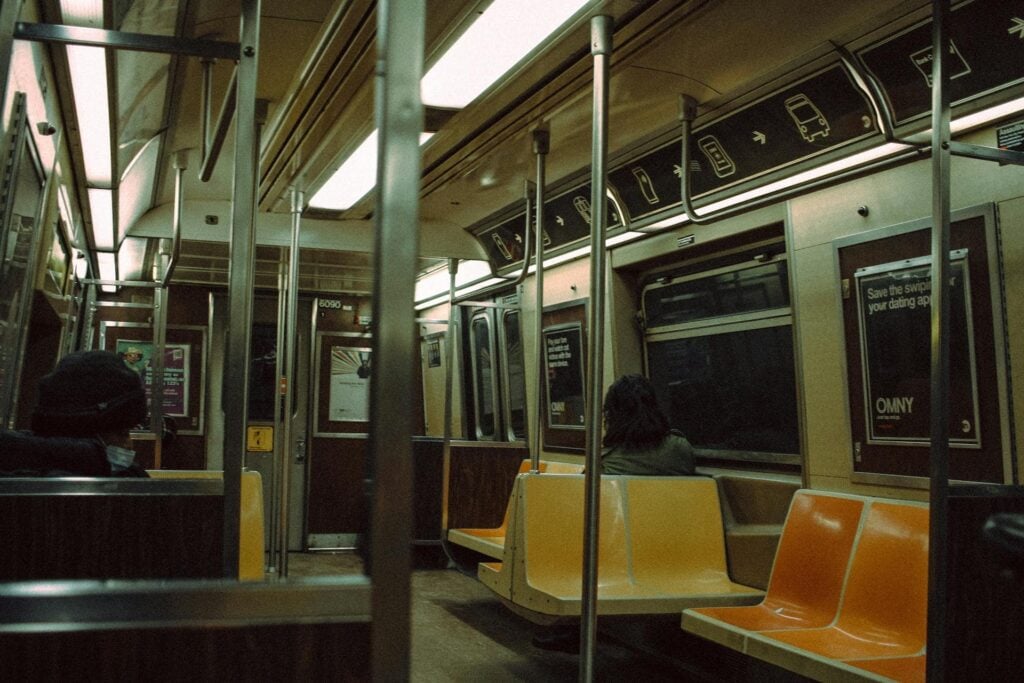

Subway doors that close on a hand, an arm, or a bag can do real damage. Injuries range from bruising to crushed fingers, falls, and head trauma, and the risk rises sharply if the train starts to move. If this happened to you or someone close to you in New York, two things matter right away.
One is medical care. The other is making a record of what happened.
A door injury doesn’t automatically mean the transit agency is legally responsible. A claim depends on what caused the doors to close and whether someone failed to use reasonable care.
Claims against the agencies that run the subway also carry a short deadline, starting with a written notice due within 90 days.
This guide explains the first steps, how these claims work, and the dates that apply.
Prior results do not guarantee a similar outcome.
What Should You Do Right After Subway Doors Close on You?
Get free safely, get medical help if you need it, report the incident, and record the details. The order matters, and your safety comes before any evidence.
Call for help while you’re caught. Shout to other riders and the train crew. Some cars have a two-way emergency intercom near each end. Yanking hard against the doors can make an injury worse.
Stay off the tracks. Never step into the track area to free yourself or to reach something you dropped. The rails may be live, and other trains may be moving.
Move away from the platform edge and check yourself. Call 911 for severe pain, heavy bleeding, numbness, a limb you can’t move, trouble breathing, or any loss of consciousness.
Report it before you leave the station. Tell a station agent or a police officer, or use a blue Help Point intercom on the platform. The conductor usually rides in the middle of the train. Ask that an incident report be made, and write down the name or badge number of the person you spoke with.
Record the details. Note the line, the direction of travel, the station and platform, the time, the car number, and which set of doors was involved. Write down whether the doors reopened and whether the train moved while you were caught. Your OMNY tap history can confirm when and where you entered the system.
Take photos. Capture the car number, visible injuries, torn clothing, and damaged belongings. Keep photographing injuries as they change over the following days.
Ask witnesses for contact information. Riders leave quickly, and they are hard to find later.
Keep what was caught. Don’t repair or throw away a damaged coat, bag, stroller, or cane. Marks and tears can show how the doors closed and with how much force.
Start a symptom log. Note pain, headaches, dizziness, sleep changes, and missed work, with dates.
The MTA’s emergency guidance for riders says to call 911 and notify staff when safety is at immediate risk. It also says the emergency brake should be pulled only when the train’s continued movement presents an immediate danger to people.
When Should You Get Medical Care?
Get checked the same day, even if the injury seems minor. Adrenaline can hide pain, and several common door injuries get worse over hours or days.
Nerve injuries. Mild tingling in a hand or wrist can progress to weakness or loss of grip.
Concussion. The CDC notes that symptoms of a concussion may not appear until hours or days after an injury. A worsening headache, repeated vomiting, slurred speech, or unusual drowsiness calls for emergency care.
Soft tissue injuries. Strains and ligament tears often feel like soreness at first, then worsen as swelling builds.
Rib and internal injuries. Pain with breathing, or pain and swelling in the abdomen, needs prompt evaluation.
A blow to the head deserves particular care. The New York State Department of Health reports that traumatic brain injuries lead to more than 17,000 hospitalizations and almost 38,000 emergency department visits among New York residents each year, with falls among the leading causes.
Those figures cover every cause, not subway incidents alone. Older adults and people who take blood thinners should be seen promptly after any head impact.
Tell the provider exactly how the injury happened, and keep your follow-up appointments. Subway trains aren’t motor vehicles under New York’s no-fault insurance law, so no-fault benefits don’t apply. Treatment is usually billed to your health insurance. A legal claim is never a substitute for medical care.
What Injuries Can Subway Doors Cause?
The injury depends on what was caught, for how long, and whether the train moved. The most common types are:
Hand, finger, and wrist injuries. Crush injuries can break bones and damage tendons and nerves, sometimes with lasting loss of grip strength.
Shoulder, rib, and back injuries. These often happen when a person is twisted or thrown off balance while pulling free.
Fall injuries. A strike or sudden release can cause wrist and hip fractures, knee and ankle injuries, and blows to the head.
Dragging injuries. When a person or a strap stays caught as the train moves, the result can be multiple fractures, amputation, spinal cord injury, or death.
Psychological harm. Anxiety, panic on platforms, and post-traumatic stress can follow an entrapment, and they can affect work and daily life.
Can You Sue If Subway Doors Close on You?
Yes, when carelessness or a defect caused the injury. An injury alone isn’t enough. New York holds transit operators to a standard of reasonable care under the circumstances. The older rule, which held carriers to the highest degree of care toward passengers, was replaced in 1998.
Subway door claims usually rest on one or more of three grounds:
Careless operation. The crew closed the doors on a rider who was visibly boarding or exiting, didn’t check the platform before leaving, or moved the train while someone was caught.
Poor maintenance. A door, sensor, or control was faulty, and the agency knew about it or should have found it through reasonable inspection. Lawyers call these actual notice and constructive notice.
A product defect. The door system was unsafe because of how it was designed or built. Those claims fall under product liability law in New York and can be brought against a manufacturer.
Each ground needs proof. Train crews work with crowded platforms and short station stops, and the question is what a reasonably careful operator would have done in the same conditions.
What If You Were Partly at Fault?
You can still bring a claim. Under CPLR 1411(a), your share of fault reduces your damages by that percentage but doesn’t bar recovery.
New York changed this rule in 2026 for motor vehicle cases covered by the no-fault law. In those cases, a person who is more at fault than the defendants can no longer recover. A subway train isn’t a motor vehicle under that law, so the change doesn’t reach subway door claims.
Transit agencies often raise the rider’s conduct. Common arguments include:
The rider ran for the train after the closing chime
The rider held or forced the doors
The rider ignored announcements or stood in the doorway
The rider pulled free in a way that made the injury worse
These points go to how fault is divided. They don’t end the inquiry, because the crew’s conduct and the condition of the doors are weighed alongside the rider’s.
What Deadlines Apply to a Subway Door Injury Claim?
The first deadline is 90 days. A claim against the New York City Transit Authority requires a written notice of claim within that time, and the lawsuit itself must follow within a year and 90 days.
Step | Deadline | Source |
|---|---|---|
Notice of claim to the Transit Authority | 90 days after the claim arises | General Municipal Law 50-e and Public Authorities Law 1212 |
Earliest a lawsuit can be filed | 30 days after the claim is presented | Public Authorities Law 1212 |
Lawsuit against the Transit Authority | 1 year and 90 days from the incident | Public Authorities Law 1212 and CPLR 217-a |
Wrongful death claim against a public authority | Notice within 90 days of the estate representative’s appointment, lawsuit within 2 years of death | General Municipal Law 50-e and Public Authorities Law 2980 and 2981 |
Lawsuit against a private contractor or manufacturer | 3 years from the incident | CPLR 214 |
Wrongful death lawsuit against a private company | 2 years from the date of death | EPTL 5-4.1 |
The 90 days run from the date of the injury. They don’t run from the end of treatment or the day a lawyer is hired.
Under General Municipal Law 50-e, the notice must be in writing and sworn. It has to state the nature of the claim, the time, place, and manner in which it arose, and the injuries claimed so far. A customer service complaint, a report to a station agent, or a police report does not take its place.
Missing the 90 days isn’t always the end. A court may allow late notice, and it considers whether the agency already knew the essential facts and whether the person was a minor or was physically or mentally incapacitated. Permission is discretionary, and it can’t extend past the deadline for the lawsuit.
After a notice is served, Public Authorities Law 1212 allows the Transit Authority to require the claimant to answer questions under oath about the claim. Skipping that examination can put the claim at risk.
What Compensation Can a Claim Include?
A claim can include financial losses and the human cost of an injury. No result is guaranteed, and what a claim covers depends on the facts. The main categories are:
Medical expenses, past and future
Lost earnings and reduced ability to earn in the future
Pain and suffering, including documented emotional harm
Out-of-pocket costs, such as travel to appointments and help at home
Damaged property
Because the no-fault law doesn’t apply to subway trains, a subway claim has no “serious injury” requirement for pain and suffering.
When an injury is fatal, EPTL 5-4.3 limits a wrongful death claim to the family’s financial losses, including funeral expenses and lost support. The estate may bring a separate claim for the pain and suffering the person experienced before death.
What If It Happened on Another Rail System?
The steps are the same, but the agency and its rules change. Identify the operator before anything else.
Long Island Rail Road and Metro-North. Both are MTA subsidiaries governed by Public Authorities Law 1276. A lawsuit must be filed within one year and 90 days and can’t start until 30 days after the claim is presented. That statute handles the notice of claim requirement differently for subsidiaries than Public Authorities Law 1212 does for the Transit Authority.
PATH. It is run by the Port Authority of New York and New Jersey, a two-state agency with its own notice requirement and a shorter window to sue.
Frequently Asked Questions
Where is a notice of claim against the Transit Authority served?
It is served on the Transit Authority itself, not on the City of New York. The New York City Comptroller, which handles claims against the City, states that claims against the Transit Authority and other MTA entities must go to that authority or its designated agent. General Municipal Law 50-e allows personal delivery or registered or certified mail. A notice sent to the wrong office may not count.
Can I request the platform or train video myself?
Yes, you can ask in writing. The Transit Authority is subject to New York’s Freedom of Information Law, found in Public Officers Law Article 6, so a records request is one route. A request doesn’t guarantee you’ll receive the footage, and agencies can withhold some records. Send it quickly and include the date, time, station, platform, and car number.
What if my child was hurt by subway doors?
The 90-day notice of claim still applies. CPLR 208 can pause a child’s deadline to file a lawsuit, but it doesn’t automatically extend the time to serve the notice. If the 90 days have passed, a court may weigh the child’s age when deciding whether to allow late notice. A parent or guardian usually acts on the child’s behalf, and the right steps depend on the facts.
Can a claim include anxiety or PTSD after being trapped in the doors?
Yes, emotional harm can be part of a claim. Anxiety, panic, or post-traumatic stress that follows a physical injury or an entrapment is generally treated as part of pain and suffering. It needs the same support as any other injury, which usually means a diagnosis and treatment records from a mental health provider. How much weight it carries depends on the facts and the medical evidence.
What if I was hurt on the subway while working?
It depends on why you were traveling. An ordinary commute usually falls outside workers’ compensation. If you were traveling as part of your job, workers’ compensation may cover medical care and lost wages, and a separate claim against the party responsible for the injury may still be possible. Which rules apply turns on your job duties and the details of the trip.
Protecting Your Health and Your Claim After a Subway Door Injury
A subway door injury calls for two things at once. Medical care comes first, because nerve, head, and internal injuries can be worse than they first appear. The record comes second, and it is time sensitive, since video, witnesses, and the 90-day notice period all run on short clocks. Whether a claim exists depends on what caused the doors to close and who was responsible for them.
This article is for informational and educational purposes only. It is not a substitute for medical advice from a qualified healthcare provider or legal advice based on your specific circumstances.
Attorney Advertising. Prior results do not guarantee a similar outcome.
If you or a family member was hurt by subway doors in New York, Porter Law Group can review what happened and explain the deadlines that may apply. Call 833-PORTER9, email info@porterlawteam.com, or reach us through our contact page. Contacting the firm does not create an attorney-client relationship.