


A lung cancer diagnosis changes everything. Between the fear, the treatment decisions, and the overwhelming medical appointments, it’s natural to feel like life has been turned upside down. For many people, that diagnosis also raises a difficult question: could this have been prevented? Could someone’s mistake or negligence have led to this?
If you’re wondering whether you have grounds for a lung cancer lawsuit, you’re not alone. These cases typically fall into two categories: medical errors that delayed your diagnosis, and exposure to toxic substances that caused the cancer in the first place. New York has specific laws that govern both types of cases, including special timing rules for cancer misdiagnosis claims that can make a real difference in whether you can pursue legal action.
Prior results do not guarantee a similar outcome.
This article walks through what makes a viable lung cancer lawsuit, the deadlines you need to know about, and the practical questions you should be asking as you decide what to do next.
Does Your Situation Match These Warning Signs?
Before diving into the legal details, here are the key factors that suggest you might have a case. If several of these apply to your situation, it’s worth talking to a cancer attorney:
Medical Error Indicators
Your doctor repeatedly treated a persistent cough, unexplained weight loss, or chest pain as a minor infection without ordering imaging, even though you’re a smoker or former smoker. A chest X-ray or CT scan showed something suspicious, but no one told you about it or scheduled follow-up testing. You had clear symptoms of lung cancer for months, but your provider kept reassuring you it was nothing serious. A radiologist misread your scan and missed an obvious mass that was later confirmed as cancer.
Toxic Exposure Indicators
You worked for years in construction, shipyards, manufacturing, or another industry with heavy asbestos exposure. Your home or workplace had high radon levels that were never properly tested or addressed. You were regularly exposed to diesel exhaust, arsenic, or other industrial chemicals known to cause lung cancer. You’re a nonsmoker or light smoker, which makes occupational or environmental exposure more likely to be the cause.
Outcome and Timing Indicators
The delay in diagnosis meant your cancer progressed from an early, treatable stage to advanced disease. You lost the chance for surgery or other curative treatments because of how long it took to get the right diagnosis. You’re still within New York’s legal deadlines to file a claim (more on this below).
If you’re reading through this list and recognizing your own experience, keep reading. The details matter, and understanding how lung cancer lawsuits actually work can help you figure out whether legal action makes sense for you.
What You Need to Know About Lung Cancer First
Lung and bronchus cancer is the term used in medical statistics, and it covers both non-small cell lung cancer (the most common type) and small cell lung cancer. The numbers tell a sobering story. In 2025, there will be roughly 226,650 new cases diagnosed in the United States, with about 124,730 deaths. That makes it one of the most serious cancer diagnoses someone can receive.
Survival depends heavily on when the cancer is caught. If it’s found while still localized to the lung, the five-year survival rate is about 65%. But if it has spread regionally to nearby lymph nodes or tissues, that drops to 37%. Once the cancer has metastasized to distant parts of the body, the five-year survival rate is less than 10%.
That dramatic difference is why timing matters so much in these cases. When a doctor misses early signs or fails to follow up on suspicious findings, the consequences can be devastating. A cancer that could have been surgically removed at stage I might become incurable by stage IV.
Treatment options include surgery (removing part or all of a lung), radiation therapy, chemotherapy, targeted drugs that attack specific genetic mutations in the cancer, and immunotherapy that helps your immune system fight the disease. Which treatments are available depends on the type of lung cancer, how far it has spread, and your overall health. Many patients are diagnosed late because early lung cancer often doesn’t cause noticeable symptoms until it has already grown or spread.
What Actually Causes Lung Cancer
Understanding what causes lung cancer is important because it determines what kind of legal case you might have. Some causes involve toxic exposures that could be someone’s legal responsibility, while others don’t have a clear connection to negligence or fault.
Tobacco smoke is by far the leading cause. Cigarette smoking is responsible for about 90% of lung cancer cases in men and 80% in women. Smokers face 15 to 30 times the risk of developing or dying from lung cancer compared to people who never smoked. Secondhand smoke also increases risk, though not as dramatically.
But plenty of people who never smoked or only smoked briefly still develop lung cancer. For them, other risk factors are often to blame.
Radon is a naturally occurring radioactive gas that seeps up from the ground and can accumulate in homes and buildings. It’s the leading cause of lung cancer in nonsmokers. You can’t see it or smell it, which makes it particularly dangerous. Some radon lawsuits have focused on landlords or property owners who failed to test for or remediate dangerous radon levels.
Asbestos is well-known as a lung cancer risk, especially for people who worked in construction, shipyards, factories, or other industrial settings before asbestos regulations took effect. The risk is even higher for people who were exposed to asbestos and also smoked. Many lung cancer lawsuits have been filed by former workers who breathed in asbestos fibers for years on the job.
Other workplace carcinogens also play a role. Diesel exhaust, arsenic, certain metals, and various industrial chemicals have all been linked to increased lung cancer risk. Workers in mining, trucking, chemical manufacturing, and similar fields may have been exposed to these substances without proper protection.
Air pollution contributes to lung cancer risk as well, though usually to a lesser degree than smoking or occupational exposures. Living in areas with heavy traffic or industrial pollution does raise your baseline risk.
Prior radiation to the chest, whether for medical treatment or occupational exposure, can increase lung cancer risk years or decades later. Chronic lung diseases like COPD, pulmonary fibrosis, or a history of tuberculosis also increase risk.
Finally, genetics and family history matter. Having close relatives with lung cancer raises your risk, especially when combined with environmental exposures.
For legal purposes, what matters most is whether your cancer can be tied to a specific negligent action or hazardous exposure that someone else should be held responsible for. A lifetime of smoking in a world full of tobacco advertising might be tragic, but it usually doesn’t create a viable lawsuit. Breathing asbestos fibers every day at work because your employer failed to provide proper safety equipment is different.
When Medical Errors Turn Into Malpractice Cases
Not every medical mistake is malpractice, and not every bad outcome means someone did something wrong. To win a medical malpractice case in New York, you need to prove four things: you were a patient under that provider’s care, the provider failed to meet the standard of care that a competent doctor in that specialty would have met, that failure caused you harm, and you suffered real damages as a result.
In lung cancer cases, the most common malpractice claims involve delayed diagnosis or failure to diagnose. Here’s what that actually looks like in practice.
Imagine you’ve been a two-pack-a-day smoker for 30 years. You develop a persistent cough that doesn’t go away, you’re losing weight without trying, and you’re more tired than usual. You go to your doctor multiple times over six months, and each time you’re told it’s probably bronchitis or a lingering respiratory infection. You’re given antibiotics and told to come back if it doesn’t improve. No one orders a chest X-ray. Eventually, you end up in the emergency room with severe chest pain and shortness of breath. A CT scan reveals advanced lung cancer that has already spread to your lymph nodes.
That scenario might support a malpractice claim. A reasonably competent doctor should recognize that a long-term smoker with a persistent cough, weight loss, and fatigue needs imaging to rule out lung cancer. The failure to order that imaging is a deviation from the standard of care. And the delay meant the cancer progressed from a stage where surgery might have been curative to a stage where your only options are palliative.
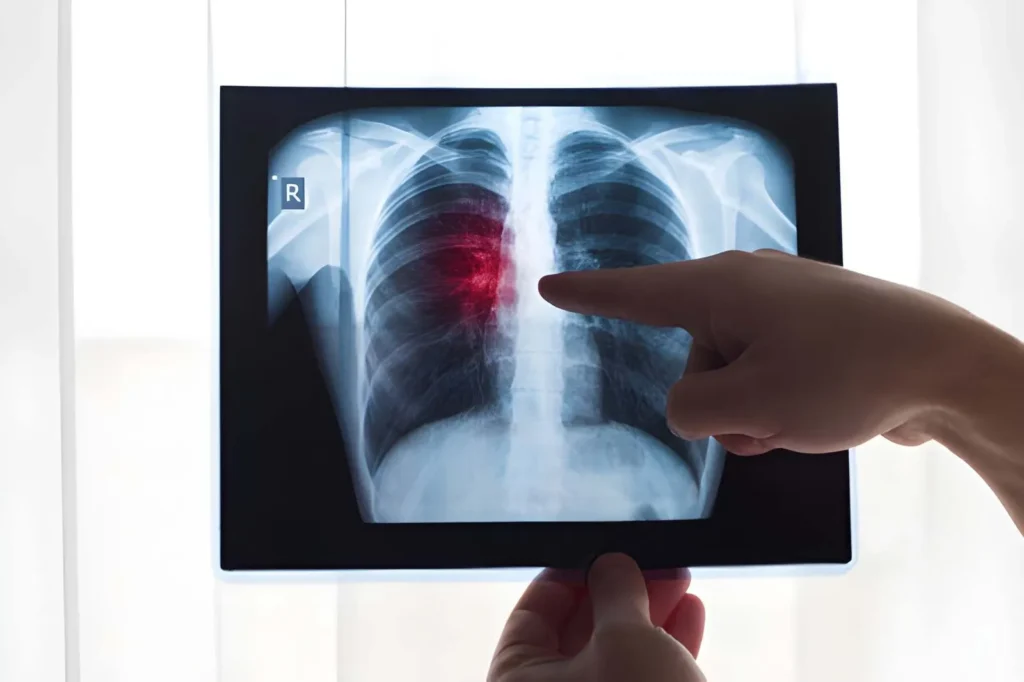
Another common scenario involves imaging that shows something concerning, but the information never reaches the patient. A radiologist interprets your chest X-ray and notes “a 2 cm nodule in the right upper lobe, recommend CT follow-up.” But your primary care doctor never tells you about this finding, and no follow-up CT is ever ordered. A year later, you have symptoms and get another scan that shows the nodule has grown to 5 cm and there’s evidence of metastasis.
That kind of failure to follow up on abnormal findings is a recognized form of malpractice. Once a test reveals something that needs further investigation, there’s a duty to make sure that investigation happens. When it falls through the cracks and a patient suffers harm as a result, that can be actionable.
Misreading imaging is another potential source of claims. If a radiologist looks at a CT scan that clearly shows a suspicious mass but interprets it as normal or benign, and cancer is later diagnosed after the tumor has grown, that misinterpretation might be negligence. These cases usually require another radiologist to review the original images and testify that the findings were obvious enough that they should have been caught.
Treatment errors can also give rise to malpractice claims, though these are less common in lung cancer cases. If a surgeon performing a lobectomy makes a serious error that goes beyond the recognized risks of the procedure, or if an oncologist prescribes a drug regimen that no competent specialist would use, causing serious harm, those could be malpractice.
The key in all these scenarios is proving that the error changed the outcome. Courts understand that cancer is a serious disease and that even perfect care doesn’t always lead to a good result. What malpractice law requires is showing that reasonable, timely care probably would have caught the cancer earlier, when treatment options were better and survival was more likely. You need medical experts who can explain what should have been done, when it should have been done, and how the delay affected your prognosis.
When Toxic Exposure Leads to a Lawsuit
If your lung cancer was caused by exposure to asbestos, radon, or other hazardous substances, your legal options are different. These cases fall under toxic tort law, product liability, or workers’ compensation, depending on where and how the exposure occurred.
Asbestos cases are the most common type of toxic exposure lung cancer lawsuit. Asbestos is a naturally occurring mineral that was widely used in construction, shipbuilding, manufacturing, and other industries throughout much of the 20th century. When asbestos fibers are disturbed, they become airborne and can be inhaled. Those fibers lodge in lung tissue and can cause cancer decades later.
Many occupations involved heavy asbestos exposure. Insulation workers, pipefitters, boilermakers, shipyard workers, construction workers, factory workers, auto mechanics (who worked with brake linings), and demolition workers were all at risk. If you worked in one of these fields and developed lung cancer years later, especially if you’re a nonsmoker or light smoker, asbestos exposure might be the cause.
Asbestos lawsuits are typically filed against the manufacturers of asbestos-containing products or the companies that exposed workers without proper safety equipment or warnings. Because asbestos disease often doesn’t appear until 20, 30, or even 40 years after exposure, many of the companies responsible have gone bankrupt. However, most established asbestos trust funds to compensate victims. There are dozens of these trusts with billions of dollars set aside for claims.
Radon cases are less common but still viable in some circumstances. If you lived or worked in a building with dangerously high radon levels, and the landlord or property owner knew or should have known about the problem but failed to test or remediate, you might have a claim. These cases require evidence that radon levels were actually tested and found to be elevated, or that there were obvious reasons to suspect a problem (like radon issues in neighboring buildings or geological surveys showing high-risk soil conditions).
Other industrial carcinogens can also support lawsuits. Diesel exhaust exposure is recognized as a lung cancer risk, particularly for truck drivers, railroad workers, and miners who spent years breathing in fumes in enclosed spaces. Arsenic exposure from certain types of mining or industrial work has been linked to lung cancer. Workers who handled certain metals, solvents, or chemicals without proper ventilation or protective gear may have viable claims.
These toxic exposure cases require proof of substantial exposure over time, scientific evidence linking the substance to lung cancer, and medical evidence that the exposure probably caused your specific cancer. They often involve industrial hygiene experts who can document the levels of exposure you faced, oncologists who can explain the medical causation, and sometimes epidemiologists who can discuss the statistical link between that exposure and cancer risk in populations.
For nonsmokers, the causation argument is usually stronger because there’s no competing explanation for the lung cancer. For smokers, the legal challenge is greater because defendants will argue that tobacco, not their product, caused the cancer. Many courts allow these cases to proceed but require careful analysis of how different risk factors contributed.
How New York’s Medical Malpractice Deadlines Work
New York has strict time limits for filing medical malpractice lawsuits, and these rules can make or break your case. Understanding them is crucial if you think a doctor’s error led to your lung cancer being diagnosed late.
The basic rule is found in New York’s Civil Practice Law and Rules (CPLR) Section 214-a. It says you must file a medical malpractice lawsuit within two and a half years of the act, omission, or failure you’re complaining about. So if your doctor failed to order a chest X-ray during an appointment on January 1, 2023, you would generally need to file a lawsuit by July 1, 2025.
But there’s an important exception called the continuous treatment doctrine. If you were receiving ongoing care for the same condition from the same provider, the two-and-a-half-year clock doesn’t start until that continuous treatment ends. This recognizes that patients often continue seeing the same doctor while a condition is being investigated or treated, and it wouldn’t be fair to start the clock while the relationship is ongoing.
Here’s where lung cancer cases get special treatment in New York. The state has a specific discovery rule for claims involving failure to diagnose cancer or a malignant tumor. This law is sometimes called Lavern’s Law, named after Lavern Wilkinson, a woman who died of lung cancer after a chest X-ray showing a suspicious mass was misread and she wasn’t informed of the findings.
Under Lavern’s Law, if your claim involves negligent failure to diagnose cancer, the two-and-a-half-year deadline runs from whichever is later: when you knew or reasonably should have known that the negligent act caused your injury, or the date of your last treatment where there was continuous treatment for that condition. However, there’s an outside limit of seven years from when the negligent act actually occurred.
What this means in practice is that you might discover a delayed cancer diagnosis well after the original error occurred, and you can still file a lawsuit. For example, if a radiologist misread your chest X-ray in 2020 and reported it as normal, but you were finally diagnosed with lung cancer in 2024 when a new scan was done, you would have two and a half years from 2024 to file, as long as that’s within seven years of the original misread scan.
This discovery rule only applies to cancer misdiagnosis cases. If your claim involves a treatment error during lung cancer care rather than a failure to diagnose, the regular two-and-a-half-year rule would apply.
One critical exception to be aware of: if the doctor or hospital you’re suing is a municipal or public entity, much shorter deadlines apply. You typically need to file a notice of claim within 90 days and then file the actual lawsuit within one year and 90 days. This was actually one of the issues in the Lavern Wilkinson case that led to the law being changed. If you received care at a city or county hospital, talk to a lawyer immediately because these deadlines move quickly.
The Special Rules for Toxic Exposure Claims
If your lung cancer is related to asbestos, radon, or another toxic substance exposure, different timing rules apply. New York has a specific statute, CPLR Section 214-c, that governs these latent toxic exposure cases.
The key principle is that the deadline doesn’t start when you were exposed to the substance. It starts when you discover the injury, or when you reasonably should have discovered it with due diligence. This makes sense because diseases like cancer from toxic exposure often don’t show up until decades after the exposure ended.
Under Section 214-c, you have three years from the date you discovered your injury to file a lawsuit. For most lung cancer cases, “discovery of injury” means the date you were diagnosed with lung cancer. So if you were diagnosed on March 1, 2025, you would generally have until March 1, 2028, to file.
There’s an additional wrinkle in the law. If you discover the toxic cause of your injury more than three years after discovering the injury itself, the statute allows a separate one-year period from when you discover the cause, under certain conditions. This rarely applies to lung cancer cases because if you’re diagnosed with lung cancer and have a history of asbestos or radon exposure, you’re usually aware of the potential connection fairly quickly. But it can matter in cases where the exposure source isn’t immediately obvious.
The definition of “exposure” under this law is broad. It includes inhalation (breathing in asbestos fibers or radon gas), absorption through the skin, ingestion, contact, implantation, or injection. For lung cancer cases, inhalation is almost always the relevant route of exposure.
These timing rules were created largely because of asbestos litigation. Workers who were exposed to asbestos in the 1960s and 1970s often didn’t develop lung cancer until the 2000s or later. Without a discovery rule, their claims would have been time-barred before they even knew they were sick.
But the same logic applies to other toxic substances. If you were exposed to high levels of radon in your home from 2000 to 2010 but weren’t diagnosed with lung cancer until 2024, the three-year clock starts in 2024, not back when the exposure occurred.
These cases can get complicated when exposure happened over many years, from multiple sources, or when the person also has other risk factors like a smoking history. Courts have to work through questions about when the plaintiff reasonably should have known their cancer was related to the toxic exposure, especially if they had other potential causes. This is where thorough documentation becomes important.
Workers’ Compensation and Occupational Lung Cancer
If your lung cancer resulted from exposure to hazardous substances at work, you might be dealing with both workers’ compensation and potential lawsuits against third parties.
New York’s workers’ compensation system covers occupational diseases, which are conditions that arise from the nature of your employment and are not just ordinary diseases of life. Long-term exposure to asbestos, silica dust, diesel exhaust, or other workplace carcinogens can be treated as an occupational disease. If your lung cancer is determined to be work-related, you’re entitled to workers’ compensation benefits without having to prove your employer was negligent.
Workers’ compensation provides medical benefits, wage replacement, and sometimes vocational rehabilitation. It’s a no-fault system, meaning you don’t need to show the employer did anything wrong. But there’s a tradeoff. In exchange for these guaranteed benefits, you generally cannot sue your employer in civil court for the same injury.
However, you may still be able to sue third parties. For example, if you developed lung cancer from asbestos exposure on the job, you typically can’t sue your employer, but you can sue the manufacturers of the asbestos products you were exposed to. Many asbestos lawsuits are brought by workers who are receiving or have received workers’ compensation benefits while also pursuing claims against product manufacturers.
Similarly, if you worked at a site owned by a different company, or if a contractor brought in hazardous materials that exposed you to cancer-causing substances, you might be able to sue that site owner or contractor even while receiving workers’ compensation.
The deadlines for workers’ compensation claims are different from personal injury lawsuits. For occupational disease, you generally need to file a claim within two years of becoming disabled or within two years of when you knew or should have known the disease was related to your employment. Given how long lung cancer can take to develop after toxic exposure, getting the timing right is important.
Many people who develop occupational lung cancer pursue both workers’ compensation benefits and third-party lawsuits. A workers’ compensation attorney and a personal injury attorney often work together on these cases to make sure all potential sources of compensation are pursued.
Proving Your Lung Cancer Case
Whether your case is based on medical malpractice or toxic exposure, winning requires specific types of proof. Understanding what you need to establish can help you decide whether pursuing a lawsuit makes sense.
For medical malpractice cases, you need expert testimony from doctors in the relevant specialty. A pulmonologist or oncologist who practices in New York must review your records and be willing to testify that the care you received fell below the accepted standard. They need to explain what a reasonably competent doctor would have done differently, and when.
You also need a causation opinion. The expert must explain how the delay or error in diagnosis affected your outcome. This often involves comparing the stage of cancer when it should have been diagnosed versus the stage when it actually was diagnosed. If earlier diagnosis would have meant surgery was possible, or that you had a significantly better chance of long-term survival, that supports your causation argument.
Medical records are crucial. You’ll need everything from the time period in question: office visit notes, test results, imaging reports, pathology reports, and communications between providers. Often, these records reveal the smoking gun, like a radiologist’s report noting a suspicious finding that was never followed up on.
Imaging studies themselves can be important evidence. In some cases, a new radiologist can review the original X-rays or CT scans and identify findings that should have prompted further investigation. Being able to show that a mass was visible on an earlier scan that was read as normal is powerful evidence of misdiagnosis.
For toxic exposure cases, the proof requirements are different but equally demanding. You need evidence of exposure. This can come from employment records showing where you worked and what your job duties were, testimony from coworkers about conditions at the worksite, industrial hygiene reports if any were done at the time, and sometimes historical research about the products used in your industry during the relevant time period.
An industrial hygienist might review your work history and provide an opinion about the level of asbestos or other carcinogens you were exposed to. This involves understanding not just where you worked but what specific tasks you performed, how ventilation systems were set up, whether you wore protective equipment, and how frequently you were exposed.
Medical causation is critical in toxic exposure cases. An oncologist needs to review your medical history, including any smoking history, and provide an opinion that the toxic exposure was a substantial contributing factor to your lung cancer. For nonsmokers with significant occupational exposure, this opinion is usually straightforward. For smokers, the analysis is more complex because both smoking and the toxic exposure can cause lung cancer, and courts need to understand how much each factor contributed.
Scientific literature linking the substance to lung cancer is part of the case. For well-established carcinogens like asbestos, there’s extensive published research. For other substances, the scientific evidence might be newer or less settled, which can make the case harder to prove.
Documentation of exposure becomes incredibly important in these cases. If you worked with asbestos, try to remember and document what products you used, what brands, what your specific job tasks were, and what job sites you worked at over the years. Employment records, union records, pay stubs, and even old photographs of job sites can help establish exposure.
Some people keep detailed records of their work history throughout their careers. If you have anything like that, it’s valuable. If not, a lawyer experienced in toxic tort cases will know how to investigate and reconstruct your work history through other means.
Deciding Whether to Pursue a Lung Cancer Lawsuit
Not every case of lung cancer that could have been caught earlier leads to a lawsuit, and not every occupational exposure case is worth pursuing. Here are the practical considerations that go into that decision.
Damages matter. Lung cancer cases, whether malpractice or toxic exposure, are expensive and complex to litigate. They require multiple medical experts, sometimes industrial hygiene experts, extensive document review, and often years of legal work. Because of the investment required, these cases typically only make sense when the damages are substantial.
What counts as substantial? Generally, cases where the delayed diagnosis led to a worse stage of cancer, the loss of curative treatment options, significantly shorter survival time, or the need for much more aggressive and debilitating treatment. Cases where the lung cancer has caused serious disability, the inability to work, major pain and suffering, or shortened life expectancy. Cases where the person is relatively young and has lost many years of life they otherwise would have had.
A technical error that didn’t really change the outcome usually isn’t pursued, even if it violated the standard of care. For example, if a nodule was missed on one scan but then caught three months later on the next routine scan, and the cancer was still at the same early stage and was successfully treated with surgery, the damages might not justify litigation even though missing the nodule was an error.
The strength of liability matters too. In malpractice cases, was the deviation from the standard of care clear and significant, or is it a closer call where reasonable doctors might disagree? In toxic exposure cases, is the evidence of exposure strong and well-documented, or is it mostly based on decades-old memories without supporting records?
The availability of insurance or assets matters practically. In malpractice cases, most doctors and hospitals carry substantial malpractice insurance, so if you win, there’s a source to pay the judgment. In toxic exposure cases, many asbestos manufacturers have gone bankrupt, but they’ve established trust funds that still pay valid claims. For other types of toxic exposure, you need to know whether the defendants have the resources to pay a judgment if you win.
Your own credibility and litigation history can matter. If you’ve filed multiple prior lawsuits, defendants will try to paint you as litigious. If you have a complex medical history with many other health problems, they’ll argue those other conditions explain your symptoms and damages. If there are inconsistencies in what you’ve told different doctors over the years, those will be highlighted. This doesn’t mean people with complicated histories can’t pursue cases, but it’s a factor lawyers consider when evaluating whether a case is likely to succeed.
Your personal situation matters too. Litigation is stressful and time-consuming, especially when you’re also dealing with cancer treatment. You’ll need to give depositions, provide extensive medical records and authorizations, and potentially testify at trial. For some people in the late stages of cancer, the legal process might not be something they have the energy for. Others feel strongly about holding someone accountable and find the process worthwhile despite the difficulty.
The statute of limitations creates a real deadline. Unlike some of the other factors that involve judgment calls, the deadline is absolute. If you’re outside the time limit, your case is over no matter how strong it would have been. That means if you’re thinking about whether to pursue a claim, talking to a lawyer sooner rather than later is important. Even if you’re not ready to file a lawsuit immediately, at least getting advice about whether you’re within the deadline preserves your options.
Keeping Track of Potential Exposure Evidence
If you think your lung cancer might be related to toxic exposure at work or elsewhere, gathering evidence while your memory is fresh can make a big difference later. Here are the types of information that help build these cases.
For workplace exposure, write down everywhere you worked, including the company names, dates of employment, your job titles, and specific tasks you performed. Be as detailed as possible about what you actually did day to day, especially tasks that involved dust, fumes, or chemicals.
Note any specific products you remember working with. For asbestos cases, details about insulation products, gaskets, pipe covering, floor tiles, or brake linings can be crucial. For other exposures, the names of chemicals, solvents, or industrial products you handled matters.
Describe the conditions where you worked. Was it indoors or outdoors? Was there ventilation? Did you wear protective equipment like respirators or masks, and how often? Were there visible dust or fumes in the air? These details help experts estimate your level of exposure.
Try to remember the names of supervisors, coworkers, or contractors who were present and who might be able to corroborate your account. Even if you’ve lost touch with these people, investigators can sometimes track them down.
Look for any documents you might have saved. Old pay stubs, W-2 forms, union cards, apprenticeship records, job-site photographs, or safety training certificates can all help document where you worked and when.
For environmental exposures like radon, documentation might include home inspection reports, radon testing results, or correspondence with landlords about concerns. If you lived or worked in a building where others also developed lung cancer, that pattern can be significant.
Keep copies of all your medical records, including pathology reports showing the type of lung cancer, imaging reports, and oncology notes discussing possible causes. If your oncologist noted your occupational history or made any connection between your work and your cancer, that’s important.
The more contemporaneous documentation you have, the stronger your case. Memories fade over decades, and people are naturally skeptical of claims based purely on someone’s recollection of events from 30 years ago. But if you have pay stubs showing you worked at a shipyard from 1975 to 1985, and historical records show that shipyard used asbestos extensively, your case is much stronger.
Find out whether a delayed diagnosis, medical error, or harmful exposure may give you grounds for a lung cancer lawsuit.
Summing It Up
Lung cancer lawsuits aren’t simple, and they’re not right for everyone. But if you’re dealing with a diagnosis that might have been caught sooner with proper medical care, or if your cancer appears to be linked to toxic exposures that were someone else’s responsibility, you deserve to understand your options.
The two main paths are medical malpractice claims for delayed or missed diagnosis, and toxic exposure claims for cancer caused by asbestos, radon, or workplace carcinogens. New York has specific timing rules for both types of cases, including special protections for cancer misdiagnosis claims under Lavern’s Law that give you more time to file than other malpractice cases.
What matters most is that delayed diagnosis led to a worse outcome, that the mistakes or negligence were clear departures from proper care or safety standards, that you can prove the connection between the error or exposure and your cancer, and that you’re still within the legal deadlines to file a claim.
These cases require expert testimony, detailed medical and employment records, and often years of litigation. They’re typically pursued when the damages are substantial, meaning the delay or exposure significantly worsened your prognosis, treatment, or quality of life.
If you’re wondering whether you have a case, gathering your medical records, writing down your work history and potential exposures, and talking to an attorney who handles lung cancer cases in New York is the right next step. The consultation will help you understand whether pursuing legal action makes sense for your specific situation.
Lung cancer is devastating on its own. If someone’s negligence or carelessness contributed to your diagnosis or made it worse, that’s something the law recognizes and provides remedies for. Understanding your rights doesn’t change the medical reality you’re facing, but it can provide some measure of justice and compensation for what you’ve been through. Reach out to the Porter Law Group for a free consultation, and know more about how you can recover the best compensation possible. Call 833-PORTER9 or email info@porterlawteam.com to get started.