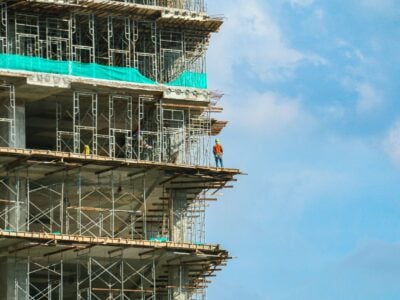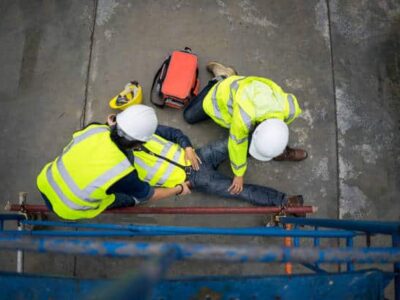


Fault is not simply a question of who was careless. In a construction accident context, it is a legal conclusion drawn from the specific duties imposed on each party at the site.
Under standard negligence principles, a plaintiff must prove four elements: that the defendant owed a duty of care, that the defendant breached that duty, that the breach caused the accident, and that the accident caused actual harm.
These are the same four elements that apply to a slip and fall, a car accident, or any other personal injury claim.
Construction cases, however, layer additional statutory obligations on top of common law negligence that can shift or even eliminate the need to prove certain elements of fault.
The practical takeaway is that in a construction accident, fault is rarely assigned to a single party. Property owners, general contractors, subcontractors, equipment manufacturers, and even the injured worker may each bear some share of responsibility.
Which parties bear liability, and how much, depends heavily on which laws apply to the specific facts of the accident.
Prior results do not guarantee a similar outcome.
What New York Laws Govern Fault on a Construction Site?
New York’s Labor Law contains three provisions that are central to almost every construction accident claim. Understanding what each one covers is essential to understanding how fault gets assigned.
Labor Law § 200 and the General Duty to Provide a Safe Workplace
Labor Law § 200 is the statute that codifies the general common law duty to maintain a reasonably safe work environment.
It applies to owners, contractors, and their agents, and it requires that workplaces be constructed, equipped, and operated in a way that provides reasonable protection to every person employed there.
To hold a property owner or general contractor liable under § 200, an injured worker must show that the defendant either created a dangerous condition or had actual or constructive notice of the hazard and failed to fix it.
Actual notice means the responsible party actually knew about the problem, for instance through prior complaints or documented inspections
Labor Law § 240(1) and the Scaffold Law
Labor Law § 240(1), commonly called the Scaffold Law, is one of the most powerful worker-protection statutes in the country.
It requires that owners and general contractors provide, erect, or cause to be erected scaffolding, ladders, hoists, ropes, and similar safety devices that are properly constructed and placed so as to give adequate protection to workers performing elevation-related tasks.
The statute applies to work involving the erection, demolition, repairing, altering, painting, cleaning, or pointing of a building or structure.
What makes § 240(1) unusual is that courts have interpreted it as imposing a nondelegable duty and, in qualifying cases, a form of strict liability.
Labor Law § 241(6) and Specific Safety Regulations
Labor Law § 241(6) requires that all areas where construction, excavation, or demolition work is being performed be guarded, equipped, and operated so as to provide reasonable and adequate protection to workers and others lawfully present at the site.
The statute incorporates specific provisions from the New York Industrial Code, and a violation of one of those provisions can establish a § 241(6) claim without requiring the plaintiff to prove ordinary negligence in the traditional sense.
Unlike § 240(1), which applies specifically to gravity-related hazards, § 241(6) covers a broader range of construction site conditions: walkway obstructions, unguarded floor openings, improper lighting, and more.
Who Can Be Held Responsible for a Construction Accident?
Multiple parties on a construction site can bear legal responsibility for the same accident, and liability is often shared across several defendants simultaneously.
| Potentially Responsible Party | Legal Basis | Common Scenarios |
| Property owner | Labor Law §§ 200, 240, 241 | Unsafe site conditions, missing fall protection |
| General contractor | Labor Law §§ 200, 240, 241 | Site safety failures, inadequate coordination |
| Subcontractor | Negligence; Labor Law §§ 200, 241 if acting as agent | Creating specific hazards (debris, faulty scaffolding) |
| Equipment manufacturer | Product liability | Defective tools, harnesses, safety devices |
| Injured worker | Comparative negligence | Ignoring warnings, misusing equipment |
Property owners and general contractors carry the heaviest statutory exposure because Labor Law §§ 240 and 241 impose nondelegable duties on them directly.
A subcontractor may also be liable if its workers created or contributed to a hazard that injured someone else at the site.
Equipment manufacturers can face product liability claims when a tool or safety device fails under normal use conditions.
Under New York’s pure comparative negligence rule, codified in CPLR § 1411, a worker’s own partial negligence reduces the damages recovery but does not eliminate it entirely.
There is one significant carve-out in the statute: owners of one- and two-family homes who do not direct or control the work are generally exempt from liability under Labor Law §§ 240 and 241.
This exception comes up regularly in residential construction cases and can significantly affect a worker’s ability to recover.
How Do Investigators and Attorneys Actually Determine Fault?
Determining fault in a construction accident is an investigative process that combines evidence gathering, legal analysis, and expert testimony. It typically follows a structured sequence.
The first step is identifying every party that owed a legal duty at the worksite.
The second step is identifying which safety rules applied to the specific work being performed at the time of the accident.
The third step is gathering evidence. In construction accident cases, the most important evidence typically includes:
- Photographs and video of the accident scene, equipment, and any missing or damaged safety devices
- Witness statements from co-workers, supervisors, and safety officers present at the site
- OSHA investigation findings and citations issued following the accident
- Safety logs, toolbox talk records, and prior incident reports showing whether the hazard was known
- Medical records and expert testimony linking the accident directly to the injuries sustained
The fourth step is comparing the actual site conditions and conduct against the applicable legal standards.
For a § 200 claim, that analysis focuses on whether the responsible party knew or should have known about the dangerous condition and failed to address it.
For a § 240(1) claim, the analysis asks whether the proper elevation safety devices were provided and properly arranged for the specific task being performed.
For a § 241(6) claim, the analysis identifies whether a specific Industrial Code provision was violated and whether that violation caused the accident.
How Does Your Own Conduct Affect a Fault Determination?
New York’s comparative negligence system means that a worker’s own actions at the time of the accident are always part of the fault analysis.
If an injured worker ignored posted safety warnings, disabled a guard on a piece of equipment, or misused a ladder against explicit instructions, a court or insurance adjuster may assign a percentage of fault to that worker.
Under CPLR § 1411, that percentage is then subtracted from the total damages award. A jury that awards $500,000 and finds the worker 25% at fault would reduce the net recovery to $375,000.
The critical nuance is that Labor Law § 240(1) treats comparative fault differently from most other personal injury claims. Courts have held that where a § 240(1) violation is the proximate cause of a gravity-related injury, the injured worker’s own negligence does not bar or eliminate the owner and contractor’s liability.
This does not mean a worker’s conduct is entirely irrelevant under § 240(1), but it does mean the strict liability framework provides significantly stronger protection than ordinary negligence principles would.
For § 200 and § 241(6) claims, standard comparative negligence applies, and the worker’s conduct can meaningfully reduce the recovery.
What Are Common Construction Accident Scenarios and How Is Fault Assigned?
Fault analysis plays out differently depending on the type of accident. The following scenarios illustrate how the statutes interact with real conditions on a construction site.
Falls From Improperly Secured Ladders or Scaffolds
When a worker falls because a ladder was not properly secured, a scaffold was not adequately planked, or a fall arrest system was absent, Labor Law § 240(1) is typically the primary theory of liability. The owner and general contractor are strictly liable if the inadequate protection was the proximate cause of the fall.
Trip and Fall Over Debris or Cluttered Walkways
Accidents caused by construction debris, scattered materials, or obstructed walkways typically fall under Labor Law § 200 and § 241(6). Under § 200, the question is whether the general contractor or responsible subcontractor had notice of the hazard and failed to address it. Under § 241(6), the question is whether a specific Industrial Code provision governing walkway maintenance or housekeeping was violated.
Falls Into Unguarded Floor Openings or Elevator Shafts
Unguarded openings in floors, stairways, or elevator shafts are among the most dangerous conditions on any construction site. Labor Law § 241 requires that shafts and openings used for hoisting materials be guarded with barriers of suitable height. When those guards are missing or inadequate, the owner and contractor face direct exposure under the statute. OSHA guarding requirements provide an additional benchmark for establishing the standard of care.
Injuries Caused by Defective Tools or Safety Equipment
When a power tool malfunctions, a safety harness tears, or a piece of rigging fails because it was defectively manufactured, the analysis shifts to product liability. The manufacturer may be strictly liable for placing a defective product into commerce, regardless of whether the contractor who supplied the tool was negligent. If the failed equipment was also a safety device specifically required under § 240(1) or § 241(6), the owner and contractor may face concurrent statutory exposure in addition to the product liability claim against the manufacturer.
What Should You Do After a Construction Accident?
The steps taken immediately after a construction accident affect both your health and your ability to pursue a legal claim. Acting quickly matters because evidence at a construction site can disappear fast, witnesses disperse, and OSHA investigations are time-limited.
Contact a personal injury attorney who handles construction accident cases. New York’s Labor Law statutes are complex and fact-specific. The applicable theories of liability, and the defendants who can be sued, are not always obvious without a thorough legal and factual analysis.
Seek medical attention immediately, even if the injury seems minor at the scene. Some serious injuries, including traumatic brain injuries and internal damage, may not produce obvious symptoms right away.
Report the accident to your supervisor or site foreman as soon as possible. Many construction employers and contractors are required to document workplace injuries, and this report becomes part of the official record.
Document the scene if you are physically able. Photographs of the area, the equipment involved, missing safety devices, and any visible hazards are among the most valuable pieces of evidence in a construction accident case.
Get the names and contact information of any witnesses, including co-workers, other subcontractors on site, or delivery personnel who were present.
Do not sign any documents from an employer, insurer, or contractor before speaking with an attorney. Releases and recorded statements can be used to limit or eliminate your legal options.
Get trusted legal guidance and a free case evaluation today.
Summing It Up
Fault in a construction accident is not a single question with a simple answer. It is a legal analysis that runs through New York’s Labor Law provisions, OSHA safety standards, common law negligence principles, and the specific facts of what happened on the day of the accident.
Property owners and general contractors carry the heaviest liability exposure under the Scaffold Law and related statutes, but subcontractors and equipment manufacturers can be drawn into the case depending on the circumstances.
A worker’s own partial fault reduces compensation under New York’s comparative negligence framework but does not eliminate it, and in strictly covered § 240(1) cases, the worker’s negligence often has no effect on the owner and contractor’s liability at all.
If you or someone you know was injured on a construction site, the specifics of your situation determine which legal theories apply and who can be held responsible. The attorneys at Porter Law Group represent injured workers in New York construction accident cases and can evaluate your claim in detail. Contact us today to schedule a consultation.
Frequently Asked Questions
Who is responsible for a construction accident in New York?
Responsibility for a construction accident in New York typically falls on the property owner, the general contractor, or both, depending on the circumstances. Under New York Labor Law §§ 200, 240, and 241, owners and general contractors have nondelegable duties to maintain safe working conditions and provide adequate fall protection. Subcontractors may also share liability if their workers created the hazardous condition, and equipment manufacturers can be held responsible under product liability principles when a defective tool or safety device caused the injury. New York’s comparative negligence rules under CPLR § 1411 allow fault to be distributed among multiple parties simultaneously, so more than one defendant may be legally responsible for the same accident.
Can I sue my employer after a construction accident?
In most cases, no. Workers’ compensation is generally the exclusive remedy against a direct employer for injuries sustained on the job. However, a construction worker who is injured can often sue the property owner, the general contractor, and potentially other third parties, even if those parties are not the direct employer. This is one of the key features of New York’s Labor Law framework: the statutes impose liability on owners and contractors who may have had little direct involvement in the specific task being performed.
How does the Scaffold Law work in New York?
New York Labor Law § 240(1), known as the Scaffold Law, requires property owners and general contractors to provide properly constructed and placed scaffolding, ladders, and other elevation safety devices for workers performing construction, demolition, repair, and related tasks. If the absence or inadequacy of required safety equipment is the proximate cause of a gravity-related injury, the owner and general contractor can be held strictly liable, meaning fault is established without having to prove they acted carelessly in the traditional negligence sense.
How long do I have to file a lawsuit after a construction accident?
For most construction accidents involving private property owners, the statute of limitations is three years from the date of the accident under CPLR § 214. If the property is owned by a government entity, municipality, or public authority, a Notice of Claim must typically be filed within 90 days of the accident before any lawsuit can be initiated. Missing the Notice of Claim deadline can permanently bar the claim regardless of how much time remains in the general limitations period.
What if I was partly at fault for my own construction accident?
For construction injury claims, New York follows a pure comparative negligence rule under CPLR 1411(a), which means an injured worker can recover damages even if they were partially or significantly at fault. The total compensation award is reduced by the worker’s percentage of fault. This is one of the most practically significant differences between a § 240(1) claim and a standard negligence claim.
What evidence is most important after a construction accident?
The most valuable evidence in a construction accident case includes photographs and video of the accident scene taken before conditions change, witness statements from anyone present at the time, OSHA inspection reports and any citations issued following the incident, safety logs and toolbox talk records that show what precautions were taken or ignored, prior complaints or incident reports that demonstrate notice of the hazardous condition, and medical records documenting the injuries and their cause. Accident scenes on construction sites are often altered or cleaned up quickly, which is one of the main reasons it is important to document conditions as soon as possible and to contact an attorney early so that formal preservation requests can be sent to the responsible parties.
Does OSHA play a role in a construction accident lawsuit?
OSHA does not directly give injured workers a private right to sue their employer, but OSHA standards and investigation findings play an important role in construction accident litigation. An OSHA citation following an accident is strong evidence that the site failed to meet a recognized safety standard, which supports the claim that someone owed a duty and breached it.
Can I recover compensation for both workers’ comp and a personal injury lawsuit?
Yes, but with an important offset. A worker who is injured on the job can receive workers’ compensation benefits from the employer’s insurer and also pursue a personal injury lawsuit against a third party, such as the property owner or general contractor, under New York’s Labor Law. Workers’ compensation covers medical expenses and a portion of lost wages regardless of fault. A personal injury lawsuit against a third party can recover pain and suffering and full economic losses. However, the workers’ compensation carrier has a lien against any third-party lawsuit recovery and must be reimbursed out of the settlement or judgment for the benefits it paid.
What is the difference between Labor Law § 240 and § 241 claims?
Labor Law § 240(1) specifically covers gravity-related hazards, including worker falls from height and injuries caused by falling objects, in work involving the construction, demolition, repair, or alteration of a building or structure. Section 241(6) is broader and applies to all areas of a construction site where construction, excavation, or demolition is occurring. A § 241(6) claim requires that a specific, concrete provision of the New York Industrial Code was violated, while § 240(1) liability can attach without pointing to a specific regulatory provision, as long as the safety devices were inadequate for an elevation-related task. Both statutes impose liability on property owners and general contractors, not just employers, and both can apply to the same accident when the facts support it.
Should I give a recorded statement to the insurance company after a construction accident?
No, not without legal advice first. Insurance adjusters for the property owner, general contractor, or employer may contact an injured worker shortly after the accident and request a recorded statement. These statements can be used to limit or undermine a legal claim later. An injured worker has no obligation to give a recorded statement to the opposing party’s insurer, and doing so before understanding the full scope of the legal claim can significantly harm the case. Before speaking to any insurance company beyond your own workers’ compensation carrier, consult an attorney who handles construction accident cases.
This article is intended for general informational purposes and does not constitute legal advice. Construction accident cases are highly fact-specific and depend on the statutes and circumstances applicable to your situation. Prior results do not guarantee a similar outcome.
Authored by Michael S. Porter, J.D., co-founder of Porter Law Group.