
The World Health Organization and U.S. public health agencies recognize asbestos as a known human carcinogen with no safe level of exposure. New York has detailed rules governing surveys, licensing, containment, and air monitoring on asbestos projects, and federal OSHA and EPA rules set workplace exposure limits and work-practice standards.
But older buildings and industrial sites throughout the state mean construction workers, tradespeople, maintenance staff, and emergency responders continue to face real exposure risk right now.
When those materials are cut, drilled, sanded, or broken, they release microscopic fibers that can be inhaled and cause serious disease years or decades later.
If you or a family member has been diagnosed with cancer or another asbestos-related disease, an attorney can help you understand your options.
Prior results do not guarantee a similar outcome.
What Diseases Does Asbestos Exposure Cause?
Mesothelioma, a rare cancer of the tissue lining the lungs, chest cavity, abdomen, or other organs, for which asbestos is the principal cause of most cases. Symptoms often don’t emerge until 30 to 40 years after exposure.
Lung cancer, with risk that rises substantially when combined with smoking; the two together create a risk far greater than either exposure alone. Quitting smoking doesn’t erase past asbestos exposure, but it’s one of the most significant steps an exposed worker can take to reduce future lung cancer risk.
Asbestosis, permanent scarring (fibrosis) of lung tissue from inhaling asbestos fibers, generally associated with heavy exposure over an extended period, causing shortness of breath, chronic cough, and potentially respiratory failure.
Pleural disease, including pleural thickening, plaques, and fluid buildup around the lungs, which can affect breathing and may itself be evidence of past exposure.
Laryngeal and ovarian cancer, which federal health authorities have also identified as caused by asbestos exposure, along with suggested links to cancers of the pharynx, stomach, and colorectum.
A long delay between a job and a diagnosis doesn’t rule out occupational exposure; it’s a well-documented feature of asbestos-related disease, not an exception to it.
Who Faces Ongoing Exposure Risk in New York?
Exposure isn’t limited to workers with “asbestos” in their job title. Occupations with documented exposure risk include:
Asbestos abatement workers, construction and demolition crews, and renovation contractors
Insulators, pipefitters, plumbers, steamfitters, and boiler workers
Electricians and HVAC technicians working in older buildings
Shipyard, marine-repair, and Navy-related workers
Power plant, refinery, and industrial maintenance workers
Mechanics performing brake and clutch work with older friction materials
Roofers, flooring installers, and workers handling old tile, mastic, roofing, or siding
Custodians, maintenance staff, and school facilities personnel
Firefighters and emergency personnel entering older or damaged buildings
Waste handling, cleanup, remediation, and disaster-recovery workers
9/11 rescue, recovery, cleanup, and restoration workers (see the dedicated section below)
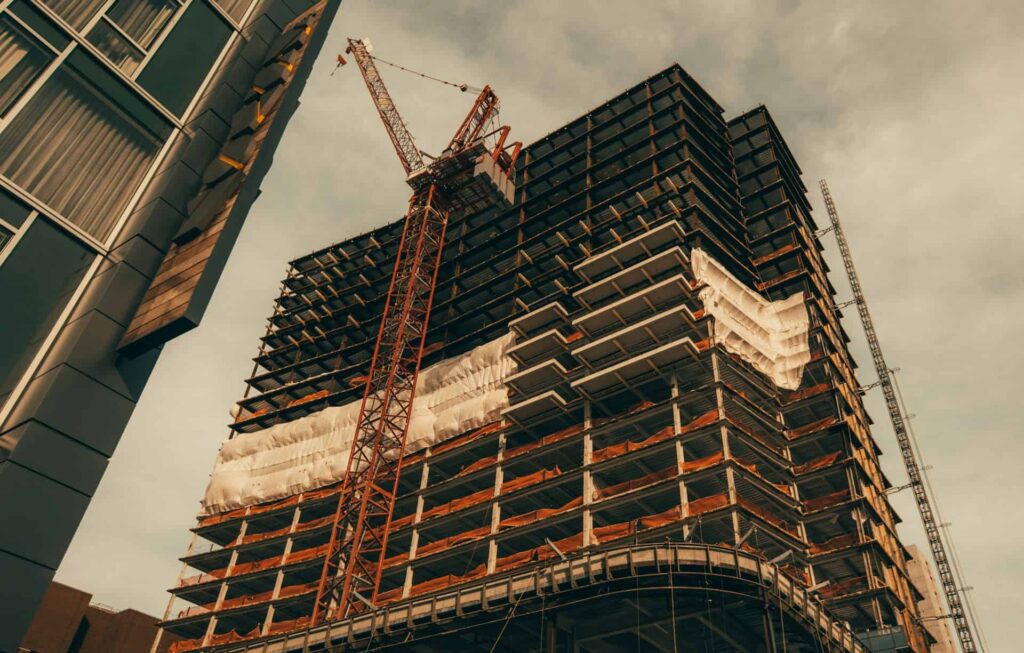
New York’s older building stock, including schools, public buildings, and legacy industrial sites like power plants, refineries, paper mills, and shipyards, means construction and maintenance workers will likely keep encountering this material for years to come.
New York’s Asbestos Workplace Rules
New York regulates asbestos work in detail through Industrial Code Rule 56, codified at 12 NYCRR Part 56, administered by the state Department of Labor’s Asbestos Control Bureau.
The basic principle: before significant demolition, renovation, remodeling, or repair work can disturb suspect material, New York generally requires the building owner or owner’s agent to have a proper asbestos survey performed by a licensed contractor using certified inspectors.
Key pieces of the framework:
Pre-work surveys. Under 12 NYCRR § 56-5.1, an asbestos survey is generally required before demolition, renovation, remodeling, or repair, to determine whether the area contains asbestos-containing or presumed asbestos-containing material.
Importantly, if a structure is certified unsound or slated for contracted demolition and no survey is performed, the rule generally requires treating the structure as if it contains asbestos unless it’s adequately certified free of it.
Contractor licensing and worker certification. Under 12 NYCRR § 56-3.1, businesses performing asbestos abatement work, including contractors, project designers, project monitors, and inspectors, must hold the required license, and workers must receive task-appropriate approved training and certification before doing the work.
Containment and engineering controls. New York requires negative-air-pressure ventilation on most asbestos abatement projects (subject to listed exceptions) under 12 NYCRR § 56-7.8, along with decontamination systems and regulated work-area enclosures, to prevent fibers from migrating out of the work area.
Air monitoring and a hard stop-work trigger. For larger projects, New York requires daily air sampling for the full work shift, with at least five samples in specified locations. If sampling outside the regulated work area shows airborne fiber concentrations at or above 0.01 fibers per cubic centimeter, or above established background levels, whichever is greater, work must stop immediately for inspection, barrier and negative-air repair, and cleanup before resuming.
Notice to building occupants. For certain larger asbestos projects, New York requires written notice to residential and business occupants at least 10 calendar days before work begins (or at least 3 days if the contract is signed less than 10 days before work starts), a reminder that asbestos work can affect people well beyond the abatement crew itself.
None of this eliminates the underlying hazard on its own. Watch for red flags suggesting these rules aren’t being followed.
Federal Exposure Limits and the 2024 Chrysotile Rule
Federal OSHA sets a permissible exposure limit of 0.1 fibers per cubic centimeter (f/cc) as an 8-hour time-weighted average, with a short-term limit of 1.0 f/cc over 30 minutes.
OSHA’s asbestos standards also generally require exposure monitoring, engineering controls, respiratory protection where necessary, protective clothing and decontamination procedures, training before initial assignment and at least annually, and medical surveillance in covered circumstances.
In March 2024, the EPA finalized a rule under the Toxic Substances Control Act addressing chrysotile asbestos, the only form still imported and used in the U.S. at the time.
The rule immediately banned importing chrysotile for chlor-alkali use, phased out most asbestos-containing sheet gaskets over two years, and prohibited asbestos in oilfield brake blocks, aftermarket automotive brakes and linings, and certain other friction and gasket products within six months.
This is a meaningful step, but it doesn’t make asbestos disappear from New York’s existing buildings, industrial equipment, schools, or infrastructure.
For most workers, the ongoing hazard is legacy asbestos disturbed during repair, maintenance, renovation, or demolition, exactly the scenario New York’s own Rule 56 is built to address.
The World Trade Center Exception
New York has a uniquely large population of workers with a documented, extraordinary asbestos and mixed-dust exposure event: the September 11, 2001 attacks. Firefighters, police officers, EMS personnel, and cleanup and recovery workers at the World Trade Center site were exposed to dust containing asbestos and numerous other toxins, and many are still being diagnosed with related diseases today.
The federal WTC Health Program provides medical monitoring and treatment for certified WTC-related conditions, and its covered cancer categories include mesothelioma along with lung and bronchus, digestive-system, blood and lymphoid, skin, urinary, ovarian, and thyroid cancers, among others. The program applies minimum latency periods before a cancer can be certified as WTC-related:
Cancer category | Minimum latency required |
|---|---|
Blood cancer | About 5 months (146 days) |
Childhood cancer | 1 year |
Thyroid cancer | 2.5 years |
Other covered solid cancers | 4 years |
Mesothelioma | 11 years |
Certification is an official determination that a specific condition meets WTC-related criteria; it isn’t a general assumption that every health condition after 9/11 automatically qualifies.
What Legal Options Do Exposed Workers Have?
Workers diagnosed with mesothelioma, lung cancer, asbestosis, or another asbestos-related disease generally have more than one potential path, and they don’t have to choose only one.
Workers’ compensation is generally your exclusive remedy against your own employer for a workplace injury or illness, which is why most civil lawsuits target other responsible parties instead, such as product manufacturers, property owners who knew or should have known about a hazard, or contractors responsible for abatement work.
New York’s Workers’ Compensation Law recognizes that occupational diseases can take decades to appear: under Workers’ Compensation Law § 28, a claim involving disablement from an occupational disease, including latent lung changes and malignancies from occupational exposure, generally isn’t barred just because it wasn’t filed within the standard two-year period, so long as it’s filed within two years of disablement and after the worker knew or should have known the disease was related to their work.
Civil claims against manufacturers, property owners, or contractors run on a different, but similarly discovery-based, clock. Under CPLR 214-c, a personal injury claim caused by the latent effects of exposure to a substance generally has a three-year filing period that runs from when the injury was discovered, or reasonably should have been discovered, rather than from the original exposure decades earlier.
Bankruptcy trusts are a major, separate compensation source. Many of the largest historical asbestos product manufacturers went bankrupt because of the sheer volume of claims against them, and many of those bankruptcies created trust funds specifically to compensate people injured by their products.
If a manufacturer whose products you worked with went through this process, a trust claim may be available separately from, and in addition to, a lawsuit against any still-solvent defendants.
Wrongful death. If a worker died from an asbestos-related disease, EPTL 5-4.1 generally requires the decedent’s personal representative to file within two years of the date of death.
What Evidence Matters in an Asbestos Case?
Detailed work history, including every employer, job site, and role, since exposure often came from multiple sources over a career
Product and material identification, meaning which specific asbestos-containing products or materials you worked with or around, since this determines which manufacturers and bankruptcy trusts may be involved
Co-worker and witness accounts, since former colleagues can often confirm specific products, brands, and working conditions that documentary records no longer capture
Medical records, including imaging, biopsy or pathology results, and treatment records confirming your specific diagnosis
A documented occupational and exposure history from your treating physician, since many doctors don’t routinely ask about decades-old job history
For household exposure, details about the worker’s job, employment dates, the types of asbestos materials involved, and how the family member came into contact with contaminated clothing or the worker directly
Frequently Asked Questions
I was exposed decades ago and the company I worked for no longer exists. Do I still have a claim?
Often yes. Many claims are filed against product manufacturers rather than employers, and if a manufacturer went bankrupt, its bankruptcy trust may still be available to compensate claims even though the company no longer operates. An attorney can help identify which manufacturers and trusts connect to your specific work history.
What’s the difference between the workers’ compensation deadline and the civil lawsuit deadline?
They’re separate systems with separate discovery-based rules. Workers’ Compensation Law § 28 governs claims against your own employer and generally runs from disablement and your awareness that the disease relates to your work. CPLR 214-c governs civil claims against manufacturers, property owners, or contractors and generally runs from when the injury was discovered or reasonably should have been discovered. Both can apply to the same diagnosis, on different timelines.
My spouse worked around asbestos, but I never did. Can I still have a claim if I developed mesothelioma?
Yes. Secondary household exposure, from fibers carried home on clothing, hair, or tools, is a well-documented and legally recognized basis for a claim, even though you never worked with asbestos directly.
I worked at Ground Zero after 9/11. Should I pursue the WTC Health Program, a lawsuit, or both?
Potentially both, since they’re different systems addressing different things. The WTC Health Program provides certified medical monitoring and treatment and has its own latency and eligibility rules. A separate legal claim may still be available depending on your broader occupational history and diagnosis. An attorney can help you understand how the two interact in your specific situation.
How soon should I talk to an attorney after a diagnosis?
As soon as possible. While New York’s discovery-based rules generally protect claims involving decades-old exposure, building a detailed work history, identifying the specific products and parties involved, and locating co-workers who can corroborate your account all take time, and that evidence becomes harder to gather the longer you wait.
If You’ve Been Diagnosed With an Asbestos-Related Disease
Asbestos hasn’t gone away in New York; it’s still present in the state’s older buildings, schools, and industrial sites, and it remains a real risk whenever that legacy material is disturbed.
Porter Law Group represents workers and families throughout New York affected by occupational toxic exposure, including asbestos-related disease. If you or a loved one has been diagnosed with an asbestos-related disease, call 833-PORTER9, email info@porterlawteam.com, or reach us through our contact page for a free, confidential consultation.
This article is for informational and educational purposes only. It is not a substitute for medical advice from a qualified healthcare provider or legal advice based on your specific circumstances.
Prior results do not guarantee a similar outcome.