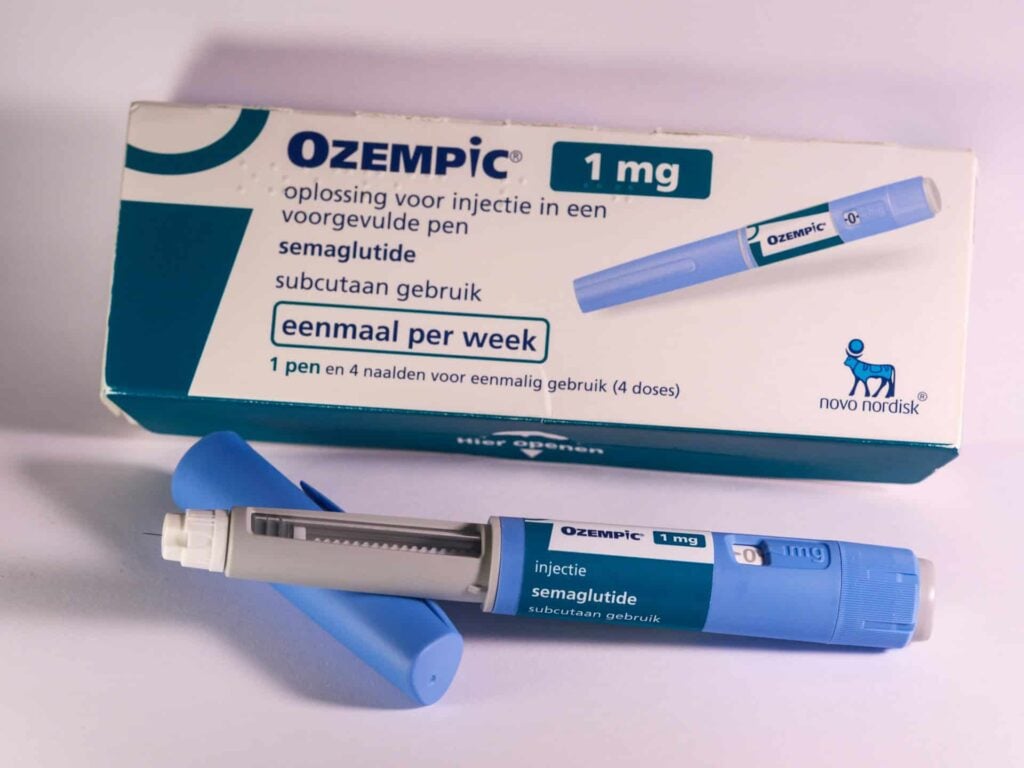

If you noticed sudden vision changes after starting Ozempic or Wegovy, you’re asking the right question by looking into whether the medication is connected.
Researchers have identified a rare eye condition called NAION that’s been linked to semaglutide, and while the science is still developing, that doesn’t mean your situation doesn’t matter or that a claim is out of reach.
It means the details, your specific diagnosis, timing, and medical history, are what actually determine where you stand, and that’s worth sorting out with real information rather than guessing.
What Is NAION, and Could Something Else Explain Your Vision Loss
NAION, non-arteritic anterior ischemic optic neuropathy, happens when blood flow to the optic nerve is suddenly cut off. Because the optic nerve can’t regenerate, the resulting vision loss, typically sudden, painless, and in one eye, is usually permanent.
Risk factors include type 2 diabetes, obesity, high blood pressure, high cholesterol, sleep apnea, cardiovascular disease, older age, and certain optic nerve anatomy, the same factors common among people prescribed semaglutide in the first place.
Both FDA labels document diabetic retinopathy complications, a different condition entirely, at real, measured rates: in an Ozempic cardiovascular trial, retinopathy complications occurred in 3.0% of treated patients versus 1.8% on placebo.
In a Wegovy weight-management trial involving patients with type 2 diabetes, retinal disorders appeared in up to 6.9% of the treatment group versus 4.2% on placebo, most tied to diabetic retinopathy rather than NAION.
A diagnosis of “vision loss” by itself doesn’t tell you which condition you’re dealing with, and confirming which one applies is the first real step, both medically and legally.
What Does the Current Research Actually Show
This is where an honest answer requires some nuance the headlines usually skip.
Study | Population | Finding |
|---|---|---|
16,827 patients, single specialty clinic | Hazard ratio 4.28 (diabetes) and 7.64 (weight loss) | |
424,152 people with type 2 diabetes | Roughly doubled five-year NAION risk | |
Multicenter database study, 2025 | 14 databases, larger population | Smaller association than the original single-center study |
Veterans starting semaglutide vs. SGLT2 inhibitors | 123 vs. 67 cases per 100,000 person-years; adjusted hazard ratio 2.33 | |
Over 3 million patients across 16 studies | Pooled hazard ratio 1.85, but only 4 of 8 observational studies found significant risk, 4 didn’t, and 1 suggested a protective effect |
Researchers point to “confounding by indication” as a likely factor: people prescribed semaglutide often have more severe diabetes, obesity, and cardiovascular disease to begin with, all of which independently raise NAION risk regardless of the drug.
It’s also worth separating relative risk from absolute risk. A hazard ratio of 4 sounds alarming, but European and WHO regulators classify NAION as very rare even among semaglutide users, potentially affecting up to 1 in 10,000 people.
The elevated relative risk is real in several studies, but the actual number of people affected remains small, which is important context, not a reason to dismiss what happened to you if you’re one of them.
How Have Regulators Responded Around the World
Regulator | Action Taken |
|---|---|
U.S. FDA | As of mid-2026, no NAION-specific warning on Ozempic or Wegovy labels. Current labels warn about vision changes and diabetic retinopathy complications generally, not NAION by name |
Concluded in June 2025 that NAION is a “very rare” adverse effect and recommended a label update for Ozempic, Wegovy, and Rybelsus | |
Issued a June 2025 safety alert and stated that confirmed NAION warrants stopping semaglutide treatment | |
Updated its product information in February 2026, warning that semaglutide may very rarely be associated with NAION |
The U.S. label gap, standing alongside EMA, WHO, and now MHRA action based on largely the same research, is central to the failure-to-warn theory driving current litigation.
What Legal Theories Could Apply
Theory | Core Allegation |
|---|---|
Failure to warn | The manufacturer knew or should have known of the risk and didn’t adequately warn patients or doctors |
Design defect | The product’s risks outweighed its benefits, or a safer alternative existed |
Negligence | The manufacturer fell short in testing, monitoring, or reporting safety signals |
Breach of warranty | The product didn’t match express or implied representations made about it |
A prescribing clinician was negligent in prescribing, monitoring, or responding to reported symptoms |
FDA approval doesn’t automatically defeat a product liability claim, but federal labeling law and preemption arguments can add real complexity to prescription drug litigation.
An adverse event by itself doesn’t automatically mean a viable lawsuit exists, but it’s also not a reason to assume you don’t have one.
How Have the Lawsuits Been Organized
In December 2025, the Judicial Panel on Multidistrict Litigation created MDL No. 3163, covering NAION claims involving Ozempic, Wegovy, Saxenda, and Trulicity, in the U.S. District Court for the Eastern District of Pennsylvania, separate from the broader gastrointestinal-injury MDL already underway.
The complaints generally assert failure-to-warn, design-defect, and warranty claims. The MDL’s existence doesn’t mean liability has been established, it means related pretrial proceedings have been centralized for efficiency.
What Would You Need to Build a Claim
Proof of the medication, prescription and pharmacy records, dose, and dose-escalation history
Medical proof of a confirmed NAION diagnosis, including ophthalmology imaging and examination records, not just a general report of vision loss
A clear timeline connecting your first dose or a dose change to symptom onset and diagnosis
Documentation of preexisting eye conditions, like diabetic retinopathy or glaucoma, that could point to a different cause
Review of competing risk factors, including diabetes control, blood pressure, sleep apnea, and cardiovascular history
The exact label and warnings in effect when you were prescribed the medication
Expert opinions, typically from an ophthalmologist or neuro-ophthalmologist, for diagnosis and causation
Documentation of damages, medical costs, lost wages, and the impact on daily life
What Should You Do If You Notice Vision Changes on Semaglutide
Treat sudden vision changes as a medical emergency and see an ophthalmologist the same day if possible
Tell the eye doctor you’re taking a GLP-1 medication and bring your medication list
Discuss with your prescriber and ophthalmologist whether to stop the medication if NAION is confirmed, the WHO specifically recommends discontinuing if that diagnosis is confirmed
Document your symptoms, timeline, and how the injury has affected your work and daily life
Don’t stop a prescribed medication on your own without medical guidance
How Long Do You Have to File a Claim in New York
Deadline | Applies To | Rule |
|---|---|---|
3 years from injury | Product liability where the injury was reasonably apparent | CPLR § 214(5) |
3 years from discovery | Latent injury where the connection wasn’t reasonably knowable at diagnosis | |
2.5 years | A separate claim against a prescribing clinician | CPLR § 214-a |
Whether CPLR § 214-c’s discovery rule applies to your specific situation is fact-specific, and a claim against the manufacturer runs on a different timeline than a claim against your doctor. It’s worth having an attorney confirm your actual deadline rather than assuming one.
Summing It Up
Porter Law Group represents New York clients in product liability and defective prescription drug cases.
If you experienced a confirmed NAION diagnosis after starting Ozempic or Wegovy, that combination, a real diagnosis and a regulatory gap other countries have already addressed, is exactly the kind of situation worth having reviewed.
Porter Law Group offers free consultations to help you understand where you actually stand.
Prior results do not guarantee a similar outcome.
This article is for informational purposes only and does not constitute legal advice. Attorney Advertising.
Frequently Asked Questions
I had vision loss on Ozempic. Does that automatically mean I have a NAION claim?
Not necessarily. Vision changes on semaglutide can also stem from diabetic retinopathy, a distinct condition that’s separately documented in the drug’s own label. Confirming an actual NAION diagnosis through ophthalmology imaging and examination is the first step before any legal claim can move forward.
Is the research on Ozempic and NAION settled?
No. A 2026 systematic review of the evidence found roughly half the observational studies showed a significant increased risk, while the other half didn’t, and one even suggested a protective effect. The overall direction leans toward increased risk, but the science remains genuinely unsettled.
Why hasn’t the FDA added a NAION warning if the EU and UK have?
That gap is unresolved. The FDA has continued reviewing the evidence while the EMA, WHO, and UK’s MHRA have already acted on largely the same research. That regulatory gap is central to the failure-to-warn claims currently being filed.
What’s the difference between the two Ozempic MDLs?
MDL 3094 covers broader GLP-1 injury claims, including gastrointestinal complications. MDL 3163, created in December 2025, covers NAION vision-loss claims specifically for Ozempic, Wegovy, Saxenda, and Trulicity, and is handled separately because the medical and causation issues are distinct.
What does it cost to have Porter Law Group review my case?
Nothing upfront. We work on a contingency fee basis, so you pay nothing unless we recover compensation for you.
Call 833-PORTER9 or email info@porterlawteam.com to schedule a free consultation.