

When construction equipment fails because of a design flaw, a manufacturing defect, or an absent safety warning, injured workers in New York have two distinct legal tracks available simultaneously: a product liability claim against the manufacturer and everyone in the chain of commerce who supplied the defective equipment, and a New York Labor Law claim against the property owner and general contractor for failing to provide safe equipment on the job site.
These are independent claims that can each produce independent recoveries, and pursuing both is how seriously injured workers access the full compensation their injuries actually warrant.
At Porter Law Group, attorney Michael S. Porter and his team represent construction workers seriously injured by defective equipment and the families of those killed throughout New York State. Call us at (833) 767-8379 or email info@porterlawteam.com for a free consultation. You pay nothing unless we recover for you.
Prior results do not guarantee a similar outcome.
What Makes Defective Equipment Cases Different in New York
Most construction accident cases involve a single legal track: New York Labor Law claims against the property owner and general contractor. Defective equipment cases are genuinely different because they add an entirely separate legal track, product liability, that runs against a different set of defendants and is governed by a different body of law.
On the Labor Law track, property owners and general contractors are liable under Sections 240(1), 241(6), and 200 for failing to provide safe equipment, failing to enforce safety standards, or allowing defective equipment to remain in use on the site. These claims do not require proving that the equipment was defectively manufactured. The owner and contractor are liable for failing to ensure workers were protected, regardless of why the equipment failed.
On the product liability track, the manufacturer, component part suppliers, distributors, and equipment rental companies face strict liability under New York law for placing a defective product into the stream of commerce. Under New York’s strict liability standard, a worker does not need to prove that the manufacturer was careless. The worker must show that the product was defective, that the defect made it unreasonably dangerous, and that the defect caused the injury. The manufacturer’s fault or knowledge of the defect is not required.
Running both tracks simultaneously is not only permitted under New York law, it is frequently the only way to recover compensation that reflects the full scope of what a catastrophic equipment injury actually costs. Workers’ compensation alone covers neither track, and settling for it means leaving the most significant damages, pain and suffering, full lost wages, and future care, on the table.

How New York Law Governs Defective Construction Equipment Claims
Two distinct legal frameworks apply to defective equipment injuries on New York construction sites. Understanding how they work independently and together is the foundation of a well-built case.
New York Product Liability: Three Theories of Defect
New York recognizes three theories under which a product can be found legally defective, and each shapes a different litigation strategy.
A manufacturing defect exists when the product was designed correctly but something went wrong during production. A batch of harness webbing cut from inferior material, a weld that failed quality inspection, a missing bolt in a scaffold frame, or a brake component that was improperly assembled all qualify. The item that caused the injury deviated from the manufacturer’s own specifications. In these cases, the defect is specific to the unit that failed, not the product line as a whole.
A design defect exists when the flaw is built into the blueprint itself. Every unit off the assembly line shares the same dangerous characteristic because the design never incorporated an adequate safety guard, a reliable shutoff mechanism, a stable base configuration, or another protection that a safer alternative design would have included. New York courts apply a risk-utility test: the question is whether the design’s risks outweigh its benefits and whether a reasonable alternative design was available and feasible.
A failure to warn exists when the product is otherwise well-made but the manufacturer failed to provide adequate instructions or warnings about non-obvious hazards. This includes omitting warnings in languages spoken by the workers most likely to use the equipment, failing to update safety literature after new risks are discovered, or providing instructions that do not adequately communicate the conditions under which the equipment is safe to use.
Under New York’s strict liability standard, a manufacturer, distributor, or seller can be held liable for any of these three defect types without proof of negligence. Liability attaches simply because the product was defective and the defect caused the injury.
New York Labor Law and Defective Equipment on Construction Sites
New York Labor Law provides a separate and independent basis for recovery against the property owner and general contractor when defective equipment caused the injury on a covered construction site.
Under Labor Law Section 240(1), property owners and general contractors are strictly liable for gravity-related injuries when the safety device provided, including a scaffold, ladder, hoist, or fall arrest system, was defective and failed to protect the worker from the elevation hazard. A defective scaffold that collapses under a worker, a defective fall harness whose buckle releases under load, or a defective ladder whose rungs give way can each trigger Section 240(1) liability against the owner and contractor, independent of any product liability claim against the manufacturer.
Under Labor Law Section 241(6), when defective or inadequate safety equipment violates a specific New York State Industrial Code provision and a worker is injured, the property owner and general contractor are liable for the Industrial Code violation regardless of who supplied the defective equipment. Courts have expanded the scope of Section 241(6) to reach situations where equipment defects contribute to safety code violations.
Under Labor Law Section 200, if the owner or general contractor knew that a piece of equipment on the site was defective and required workers to use it anyway, or had supervisory control over the work being performed with the defective equipment, Section 200 creates liability based on that knowledge and control.
The residential owner exception applies to all three statutes. A homeowner who owns and occupies a one- or two-family dwelling and does not direct or control the work may not face liability under these provisions. All other property owners face the full Labor Law framework.
To learn more about how these statutes apply across construction accident types, visit our construction accident practice area page.
Types of Defective Construction Equipment That Cause Serious Injuries
Construction sites rely on hundreds of specialized tools, machines, and safety systems. Any of them can become a source of serious injury when a defect goes undetected or uncorrected.
Defective fall protection systems. Harnesses with buckles that release under load, lifelines manufactured from substandard rope, guardrail systems that collapse when a worker leans against them, and safety nets with hidden tears are among the most deadly defects on any job site. When defective fall protection fails and a worker falls, the product liability claim against the manufacturer runs alongside the Labor Law Section 240(1) claim against the property owner and general contractor.
Defective scaffolding and elevated work platforms. Scaffolding components manufactured with structural flaws, hoists with failing brake systems, and suspended platforms that drop without warning cause catastrophic injuries every year. When the scaffold structure itself is defective rather than improperly assembled, the product manufacturer bears primary liability under strict liability alongside the property owner’s Labor Law exposure.
Defective power tools and handheld equipment. Circular saws without functioning blade guards, nail guns prone to double-firing when the trigger is depressed, angle grinders whose discs shatter at operating speed, and drills with defective chucks that eject bits unexpectedly are common sources of severe hand, eye, and face injuries. These cases involve both product liability against the manufacturer and potential Section 241(6) claims when Industrial Code machine guarding requirements are implicated.
Defective heavy machinery and cranes. Cranes with faulty load-moment indicators, forklifts prone to tip-over due to a defective stability design, bulldozers with hydraulic brake failures, and excavators with control system malfunctions can injure or kill workers in seconds. These cases require engineering analysis of the equipment failure alongside the Labor Law analysis of the site safety obligations. For crane-specific liability, see our page on crane accidents.
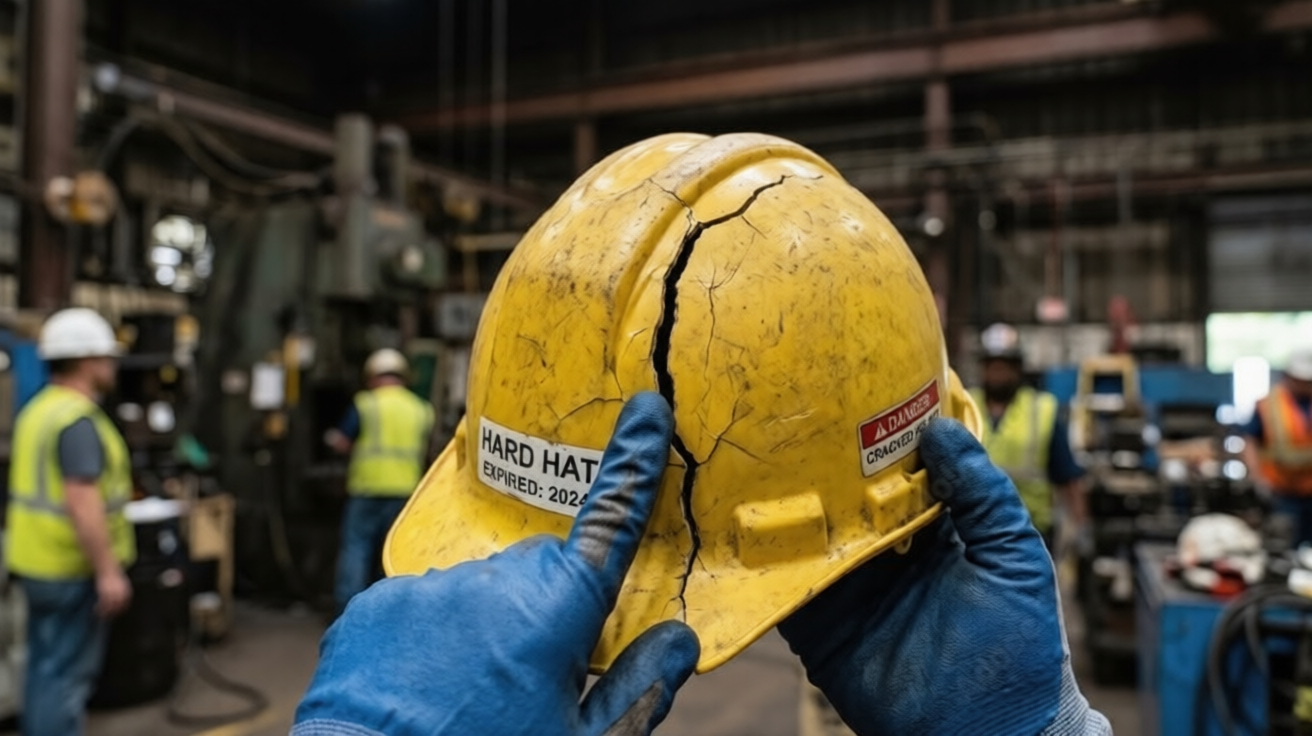
Defective personal protective equipment. A hard hat that shatters on impact rather than absorbing force, a respirator that fails to filter silica dust, or safety glasses with lenses that crack under normal conditions are all defective products. When PPE fails because of a manufacturing or design flaw, the manufacturer faces strict liability for every injury that results.
Defective electrical equipment and temporary power systems. Faulty ground fault circuit interrupters, inadequately insulated power cables, and defective temporary distribution panels create electrocution risks on every type of construction project. When the electrical equipment itself was defective, a product liability claim against the manufacturer runs alongside any Labor Law Section 241(6) claim based on Industrial Code Section 23-1.13 violations. For electrocution-specific claims, see our page on electrocution accidents.
Who Can Be Held Liable for a Defective Equipment Injury
Multiple parties in the chain of commerce can bear legal responsibility for a defective equipment injury, independent of and in addition to the property owner and general contractor’s Labor Law liability.
Equipment manufacturers. The company that designed and built the defective item bears primary product liability. Their duty to produce reasonably safe products extends to every foreseeable user, including construction workers across New York. Under strict liability, knowledge of the defect is not required.
Component part manufacturers. Large machines are assembled from parts made by different companies. A crane’s hydraulic valve, a scaffold’s locking pin, or a harness’s load-bearing buckle may come from a separate supplier. If that component was defective, the component maker can be named as a defendant independently of the final product manufacturer.
Distributors and equipment rental companies. Businesses that sell or rent construction equipment into the stream of commerce can be held liable under New York strict products liability law even if they had no knowledge of the defect. Rental companies have an ongoing duty to inspect and maintain equipment before each rental and to disclose known defects before delivery.
Property owners and general contractors. On the Labor Law track, property owners and general contractors face liability under Sections 240(1), 241(6), and 200 for allowing defective equipment to be used on the site, for failing to enforce safety standards, or for directing workers to use equipment they knew was unsafe.
Maintenance and inspection companies. Third-party firms hired to inspect, service, or certify equipment who miss or fail to report a defect may share liability for the injuries that defect later causes.
Our attorneys also handle third-party construction claims as a dedicated practice area, covering the full range of parties whose negligence can be pursued alongside workers’ compensation.
Injuries Common in Defective Equipment Accidents
The injuries sustained from defective construction equipment are consistently among the most severe in all of personal injury law.
Traumatic brain injury. A fall caused by defective fall protection, or a direct blow from malfunctioning equipment, can produce TBI ranging from concussion with lingering cognitive effects to severe brain damage requiring permanent care. Our firm has significant experience handling catastrophic injury cases involving TBI.
Spinal cord injuries and paralysis. Defective scaffolding collapses, crane failures, and fall protection malfunctions frequently cause spinal cord damage producing partial or complete paralysis. These injuries require lifetime medical management and permanently alter every aspect of a worker’s life.
Traumatic amputations. Power tools without functioning blade guards and machinery with defective safety interlocks are leading causes of traumatic amputations on construction sites. Surgical amputations following crush injuries from machinery failures are also common.
Severe burns. Electrical defects and fuel system failures cause flash fires and arc flash events that produce third-degree burns requiring extensive reconstructive surgery and leaving permanent scarring.
Crush injuries. Heavy machinery with brake failures, collapsing structures, and runaway equipment can trap workers under enormous weight, causing severe damage to internal organs, bones, and soft tissue simultaneously.
Wrongful death. Defective equipment failures are among the most fatal categories of construction accidents. When a worker is killed, surviving family members may have a wrongful death claim against the equipment manufacturer, property owner, general contractor, and other responsible parties. Recoverable damages include funeral costs, the financial support the deceased would have provided over a lifetime, and compensation for the loss of companionship and guidance. For more on how these claims work, visit our page on wrongful death in New York.
Steps to Take After a Defective Equipment Injury
Evidence in a defective equipment case can disappear quickly. Employers and manufacturers have strong incentives to repair, replace, or return the equipment before an independent investigation can take place.
- Seek emergency medical care the same day. TBI, internal injuries, and crush damage may not be fully apparent immediately after the accident. Go to an emergency room regardless of how you feel and follow all medical instructions. A medical record created the same day connects your injuries directly to the equipment failure.
- Report the accident in writing. Notify your employer or the site supervisor in writing as soon as possible. Under New York workers’ compensation law, you must report a workplace injury to your employer within 30 days.
- Photograph the equipment and the scene before anything is moved. The defective tool, machine, or safety device is the central piece of evidence in your case. Photograph it, the accident scene, and your injuries before any cleanup or repair begins.
- Preserve the equipment. Do not allow the defective item to be returned to a rental yard, repaired, discarded, or altered before an attorney can arrange an independent inspection. Your attorney can send a legal preservation notice to the employer, site owner, and equipment supplier demanding that it be held intact.
- Collect witness information. Get the names and contact details of everyone who saw the accident or who was aware that the equipment was defective before the accident occurred.
- File for workers’ compensation promptly. Workers’ comp covers medical bills and a portion of lost wages regardless of fault. Filing on time protects those benefits. Note that filing a workers’ comp claim does not extend or pause the statute of limitations for your product liability or Labor Law lawsuits. Those deadlines run on completely separate tracks.
- Do not give recorded statements without legal advice. Insurance adjusters for the manufacturer, the property owner, and the general contractor will contact you quickly. You are not required to give a recorded statement. Do not sign any documents or releases before speaking with an attorney.
- Contact Porter Law Group. Call (833) 767-8379 or email info@porterlawteam.com. We will review your case at no cost and explain every legal option available to you.
What Compensation Can You Recover
Workers’ compensation provides medical benefits and a portion of lost wages but does not cover pain and suffering, full lost wages, or the long-term financial impact of a permanent disability. A successful product liability claim and a parallel Labor Law claim together open access to the full range of compensation that serious defective equipment injuries warrant.
- Past and future medical expenses, including emergency care, surgery, hospitalization, rehabilitation, prosthetics, and long-term treatment
- Lost wages from the time of the accident through the resolution of your case
- Reduced future earning capacity if your injuries prevent you from returning to your trade or any comparable work
- Pain and suffering, both physical and emotional
- Loss of enjoyment of life
- Permanent disability and disfigurement
- Loss of consortium for the injured worker’s spouse or family members
- In cases where a manufacturer’s conduct was particularly reckless, punitive damages may also be available
How Much Is a Defective Equipment Case Worth in New York?
The value of a defective equipment claim depends on the severity and permanence of the injuries, the specific defect involved, the number of liable parties across both the product liability and Labor Law tracks, and the applicable insurance coverage. Cases that produce recoveries from both the product manufacturer and the property owner and general contractor simultaneously tend to result in significantly higher total outcomes than single-track claims.
| Injury severity | Typical range |
| Moderate injuries, full or significant recovery | $75,000 to $300,000 |
| Serious injuries requiring surgery or with permanent effects | $300,000 to $1,500,000 |
| Catastrophic injuries including TBI, paralysis, amputation, or severe burns | $1,500,000 to $7,000,000 or more |
| Wrongful death | $1,000,000 to $5,000,000 or more |
These ranges are general guidance only. Cases where both a clear product defect and a Labor Law violation are established, allowing simultaneous recovery from multiple defendants, consistently produce the strongest outcomes.
Deadlines for Filing a Defective Equipment Claim in New York
New York’s filing deadlines for defective equipment cases differ from those in other construction accident types and must be carefully tracked across both legal tracks. Missing any one of them permanently ends your right to recover compensation on that track.
Product Liability Deadline: Three Years from Date of Injury
Product liability claims against manufacturers, distributors, component suppliers, and equipment rental companies must be filed within three years from the date of injury under CPLR Section 214(c). The clock begins running from the date of the injury, not the date of manufacture or sale. Wrongful death claims arising from a defective equipment fatality carry a shorter deadline of two years from the date of death under New York Estates, Powers and Trusts Law Section 5-4.1.
Labor Law Deadline: Three Years from Date of Accident
Labor Law claims under Sections 240(1), 241(6), and 200 against private property owners, developers, and general contractors must be filed within three years from the date of the accident under CPLR Section 214(5). If the construction site was owned or controlled by New York City, the MTA, NYCHA, a city agency, a public authority, or any other government body, a separate and much shorter deadline applies: you must file a Notice of Claim within 90 days of the accident under General Municipal Law Section 50-e, followed by your lawsuit within one year and 90 days. Missing the 90-day notice window permanently ends the claim against that government entity regardless of how strong the case is.
For workers’ compensation, you must notify your employer of the injury within 30 days of the accident.
One critical point that applies to both legal tracks: filing a workers’ compensation claim does not toll or extend the statute of limitations for your product liability or Labor Law lawsuits. All deadlines run independently, and many workers lose valuable claims by assuming that one filing covers the others.
We’ll explain who may be responsible and what compensation you may be entitled to pursue.
Why Choose Porter Law Group
Michael S. Porter founded Porter Law Group to represent New York workers and families in serious injury cases. A graduate of Harvard University and Syracuse University College of Law, he served as a Captain in the U.S. Army Judge Advocate General’s Corps before entering private practice. He has been selected to Super Lawyers for 14 consecutive years, from 2012 through 2025, and holds a 10.0 Superb rating on Avvo and a Distinguished rating from Martindale-Hubbell.
No fee unless we win. All defective equipment cases are handled on a contingency basis. You pay nothing unless we recover compensation for you.
Free consultations, available 24/7. You can reach our team any time to discuss your case at no cost and with no obligation to retain us.
Direct attorney access. You will speak with the attorney handling your case throughout the process, not only with a case manager or paralegal.
You can review our case outcomes on our Results page, read client experiences on our Testimonials page, and meet our team on the Attorneys and Staff page.
Serving Defective Equipment Accident Victims Across New York State
Porter Law Group represents workers injured by defective construction equipment and their families throughout New York State.
Upstate New York. We handle defective equipment cases in Albany, Rochester, Utica, Binghamton, and communities throughout New York State.
New York City. The density and pace of construction across all five boroughs creates constant exposure to equipment that has not been properly inspected, maintained, or flagged for defects before use. We handle defective equipment cases across Manhattan, Brooklyn, Queens, the Bronx, and Staten Island, including government-managed projects involving NYCHA, the MTA, and the NYC Department of Design and Construction, each of which requires a Notice of Claim within 90 days of the accident.
Long Island. We represent workers injured by defective equipment across Nassau and Suffolk Counties, including residential construction, commercial development, and utility projects where equipment rental is routine and equipment condition is frequently overlooked.
Westchester and the Hudson Valley. Workers injured by defective tools, scaffolding, or heavy machinery on construction and renovation projects in White Plains, Yonkers, and across Westchester County are served by our team.
Syracuse and Central New York. We handle defective equipment cases throughout Onondaga County and the surrounding region. New York Labor Law and product liability law apply statewide, and the dual-track recovery strategy is equally available on any New York construction site.
Buffalo and Western New York. Workers injured by defective construction equipment across Erie and Niagara Counties can reach our team for a free consultation at any time.
Frequently Asked Questions
Can I sue the equipment manufacturer if I am already receiving workers’ compensation?
Yes. Workers’ compensation and a product liability lawsuit are entirely separate legal proceedings against different defendants. Workers’ compensation is a claim against your employer’s insurer. A product liability claim targets the manufacturer, distributor, component supplier, or rental company that placed defective equipment into the stream of commerce. New York law allows you to pursue both simultaneously. If you recover a product liability settlement or verdict, New York law requires reimbursing the workers’ compensation carrier for benefits already paid, but in serious injury cases the total recovery from both sources typically far exceeds what workers’ compensation alone would have provided.
What is the difference between a product liability claim and a Labor Law claim for defective equipment?
A product liability claim is brought against the manufacturer, distributor, or rental company that supplied the defective equipment. It is based on the defect in the product itself, whether a manufacturing flaw, design defect, or failure to warn, and does not require proving that the property owner or contractor was negligent. A Labor Law claim is brought against the property owner and general contractor for failing to provide safe equipment on a covered construction site. Both claims can arise from the same accident and can be pursued simultaneously. They reach different defendants, are governed by different legal standards, and can produce independent recoveries.
How long do I have to file a defective equipment lawsuit in New York?
For product liability claims against manufacturers, distributors, and rental companies, you have three years from the date of injury under CPLR Section 214(c). For Labor Law claims against property owners and general contractors, you have three years from the date of the accident under CPLR Section 214(5). For wrongful death claims, the deadline is two years from the date of death under EPT Section 5-4.1. If a government entity owned or managed the construction site, you must file a Notice of Claim within 90 days under General Municipal Law Section 50-e. Filing a workers’ comp claim does not extend any of these deadlines.
What if my employer told me the equipment was safe?
Your employer’s assurances do not shield a manufacturer from liability. If the equipment was defectively designed or manufactured before it reached the job site, the manufacturer is responsible regardless of what your employer said or believed. In some situations, if your employer knew the equipment was defective and required you to use it anyway, that employer may also face liability outside the normal workers’ compensation bar, depending on the specific facts.
What if I am an undocumented worker?
Undocumented workers in New York have the same rights under New York Labor Law and the product liability framework as any other construction worker. Immigration status does not affect your right to file a claim or recover full compensation for injuries caused by defective equipment. Our attorneys handle these cases with complete confidentiality.
What evidence matters most in a defective equipment case?
The equipment itself is the most critical piece of evidence and the most vulnerable to loss. Manufacturers, rental companies, and employers all have reasons to repair, return, or discard the item quickly after an accident. Photographs of the defective item before any repair or removal, along with maintenance logs, inspection records, rental agreements, and prior complaints about the equipment, establish the foundation of the case. OSHA inspection reports document whether a safety violation accompanied the equipment failure. A same-day medical record connecting your injuries to the specific equipment failure is also essential.
What Clients Say About Porter Law Group
Meet the Attorney

Michael S. Porter, J.D.
Founder and managing partner of Porter Law Group. Harvard University (B.A., 1994), Syracuse University College of Law (J.D., 1997). Former U.S. Army JAG Corps Captain, Airborne Training School graduate. Super Lawyers 14 consecutive years, 10.0 Superb on Avvo, Distinguished rating from Martindale-Hubbell. Over 20 years of trial experience and $500 million in recoveries.
Reviewed by Michael S. Porter, J.D. | Last updated: [April, 2026]
Get Help from a New York Defective Equipment Lawyer Today
When construction equipment fails because of a design flaw, a manufacturing defect, or a missing safety warning, the companies responsible for that equipment should be held accountable alongside the property owners and contractors who allowed it to be used. A defective equipment injury can produce permanent consequences, and the legal process for pursuing full compensation across both the product liability and Labor Law tracks is complex.
Porter Law Group is ready to help. Call us at (833) 767-8379 or email info@porterlawteam.com for a free, confidential consultation. We handle defective equipment cases on a contingency fee basis, which means you pay nothing unless we win your case.
Call 833-PORTER9 | Available 24/7 | No fee unless we win

