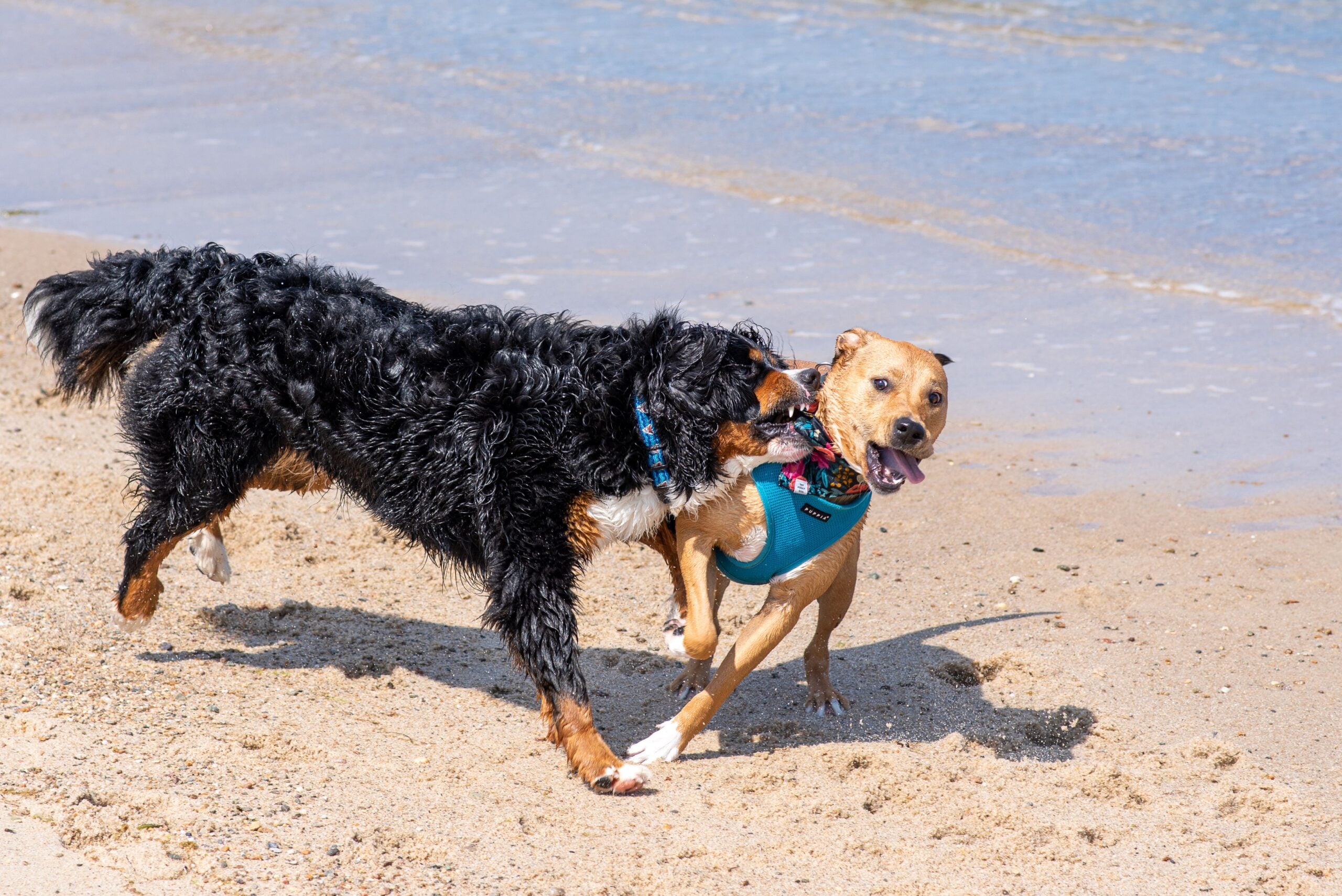

Dog bites happen fast. One moment you’re walking through a neighbor’s yard, picking up a package, or letting your kid pet a dog at the park, and the next you’re at the emergency room trying to make sense of what just happened. Dog bites are far more common than most people realize, and the injuries they cause range from minor punctures to severe lacerations, nerve damage, and permanent scarring. According to a landmark study published in JAMA, dog bites account for roughly 333,687 emergency department visits per year in the United States, which breaks down to about 914 new injuries each single day. If you or someone you love was bitten, the question of whether you have a legal case is probably already on your mind.
The honest answer is: it depends. New York has a specific and somewhat nuanced legal framework for dog bite liability, and understanding how it works is the first step to knowing where you stand. This article walks you through the rules, what they mean in practice, and what evidence matters most when building a case.
Prior results do not guarantee a similar outcome.
Quick Checklist: Do You Have the Building Blocks of a Dog Bite Claim?
Before diving into the legal details, here’s a quick way to gauge whether your situation might support a lawsuit. You do not need all of these to have a case, but the more boxes you check, the stronger your position tends to be.
- You were bitten or attacked by someone else’s dog
- You sought medical treatment and have records documenting your injuries
- The bite caused significant harm (lacerations, infection, scarring, nerve damage, or required surgery)
- The dog had a prior history of aggressive behavior (biting, lunging, snapping, or growling at people)
- The owner knew or should have known about that prior behavior
- The dog had been previously reported to animal control or declared “dangerous”
- You can identify witnesses who saw the attack or who are aware of the dog’s behavior
- The attack happened in a public place or somewhere you had a legal right to be
If most of these apply to your situation, it is worth speaking with a dog bite lawyer to understand your options.
How New York Dog Bite Law Actually Works
New York is not what lawyers call a “strict liability” state in the way most people imagine. In many states, a dog owner is automatically on the hook the moment their dog bites someone, no questions asked. New York takes a different approach, and it catches a lot of people off guard.
The state uses two overlapping legal frameworks. The first is the Agriculture and Markets Law, specifically the “dangerous dog” statute, which imposes strict liability on owners for medical costs when a dog that has been legally declared dangerous injures someone. The second is a common-law rule that has been part of New York courts for nearly 200 years, which holds owners liable when they knew or should have known their dog had vicious propensities. These two paths sometimes run parallel and sometimes intersect, but they serve different purposes and produce different outcomes for injured victims.
The key takeaway is this: getting your medical bills covered is one thing, but recovering for pain and suffering, lost income, or permanent scarring usually requires more. It requires showing that the owner had reason to know the dog was dangerous before the attack ever happened.
What Makes a Dog “Dangerous” Under New York Law?
Under New York’s Agriculture and Markets Law, a dog can be formally adjudicated as “dangerous” through a legal proceeding. A dog generally meets this definition if it attacks or behaves in a way that would cause a reasonable person to believe it poses a serious and unjustified threat of physical injury or death, without provocation. Once a dog carries that official designation, the owner is strictly liable for medical costs if the dog injures someone again. No further proof is needed on that narrow issue.
But here’s the practical reality: most dogs involved in bite cases have never been formally declared dangerous. The more commonly used path to recovery is the common-law vicious propensity rule, which does not require an official designation. It requires proof of prior behavior and owner knowledge.
What Is the Vicious Propensity Rule?
The vicious propensity rule is the backbone of most New York dog bite lawsuits. Under this rule, a dog owner is strictly liable for injuries caused by their dog if they knew, or reasonably should have known, that the dog had a tendency to behave in ways that put people at risk. “Vicious propensities” does not only mean prior bites. It includes any behavior that would signal danger to a reasonable person: snapping, lunging at strangers, growling aggressively, chasing people, or threatening behavior that never escalated to an actual attack.
Say your neighbor’s dog has charged at the mail carrier three times and once snapped at a child who walked past the fence. The neighbor has seen this behavior repeatedly. If that dog eventually bites you, your neighbor’s knowledge of those prior incidents becomes critical evidence. The prior snapping and charging are what put the owner on notice, and that notice is what triggers liability for all of your damages, not just medical costs.
Does New York Give Dogs “One Free Bite”?
This is one of the most common questions people ask after a dog attack, and the answer requires some nuance. New York does not have a formal “one free bite” rule that shields owners from liability the first time their dog bites someone. However, the vicious propensity standard does make first-bite cases harder to win.
The New York Court of Appeals addressed this directly in Collier v. Zambito, a significant case that clarified the standard. In that case, a family dog with no prior history of aggression bit a child visitor. The owner argued the dog had no known dangerous tendencies, and the court agreed, dismissing the case because ordinary barking and excitement, without more, does not demonstrate vicious propensity. The lesson from Collier is that normal dog behavior like barking at strangers or jumping up is generally not enough on its own. You need evidence that the dog behaved in a genuinely threatening way and that the owner was aware of it.
When the Case Is Strong and When It Gets Complicated
Cases with documented prior incidents tend to be the most straightforward. Imagine a scenario where a dog has been reported to animal control twice for attacking people, and the owner received formal warnings. If that dog bites a jogger on a public trail, the paper trail of prior complaints, combined with the severity of the injury, gives an attorney strong material to work with. Add in witness statements from neighbors who saw the dog lunge at people regularly, and you have a case with real teeth.
Cases get harder when there is no prior record of any kind. If the dog had never shown aggression, the owner had no complaints on file, and no witnesses can describe anything alarming about the dog’s behavior before the incident, establishing the knowledge element becomes significantly more difficult. The injury still matters, and a dog bite lawyer in Albany or anywhere in New York can evaluate whether other legal theories might apply, but the vicious propensity path is steeper without prior incidents to point to.
Injuries also matter when assessing whether a case is worth pursuing. A minor puncture wound that healed in a week without scarring or infection is a very different case than a bite that required reconstructive surgery, left a visible scar on a child’s face, or caused lasting nerve damage to someone’s hand. The data underscores how serious these injuries can get: in 2023 alone, approximately 19,000 people underwent reconstructive surgery following dog bite injuries in the United States.
Who Can Be Held Responsible Besides the Dog’s Owner?
Liability does not automatically stop with the owner. Depending on the circumstances, other parties may share responsibility. A landlord who knows a tenant keeps a dangerous dog on the property, and who has the ability to do something about it but chooses not to, may face liability under common-law theories if someone is injured. Dog walkers, pet sitters, and other caretakers who have control over the animal at the time of the attack may also be responsible depending on what they knew and how the incident unfolded.
Homeowners and renters insurance policies frequently cover dog bite claims, though coverage varies widely, and some policies exclude certain breeds or cap payouts below what serious injuries actually cost. Identifying all potential sources of coverage and all potentially liable parties is something a skilled attorney will evaluate early in the process.
Steps to Take After a Dog Bite in New York
What you do in the hours and days following a dog bite shapes your legal options in ways that are hard to undo later.
The most important first step is medical care. Beyond protecting your health, prompt medical treatment creates documentation of your injuries, their severity, and the circumstances under which they occurred.
In New York City, the Health Code requires that animal bites be reported to the NYC Animal Bite Unit within 24 hours. Outside the city, local health departments have their own reporting requirements. Under New York law, the dog that bit you is generally required to be observed for 10 days to rule out rabies exposure. If the owner cannot demonstrate the dog is current on its rabies vaccination, the dog may need to be confined at a veterinary facility during that observation period.
Preserving evidence as soon as possible is critical. Photograph your injuries before they heal. Get the owner’s name, address, and contact information. Ask any witnesses for their contact details. Note whether the dog was leashed or unleashed, and whether any posted warnings were present. If there is a business or property involved, document that as well. All of this becomes relevant as a case develops.
What Evidence Matters Most in a New York Dog Bite Case
Because New York requires proof of vicious propensities and owner knowledge for full damages, the dog’s history is often the most important body of evidence in a case. This means gathering more than just documentation of your own injuries, though that documentation is essential too.
Animal control reports and dangerous-dog proceedings are especially valuable. These records can show prior complaints, prior attacks, whether the dog has been formally flagged, and what the owner was told.
Neighbor statements can be powerful as well. Someone who saw the dog charge at children from behind a fence, or who witnessed a previous incident that was never formally reported, can provide testimony that helps establish what the owner knew.
Owner statements made at the scene matter too. If the owner said something like “he’s done this before” or “we usually keep him locked up,” those admissions can be significant.
Medical records, photographs of your injuries over time, and documentation of any psychological effects of the attack (especially for children) round out the picture of your damages. Children are disproportionately affected by dog bites: that same JAMA study found that kids were far more likely than adults to be bitten on the head, face, and neck, with 73% of pediatric bites landing in those areas compared to 30% for adults. For a child left with facial scarring, the damages can be substantial.
When to Talk to a Lawyer About Your Dog Bite Case
If you were seriously injured, if the bite happened to your child, or if the owner is denying liability or unresponsive, speaking with an attorney sooner rather than later protects your ability to pursue a claim. New York has a statute of limitations that sets a deadline for filing a personal injury lawsuit, and evidence, especially evidence about the dog’s behavioral history, can disappear quickly.
A dog bite lawyer in New York can investigate the dog’s history through animal control records and local complaint databases, identify all potentially liable parties, and assess what your injuries are worth. In cases involving scarring, ongoing medical treatment, or psychological trauma, particularly for children, compensation can extend well beyond initial medical bills to include pain and suffering, future medical costs, and lost income.
Dog bites are not minor events to brush off, even when the physical injury seems manageable in the moment. The legal system recognizes that, and New York law, while more demanding than some states in terms of proof, does offer real remedies for people who were harmed through no fault of their own.
Talk to our experienced personal injury lawyers and know all your legal options for recovery in a free, no-obligation consultation.
Summing It Up
New York dog bite cases turn on a few key factors: whether the dog had a known history of dangerous behavior, whether the owner knew about it, and whether the injuries were serious enough to warrant full compensation. The law does not require a prior bite to establish liability, but it does require evidence that something in the dog’s past put the owner on notice. Strong cases tend to involve documented prior incidents, credible witnesses, significant injuries, and prompt action to preserve evidence. If your situation fits that profile, or even if you are unsure, the next step is a conversation with someone who can review the specifics and give you a clear picture of where you stand.
Reach out to the Porter Law Group today. Fill out our online form for a free consultation and know your options. You can also call 833-PORTER9 or email info@porterlawteam.com to get started.