
Most personal injury cases involve one legal track: you were hurt because of someone’s negligence, and you file a lawsuit against them.
Construction accident cases in New York often involve at least two tracks running simultaneously, and they do not operate independently of each other.
The first is workers’ compensation, a no-fault state system administered by the New York Workers’ Compensation Board that provides medical benefits and cash payments for lost wages.
The second is a potential civil lawsuit under New York Labor Law §§ 200, 240, and 241, which allows injured workers to sue property owners, general contractors, and others who are not their direct employer. Our construction accident attorneys handle both tracks together.
These two tracks interact in ways that can significantly affect how much you ultimately recover, particularly because any workers’ compensation benefits paid out create a lien that must be addressed if you also win a civil settlement or verdict.
Prior results do not guarantee a similar outcome.
What Does a Construction Accident Attorney Actually Do
A construction accident attorney does several things that go well beyond paperwork. The first and arguably most important is identifying all the claims available to you.
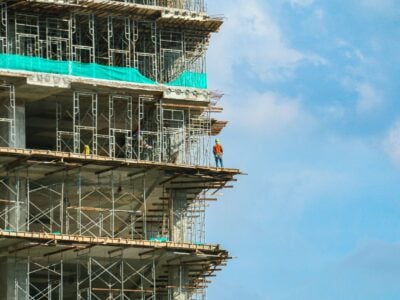
Attorneys also preserve and build evidence from the beginning. OSHA standards require fall protection in construction at heights of six feet or more, per OSHA’s fall protection rules, which is why scaffolding and fall accidents so often anchor Labor Law claimsand violations of those standards, combined with violations of specific New York Industrial Code provisions, form the factual foundation of Labor Law § 241(6) claims.
On the workers’ compensation side, attorneys ensure that the correct forms are filed accurately and on time.
If a claim is disputed, which happens regularly when insurers contest the severity of the injury, the connection between the accident and the injury, or the worker’s inability to return to work, an attorney handles the hearing before the Workers’ Compensation Board, presents medical evidence, and argues on your behalf.
Why Handling Workers’ Compensation Alone Is Riskier Than It Looks
The New York State Bar Association publishes a dedicated practice guide on workers’ compensation law specifically because its “complex and interrelated issues” require specialized legal knowledge, even for experienced attorneys learning the area.
The Workers’ Compensation Board itself maintains a dedicated Find Legal Representation page that directs injured workers to the New York State Bar Association and the Injured Workers’ Bar Association.
When a claim is denied or disputed, the stakes rise considerably. Disputes about the extent of a permanent disability, for example, directly affect lifetime benefit amounts and can involve conflicting medical opinions from the worker’s doctors and the insurer’s doctors.
How Labor Law Claims and Workers’ Compensation Work Together
As explained in the New York Labor Law advisory published by Amwins, Labor Law § 240(1) places a nondelegable duty on property owners and contractors for elevation-related hazards, while § 241(6) imposes liability for violations of specific Industrial Code regulations. Labor Law § 200 addresses the broader duty to maintain a safe worksite.
A claim under § 240(1) does not require proving that the owner or contractor was negligent in the traditional sense; if the required safety device was absent or inadequate and a worker was injured as a result, liability attaches.
What this means practically is that your workers’ compensation case and your civil case involve different defendants, different legal standards, and different potential recoveries. Workers’ compensation covers medical expenses and a portion of your lost wages.
A civil claim under Labor Law can recover full lost earnings, pain and suffering, long-term disability, and other damages that the workers’ compensation system simply does not touch. This is especially significant in catastrophic injury cases.
What Happens If You Try to Handle This Without an Attorney
People handle their own workers’ compensation claims every day, and some of them succeed in straightforward cases.
But construction accident cases in New York are rarely straightforward, and the consequences of errors compound quickly. Understanding whether you can sue after a construction accident is a critical early step.
Missing the 30-day employer notification requirement, which NY.gov’s workers’ compensation guidance flags as a threshold obligation, can jeopardize your right to benefits from the start. Filing an inaccurate C-3 form, or failing to document the connection between the accident and specific injuries, gives insurers an opening to dispute the claim.
Accepting an early settlement offer from a workers’ compensation carrier without understanding whether a Labor Law civil claim exists can permanently foreclose the more valuable recovery.
The insurer on the other side of your claim is represented by experienced legal counsel from day one.
That counsel’s job is to minimize the payout. The imbalance between an unrepresented injured worker and a staffed insurance defense operation is real, and it shows up in outcomes.
What Does It Cost to Hire a Construction Accident Lawyer in New York
In workers’ compensation cases, attorneys in New York are paid from wage-replacement awards, not from a retainer paid upfront. NY.gov’s workers’ compensation filing guide notes that attorney fees are generally around 15 percent of benefits awarded and are subject to approval by the Workers’ Compensation Board, which regulates what attorneys may charge in these cases.
In civil personal injury cases, including Labor Law claims, construction accident attorneys typically work on a contingency fee basis, meaning there is no fee unless money is recovered.
The contingency percentage varies by firm and case complexity, but the fundamental structure is the same: the attorney assumes the financial risk of pursuing the case, not the client.
What to Look for in a Construction Accident Attorney
When you speak with an attorney, ask directly whether they handle Labor Law § 240 and § 241 claims, how many construction cases they have handled, and how they coordinate workers’ compensation with civil litigation.
The answers will tell you quickly whether they have real experience in this area or are simply a general personal injury firm taking on an unfamiliar case type.
An experienced attorney can identify every available claim and help you pursue the compensation you deserve.
Frequently Asked Questions
Why should I hire an attorney after a construction accident?
After a construction accident in New York, you may have rights under two separate legal systems: workers’ compensation and civil liability under New York Labor Law. Workers’ compensation covers medical expenses and partial wage replacement, but it does not compensate for pain and suffering or full lost earnings.Identifying and coordinating both claims requires legal knowledge that most injured workers do not have. Missing either claim, or mishandling one, can result in a significantly lower recovery than your injuries justify.
What does a construction accident lawyer do?
A construction accident attorney identifies every available legal claim, preserves and organizes evidence, ensures that workers’ compensation forms are filed correctly and on time, represents the worker at Workers’ Compensation Board hearings, and pursues civil liability claims against third parties such as property owners and general contractors. Attorneys also coordinate between the workers’ compensation system and any civil lawsuit, including managing the liens that workers’ comp carriers place on civil recoveries. In cases involving permanent injuries or long-term disability, attorneys work with treating physicians and expert witnesses to document the full scope of the worker’s losses and present that evidence effectively.
Can I handle my own workers’ compensation claim after a construction accident?
You can file your own workers’ compensation claim, but contested cases involving disputed injuries, permanent disability evaluations, or insurer denials become very difficult to navigate without legal representation. The Workers’ Compensation Board holds formal hearings with procedural rules, and the insurer opposing your claim is represented by experienced counsel. The New York Workers’ Compensation Board maintains a dedicated resource page to help injured workers find attorneys or licensed representatives, which reflects that representation is expected and often necessary in anything beyond the most straightforward accepted claims.
What is the difference between workers’ compensation and a Labor Law lawsuit?
Workers’ compensation is a no-fault system that provides medical benefits and wage replacement regardless of who caused the accident, but it bars direct lawsuits against your employer and limits recovery to those specific benefits. A Labor Law lawsuit under New York Labor Law §§ 200, 240, or 241 is a civil claim filed against a property owner or general contractor, not your employer, and allows recovery for pain and suffering, full lost wages, and long-term disability. The two systems can operate simultaneously, but any workers’ compensation benefits paid out create a lien against a civil recovery. An attorney manages both tracks and the financial relationship between them.
How much does a construction accident attorney cost in New York?
In workers’ compensation cases, attorney fees in New York are paid from wage-replacement awards, not upfront, and are generally around 15 percent of the benefits awarded, subject to Workers’ Compensation Board approval. In civil personal injury cases, including Labor Law claims, attorneys typically work on a contingency fee basis, meaning there is no attorney fee unless money is recovered. This structure means that most seriously injured workers can access qualified legal representation without paying anything out of pocket. Specific fee percentages vary by firm and should be discussed directly during your initial consultation.
Do I have a Labor Law Section 240 claim after my construction accident?
Labor Law § 240(1) applies to gravity-related injuries on construction sites, including falls from ladders, scaffolds, and elevated surfaces, and injuries from falling objects. The law imposes absolute liability on property owners and general contractors when adequate safety equipment was not provided or when equipment that was provided failed. Whether § 240(1) applies to your specific accident depends on what kind of work you were doing, what caused the injury, and what safety measures were or were not in place. Not every construction accident qualifies, but when the statute applies, it is one of the most powerful legal tools available in New York injury law.
What happens if I accept a workers’ compensation settlement without an attorney?
Accepting a workers’ compensation settlement without legal review can permanently foreclose your ability to pursue additional claims. If you also have a civil lawsuit available under New York Labor Law against a property owner or contractor, an uninformed settlement could include release language that eliminates that claim. Even within the workers’ compensation system, early settlement offers may undervalue permanent injuries or long-term medical needs. A workers’ compensation attorney reviews any proposed settlement against the full scope of your injuries and available claims before you agree to anything.
What deadlines apply after a construction accident in New York?
The most immediate deadline is the requirement to notify your employer of the injury within 30 days. Separately, a workers’ compensation claim should be filed with the Workers’ Compensation Board as soon as possible after that. For civil lawsuits, the general statute of limitations in New York is three years from the date of the accident under CPLR § 214. If the property involved is owned or operated by a government entity, a Notice of Claim must be filed within 90 days of the injury or the right to sue is almost certainly lost. Missing any of these deadlines can permanently bar specific claims regardless of how severe the injuries are.
Can I sue the property owner even if workers’ compensation covers me?
Yes, in many construction accident cases. Workers’ compensation bars direct lawsuits against your employer, but it does not bar claims against third parties, including property owners and general contractors who are separate entities from your employer. New York Labor Law §§ 240 and 241 specifically create liability for these parties when their safety obligations were not met. A construction accident attorney evaluates the site’s ownership structure, contractual relationships between the parties, and the circumstances of the accident to determine which parties can be named in a civil lawsuit alongside or separate from your workers’ compensation claim.
Summing It Up
Attorneys who handle these cases serve as the connective tissue between the two systems, ensuring that every claim is identified, every deadline is met, and every dollar of recovery is accounted for.
The fee structure in both systems is designed so that representation does not require money upfront.
If you were hurt on a construction site and want to understand what claims may be available to you, the Syracuse construction accident lawyers at Porter Law Group are available to evaluate your situation at no cost. Reach out through our contact page.
This article is for informational purposes only and does not constitute legal advice. Prior results do not guarantee similar outcomes. For guidance specific to your situation, consult a licensed New York personal injury attorney.
Authored by Michael S. Porter, J.D., co-founder of Porter Law Group.