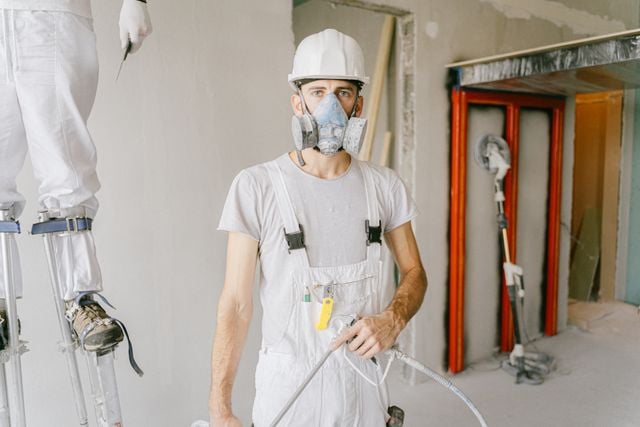

Yes. Wearing a respirator doesn’t guarantee protection if it was the wrong type, didn’t fit, wasn’t maintained, or wasn’t used correctly.
Under OSHA’s respiratory protection standard, employers must identify what workers are being exposed to, measure how much is in the air, and select a respirator certified by NIOSH that can handle that specific contaminant.
That means an employer can’t just grab any mask off the shelf. They need to know whether the hazard is dust, fume, mist, gas, or vapor, know the chemical identity of the substance, and choose a device designed to filter or block that exact type of contaminant.
If your employer gave you the wrong type of respirator for the hazard you actually faced, whether that was benzene, TCE, gasoline vapor, formaldehyde, carbon monoxide, chlorine, or another gas, you were essentially working unprotected.
Prior results do not guarantee a similar outcome.
What Does OSHA Actually Require
OSHA’s respiratory protection standard, 29 CFR 1910.134, requires employers to:
Conduct a hazard assessment identifying what workers are exposed to
Select a NIOSH-certified respirator matched to that specific hazard and its concentration
Provide medical evaluation before initial use to confirm a worker can safely wear a respirator
Provide fit testing before initial use and at least annually afterward
Train workers on proper use, limitations, and maintenance
Maintain a written, worksite-specific respiratory protection program
If your employer skipped any of these steps, that’s a real regulatory violation. What it means for your legal options, though, depends on how your illness or injury connects to that failure, which is where the details matter.
Does the Respirator Actually Fit Your Face
OSHA requires fit testing before initial use and at least annually afterward, and a NIOSH study following workers over three years found that the share of workers whose respirator no longer fit properly rose from 10 percent after one year without retesting, to 20 percent after two years, to 26 percent after three years.
Among workers who had lost more than 20 pounds, 24 percent no longer maintained an acceptable fit. This is exactly why annual fit testing, and retesting after any significant physical change, isn’t a bureaucratic formality.
Fit isn’t just about size. Facial hair, certain facial structures, and glasses can all break the seal, and OSHA specifically prohibits facial hair crossing the sealing surface of a tight-fitting respirator, an issue OSHA has cited employers over.
If your employer never fit-tested your respirator or let you wear one with a beard, the device may have failed to protect you even if it was technically the right model.
Can a Dust Mask Protect You From Cancer-Causing Dust
It depends on the dust and the mask. Filter ratings vary considerably:
N95 filters at least 95 percent of airborne particles and is not oil-resistant
N100 filters at least 99.97 percent of airborne particles and is not oil-resistant
P100 filters at least 99.97 percent of airborne particles and is strongly resistant to oil
For cancer-causing dusts like silica, asbestos, or metal fumes, a higher-efficiency filter is often required, especially at higher exposure levels.
If you were exposed to a known carcinogen and your employer only provided a basic dust mask or a lower-rated respirator without first measuring the concentration in the air and matching the filter to it, that may not have been adequate protection.
What If You Were Exposed to Chemical Vapors or Solvents
Chemical vapors and gases are molecules in gas form, not solid particles, and a dust filter won’t stop them. This is one of the most important things to understand about a filtering-facepiece respirator like an N95: it removes particles, not gases or vapors.
Vapors require a respirator with a cartridge specifically designed for that type of chemical: organic vapor cartridges for many solvents and fuels, acid gas cartridges for different chemicals, and combination units for mixed exposures.
If you were working with paint thinners, degreasers, pesticides, or other volatile chemicals and your employer gave you a dust mask, the vapors went straight through the filter.
Cartridges also have limits. They can absorb or neutralize only a certain amount of vapor before becoming saturated, which is why employers are supposed to establish a cartridge change-out schedule based on objective exposure data, not on whether workers can smell the chemical.
Odor perception varies from person to person, and some chemicals have poor warning properties, meaning cartridge breakthrough can occur before anyone notices a smell at all.
If cartridges were never changed on an objective schedule, or were used past their useful life, you may have been breathing contaminated air without knowing it.
What Are Your Legal Options If Your Respiratory Protection Wasn’t Adequate
Workers’ compensation is generally the primary and exclusive remedy against your own employer for a workplace injury or illness in New York. An employer’s failure to follow OSHA’s respirator requirements is strong evidence supporting an occupational disease claim, since it helps establish that your illness is genuinely work-related and that the exposure was foreseeable and preventable.
But it doesn’t typically open the door to a separate personal injury lawsuit against that same employer, even where the violation is clear.
That’s where genuine third-party claims become relevant:
The respirator manufacturer, if the device itself was defectively designed, manufactured, or labeled, or failed to perform as its NIOSH certification represented, which is a product liability question distinct from how your employer used it
A general contractor or site owner separate from your direct employer, particularly relevant on multi-employer worksites like construction sites, where you may work for a subcontractor but the hazard, or the failure to provide adequate protection, was controlled by a different party.
This is exactly the kind of situation where construction accident claims commonly arise against parties other than the direct employer.
In limited situations involving a “grave injury” as defined under New York’s workers’ compensation law, additional claims may also be available.
Because respirator-related illnesses often involve asbestos, silica, or other well-studied carcinogens, and can lead to conditions like mesothelioma, an attorney experienced in occupational disease claims can help sort out which of these paths actually applies to your situation.
Frequently Asked Questions
If my employer had a written respiratory protection program on paper, does that mean they did everything right?
Not necessarily. A written program is a starting requirement, not proof it was actually followed. What matters is whether hazards were actually identified and measured, whether the respirator issued actually matched those hazards, whether fit testing and training actually happened, and whether the program was kept current as conditions changed. A document that exists on paper but wasn’t followed in practice is still a meaningful gap.
Can I have a claim if I wasn’t required to wear a respirator, but chose to wear one voluntarily?
Possibly, though the analysis differs. OSHA still imposes some requirements even for voluntary use, including providing certain hazard information for basic filtering facepieces, and full medical evaluation requirements for other respirator types. If your employer failed to meet even these lighter voluntary-use obligations while you were working around a real hazard, that’s still worth having reviewed.
What if I was a contractor or temp worker, not a direct employee?
This can actually work in your favor legally. Workers’ compensation exclusivity generally protects your direct employer, but if you were placed at a different company’s worksite, that host company may be a viable third-party defendant separate from the entity that technically employed and insured you.
Does it matter if I no longer have the actual respirator I was given?
Not having the physical device doesn’t end your case. Purchase records, safety data sheets, training records, photos, coworker descriptions, and your employer’s own respiratory protection program documentation can all help establish what type of respirator was actually provided and whether it matched the hazard.
How is a respirator failure case different from a general workplace exposure case?
A respirator failure case adds a specific, documentable point of analysis: whether the protective equipment that was supposed to prevent your exposure actually could have, given the hazard, the fit, and how it was used. That can strengthen causation, since it addresses the “why weren’t you protected” question directly, rather than only establishing that a hazard existed.
Summing It Up
A respirator is only as protective as the process behind it: identifying the hazard, matching the equipment to it, fitting it properly, and training workers to use it correctly. When that process breaks down, workers can be left believing they were protected when they weren’t.
If you’ve been exposed to a workplace hazard and believe your respiratory protection wasn’t adequate, Porter Law Group can help you understand your options. Call 833-PORTER9, email info@porterlawteam.com, or contact us online.
This article is for informational and educational purposes only. It is not a substitute for medical advice from a qualified healthcare provider or legal advice based on your specific circumstances.
Prior results do not guarantee a similar outcome.